Salen, Isle of Mull
A stay in Salen, Isle of Mull with time for the wider area
Find stays in Salen, Isle of Mull on Booking.com the ai birderBirding near me
Responsible wildlife guide
For guided White-tailed Eagle watching, start with a booked Mull walk or boat trip; the island guide records the bird throughout the year. Beinn Eighe and Loch Maree offers a public shore viewpoint, while Rùm and Hoy provide broader island visits with year-round bird records. Use operator access advice, allow for island travel and expect distant or absent birds rather than a guaranteed encounter.
For White-tailed Eagles, choose a responsible booked Mull wildlife experience or a wider Hoy landscape visit, allowing a year-round watching window without expecting a bird at a fixed nest or viewpoint.
Compare these public visit choices using each bird’s local guide season. Months describe bird records, not event or sailing dates. Check current operator access; sightings are never guaranteed.
| Site | Type of view | Best months | Notes and sources |
|---|---|---|---|
| Mull: guided Eagle Walk White-tailed Eagle | Operator-led walk | January, February, March, April, May, June, July, August, September, October, November, December | Book with the operator, which selects lawful viewing places. Bird months do not establish tour dates. Official source · Source review: 2026-10-28. |
| Mull: Sea Eagle Adventure White-tailed Eagle | Operator-run boat | January, February, March, April, May, June, July, August, September, October, November, December | Book with the operator and check the trip format and sailing dates. Bird months do not establish sailings. Official source · Source review: 2026-10-28. |
| Beinn Eighe National Nature Reserve White-tailed Eagle | Public viewpoint | January, February, March, April, May, June, July, August, September, October, November, December | Slattadale shore viewpoint. Use the official shore viewpoint; do not land on sensitive islands. Official source · Source review: 19 October 2026. |
| Isle of Rum National Nature Reserve White-tailed Eagle | Public landscape watch | January, February, March, April, May, June, July, August, September, October, November, December | Follow operator visitor guidance; no eagle viewpoint, nest or approach route is published here. Official source · Source review: 19 October 2026. |
| RSPB Hoy White-tailed Eagle | Public landscape watch | January, February, March, April, May, June, July, August, September, October, November, December | Follow official public access guidance; no eagle viewpoint, nest or approach route is published here. Official source · Source review: 19 October 2026. |
Plan responsible White-tailed Eagle watching on Mull, the Isle of Wight and Scottish reserves, using official viewing advice and suitable trips.
NearestBase is a relevant existing-guide base for the stated arrival, not a new accommodation inspection or an independently ranked distance comparison.
| Place | Season | Access and booking | Nearby base |
|---|---|---|---|
| Isle of Mull white-tailed eagles | Year-round island interest in existing guide; actual tour date must be confirmed. | Book a responsible wildlife walk; the operator promises safe legal-distance viewing, not close-up photography. Official visit/booking instructions | Salen, Isle of Mull |
| RSPB Hoy | Year-round target window from dated guide; no fixed viewing appointment. | Established public paths and current operator advice; island transport is separate. Official visit/booking instructions | Stromness |
The Mull operator’s tour is an experience, not an independently open reserve hide. Confirm the actual departure and ferry connections.
Hoy is not a guaranteed eagle-viewing appointment; choose the landscape and supporting birds as well.
Watch from established public routes or with the responsible operator. No nest locations, roadside gathering points or instructions to follow eagles into breeding ground are supplied.
Some links earn us a small commission at no extra cost to you. These are settlement search bases, with no promise of availability.
A stay in Salen, Isle of Mull with time for the wider area
Find stays in Salen, Isle of Mull on Booking.comA stay in Craignure with time for the wider area
Find stays in Craignure on Booking.comA stay in Stromness with time for the wider area
Find stays in Stromness on Booking.com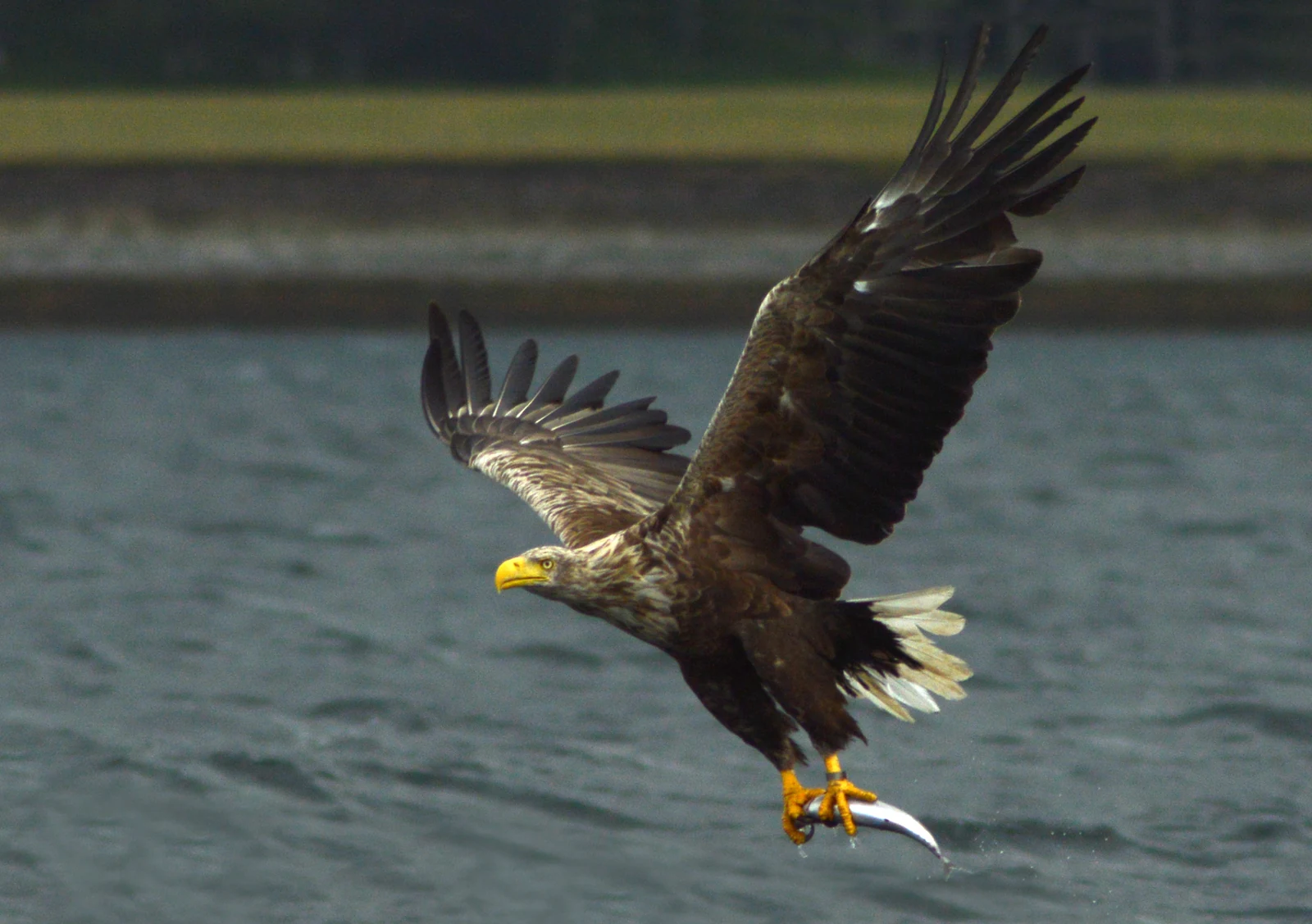
White-tailed Eagle watching works best when you choose a suitable public reserve or an established operator’s trip and give the birds time. Mull has specialist wildlife trips, while Scottish reserves and the recovering population in southern England offer opportunities from public paths and viewpoints. An eagle may spend a long time perched or move across a wide landscape, so plan an enjoyable wildlife day around the possibility of seeing one.
Decide what kind of experience suits you. A boat outing involves weather, movement and the operator’s rules; a reserve visit offers more freedom to walk at your own pace but usually requires patient scanning. Ask about the trip’s method, access and cancellation arrangements before booking. For an independent walk, use the official reserve directions and follow current local signs. The useful starting point is a safe, permitted viewing position with a broad outlook, rather than a report of a bird on somebody else’s land.
The broad, rectangular wings, fingered tips and heavy bill give a White-tailed Eagle a distinctive appearance. Adults have a pale head and white tail, but younger birds retain darker tails, so a white patch alone is a poor identification test. The RSPB’s winter raptor guide illustrates adults and juveniles, making it a useful comparison before you leave home. Compare the whole outline and flight rather than relying on an impression of enormous size.
Forestry England describes these birds as sit-and-wait foragers around coasts, estuaries and lochs. That helps explain why a careful scan of distant perches can be useful between looks at the sky. Begin with binoculars, then use a telescope if a suitable public viewpoint allows it. Rest your arms, work across a manageable sector and return to it later. A moving bird may be easier to locate through the unaided eye before lifting binoculars, especially against a large, empty sky.
Mull Charters advertises a Sea Eagle Adventure from Ulva Ferry, with advance booking for small groups. Its own description explains that fish are offered from the boat and that eagles may take them from the water. That is a specific managed trip format, which visitors should understand when choosing between boat watching and a land-based wildlife outing. Follow the skipper’s instructions, share viewing space and keep loose equipment secure while the boat moves.
Land-based operators offer another approach. Nature Scotland advertises its new Mull Eagle Explorer for 2027, with an on-foot search for White-tailed Eagles and Golden Eagles, while Mull Magic’s Eagle Walk explains that close photographic views are unlikely. Those different descriptions help you choose a day that matches your interests and mobility. Discuss walking surfaces, duration and the chance of weather changes directly with the provider. Their current booking information is more useful than an old visitor’s account of a particular nest or a dramatic close encounter.
Be careful with older Mull Eagle Watch information. The partnership’s website still displays a notice specifically saying that trips did not run in 2023. That dated statement does not establish the programme’s arrangements for 2026 or 2027. Consult the current Mull and Iona Ranger Service or the operator you intend to use. An old booking number or former viewing hide should never become the basis for visiting a sensitive breeding area independently.
RSPB Loch Gruinart on Islay is explicitly listed for White-tailed Eagles in the RSPB’s winter raptor guide. The reserve also offers substantial interest in its geese, waders and other birds of prey, making it a sensible place to give a broad wildlife day time to develop. Use the full Loch Gruinart guide for ferry planning and public walking routes. From an authorised hide or viewpoint, scan the wider landscape between closer looks at feeding birds.
RSPB Loch Lomond has also been identified by the RSPB and National Park as a place where White-tailed Eagles occur. The National Park describes protection and visitor-management work to keep the birds undisturbed. Follow that approach: use the public reserve experience, respect closures and allow the eagle to remain distant. On another Scottish trip, NatureScot identifies White-tailed Eagles at Rùm National Nature Reserve. Its official visitor information is linked below as a separate destination, with its own island access requirements.
The Isle of Wight is central to the return of White-tailed Eagles to southern England. Forestry England and the Roy Dennis Wildlife Foundation began releases there in 2019, under licence from Natural England. Their project follows the movements of young birds, which can range widely before returning towards the south coast. A release island is therefore a regional starting point for understanding the project, rather than an assurance of seeing a bird at a particular forest entrance.
Use the project’s official updates when choosing a public outing, and keep private breeding locations private. In 2023, Forestry England reported the first successful breeding from the project and explained that public viewing was unavailable at that nest. The current project page also records six releases in Exmoor during August 2026. These are dated conservation milestones; they do not create permission to search release sites or approach nests. In Sussex, RSPB Pulborough Brooks is a useful full-guide option: the RSPB’s spring-walks article specifically calls White-tailed Eagles a regular sight there, alongside a varied wetland and woodland day.
NatureScot dates the main west-coast Scottish reintroduction programme to 1975. The later English project builds on that recovery, bringing a once-lost bird back into landscapes used by communities, farmers and other wildlife. Watching responsibly supports the same aim: an eagle should be able to rest, feed or return to its young without a visitor changing that behaviour. A prolonged distant view often teaches more about how the bird uses its surroundings than a brief close flight.
Keep people and equipment on the public route, avoid gathering beneath a nest tree and never use a drone or bait to provoke a closer encounter. If a perched bird becomes alert to your approach, retreat and watch from farther away. Do not stop a car where it obstructs traffic or access, and keep location details of sensitive breeding birds off public posts. Photograph the landscape as well as the bird, then finish the visit without following it from place to place. The enduring reward is seeing an eagle as part of a living coast, loch or wetland.
These rows use existing reserve watching-place records and typical local seasons. Sensitive locations are withheld. Follow current operator restrictions.
| Reserve and public watching place | Typical months | Best light | Scope |
|---|---|---|---|
| Beinn Eighe National Nature Reserve: Slattadale shore viewpoint | January, February, March, April, May, June, July, August, September, October, November, December | either | essential |
The months below come from each reserve’s local birding guide. They describe typical presence or a preferred watching season; national occurrence can be broader. Reports show past observations and cannot promise an encounter. Sensitive birds have no published watching position.
| Species | Reserve guide | Typical or preferred months |
|---|---|---|
| White-tailed Eagle | Isle of Mull white-tailed eagles | January, February, March, April, May, June, July, August, September, October, November, December |
| White-tailed Eagle | RSPB Hoy | January, February, March, April, May, June, July, August, September, October, November, December |
| White-tailed Eagle | Beinn Eighe National Nature Reserve | January, February, March, April, May, June, July, August, September, October, November, December |
| White-tailed Eagle | Isle of Rum National Nature Reserve | January, February, March, April, May, June, July, August, September, October, November, December |
Public places covered in this guide include Isle of Mull white-tailed eagles, RSPB Hoy, Beinn Eighe National Nature Reserve.
Year-round where resident; trip schedules, weather and local access determine the visit
Use authorised viewpoints and current operator guidance; keep away from nests, resting birds and private land, and never bait an eagle yourself.
Reviewed 2026-10-19.