Short entry5.5 miles away
Bowling Green and Goosemoor
Topsham · Estuary and wetland
 the ai birderBirding near me
The AI Birder · one-page field sheet
Joney’s Cross, East Devon · EX10 0BL

Stonechat · Dartford Warbler · Linnet · Yellowhammer · Great Spotted Woodpecker · Buzzard
Short nature trail · Long nature trail · Level tarmac farm track
Check current access, hide closures and operator notices before travelling. Seasonal birds are possibilities, not promised sightings. Keep to authorised routes and give wildlife space.
Opening and charges checked 2026-10-18. Operator: https://www.rspb.org.uk/days-out/reserves/aylesbeare-common
Full guide and current source links: https://aibirder.co.uk/reserves/rspb-aylesbeare-common
EN 94 · RSPB reserve guide
Joney’s Cross, East Devon
Nightjars, Dartford warblers, Stonechats, Hobbies
Decide if the visit fits.
Last checked 18 October 2026.
Opening and charges information · checked .
Stay nearby →Reserve overview
Nightjars, Dartford warblers, Stonechats, Hobbies
Eight checks for a smoother visit.
Conditions change: check the operator and transport notices before travelling.
January: typically look for Stonechat and Linnet from Short nature trail. Choose a calm spell. Listen from a sheltered path position before stepping onto more open ground, especially during a breezy visit. February: typically look for Coal Tit and Great Spotted Woodpecker from Level tarmac farm track. Listen at the woodland edge. Work through the calls of a small flock patiently rather than following it into the undergrowth. March: typically look for Yellowhammer from Short nature trail. Remain on the established trail. A bird that vanishes into gorse can be left there; give another part of the path some time. April: typically look for Tree Pipit and Chiffchaff from Long nature trail. The county April 2026 walk confirms spring interest. Use song as a clue to the habitat, without trying to stand beneath every singing bird. May: typically look for Whitethroat from Long nature trail. Listen from the route rather than entering scrub. Choose a comfortable stopping place and watch how birds move between visible perches along the path. June: typically look for Linnet and Stonechat from Short nature trail. No breeding-territory or nest directions are supplied. Keep dogs on leads and avoid lingering where adult birds appear hesitant to pass you. July: typically look for Goldfinch and Kestrel from Short nature trail. Morning gives a quieter walk in hot weather. Carry water and choose the shorter circuit if heat makes the longer route less appealing. August: typically look for Hobby and Swallow from Long nature trail. Watch open sky without leaving the path. Look above the heath as well as at it, allowing time for birds moving across the sky. September: typically look for Chiffchaff from Level tarmac farm track. Passage activity varies. Combine short listening stops with broader scans instead of treating the walk as a species chase. October: typically look for Bullfinch and Siskin from Level tarmac farm track. Compare calls and shapes. Use the woodland edge to compare calls when gusts make the open heath difficult to watch. November: typically look for Stonechat from Short nature trail. Wind can suppress visible activity. A short stationary watch can be enough when the exposed route feels cold or uncomfortable. December: typically look for Great Tit and Coal Tit from Level tarmac farm track. Choose a shorter route when daylight is limited. Be realistic about daylight and the road crossing; a short well-planned walk is a complete visit.
Best conditions: Our choice is a calm morning, listening along heath and woodland edges before it becomes hot or breezy. Bring suitable clothing because there is no shelter. Watch from the paths and avoid playback or pushing into gorse; evening birding needs a known return route.
The RSPB's tariff checked on 18 October 2026 lists free adult and child admission for members and non-members. Its opening calendar describes the nature reserve as open 24 hours. Joney's Cross is the public car park identified in the visitor directions, with seventy spaces, no lighting and height barriers. No separate parking tariff was shown in the operator information reviewed. Use the signed parking area rather than verges, gates or farm entrances. The charges page's generic payment-at-a-visitor-centre sentence does not imply a staffed ticket service on the heath. Check the reserve's official information and any local fire or access notices before travelling. An evening visit needs an independent return plan, since unrestricted reserve hours do not extend the public bus timetable.
Access times: Reserve: Current RSPB calendar lists nature reserve open 24 hours. · Hides: No hides or formal viewing points; there is no shelter on the reserve. · Car park: Joney’s Cross parking has height barriers and no lighting; separate gate opening hours were not verified. · Dawn access: yes. Operator opening information.
Aylesbeare Common offers open heath and woodland margins on two operator-described nature trails. Choose the shorter route for a focused introduction or the longer one when there is time to pause and compare habitats. The public track can be rewarding in its own right: watch birds using visible perches and listen without following every call off the path. Familiarity with the route is especially useful if you intend to remain until dusk. Two-hour plan: begin at the signed reserve entrance from Joney's Cross and follow a manageable trail, spending more time stationary than the route's distance might suggest. Look first for the upright posture of stonechats, then work carefully through the low heath and woodland-edge birds. Stop at a safe place where other walkers can pass. Return with enough margin for the road crossing and onward transport; a short walk watched attentively can fill the available time comfortably. Full-day plan: make a longer morning circuit, take a proper break away from the sensitive heath, and return for an afternoon watch in different light. In the nightjar season, a separate dusk session can round off the day, provided the route and return transport are already arranged. Pick a public path position and listen quietly; a bird flying naturally across the view is a better encounter than one disturbed from cover. Never publish nest directions or leave the trail to search for resting nightjars. Keep fires, barbecues and discarded smoking material away from the heath. Respect grazing animals and leave gates as instructed by signs. On repeated visits, choose the same public stopping places and compare the calls and perches used. That approach builds a useful understanding of ordinary heathland birds without adding pressure on the vegetation.
Use the linked reserve map and directions with current access notices. Species are typical seasonal targets. Light and telescope advice reflects our choice of viewpoint.
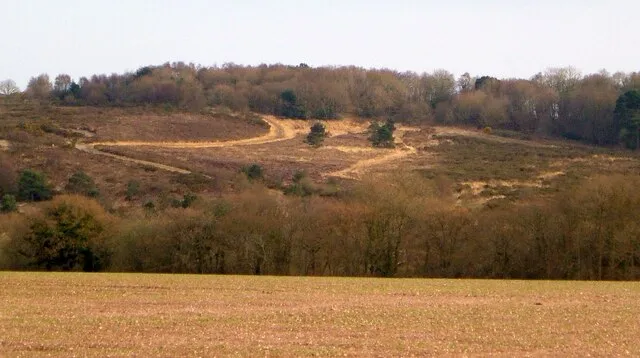
Open heath and gorse
Operator’s 0.75-mile trail; stay on public paths.
Winter: Stonechat, Linnet, Yellowhammer, Kestrel, Goldfinch, Dartford Warbler
Spring: Stonechat, Linnet, Yellowhammer, Kestrel, Goldfinch, Dartford Warbler
Summer: Stonechat, Linnet, Yellowhammer, Kestrel, Goldfinch, Dartford Warbler
Autumn: Stonechat, Linnet, Yellowhammer, Kestrel, Goldfinch, Dartford Warbler
Light: either. Scope: not needed.
Heath, woodland fringes and lower ponds
Operator’s 3-mile trail; gradients, steps and gates.
Winter: Buzzard
Spring: Hobby, Tree Pipit, Buzzard, Whitethroat, Swallow, Nightjar
Summer: Hobby, Tree Pipit, Buzzard, Whitethroat, Swallow, Nightjar
Autumn: Hobby, Buzzard, Whitethroat, Swallow
Light: either. Scope: useful.
Wooded margins and adjoining heath
Operator lists a level tarmac farm track; no formal viewing points.
Winter: Great Spotted Woodpecker, Coal Tit, Great Tit, Bullfinch, Siskin
Spring: Great Spotted Woodpecker, Coal Tit, Great Tit, Chiffchaff, Bullfinch, Siskin
Summer: Great Spotted Woodpecker, Coal Tit, Great Tit, Chiffchaff, Bullfinch, Siskin
Autumn: Great Spotted Woodpecker, Coal Tit, Great Tit, Chiffchaff, Bullfinch, Siskin
Light: either. Scope: not needed.
| Spot | Overlooks | Key species by season | Best light | Scope | Tide |
|---|---|---|---|---|---|
| Short nature trailOperator’s 0.75-mile trail; stay on public paths. | Open heath and gorse | Winter: Stonechat, Linnet, Yellowhammer, Kestrel, Goldfinch, Dartford Warbler Spring: Stonechat, Linnet, Yellowhammer, Kestrel, Goldfinch, Dartford Warbler Summer: Stonechat, Linnet, Yellowhammer, Kestrel, Goldfinch, Dartford Warbler Autumn: Stonechat, Linnet, Yellowhammer, Kestrel, Goldfinch, Dartford Warbler | either | not needed | — |
| Long nature trailOperator’s 3-mile trail; gradients, steps and gates. | Heath, woodland fringes and lower ponds | Winter: Buzzard Spring: Hobby, Tree Pipit, Buzzard, Whitethroat, Swallow, Nightjar Summer: Hobby, Tree Pipit, Buzzard, Whitethroat, Swallow, Nightjar Autumn: Hobby, Buzzard, Whitethroat, Swallow | either | useful | — |
| Level tarmac farm trackOperator lists a level tarmac farm track; no formal viewing points. | Wooded margins and adjoining heath | Winter: Great Spotted Woodpecker, Coal Tit, Great Tit, Bullfinch, Siskin Spring: Great Spotted Woodpecker, Coal Tit, Great Tit, Chiffchaff, Bullfinch, Siskin Summer: Great Spotted Woodpecker, Coal Tit, Great Tit, Chiffchaff, Bullfinch, Siskin Autumn: Great Spotted Woodpecker, Coal Tit, Great Tit, Chiffchaff, Bullfinch, Siskin | either | not needed | — |
Month chips show typical presence or our preferred viewing season. Choose birds that suit the time of your visit.
The RSPB describes uneven surfaces, with gradients, steps and gates on the longer route. It also identifies a level tarmac farm track and five benches, most with backs but only one with arms. Those details provide more useful planning information than assuming the entire reserve is accessible. Its published description calls the tarmac section both one mile and 1.2 km, which are not equivalent; obtain a current route assessment if that difference would affect your outing. Choose an out-and-back along the firmest suitable section rather than committing to the full circuit before seeing the ground. A companion can help manage a gate or carry binoculars, but cannot remove a gradient or make a muddy surface safe. The car park's height barriers may matter for an adapted vehicle. There is no lighting there, so a low-light birdwatching session requires particular care on the return. Discuss specific wheelchair, pushchair or walking-aid needs with the reserve team, including whether the approach and any road crossing are manageable for your party.
No toilets or baby-changing facilities are provided on the reserve. The RSPB identifies public facilities in Sidmouth, including accessible changing provision. Plan a comfort stop and bring food, water and a spare layer for a self-contained heathland walk. There are no formal birdwatching viewpoints or shelters advertised; the trails themselves supply the views. Sit only where it is appropriate and leave the path clear for other users. Take litter home, including small food wrappers that can blow into vegetation.
The RSPB permits dogs on public footpaths and bridleways only and asks that all dogs remain on leads. Livestock are present for much of the year, so keep a generous distance and do not allow chasing or entry into heathland cover. Assistance dogs are welcome under the operator's published guidance.
Stagecoach's 9 and 9A link Exeter with Sidmouth and onward branches to Honiton or Seaton. The RSPB identifies Joney's Cross as a request stop for the reserve; confirm the stop and direction against the current Stagecoach timetable before travelling. Exeter's rail stations provide the wider car-free connection, with a city transfer to the appropriate bus stop. The latest dated timetable located during this check took effect on 5 April 2026, so use Stagecoach's current service notices for changes affecting the chosen date. An evening nightjar visit can finish after the useful bus service: arrange a taxi or another confirmed return rather than assuming the outward connection works in reverse. The A3052 is a road to cross carefully at the signed approach, not a place to improvise a birdwatching stop.
Useful bases for an early start.
Booking.com links are affiliate links: we may earn a commission at no extra cost to you. How these links work.
About 10.3 miles by road, roughly 20 minutes’ drive to the reserve approach (OSRM, measured 18 October 2026; estimate without live traffic).
Measured driving route · 18 October 2026. Map estimates exclude live traffic.
A separate base for the reserve visitFind places to stay in Exeter on Booking.comAbout 5.9 miles by road, roughly 13 minutes’ drive to the reserve approach (OSRM, measured 18 October 2026; estimate without live traffic).
Measured driving route · 18 October 2026. Map estimates exclude live traffic.
A separate base for the reserve visitFind places to stay in Sidmouth on Booking.comAbout 8.0 miles by road, roughly 14 minutes’ drive to the reserve approach (OSRM, measured 18 October 2026; estimate without live traffic).
Measured driving route · 18 October 2026. Map estimates exclude live traffic.
A separate base for the reserve visitFind places to stay in Exmouth on Booking.comExplore Devon’s full guides and smaller birding sites
Contact the Aylesbeare reserve team at aylesbeare.common@rspb.org.uk or 01395 233655 for route or access questions. The official reserve pages link the wider Pebblebed Heaths visitor guidance, which is useful for understanding grazing and access codes. Explain the trail or access feature you need help with. Use Stagecoach for a specific bus journey or cancellation, and report damaged gates or unsafe trail sections to the reserve team without circulating sensitive wildlife locations.
Check RSPB Exeter Aylesbeare visit report. dated July 2026 visit report Reports show what has been seen, not what will be.
Follow the BTO Birders’ Code and give wildlife space.
RSPB Aylesbeare Common: Free entry; parking tariff not published.
RSPB Aylesbeare Common: The RSPB permits dogs on public footpaths and bridleways only and asks that all dogs remain on leads.
RSPB Aylesbeare Common: Spring and autumn passage; seasonal breeding and winter birds.
RSPB Aylesbeare Common: It also identifies a level tarmac farm track and five benches, most with backs but only one with arms.
RSPB Aylesbeare Common: Stagecoach's 9 and 9A link Exeter with Sidmouth and onward branches to Honiton or Seaton.
Shorter stops within 15 miles in a straight line. Use the operator’s arrival directions for the journey.
Topsham · Estuary and wetland
Between Maidencombe and Shaldon · Coastal grassland, scrub, farmland and woodland
Nearby complete guides.
Stops with a purpose: use one as a contrasting habitat or weather-proof Plan B. Distances are straight-line estimates, not road journeys.