Short entry8.4 miles away
Pool of Virkie
Eastshore, north of Sumburgh Airport, South Mainland · Tidal pool, mudflats and coastal shore
 the ai birderBirding near me
The AI Birder · one-page field sheet
Off Sandwick, South Mainland, Shetland · ZE2 9HP

Spring and autumn passage; seasonal breeding and winter birds
West Ham landing to East Ham — designated cross-island path · East Ham to Peerie Bard — designated coastal trail · Muckle Bard dyke — official public outlook
Check current access, hide closures and operator notices before travelling. Seasonal birds are possibilities, not promised sightings. Keep to authorised routes and give wildlife space.
Opening and charges checked 2026-10-25. Operator: https://www.rspb.org.uk/days-out/reserves/mousa
Full guide and current source links: https://aibirder.co.uk/reserves/rspb-mousa
SC 39 · RSPB reserve guide
Off Sandwick, South Mainland, Shetland
Storm petrels, Black guillemots, Arctic terns
Decide if the visit fits.
Last checked 18 October 2026.
Opening and charges information · checked .
Stay nearby →Reserve overview
Storm petrels, Black guillemots, Arctic terns
Eight checks for a smoother visit.
Conditions change: check the operator and transport notices before travelling.
January: January is outside the ordinary island-ferry season. Black Guillemot is a coastal bird associated with Mousa, but the East Ham coastal trail is not a practical winter day-trip destination without explicitly arranged transport. Keep island plans provisional and choose a safe mainland outing rather than assuming 24-hour reserve opening means a ferry.
February: In February, the same transport limit applies: there is no ordinary winter island service. Wren on the public Muckle Bard dyke belongs to a seasonal island walk, not a reason to attempt an independent landing. There are no island toilets or shelter, and winter sea conditions can overwhelm an apparently short crossing.
March: March is mainly a planning month for a normal Mousa visit. Read the boat operator’s current season notice before making plans for Black Guillemot from the East Ham coastal trail or waders from the cross-island path. Early spring weather is not evidence that public ferry sailings have already begun.
April: April usually brings the return of the daytime visitor season, subject to the operator’s actual opening and weather. The next season announced after the 2026 closure starts in April 2027. Try Black Guillemot, Shag and Fulmar from the designated East Ham coastal trail and watch Oystercatcher from the cross-island path.
May: May usually offers a good daylight circuit: Black Guillemot and Shag from the East Ham coastal path, and Snipe or Redshank from the marked cross-island route. Storm Petrel watching belongs only to an expressly booked operator-run evening trip. Do not leave the path to search walls, crevices or breeding cover.
June: In June, the cross-island path can provide Snipe, Dunlin, Ringed Plover and Oystercatcher, while the East Ham coastal section gives feeding Black Guillemot and Shag. Stay on the signed route if birds alarm. Terns, skuas and divers are sensitive breeding birds, not directions to explore their territories.
July: July usually remains useful for a daytime Black Guillemot and Shag watch from the public East Ham coastal trail. Listen for Wren from the designated dyke path at the official Muckle Bard outlook. Any evening Storm Petrel trip needs its own current booking and date check; do not assume an all-summer timetable.
August: August typically suits a broad coastal walk rather than a promised evening petrel spectacle. Try Black Guillemot and Fulmar from the East Ham trail and Oystercatcher or Ringed Plover from the cross-island route. Ground-nesting birds and seal resting areas still require space, even after the busiest breeding weeks.
September: September usually offers the last opportunities within the general daytime boat season for Shag and Black Guillemot from the East Ham coastal trail. Exact closure is weather-dependent: the operator ended the 2026regular season on28 September. Allow spare days and confirm a crossing rather than treating the printed seasonal range as a guarantee.
October: In October, ordinary island day trips should not be assumed. The2026 season is closed and the broch locked for winter. Black Guillemot from the East Ham trail is an island interest to retain for the open season; only an explicitly agreed operator charter could make an out-of-season visit possible.
November: November is outside the advertised ordinary ferry season. Wren at the Muckle Bard dyke and island waders from the cross-island path do not make an independent winter crossing sensible. Watch the mainland coast from a safe public position if conditions permit, without claiming that Mousa’s summer birds will appear there.
December: December is best reserved for planning a later island visit. Black Guillemot and Shag on the East Ham coastal circuit are seasonal visitor targets rather than a guaranteed winter trip. The reserve calendar’s 24-hour status is separate from the boat service, broch access, weather and the absence of facilities on Mousa.
Best conditions: Choose a forecast with a comfortable crossing and manageable wind, and leave spare days because the boat can cancel. Our choice is the normal daylight circuit for feeding coastal birds, keeping the sun to one side where the marked route permits. Binoculars are sufficient for many observations, with a scope useful only from a steady safe outlook. Wear waterproof boots and layers; exposed natural trails can be boggy and there is no indoor refuge on the island.
Information checked on 18 October 2026: the Mousa Boat states that its 2026 regular season has closed and the broch has been locked for winter. It says ferry service resumes in April 2027. The daytime page advertises 1 April to the end of September, but its fare table is not separately headed 2027: £20 adult and £10 child aged 5–16 are the published rates seen during this check, not confirmed future fares. The daytime service normally runs every day except Saturday, departing at 11:30 and returning at 14:30. Payment is cash aboard and ordinary daytime crossings do not require booking. Parking is at Sandsayre Pier; the RSPB lists twenty spaces but no parking tariff. The island journey and the evening ticket arrangements are set out in the boat section. The operator’s home-page season summary says mid-September, its detailed daytime page end-September, and the RSPB facilities text early September; use an actual confirmed sailing rather than any summary end date.
Access times: Reserve: RSPB calendar says open 24 hours, but ordinary visitor access depends on the seasonal Mousa Boat. Operator says2026 season closed28 September and next regular ferry season begins April 2027. · Hides: No enclosed hides or shelters. Broch is locked for winter under the current operator notice; booked guided evening petrel trips have separate joining times. · Car park: Sandsayre Pier mainland parking is the official departure parking; no separate gate or overnight timetable verified. Confirm sailing and check-in arrangements with the boat. · Dawn access: no. Operator opening information.
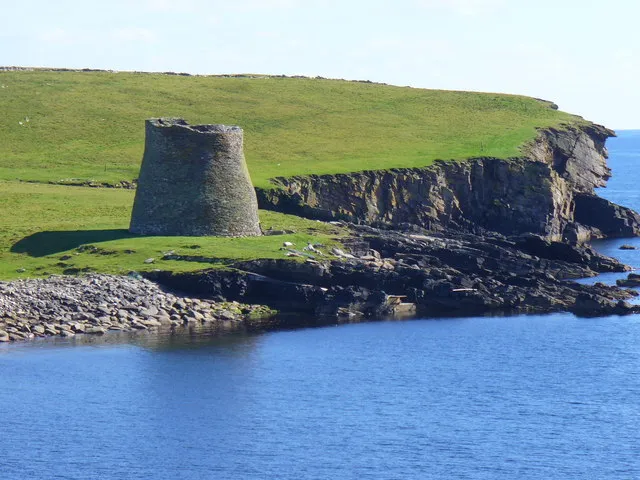
The island's public trail links the landing area, open coastal habitat and the broch. Follow the marked route and the crew's return instructions. The interesting contrast is between birds visible in daylight and the storm petrels that appear around the broch in low light. A daytime walk and a guided evening excursion are different outings; fitting one does not automatically give access to the other. Two-hour plan: as a portion of a normal daytime landing, follow the visitor route towards the broch, pause for the coastal view and return without rushing. Use binoculars to watch black guillemots or other birds already visible from the path. Do not extend the walk because a bird has landed beyond the visitor route. The ferry schedule, not this suggested walking duration, determines the available time ashore. Full-day plan: reserve a substantial part of the day for the crossing, island circuit and a relaxed return to Sandwick. After landing, let the first group move ahead if space permits, then make several patient watches along the signed trail. Give the broch and its surroundings time rather than treating it as a quick photograph stop. On returning to the mainland, keep any onward activity flexible enough to accommodate a delayed sailing. A separately booked dusk excursion may require a different day and a late-night transfer; it is not an invitation to remain on the island after the daytime boat departs. Storm-petrel observation belongs with the official evening guide, with no searching in walls, crevices or burrows.
Use the linked reserve map and directions with current access notices. Species are typical seasonal targets. Light and telescope advice reflects our choice of viewpoint.
Open island grassland and sheltered coastal margins
Follow only the marked visitor path and boat instructions. Avoid any bird alarm behaviour; never walk across breeding ground.
Spring: Snipe, Ringed Plover, Redshank, Oystercatcher
Summer: Snipe, Dunlin, Redshank, Oystercatcher
Autumn: Ringed Plover, Oystercatcher
Light: either. Scope: useful.
Rocky coast and nearshore feeding water
Stay on the public marked route, well clear of cliff edges and all occupied breeding areas. No landing below cliffs or approach to ledges.
Spring: Black Guillemot, Shag, Fulmar
Summer: Black Guillemot, Shag, Fulmar
Autumn: Black Guillemot, Shag, Fulmar
Light: either. Scope: useful.
Tide: Sea state matters as well as predicted tide; no tide height makes a storm-exposed path safe.
Coastal pools viewed from the designated side of the stone wall
The boat operator identifies this public outlook and Wren along the dyke. Keep behind the wall and do not enter East or West Pools, important seal habitat.
Spring: Wren
Summer: Wren
Autumn: Wren
Light: either. Scope: useful.
Tide: Remain on the designated inland path; never use tide state as permission to enter pools or the shore below.
| Spot | Overlooks | Key species by season | Best light | Scope | Tide |
|---|---|---|---|---|---|
| West Ham landing to East Ham — designated cross-island pathFollow only the marked visitor path and boat instructions. Avoid any bird alarm behaviour; never walk across breeding ground. | Open island grassland and sheltered coastal margins | Spring: Snipe, Ringed Plover, Redshank, Oystercatcher Summer: Snipe, Dunlin, Redshank, Oystercatcher Autumn: Ringed Plover, Oystercatcher | either | useful | — |
| East Ham to Peerie Bard — designated coastal trailStay on the public marked route, well clear of cliff edges and all occupied breeding areas. No landing below cliffs or approach to ledges. | Rocky coast and nearshore feeding water | Spring: Black Guillemot, Shag, Fulmar Summer: Black Guillemot, Shag, Fulmar Autumn: Black Guillemot, Shag, Fulmar | either | useful | Sea state matters as well as predicted tide; no tide height makes a storm-exposed path safe. |
| Muckle Bard dyke — official public outlookThe boat operator identifies this public outlook and Wren along the dyke. Keep behind the wall and do not enter East or West Pools, important seal habitat. | Coastal pools viewed from the designated side of the stone wall | Spring: Wren Summer: Wren Autumn: Wren | either | useful | Remain on the designated inland path; never use tide state as permission to enter pools or the shore below. |
Month chips show typical presence or our preferred viewing season. Choose birds that suit the time of your visit.
There is no operator-published best birdwatching tide or minimum height. Let the boat crew decide crossing and landing conditions, and use only the marked island trail and public dyke viewpoint. Never enter coastal pools or shingle habitat to improve a view. Tide predictions do not establish a safe landing or guarantee a sailing.
Operator: The Mousa Boat.
Booking opens: Evening trips require booking through the operator; daytime crossings normally do not.. Season: 2027 evening table: 15 May–17 July, Mondays, Wednesdays and Saturdays at 22:30. Its general text says late May, so use the individual bookable date.. Fares: 2027 storm-petrel trips: adult £40, child aged 5–16 £15. The operator requests payment before departure and says it does not take cards..
Time ashore: Evening excursion advertised as about 2–2½ hours overall; follow the guide and return instructions.. Landing access: Discuss vessel transfer and low-light walking with the operator; stay with the guided route.. Weather policy: All sailings depend on weather. Check the operator sailing notice two hours before departure; trips may be postponed or cancelled.
The RSPB describes uneven natural vegetation, stony areas and boardwalks, with sections that can be steep, narrow, boggy and slippery. It says the trail is unsuitable for visitors requiring extra mobility assistance or who are not sure-footed. There are no seats along the route. Waterproof footwear and the ability to balance comfortably on irregular ground matter more here than the apparent modest size of the island. Discuss embarkation, landing and the proposed walk with the boat operator before buying an evening trip or travelling to the pier. A short sea crossing still involves a moving vessel, and the return in low light can add an extra challenge. The mainland interpretive-centre approach is described as firm and flat, but that does not describe the island circuit. The broch's historic fabric should be assessed separately from the outdoor reserve route; follow Historic Environment Scotland's visitor guidance for any interior access. Someone who cannot use the landing route may wish to enquire about a separately advertised non-landing cruise, without assuming that such a sailing is available on a chosen date.
There are no toilets, café, shop or staffed visitor centre on Mousa. The RSPB identifies toilets at the mainland pier, with access limitations, and food options around Sandwick and Hoswick. Carry what you need for the landing and take waste back to the mainland. The Sandsayre boatshed has interpretation about local life and boats, making it a useful mainland stop before or after the crossing. Keep refreshments securely packed against wind and spray.
The RSPB welcomes responsible access under the Scottish Outdoor Access Code and asks for a short lead during the ground-nesting season and near livestock. Confirm the boat's dog policy directly before arranging travel. Assistance dogs are welcome on the reserve, but their passage still needs to be discussed with the ferry provider.
The Mousa Boat leaves Sandsayre Pier at Sandwick on Shetland's South Mainland, unless the operator advises otherwise. ZetTrans lists daytime service 6 between Lerwick and Sumburgh Airport, operated by J & DS Halcrow, with Sunday journeys under 6S. The RSPB describes the nearest bus stop as a walk from the pier; confirm the actual Sandwick stop and connection with the dated timetable. A late-night storm-petrel return should be planned with a pre-booked taxi or other arranged transfer, rather than assuming a public bus after midnight. Shetland itself is reached by Loganair flights to Sumburgh or NorthLink ferries to Lerwick. For accommodation choices below, road estimates end at the mainland departure area, not at the offshore map point. Leave room in the trip for a cancelled crossing.
Useful bases for an early start.
Booking.com links are affiliate links: we may earn a commission at no extra cost to you. How these links work.
About 12.7 miles by road, roughly 21 minutes’ drive to Sandsayre Pier on mainland Shetland, before the boat (OSRM, measured 18 October 2026; estimate without live traffic).
Measured driving route · 18 October 2026. Map estimates exclude live traffic.
A separate base for the reserve visitFind places to stay in Lerwick on Booking.comAbout 12.8 miles by road, roughly 21 minutes’ drive to Sandsayre Pier on mainland Shetland, before the boat (OSRM, measured 18 October 2026; estimate without live traffic).
Measured driving route · 18 October 2026. Map estimates exclude live traffic.
A separate base for the reserve visitFind places to stay in Scalloway on Booking.comAbout 13.0 miles by road, roughly 21 minutes’ drive to Sandsayre Pier on mainland Shetland, before the boat (OSRM, measured 18 October 2026; estimate without live traffic).
Measured driving route · 18 October 2026. Map estimates exclude live traffic.
A separate base for the reserve visitFind places to stay in Sumburgh on Booking.comExplore Shetland’s full guides and smaller birding sites
Use the Mousa Boat's website for its current sailing notice and booking link, or telephone 07901 872339 for a specific transport question. RSPB Shetland handles reserve matters; Historic Environment Scotland handles broch visitor information. If seeking help with a mobility requirement, explain the landing and walking assistance you need before travelling. Tell the crew about onward transport constraints, while recognising that weather determines whether a sailing can safely run.
Check Shetland Bird Club — Nature in Shetland dated county sightings. dated archive displayed through 22 June 2025; current frequency unverified Reports show what has been seen, not what will be.
Follow the BTO Birders’ Code and give wildlife space.
RSPB Mousa: Day boat adult £20/child £10; 2027 dusk trip adult £40/child £15. Reserve entry free.
RSPB Mousa: The RSPB welcomes responsible access under the Scottish Outdoor Access Code and asks for a short lead during the ground-nesting season and near livestock.
RSPB Mousa: Spring and autumn passage; seasonal breeding and winter birds.
RSPB Mousa: The RSPB describes uneven natural vegetation, stony areas and boardwalks, with sections that can be steep, narrow, boggy and slippery.
RSPB Mousa: The Mousa Boat leaves Sandsayre Pier at Sandwick on Shetland's South Mainland, unless the operator advises otherwise.
Shorter stops within 15 miles in a straight line. Use the operator’s arrival directions for the journey.
Eastshore, north of Sumburgh Airport, South Mainland · Tidal pool, mudflats and coastal shore
Nearby complete guides.
Stops with a purpose: use one as a contrasting habitat or weather-proof Plan B. Distances are straight-line estimates, not road journeys.