

EN 62 · Portland Bird Observatory reserve guide
Portland Bird Observatory and Portland Bill
Portland, Dorset, England · DT5 2JT
Sea passage at the Bill and migrant landbirds across Portland, with a working observatory and bookable hostel.

Decide if the visit fits.
Portland Bird Observatory at a glance
Last checked 18 October 2026.
- Open
- Public coastal paths; observatory facilities by arrangement.More about open
- Price / parking
- Public coastal paths: no general admission ticket; public parking tariff not confirmed.More about price / parking
- Best time
- Spring seabirds · autumn migration · winter coastMore about best time
- Dogs
- Pets are not permitted in the observatory’s hostel bedrooms or c…More about dogs
- Toilets
- The Bill’s public car-park information identifies toilets and ne…More about toilets
- Step-free
- Portland Town Council lists six disabled bays at the public Bill…More about step-free
Opening and charges information · checked .
Stay nearby →On this page
Reserve overview
Portland reserve and habitat
Sea passage at the Bill and migrant landbirds across Portland, with a working observatory and bookable hostel.
Eight checks for a smoother visit.
Planning your visit to Portland
Conditions change: check the operator and transport notices before travelling.
Portland best time to visit and seasonal birds
January: Usually begin at Bill tip public seawatching ground for Purple Sandpiper, Turnstone and passing Kittiwake. Watch shorebirds from a safe distance on upper public ground. A bird visible near the rocks is not a reason to scramble down towards breaking waves or a resting flock. February: Typically choose Bill tip public seawatching ground for Purple Sandpiper and Turnstone, with a short scan for Kittiwake offshore. The observatory’s winter records support this modest plan. Let the day’s conditions determine the duration instead of staying exposed to complete an arbitrary count. March: Usually combine Bill tip public seawatching ground with Top Fields public footpaths for the first Wheatear possibilities and Meadow Pipit. Early migration depends strongly on weather. Begin with familiar birds and check identification carefully rather than letting an expected arrival date decide the answer. April: Our choice is Top Fields public footpaths for Wheatear, followed by Culverwell public-path edge for Chiffchaff and Willow Warbler. Bill tip public seawatching ground adds Gannet passage. Stay out of crops and ringing areas; a mapped locality name is not a right of entry. May: Typically give Culverwell public-path edge time for Willow Warbler and Chiffchaff before scanning Gannet and Kittiwake from Bill tip public seawatching ground. Some mornings produce little grounded passage. Learn from the birds present rather than pursuing a report into private cover. June: Usually make Bill tip public seawatching ground the focus for Manx Shearwater, Fulmar, Guillemot and Razorbill. The observatory’s June 2026 reports describe these sea watches. Select a safe, comfortable upper-ground position and take breaks; distant identification becomes less reliable as concentration fades. July: Typically watch Gannet, Fulmar and Manx Shearwater from Bill tip public seawatching ground, with Linnet and Swallow along Top Fields public footpaths. Seabirds may remain far offshore. A telescope improves the view, but cannot replace calm conditions or justify standing close to an exposed edge. August: Usually compare returning Wheatear on Top Fields public footpaths with Willow Warbler at Culverwell public-path edge. Bill tip public seawatching ground gives a different focus for Manx and possible Balearic Shearwater. Avoid treating a rarity mentioned in the blog as a guaranteed seasonal attraction. September: Typically combine Wheatear, Linnet and Goldfinch along Top Fields public footpaths with Chiffchaff around Culverwell public-path edge. Offshore, the Bill tip public seawatching ground can reward a shearwater scan. Passage intensity changes through the day, so a second unhurried watch may outperform a longer walk. October: Usually prioritise Top Fields public footpaths for visible migration and Crown Estate Field public-path edge for Blackcap possibilities. Bill tip public seawatching ground adds Kittiwake and late shearwater interest. The actual October 2026 reports describe varied conditions; none establishes that tomorrow will repeat today. November: Typically return to Bill tip public seawatching ground for Kittiwake and Purple Sandpiper as the autumn passage emphasis changes. Top Fields public footpaths can still add Meadow Pipit. Wind, visibility and wave exposure should decide the viewing position and the time spent outside. December: Usually keep the plan short: Bill tip public seawatching ground for Purple Sandpiper, Turnstone and Kittiwake, then a warm break away from exposed ground. Contact the observatory separately about its facilities. Public coast-path access does not imply entry to the working station, garden or accommodation.
Best conditions: Our choice is a clear session with enough shelter to identify offshore movement accurately, then a quiet public-path migrant watch as conditions change. Typically wind direction changes which birds pass and whether they come close; poor visibility and spray can make even a productive sea impossible to watch well. Scope and light ratings are editorial advice. Never trade a safe upper-ground position for a closer rock or cliff ledge.
Portland opening times, entry and facilities
Checked 18 October 2026: public coastal-path birdwatching at the Bill has no general observatory admission ticket. Access to the working observatory’s own facilities should be agreed with staff; membership includes use of its car park and many facilities. Ordinary family-at-one-address membership is currently £20 per year, with £5 for under-18s or students under 21. The public Bill car park is managed by the Crown Estate, as confirmed by Portland Town Council, and is open 24 hours with pay-and-display location 6209. Older Dorset Council tariff orders therefore do not establish today’s charges. A current visitor day tariff was not confirmed on the checked Crown Estate page: consult the displayed payment terms and operator before budgeting. The bookshop usually opens daily in busy migration periods; outside those periods contact staff first. Check observatory notices and weather before travelling. Hostel beds listed on the official page when checked in October 2026 are £19 per person per night for members and £22 for non-members. The self-contained four-person cottage is £65 per night for members or £90 for non-members, with a winter rate of £60 for either. Reserve directly by telephone or email; the operator prefers weekend or whole-week cottage stays during April–May and August–October. Confirm bedding requirements and the exact dates covered by the winter rate before booking.
Access times: Reserve: Use legitimate public coastal paths and rights of way. The working observatory and neighbouring private fields are not a general open-access reserve. · Hides: No public hide timetable was verified. Bill seawatching is outdoors; observatory research areas, net sites, garden and accommodation require permission. · Car park: Public Bill parking and observatory parking have separate operators and conditions. Membership includes observatory parking; confirm arrangements with staff rather than inferring an early-entry entitlement. · Dawn access: partly. Operator opening information.
Portland trails, hides and visit length
Treat this as a coastal birdwatching area with a working research and accommodation centre, rather than a fenced reserve whose paths all belong to one visitor operator. The Bill provides the principal seawatching focus. Public paths across the adjacent grassland and beside low cover offer landbird watching, while the observatory’s records help explain the movement occurring over a much wider patch of Portland. Stay on legitimate public routes and respect gardens, crops and horse paddocks. A telescope can improve offshore views, but it does not justify a closer approach to dangerous rocks. Two-hour plan, editorial suggestion: divide the visit between a sustained sea watch and a careful public-path walk near suitable low cover. Choose the order according to visibility and wind, allowing a few minutes to orientate yourself before identifying distant shapes. If migration is quiet, examine common Rock Pipits, gulls and passing auks rather than treating the visit as unsuccessful because a scarce bird has not appeared. Full-day plan, editorial suggestion: begin with a morning landbird session, take a food break, then use a second viewpoint for offshore movement or return to the Bill when the light improves. Contact the observatory separately if you want to visit its bookshop or discuss a stay; access to bedrooms, gardens, trapping equipment or other operational space must never be inferred from the presence of a public-facing organisation. An observatory monitors birds over time, and any opportunity to watch ringing is subject to the staff’s work and permission. Give observers room, keep conversation quiet during counts and follow instructions around equipment. The hostel can make an early start straightforward, but an overnight booking is not a licence to wander across private neighbouring land.
Where to watch at Portland
Use the linked reserve map and directions with current access notices. Species are typical seasonal targets. Light and telescope advice reflects our choice of viewpoint.
Bill tip public seawatching groundWinter · Spring · Summer · Autumn
Offshore passage and visible rocky margins from safe public ground
Remain on safe upper public ground near the Bill. No approach to roosts, lower ledges or wave-washed rocks is recommended.
Winter: Purple Sandpiper, Turnstone, Kittiwake
Spring: Gannet, Kittiwake, Purple Sandpiper
Summer: Guillemot, Razorbill, Manx Shearwater, Fulmar
Autumn: Balearic Shearwater, Kittiwake, Gannet
Light: either. Scope: essential.
Tide: Use Portland predictions for context; waves and tidal races do not create a safe route onto lower rocks.
Top Fields public footpathsWinter · Spring · Summer · Autumn
Open field margins and visible migration from legitimate public paths
Use actual public paths; the observatory map’s field labels do not grant entry into crops, paddocks or private land.
Winter: Meadow Pipit, Linnet
Spring: Wheatear, Meadow Pipit, Swallow
Summer: Linnet, Goldfinch, Swallow
Autumn: Wheatear, Linnet, Goldfinch
Light: either. Scope: useful.
Culverwell public-path edgeSpring · Autumn
Low cover visible from the legitimate path edge near Culverwell
Do not enter the ringing station, trap approaches or nets. Ask staff if an observation requires access beyond the public route.
Spring: Chiffchaff, Willow Warbler
Autumn: Chiffchaff, Willow Warbler
Light: either. Scope: not needed.
Crown Estate Field public-path edgeSpring · Autumn
Cover visible from the authorised path edge by the mapped field
Research and mist-net areas are not general visitor space; observe only from a legitimate public route and heed staff instructions.
Spring: Blackcap
Autumn: Blackcap
Light: either. Scope: not needed.
East Cliff public coast path
Sea and coastal grassland from the mapped eastern coast path
Do not approach cliff ledges or enter private gardens and paddocks.
Light: either. Scope: useful.
Tide: Keep to upper public ground; choose a different route if waves, wind or erosion make the path unsafe.
West Cliff public coast path
Sea and coastal grassland from the mapped western coast path
Use the public route and retreat from exposed ground in poor conditions.
Light: either. Scope: useful.
Tide: No scrambling to improve the view; an exposed coast is not made safe by low tide.
Strip Fields public paths
Mapped Strip Fields area seen from public paths
The map labels a locality, not an open-access birding field. Stay on rights of way and respect any gate or protection signs.
Light: either. Scope: useful.
Hut Fields public paths
Mapped Hut Fields area seen from legitimate public paths
Respect private plots, huts and field boundaries. Do not follow birds into a private garden.
Light: either. Scope: not needed.
| Spot | Overlooks | Key species by season | Best light | Scope | Tide |
|---|---|---|---|---|---|
| Bill tip public seawatching groundRemain on safe upper public ground near the Bill. No approach to roosts, lower ledges or wave-washed rocks is recommended. | Offshore passage and visible rocky margins from safe public ground | Winter: Purple Sandpiper, Turnstone, Kittiwake Spring: Gannet, Kittiwake, Purple Sandpiper Summer: Guillemot, Razorbill, Manx Shearwater, Fulmar Autumn: Balearic Shearwater, Kittiwake, Gannet | either | essential | Use Portland predictions for context; waves and tidal races do not create a safe route onto lower rocks. |
| Top Fields public footpathsUse actual public paths; the observatory map’s field labels do not grant entry into crops, paddocks or private land. | Open field margins and visible migration from legitimate public paths | Winter: Meadow Pipit, Linnet Spring: Wheatear, Meadow Pipit, Swallow Summer: Linnet, Goldfinch, Swallow Autumn: Wheatear, Linnet, Goldfinch | either | useful | — |
| Culverwell public-path edgeDo not enter the ringing station, trap approaches or nets. Ask staff if an observation requires access beyond the public route. | Low cover visible from the legitimate path edge near Culverwell | Spring: Chiffchaff, Willow Warbler Autumn: Chiffchaff, Willow Warbler | either | not needed | — |
| Crown Estate Field public-path edgeResearch and mist-net areas are not general visitor space; observe only from a legitimate public route and heed staff instructions. | Cover visible from the authorised path edge by the mapped field | Spring: Blackcap Autumn: Blackcap | either | not needed | — |
| East Cliff public coast pathDo not approach cliff ledges or enter private gardens and paddocks. | Sea and coastal grassland from the mapped eastern coast path | — | either | useful | Keep to upper public ground; choose a different route if waves, wind or erosion make the path unsafe. |
| West Cliff public coast pathUse the public route and retreat from exposed ground in poor conditions. | Sea and coastal grassland from the mapped western coast path | — | either | useful | No scrambling to improve the view; an exposed coast is not made safe by low tide. |
| Strip Fields public pathsThe map labels a locality, not an open-access birding field. Stay on rights of way and respect any gate or protection signs. | Mapped Strip Fields area seen from public paths | — | either | useful | — |
| Hut Fields public pathsRespect private plots, huts and field boundaries. Do not follow birds into a private garden. | Mapped Hut Fields area seen from legitimate public paths | — | either | not needed | — |
Target species at Portland
Month chips show typical presence or our preferred viewing season. Choose birds that suit the time of your visit.
Headline birds
- JanFebMarAprMayJunJulAugSepOctNovDec
- AprMayJunJulAugSep
- JanFebMarAprSepOctNovDec
Regular birds
- JanFebMarAprMayJunJulAugSepOctNovDec
- JanFebMarAprMayJunJulAugSepOctNovDec
- JanFebMarAprMayJunJulAugSepOctNovDec
- JanFebMarAprMayJunJulAugSepOctNovDec
- JanFebMarAprSepOctNovDec
- MarAprMayAugSepOct
- JanFebMarAprMayJunJulAugSepOctNovDec
- JanFebMarAprMayJunJulAugSepOctNovDec
- MarAprMayAugSepOct
- MarAprMayAugSepOct
- MarAprMayAugSep
- AprMayJunJulAugSepOct
- JanFebMarAprMayJunJulAugSepOctNovDec
Scarce but regular birds
- Balearic ShearwaterBill tip public seawatching groundBill tip public seawatching groundJunJulAugSepOct
Tide planning
Check Portland tide predictions alongside wind, waves and visibility. No operator minimum height or universal best-state rule was verified for this general seawatching guide. Stay on safe upper public ground at every tide and never approach rocky resting birds.
Portland accessibility and step-free routes
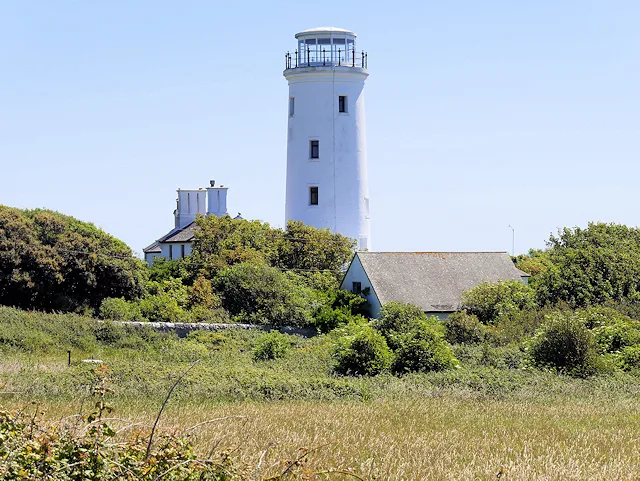
Portland Town Council lists six disabled bays at the public Bill car park. That is useful arrival provision, but it does not establish that every path or rocky viewpoint beyond the parking area is step-free. Choose a firm, stable place from which you can use optics, and examine the return surface before committing to a longer coast section. Wind exposure and loose ground can make a short distance demanding, particularly when carrying a telescope or pushing mobility equipment. The observatory’s accommodation is in an old lighthouse and adjacent buildings, with shared facilities in the hostel. The checked booking page does not provide a complete step-free access survey. Contact the operator with the exact room, entrance, bathroom and transfer requirements before making an accommodation reservation. Do not infer access to one building from the layout of another, or assume the cottage and hostel offer the same arrangements. For a day visit, describe whether you need a nearby drop-off, a seated viewpoint or a toilet with particular dimensions. A shorter Bill watch with an easy return can be preferable to a continuous clifftop walk. Keep equipment and bags clear of passing walkers and avoid any position requiring a lean or transfer close to an exposed edge.
Portland visitor facilities
The Bill’s public car-park information identifies toilets and nearby refreshment options, including the Lobster Pot café. The observatory has a natural-history bookshop; its hostel facilities are for booked guests under the operator’s conditions. Overnight accommodation is self-catering, so take food and the bedding or towels specified in your confirmation. Carry a waterproof layer for a stationary watch and keep camera bags closed against salt spray. A public sea-watching session does not depend on entering the lighthouse buildings.
Portland dog rules
Pets are not permitted in the observatory’s hostel bedrooms or communal areas. Quiet, well-behaved pets may stay in its self-contained cottage under the booking conditions. On coastal paths keep a dog close and away from cliff edges, livestock and birds; respect any local signs and ask the observatory about assistance-dog arrangements relevant to a particular booked room.
Portland public transport and getting there
Weymouth is the rail gateway for Portland. First Bus’s official 2026 Dorset information identifies seasonal service 11 between Weymouth and Portland Bill, operating daily from 23 May to 19 September; the advertised 2026 season ended on 19 September. Do not plan an October or winter trip around that seasonal Bill connection. Obtain the current timetable before assuming a similar service or dates in 2027. For an out-of-season visit, arrange a taxi from Weymouth station to the Bill or to your booked observatory accommodation, and agree the return pickup before leaving town. Other buses on Portland may stop well short of the headland: map the remaining walk and assess its exposure rather than treating a town stop as a reserve entrance. A hostel stay can remove the need for a predawn transfer, but the journey to it still needs planning when carrying food, bedding or optics. Keep a generous margin for the return train, since both the final walk and the road transfer take time beyond the end of birdwatching.
Useful bases for an early start.
Where to stay near Portland
Booking.com links are affiliate links: we may earn a commission at no extra cost to you. How these links work.
- 01
Portland Bird Observatory
On-site accommodation: zero miles and no road transfer to the observatory; the public Bill sea-watching point is a separate walk. Official accommodation page checked 18 October 2026.
Official on-site accommodation · 2026-10-18. No road transfer is needed.
Sleeping at the working observatory for local early starts; reserve directly with the operator.Book this accommodation with its operator - 02
Weymouth
About 8.6 miles by road, roughly 21 minutes’ drive from the measured central base point; OSRM/OpenStreetMap estimate measured 18 October 2026, excluding traffic, parking and walking.
Measured driving route · 2026-10-18. Map estimates exclude live traffic.
Rail connections and a coastal town base north of Portland.Find places to stay in Weymouth on Booking.com - 03
Dorchester
About 16.7 miles by road, roughly 33 minutes’ drive from the measured central base point; OSRM/OpenStreetMap estimate measured 18 October 2026, excluding traffic, parking and walking.
Measured driving route · 2026-10-18. Map estimates exclude live traffic.
An inland Dorset base for a wider birdwatching itinerary.Find places to stay in Dorchester on Booking.com
Explore Dorset’s full guides and smaller birding sites
Portland official sightings, safety and contact
Portland Bird Observatory publishes 01305 820553 and obs@btinternet.com for accommodation and visitor enquiries. Explain whether you want a hostel bed, the self-contained cottage, a bookshop visit or information about public birdwatching access. Quote your dates and party size when asking about availability, and describe any access requirement before payment. The operator’s accommodation page is the booking source for an on-site stay. Send observations with a clear location and time, distinguishing what you saw yourself from information passed on by another visitor.
Portland recent bird sightings
Check Portland Bird Observatory — daily field reports. most days; reduced winter coverage Reports show what has been seen, not what will be.
- Portland Bird Observatory — daily field reportsoperator · updated most days; reduced winter coverage
- Dorset Bird Club — county sightingscounty club or recorder · updated as reports are submitted
Birding sources
- Portland Bird Observatory: actual daily reports
- Portland Bird Observatory: current locality map
- Portland Bird Observatory: January 2026 winter birds
- Portland Bird Observatory: April 2026 migrants
- Portland Bird Observatory: June 2026 seawatching
- Portland Bird Observatory: Top Fields birds, 6 October 2026
- Portland Bird Observatory: bookshop access
- Dorset Bird Club: official county-feed provenance
- Dorset Bird Club: actual county reports
- Met Office: Isle of Portland forecast
- UKHO: Portland tides
Follow the BTO Birders’ Code and give wildlife space.
Questions visitors ask
Is Portland Bird Observatory and Portland Bill free to visit?
Portland Bird Observatory and Portland Bill: Public coastal paths: no general admission ticket; public parking tariff not confirmed.
Can I take my dog to Portland Bird Observatory and Portland Bill?
Portland Bird Observatory and Portland Bill: Pets are not permitted in the observatory’s hostel bedrooms or communal areas.
When is the best time to visit Portland Bird Observatory and Portland Bill?
Portland Bird Observatory and Portland Bill: Spring seabirds · autumn migration · winter coast.
Is Portland Bird Observatory and Portland Bill accessible for wheelchairs?
Portland Bird Observatory and Portland Bill: That is useful arrival provision, but it does not establish that every path or rocky viewpoint beyond the parking area is step-free.
How do I get to Portland Bird Observatory and Portland Bill without a car?
Portland Bird Observatory and Portland Bill: Weymouth is the rail gateway for Portland.
Best months for this reserve
Nearby complete guides.
Bird reserves near Portland
Stops with a purpose: use one as a contrasting habitat or weather-proof Plan B. Distances are straight-line estimates, not road journeys.
- About 7 miles away · A useful habitat changeRSPB Radipole LakeWinter wildfowl and waders · spring and summer wetland birds
- About 7 miles away · A useful habitat changeRSPB LodmoorWinter wildfowl and waders · spring and summer wetland birds
- About 22 miles away · A useful habitat changeRSPB ArneHeathland birds in spring and summer · passage Ospreys · winter harbour flocks