Short entry7.0 miles away
Werneth Low Country Park
Werneth Low Road and Higham Lane, Hyde · Hill farmland, grassland and mixed woodland
 the ai birderBirding near me
The AI Birder · one-page field sheet
Greenfield, Greater Manchester, England · OL3 7NE · OL3 7NE

Current planning alert (2026-10-18): The RSPB continues to warn of high wildfire risk and unstable moorland paths at Dove Stone. Follow on-site guidance; barbecues, camp fires and fireworks are forbidden. The operator’s car-park notice says parking reopened on 20 August 2026.
Crossbill · Siskin · Nuthatch · Goldcrest · Mistle Thrush · Raven
Binn Green public viewpoint and woodland approach · Dove Stone Reservoir public circuit · Yeoman Hey dam public path · Lower Chew Brook public-path view
Check current access, hide closures and operator notices before travelling. Seasonal birds are possibilities, not promised sightings. Keep to authorised routes and give wildlife space.
Opening and charges checked 2026-10-18. Operator: https://www.rspb.org.uk/days-out/reserves/dove-stone
Full guide and current source links: https://aibirder.co.uk/reserves/rspb-dove-stone
EN 59 · RSPB reserve guide
Greenfield, Greater Manchester, England · OL3 7NE
Curlew, Golden Plover, Peregrine, Raven
Decide if the visit fits.
Last checked 18 October 2026.
The RSPB continues to warn of high wildfire risk and unstable moorland paths at Dove Stone. Follow on-site guidance; barbecues, camp fires and fireworks are forbidden. The operator’s car-park notice says parking reopened on 20 August 2026.
Opening and charges information · checked .
Stay nearby →Reserve overview
Curlew, Golden Plover, Peregrine, Raven
Eight checks for a smoother visit.
Conditions change: check the operator and transport notices before travelling.
January: The sheltered Binn Green woodland approach is a realistic winter start for Siskin, Goldcrest and Nuthatch. Yeoman Hey's public dam path can offer Dipper in the overflow, viewed from a safe distance. Ice and strong wind can make a shorter lower-level visit the sensible choice.
February: Try Binn Green for Siskin, Treecreeper and Nuthatch before walking the reservoir circuit for Oystercatcher. These are verified local public-route associations. The reserve's open-hours listing does not remove weather hazards or establish that an upper works closure has finished.
March: Typically spring activity develops around the reservoir margins. The Dove Stone circuit offers Lapwing and Oystercatcher habitat, while Binn Green can hold Siskin and Mistle Thrush. Keep to paths and do not move towards displaying waders or birds carrying food.
April: Use the Binn Green public woodland approach for Crossbill, Siskin, Nuthatch and returning warblers. Common Sandpiper is a spring target from the public reservoir paths. Flocks move, so the exact tree or shoreline used in a report is not a permanent bird location.
May: Combine the reservoir circuit for Oystercatcher and Lapwing with the lower Chew Brook public route for Grey Wagtail or Cuckoo. Willow Warbler can be heard in nearby woodland. No upper Chew Reservoir route is assumed open while landowner works information remains unresolved.
June: The Yeoman Hey dam path offers a public view of Common Sandpiper and Grey Wagtail habitat. Listen around the lower brook for Cuckoo and in woodland for Willow Warbler. Do not descend into the overflow, inspect riverbank nests or bypass a signed closure.
July: Try Binn Green for mobile Crossbill and Siskin flocks, then the public reservoir paths for Common Sandpiper. Raven may be seen over the valley. The operator's moorland restoration birds are important, but this guide does not invent post-fire access to distant breeding areas.
August: The reservoir circuit and lower woodland can still provide Common Sandpiper, Grey Wagtail and Willow Warbler watching. Weather and paths deserve attention after an unsettled spell. Check the latest operator notice before extending a walk beyond the maintained lower routes.
September: Binn Green is a useful autumn start for Siskin, Crossbill and Goldcrest. Watch the canopy from public paths rather than following a moving flock through steep woodland. The reservoir circuit offers a broader view of Raven and changing conditions over the hills.
October: Try the Binn Green public approach for Crossbill, Siskin, Goldcrest and Mistle Thrush. A Dipper is a possible aim from the Yeoman Hey dam path, with no entry into the waterworks. Use a sheltered lower route if wind makes the exposed skyline impractical.
November: A short winter visit can focus on the public reservoir circuit and the valley sky for Raven. Woodland conditions may be more comfortable than the open hills, but this guide does not extend every finch chip into November without adequate local timing. Current reports help set expectations.
December: Keep the route conservative in limited daylight. Raven is a verified year-round local bird that can be watched from the public reservoir circuit. An icy dam or unstable hill path is a reason to turn back, regardless of the reserve's nominal twenty-four-hour access.
Best conditions: Choose settled weather for any exposed route; high wind, fog, ice and unstable post-fire ground can make the lower reservoir circuit the better choice. Watch Binn Green woodland with binoculars and use a safe path-side stance with the sun behind or to one side. Do not assume a dated works estimate confirms an upper path has reopened.
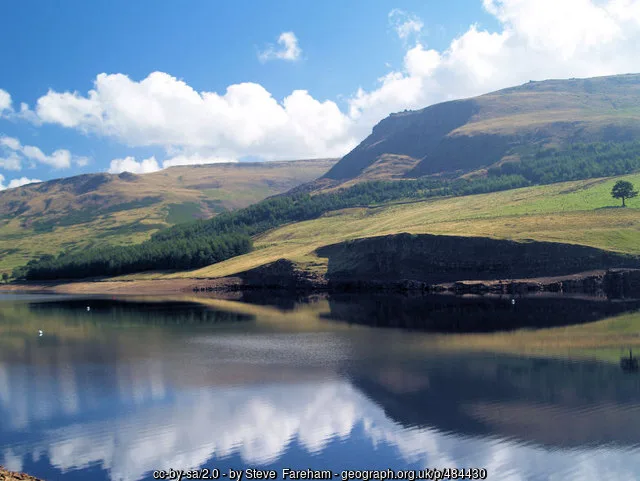
Dove Stone combines a reservoir walk with woodland and a much more demanding upland landscape. Choose the lower circuit if your priority is a manageable visit with several habitats close together. Binn Green gives a different starting point for woodland birds, but its route down to the reservoirs is steep and includes steps; the surfaced viewpoint is a separate, shorter option. Around the water, look from the public paths rather than approaching birds on the shoreline or entering a spillway. The restored blanket bog is important for upland birds, yet a reserve-wide species list is not a reason to improvise a route across unstable ground. Check current notices before every longer walk, especially where fire damage or reservoir works may affect access. A patient woodland watch or a short reservoir circuit can be a worthwhile birding visit without reaching the highest moors.
Access times: Reserve: RSPB lists reserve open 24 hours. Car-park reopening confirmed 20 August 2026; follow unstable-path warnings and all current local closures. · Hides: No public hide hours verified; use public reservoir paths and Binn Green viewpoint, subject to signs. · Car park: RSPB lists car park open 24 hours. Council toilets have separate hours; Binn Green toilets are permanently closed. · Dawn access: yes. Operator opening information.
The main introduction is the 2.5-mile, or 4km, circuit around Dove Stone reservoir. It combines water views with woodland sections and plenty of places to pause. Birdwatching here is mainly from the trail and public viewpoints rather than from enclosed hides. Work slowly along woodland edges, watch the cliff skyline and let birds come into view without pursuing them over uneven slopes. Yeoman Hey and Greenfield reservoirs offer longer walking choices on rougher ground. The RSPB also describes a 1.5-mile route to Chew reservoir, which is an ascent rather than an equivalent alternative to an easy waterside stroll. Higher circular moorland walks need proper navigation, suitable footwear and a realistic weather assessment. Do not use a birding itinerary as a substitute for a hillwalking route description. Two-hour plan — our suggestion: take a measured section of the main reservoir walk, allowing time to stop at woodland edges and scan the skyline. Complete the circuit only if your pace leaves a comfortable margin. There is no need to add Chew or the upper reservoirs to make the visit worthwhile. Full-day plan — our recommendation: walk the main circuit during the morning, taking a packed lunch and a long watching break. If the conditions and your experience are suitable, choose one signed extension towards the upper reservoirs after checking the current route advice; otherwise revisit the most productive woodland and water sections. Finish with a calm skyline scan near your exit. Keep to stable paths, respect any local closures and turn back when cloud, wind or footing makes progress uncertain. Water edges and steep ground deserve attention even when the birds are absorbing.
Use the linked reserve map and directions with current access notices. Species are typical seasonal targets. Light and telescope advice reflects our choice of viewpoint.
Woodland canopy, valley and sky from the public viewpoint/approach
Viewpoint has a short wide surfaced approach; descent to reservoirs uses a steep woodland track, steps and a narrow stone stile.
Winter: Siskin, Nuthatch, Treecreeper, Goldcrest, Peregrine
Spring: Crossbill, Siskin, Nuthatch, Blackcap, Willow Warbler, Peregrine
Summer: Crossbill, Siskin, Peregrine
Autumn: Crossbill, Siskin, Goldcrest, Mistle Thrush, Peregrine
Light: either. Scope: not needed.
Reservoir margins, neighbouring grassland and woodland
Part tarmac/gravel with two steep sections; RADAR key needed for accessible stock gates.
Winter: Mistle Thrush
Spring: Lapwing, Oystercatcher, Common Sandpiper, Willow Warbler
Summer: Common Sandpiper, Willow Warbler, Raven
Light: either. Scope: useful.
Yeoman Hey spillway/channel and adjoining reservoir margins
Watch from the public dam/path only; no access into spillways or working reservoir structures.
Winter: Dipper
Spring: Common Sandpiper, Raven
Summer: Common Sandpiper, Grey Wagtail
Light: either. Scope: useful.
Lower brook and adjacent trees from the ordinary public route
Use the lower public route shown by the National Park. This does not imply the upper Chew Road works closure has ended.
Spring: Grey Wagtail, Cuckoo, Willow Warbler
Summer: Grey Wagtail, Cuckoo
Light: either. Scope: not needed.
| Spot | Overlooks | Key species by season | Best light | Scope | Tide |
|---|---|---|---|---|---|
| Binn Green public viewpoint and woodland approachViewpoint has a short wide surfaced approach; descent to reservoirs uses a steep woodland track, steps and a narrow stone stile. | Woodland canopy, valley and sky from the public viewpoint/approach | Winter: Siskin, Nuthatch, Treecreeper, Goldcrest, Peregrine Spring: Crossbill, Siskin, Nuthatch, Blackcap, Willow Warbler, Peregrine Summer: Crossbill, Siskin, Peregrine Autumn: Crossbill, Siskin, Goldcrest, Mistle Thrush, Peregrine | either | not needed | — |
| Dove Stone Reservoir public circuitPart tarmac/gravel with two steep sections; RADAR key needed for accessible stock gates. | Reservoir margins, neighbouring grassland and woodland | Winter: Mistle Thrush Spring: Lapwing, Oystercatcher, Common Sandpiper, Willow Warbler Summer: Common Sandpiper, Willow Warbler, Raven | either | useful | — |
| Yeoman Hey dam public pathWatch from the public dam/path only; no access into spillways or working reservoir structures. | Yeoman Hey spillway/channel and adjoining reservoir margins | Winter: Dipper Spring: Common Sandpiper, Raven Summer: Common Sandpiper, Grey Wagtail | either | useful | — |
| Lower Chew Brook public-path viewUse the lower public route shown by the National Park. This does not imply the upper Chew Road works closure has ended. | Lower brook and adjacent trees from the ordinary public route | Spring: Grey Wagtail, Cuckoo, Willow Warbler Summer: Grey Wagtail, Cuckoo | either | not needed | — |
Month chips show typical presence or our preferred viewing season. Choose birds that suit the time of your visit.
The main reservoir trail is part tarmac and part gravel, broadly level but with two steep places. The RSPB specifically advises visitors to discuss detailed access needs with the reserve before travelling. RADAR keys are needed at stock gates, so resolve that part of the route before leaving the entrance rather than discovering a barrier after a long approach. The main car park has four Blue Badge bays. Binn Green has a viewpoint reached by a short, wide surfaced track and two wheelchair-accessible picnic tables. Those facilities do not mean that the rougher upland routes are accessible by the same equipment. The main accessible toilet is managed by Oldham Council and requires a RADAR key; the permanently closed Binn Green toilets should not be used as a planning stop. If a full circuit is too demanding, agree a shorter section and a practical turning point with the team. Gravel condition, gradients and wet weather can change the effort involved even when a route has no major climb. Bring the mobility equipment that suits an outdoor reservoir path, and consider how you will return if fatigue makes a continuous loop unsuitable. For families with pushchairs, assess the same gradients and gates rather than relying on the distance alone.
Bring a picnic and enough drinks for the planned walk. The reserve has picnic space and woodland paths that make a useful pause between water views, while ordinary toilets are provided at the main parking area. There are no dedicated baby-changing facilities. Check nearby Greenfield options if you want a separate meal before or after the outing. Pack out wrappers and food waste so they do not attract scavengers or blow into the reservoir, and carry an extra layer for a long skyline watch.
Dogs are welcome on footpaths. The RSPB requires leads at all times from March to July to protect ground-nesting birds; at other times keep them under effective control and away from wildlife and livestock. Remove dog waste using the provided bins or take it away. Visitors with assistance dogs are welcome at RSPB Dove Stone, including throughout its visitor routes.
Greenfield is the RSPB’s named railway gateway. From the station, its directions follow the village’s main A669 road and the brown Dove Stone signs. This adds an approach walk before the reservoir circuit, so include it in the total distance you can comfortably manage. Arrange a taxi connection if the road walk or gradients do not suit your group. Bee Network service 350 serves Greenfield station and the Chew Valley Road/Clarence Hotel area. It can shorten part of a village approach, but it is not a direct bus to a hide or a substitute for planning the final walk. Consult the current Bee Network journey planner for both legs and allow time for road crossings. Drivers approaching on the A635 should follow the signed entrance; from the Holmfirth direction the RSPB says to continue to the mini-roundabout and return rather than making a prohibited left turn into the main car park.
Useful bases for an early start.
Booking.com links are affiliate links: we may earn a commission at no extra cost to you. How these links work.
About 1.4 miles by road, roughly 4 minutes’ drive from the town-centre map point (OSRM estimate measured 18 October 2026; traffic excluded).
Measured driving route · 18 October 2026. Map estimates exclude live traffic.
A base in Greenfield suits a longer break that includes RSPB Dove Stone.Find places to stay in Greenfield on Booking.comAbout 2.7 miles by road, roughly 8 minutes’ drive from the town-centre map point (OSRM estimate measured 18 October 2026; traffic excluded).
Measured driving route · 18 October 2026. Map estimates exclude live traffic.
Uppermill offers another town base for a regional trip that includes RSPB Dove Stone.Find places to stay in Uppermill on Booking.comAbout 10.9 miles by road, roughly 17 minutes’ drive from the town-centre map point (OSRM estimate measured 18 October 2026; traffic excluded).
Measured driving route · 18 October 2026. Map estimates exclude live traffic.
A base in Holmfirth suits a longer break that includes RSPB Dove Stone.Find places to stay in Holmfirth on Booking.comExplore Greater Manchester’s full guides and smaller birding sites
Contact dovestone@rspb.org.uk or 01457 819880. Explain the date, whether you intend the reservoir circuit or a higher route, and any specific need involving gates or accessible facilities. Ask about current public access without seeking breeding-bird nest locations. The visitor address is Dove Stone, Greenfield, Oldham, OL3 7NE. Use official RSPB event information when booking an organised activity, and follow the exact meeting point because the main parking area and Binn Green are separate starting places.
Check Manchester Birding Dove Stone observations. irregular local reports; latest visible May 2026 Reports show what has been seen, not what will be.
Follow the BTO Birders’ Code and give wildlife space.
RSPB Dove Stone: Free entry; non-member parking £1.80 up to 2h / £3 up to 4h / £6 longer; members and Blue Badge holders free.
RSPB Dove Stone: Dogs are welcome on footpaths.
RSPB Dove Stone: Spring moorland birds and year-round reservoir walking.
RSPB Dove Stone: The main reservoir trail is part tarmac and part gravel, broadly level but with two steep places.
RSPB Dove Stone: Greenfield is the RSPB’s named railway gateway.
Shorter stops within 15 miles in a straight line. Use the operator’s arrival directions for the journey.
Werneth Low Road and Higham Lane, Hyde · Hill farmland, grassland and mixed woodland
Hall Bower, near Berry Brow, Huddersfield · Conservation farmland · rough grassland · hedgerow · woodland
Nearby complete guides.
Stops with a purpose: use one as a contrasting habitat or weather-proof Plan B. Distances are straight-line estimates, not road journeys.