
Short entry8.3 miles away
Roding Valley Meadows
Grange Farm Lane, Chigwell · Water meadow, River Roding, hedges, ponds and woodland
 the ai birderBirding near me
The AI Birder · one-page field sheet
Hackney, London · N16 5HQ

Current planning alert (2026-10-18): The woodland trail is closed while underground installations settle. The improved main reservoir path remains available. No reopening date is confirmed by London Wildlife Trust.
Spring reed warblers; year-round waterbirds
Coal House mapped viewing point · Eastern mapped viewing point south of Learning Centre · Western boardwalk public viewing section
Check current access, hide closures and operator notices before travelling. Seasonal birds are possibilities, not promised sightings. Keep to authorised routes and give wildlife space.
Opening and charges checked 2026-10-25. Operator: https://www.wildlondon.org.uk/nature-reserves/woodberry-wetlands
Full guide and current source links: https://aibirder.co.uk/reserves/woodberry-wetlands
EN 96 · London Wildlife Trust reserve guide
Hackney, London
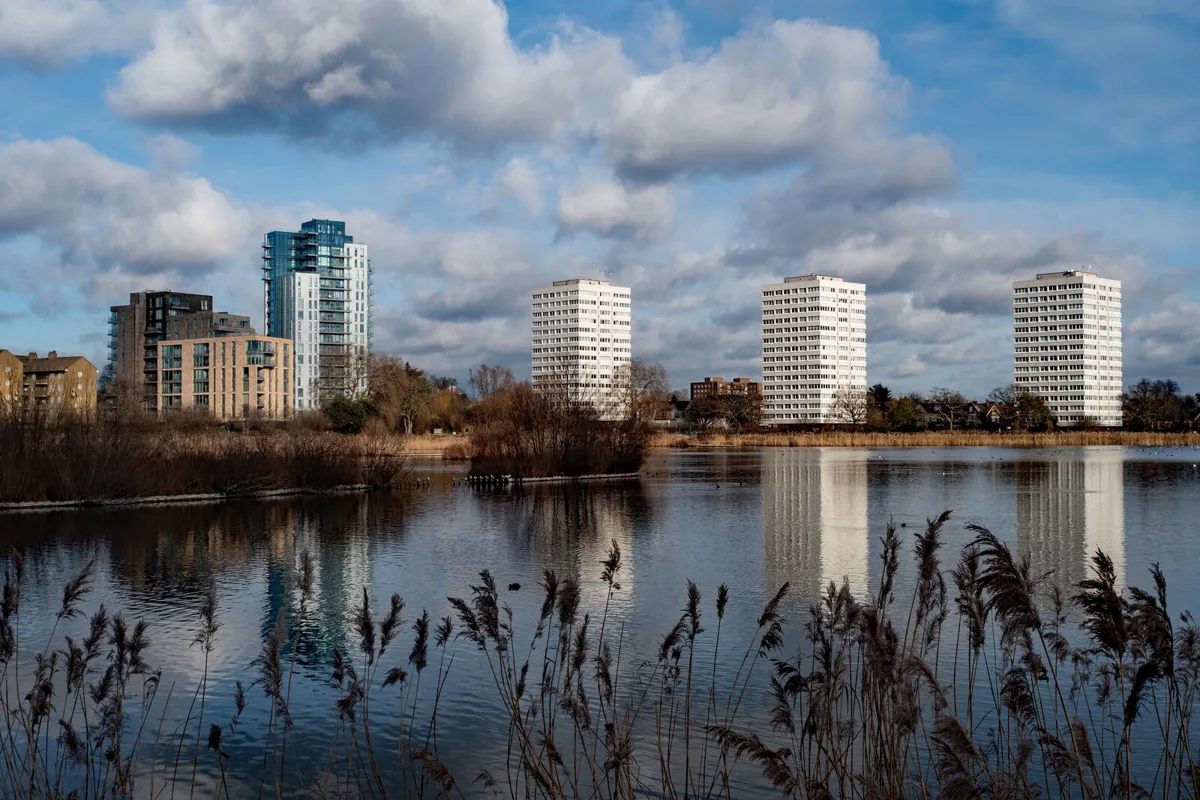
A compact reed-fringed reservoir walk with good car-free London access.
Decide if the visit fits.
Last checked 18 October 2026.
The woodland trail is closed while underground installations settle. The improved main reservoir path remains available. No reopening date is confirmed by London Wildlife Trust.
Opening and charges information · checked .
Stay nearby →Reserve overview
A compact reed-fringed reservoir walk with good car-free London access.
Eight checks for a smoother visit.
Conditions change: check the operator and transport notices before travelling.
January: Typically winter duck watching is the straightforward plan from the Coal House point. Compare Pochard and Tufted Duck before scanning for Shoveler or Gadwall. The gates do not open at dawn, so build a visit around the published admission window rather than arriving for an inaccessible early watch.
February: Use the Coal House open-water view for winter ducks, then consider the boardwalk's reed edge for Kingfisher. The operator describes sightings as regular but far from daily. Respect the closed woodland trail and ask which approach to the eastern viewing point is currently permitted.
March: Late-winter Snipe are a possibility from the eastern public view when water levels expose suitable mud. Their visibility depends on conditions, so do not cross a barrier to inspect a concealed corner. The Coal House reservoir scan remains a useful alternative while spring migration is still developing.
April: The operator's April observations support Common Sandpiper passage and arriving Reed and Sedge Warblers. Listen from the eastern public view and scan from the boardwalk. The actual 2021 dates are an archive, not a timetable for this year's first arrivals; read current local news before a target journey.
May: Common Terns and singing reedbed migrants make spring watching varied. Use Coal House for open-water flight and the eastern viewpoint for listening where its approach is permitted. Stay on the public path and boardwalk; vegetation cover is not a reason to explore the closed woodland trail.
June: Typically summer waterbirds can be watched from Coal House without approaching breeding cover. Compare Great Crested Grebe, Coot and Mallard on open water, then listen for Reed Warbler from the public reed-edge view. A quiet, stationary watch gives birds room to move naturally across the channels.
July: Little Grebe and Moorhen are verified summer birds, with the boardwalk offering a permitted water-edge perspective. Reed Bunting and Cetti's Warbler use reedbed habitat, watched from the official eastern point only if its approach is open. Do not seek nests or lean into dense vegetation for photographs.
August: The evidence confirms summer waterbirds but does not turn every July observation into an August promise. Begin with the Coal House reservoir scan for familiar ducks and grebes, then assess the boardwalk reed margin. Let current reports refine the list and leave any management restriction in place.
September: Choose a short public-path watch rather than assuming every old woodland route is open. The Coal House view helps assess returning ducks; Pochard is principally a winter aim in the operator account. The boardwalk provides a second perspective without bringing you into restricted reedbed habitat.
October: Autumn arrivals vary sharply with weather. Scan open water from Coal House and the western boardwalk, remembering that winter Shoveler and Gadwall may not yet be established. Rare one-day visitors in the operator archive are not an annual spectacle or a reason to leave the permitted route.
November: The operator's November archive supports Water Rail and Snipe as patient reed-edge aims, with Teal and Shoveler on the reservoir. Use the mapped eastern view only via an open approach and check the boardwalk for an occasional Kingfisher. Low water can change what mud is visible without creating visitor access.
December: A compact winter plan can centre on Coal House for Pochard, Gadwall and Tufted Duck, with the boardwalk as an alternative angle. Check the earlier winter gate closure before settling for a long scan. Woodland-trail closure overrides old records that mention birds along that route.
Best conditions: Typically calmer conditions make duck identification and reedbed listening easier. Use permitted public viewpoints, adjusting your stance for glare without leaving the path. Binoculars suit the closer reed edge; a scope is useful over the open reservoir. The woodland closure takes priority over historical bird-report directions.
Woodberry rewards a short, deliberate watch. Start with the open reservoir from the Coal House viewing point, then compare the reed edge from the public boardwalk. This gives you two different jobs: identifying ducks on open water and noticing movement or calls in denser vegetation. The eastern mapped viewing point offers another angle only when its approach is open. The current woodland-trail closure matters more than an older bird report that mentions a path through the trees. Winter ducks and spring warblers are the better-supported seasonal choices; a rare migrant is an extra rather than the reason to promise a spectacle. Keep the main path usable for wheelchair users and other visitors while you watch. Binoculars are enough for much of the close habitat, with a telescope helpful for the reservoir. Plan within the gate hours instead of assuming an early dawn visit is possible.
Access times: Reserve: October–March 09:30–16:00, April–September 09:30–17:00. East gate last entry 30 minutes earlier. Woodland trail currently closed; main path open. · Hides: No enclosed wildlife hide identified on current map; public viewing points and boardwalk follow reserve gates. · Car park: No general visitor car park verified; disabled bays outside entrances. Road parking restrictions are separate. · Dawn access: no. Operator opening information.
For two hours, enter by the signed New River Path approach from Lordship Road. Follow the main accessible path towards the Coal House, pausing where you can see across the water without blocking people behind you. Start by finding the most obvious birds, then look for smaller shapes against the reeds. Watch one grebe or diving duck through several dives and estimate how far it travels underwater. Continue towards the New River Studio on the open public route, then return the same way with a second look at the reed edge. A refreshment stop can divide the walk into two manageable sessions. Our full-day suggestion is an extended observation visit rather than several hours of continuous walking. Spend the morning on the main reservoir path, take a proper break, and return to the most productive viewpoints in different light. Keep a notebook with three columns: open-water birds, reed-edge birds and birds heard from shrubs. Revisiting each group encourages careful identification without turning a small reserve into a race. If you want more walking, use the operator’s map to choose an open route and distinguish reserve paths from neighbouring streets and the separate West Reservoir. The shoreline is a place to observe from the path, with no need to approach waterbirds. A camera with a modest lens is enough for wider habitat pictures; avoid waiting at a nest or moving vegetation to improve a photograph. Children can follow a simple comparison game: which birds dive, which upend and which walk along the edge? Leave enough room for wheelchairs and pushchairs at every stopping point. The compact scale makes it easy to shorten the visit when rain or tiredness arrives, so there is no reason to press on for a nominal complete circuit.
Use the linked reserve map and directions with current access notices. Species are typical seasonal targets. Light and telescope advice reflects our choice of viewpoint.
Open reservoir and reed-fringed water
Winter: Pochard, Shoveler, Gadwall, Tufted Duck
Spring: Common Tern
Summer: Great Crested Grebe, Coot, Mallard
Light: either. Scope: useful.
Eastern reeds and water from the official public point
Do not enter closed woodland trail. Confirm the current permitted approach on arrival.
Winter: Water Rail, Snipe
Spring: Reed Warbler, Sedge Warbler
Summer: Reed Bunting, Cetti's Warbler
Light: either. Scope: not needed.
Western reed edges and open water
Use the boardwalk and widened main path; leave room for other visitors.
Winter: Kingfisher, Teal
Spring: Common Sandpiper
Summer: Moorhen, Little Grebe
Light: either. Scope: not needed.
| Spot | Overlooks | Key species by season | Best light | Scope | Tide |
|---|---|---|---|---|---|
| Coal House mapped viewing point | Open reservoir and reed-fringed water | Winter: Pochard, Shoveler, Gadwall, Tufted Duck Spring: Common Tern Summer: Great Crested Grebe, Coot, Mallard | either | useful | — |
| Eastern mapped viewing point south of Learning CentreDo not enter closed woodland trail. Confirm the current permitted approach on arrival. | Eastern reeds and water from the official public point | Winter: Water Rail, Snipe Spring: Reed Warbler, Sedge Warbler Summer: Reed Bunting, Cetti's Warbler | either | not needed | — |
| Western boardwalk public viewing sectionUse the boardwalk and widened main path; leave room for other visitors. | Western reed edges and open water | Winter: Kingfisher, Teal Spring: Common Sandpiper Summer: Moorhen, Little Grebe | either | not needed | — |
Month chips show typical presence or our preferred viewing season. Choose birds that suit the time of your visit.
London Wildlife Trust describes level entry and a main wheelchair-accessible path without steep gradients, running from the principal entrance past Coal House to New River Studio. The operator also identifies seating along the route and disabled parking bays outside each entrance. Those details make the main path a useful basis for planning, rather than assuming that every side trail has the same surface. The recently improved path is the sensible first choice for a wheelchair, walking aid or pushchair. Decide on a turning point before setting off, allowing for time spent stationary watching birds. The café and toilet facilities provide a convenient pause, but their availability should be confirmed if they are essential to your day. A companion carrying binoculars and drinks can make stopping easier without loading everything onto a walking aid. For an individual access enquiry, name the entrance and your intended destination, and ask about gradients, any narrowed section and the toilet route. Rain, leaf litter and works can affect the experience even on a generally firm path. Check TfL’s station access information separately when planning the journey.
Coal House Café is the obvious base for refreshments and a break from the weather. The reserve lists toilets, an accessible toilet, baby changing, a shop and picnic facilities. Bring drinking water for your walk and keep any picnic contained so scraps do not reach the reservoir or attract birds to the path. This is a useful place to combine a modest family walk with time sitting quietly, rather than treating the café as a reward after a long forced march. Pick up or download the site map to distinguish the public reserve from surrounding reservoir land.
Guide dogs and assistance dogs are welcome; other dogs cannot enter Woodberry Wetlands. The restriction applies even when a pet is quiet and kept on a lead. Arrange a separate dog walk before visiting so your birdwatching plan works for everyone without leaving an animal waiting in a vehicle.
Public transport is our preferred approach because the reserve sits within London’s street and rail network. Use TfL’s journey planner for the Main Entrance via New River Path, Lordship Road, rather than simply asking for “Woodberry” and arriving beside the wrong reservoir. Manor House and Finsbury Park are useful rail-area starting points to compare in the planner; choose the final walk according to your mobility and the entrance currently open. Bus stop choice is similarly best made from the dated TfL journey result. Avoid following a watersports address for the separate West Reservoir when you want the nature reserve. If arriving by taxi, give the driver the official entrance description and postcode N16 5HQ. Parking bays identified for disabled visitors do not imply a general visitor car park. The three accommodation bases below have OSRM road measurements dated 18 October 2026; central London congestion and crossings can make actual journeys longer.
Useful bases for an early start.
Booking.com links are affiliate links: we may earn a commission at no extra cost to you. How these links work.
About 0.9 miles by road, roughly 4 minutes’ drive from the visitor entrance; OSRM estimate measured 18 October 2026, excluding traffic.
Measured driving route · 2026-10-18. Map estimates exclude live traffic.
A practical base for this reserve and the surrounding areaFind places to stay in Finsbury Park on Booking.comAbout 3.1 miles by road, roughly 13 minutes’ drive from the visitor entrance; OSRM estimate measured 18 October 2026, excluding traffic.
Measured driving route · 2026-10-18. Map estimates exclude live traffic.
A practical base for this reserve and the surrounding areaFind places to stay in Islington on Booking.comAbout 3.8 miles by road, roughly 16 minutes’ drive from the visitor entrance; OSRM estimate measured 18 October 2026, excluding traffic.
Measured driving route · 2026-10-18. Map estimates exclude live traffic.
Rail connections and a city breakFind places to stay in Kings Cross on Booking.comExplore Greater London’s full guides and smaller birding sites
London Wildlife Trust’s official Woodberry Wetlands page is the source for current visitor arrangements. Contact enquiries@wildlondon.org.uk or the listed reserve telephone, 07483 095985, for questions about a particular entrance or facility. Explain whether your priority is a short step-free walk, a group visit or a booked activity. Thames Water is the landowner, while London Wildlife Trust manages the nature reserve and its conservation work. Use the Trust’s events pages for published walks and activities.
Check London Wildlife Trust Woodberry observation archive. historical monthly archive: November 2020 Reports show what has been seen, not what will be.
Follow the BTO Birders’ Code and give wildlife space.
Woodberry Wetlands: Free entry; no general visitor car park; disabled bays outside entrances.
Woodberry Wetlands: Guide dogs and assistance dogs are welcome; other dogs cannot enter Woodberry Wetlands.
Woodberry Wetlands: Spring reed warblers; year-round waterbirds.
Woodberry Wetlands: London Wildlife Trust describes level entry and a main wheelchair-accessible path without steep gradients, running from the principal entrance past Coal House to New River Studio.
Woodberry Wetlands: Public transport is our preferred approach because the reserve sits within London’s street and rail network.
Shorter stops within 15 miles in a straight line. Use the operator’s arrival directions for the journey.
Grange Farm Lane, Chigwell · Water meadow, River Roding, hedges, ponds and woodland
Crescent Wood Road and Cox’s Walk, Dulwich, Southwark · Ancient and recent woodland with mature trees and an old railway cutting
Squadrons Approach, Hornchurch, Havering · Freshwater reedbeds, river, open water, marsh, grassland and woodland
Charville Lane and Yeading Brook, Hillingdon · Oak woodland, hazel coppice, meadows and river
Lynhurst Crescent and the Yeading Brook Valley, Hillingdon · Ancient oak and hazel woodland, wet grassland and meadows
Nearby complete guides.
Stops with a purpose: use one as a contrasting habitat or weather-proof Plan B. Distances are straight-line estimates, not road journeys.