UK birdwatching calendar

January birdwatching in the UK

By Does Your Duck Quack · Reviewed 18 October 2026

Begin the year with winter wetlands and a familiar woodland walk. January is excellent for learning common birds, comparing feeding flocks and choosing a repeatable route close to home.

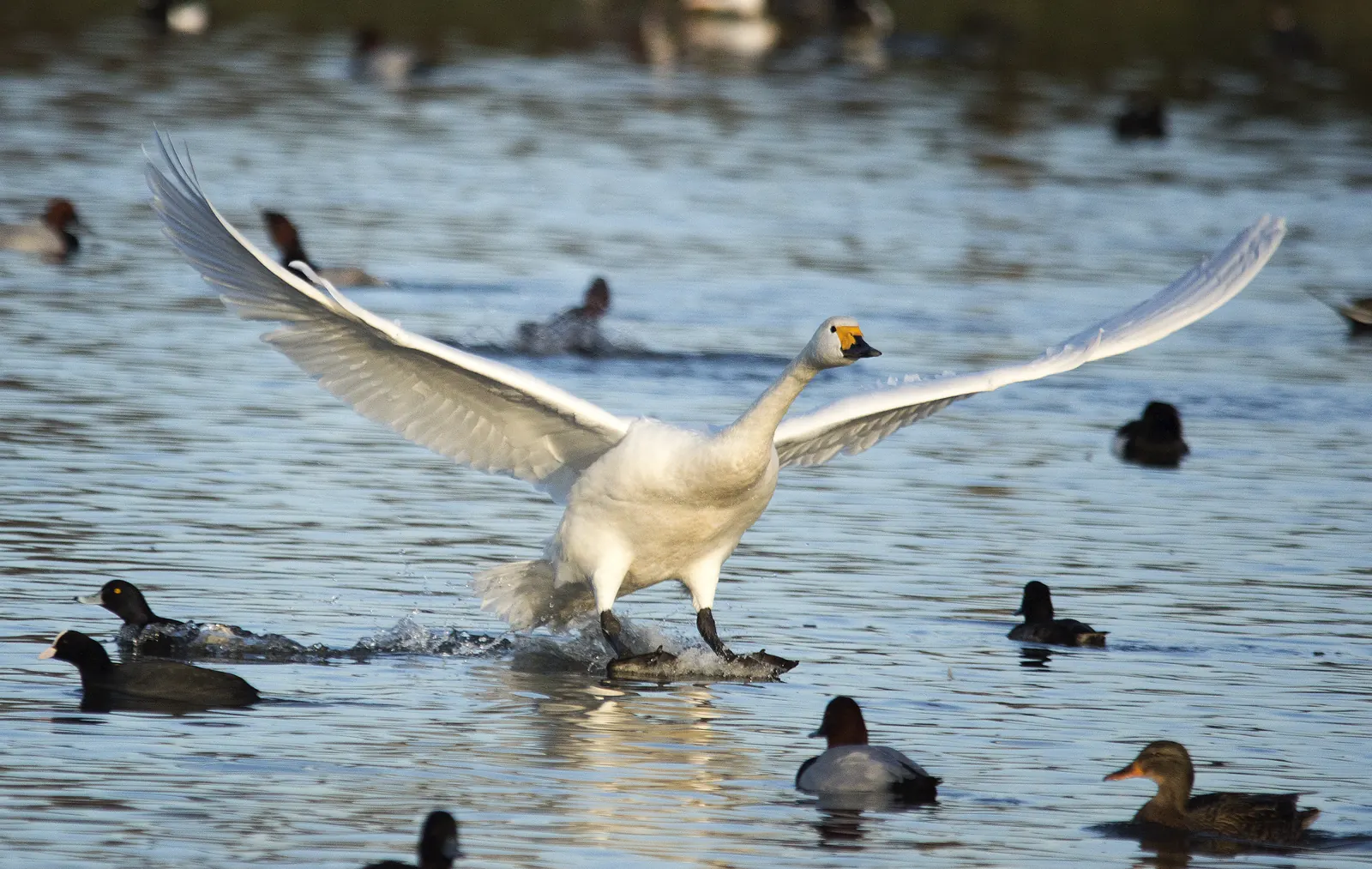
Bewick’s Swan spreading its wings on the water at Slimbridge, Gloucestershire
Photo: Jacob Spinks (resized and converted; social previews may crop) · CC BY 2.0

What changes for birds in January

January is often presented as a fresh start for a species list, but the birds are continuing a winter already in progress. Their priorities are food, shelter and safe resting places. A frozen pool, flooded field or depleted berry hedge can change where they spend the day. Our recommendation is to begin with a familiar reserve and ask what has changed since your previous visit. That makes the month's interest accessible without a long journey or an unusual sighting.

Leafless woodland can be particularly rewarding. Look along the fine outer branches as well as at trunks, and listen for a moving group before following it with binoculars. Winter thrushes typically use fruit and open feeding areas according to what remains available. Woodpecker drumming can become an early sign of the coming breeding season, although a silent morning is equally normal. The useful approach is to learn the sounds of your chosen place gradually rather than demand a particular performance.

January bird spectacles worth planning around

Winter duck gatherings offer one of the best introductions to identification. Several species may share the same water while feeding in different ways: some tip forward near the surface, others disappear on a dive, and others mostly rest during your watch. WWT Martin Mere and RSPB Leighton Moss are good choices for a day built around this kind of comparison. Give ordinary birds enough attention that you could recognise them in less favourable light next time.

Geese add sound and scale, especially where fields and wetlands form part of the same daily routine. WWT Caerlaverock and RSPB Mersehead provide southern Scottish options. Watch from the authorised viewing places and let distant feeding birds remain distant. A compact group behaving naturally is a better experience than a larger flock rising because somebody approached. If you want a dawn movement, make that the main session and leave the rest of the day lightly planned.

Cold-weather birdwatching and January tides

Look at temperature, wind and precipitation together. A dry morning can still feel severe when you are standing still, while sheltered conditions may make a modest wetland circuit comfortable. Dress for watching rather than for continuous walking, and keep an insulating layer dry for breaks. Food and a warm drink are useful because concentration tends to disappear before enthusiasm does. If you become clumsy, persistently cold or unable to judge the route clearly, shorten the visit.

At an estuary, a high tide can concentrate birds while reducing available space for people. Keep to the public viewpoint and leave access clear for others. Check the reserve's own tide interpretation rather than assuming every high water creates the same scene. Ice and floodwater introduce separate hazards on inland routes; a normally easy path can become unsuitable. Choose a different day or a shorter section when the surface is poor, especially if your party has balance or mobility needs.

A January weekend without constant driving

The car-free Morecambe Bay trip gives a useful framework for a winter break anchored on Leighton Moss. Spend the first day becoming familiar with its habitats and use the second for a shorter repeat visit or another option explicitly supported by the trip's transport advice. Keep connections generous and check the return before committing to the outward journey. January rewards a base that makes it easy to stop early, dry equipment and change plans without losing the holiday.

If your interest is the open bay, treat RSPB Hest Bank at Morecambe Bay as a separately planned coastal session. The tide, forecast and daylight need to fit the journey; proximity on a map does not make an unscheduled walk across tidal ground safe. Our choice for a first winter weekend is one excellent reedbed day plus a modest coastal watch from a recognised public place. Add distance only when the conditions and transport genuinely support it.

How to watch winter flocks without disturbing them

Keep your approach slow and visible on the established route. Birds that stop feeding, raise their heads together or begin walking away are telling you that the space between you is too small. Do not wait for flight before changing your position. Around a hide, shut doors gently and avoid pushing a lens far through the opening when birds are close. Let other people settle before announcing an identification across the room.

Try a January exercise in describing structure. Select a familiar duck and note its overall proportions, bill, neck length and position on the water. Then compare it with another species under the same light. This creates a fairer comparison than remembering a bright photograph from a book. Keep uncertain observations in your notes as uncertain; the purpose of the exercise is to build reliable recognition, not to produce a longer list by the end of the afternoon.

Make the first visit of the year useful

Choose three questions before the trip: where are birds feeding, where are they resting, and what makes them move? Those questions work at a city wetland as well as on an enormous estuary. They also give children or new observers something concrete to investigate. Bring a simple sketch map and mark broad habitat areas rather than precise sensitive locations. Repeating the exercise later in winter can reveal changes that an isolated visit would miss.

Keep any organised count or event separate from this evergreen plan. Use the organiser's own current-year announcement if you want to participate, because dates and methods can change. An ordinary reserve visit still contributes to your understanding even when you submit nothing. Finish by writing one thing you learned and one question for next time. That is a more useful January resolution than deciding that every weekend must produce a new place or a new bird.

Where to go birdwatching in England in January

WWT Martin Mere

Martin Mere is our choice for a January waterbird day that gives beginners plenty to compare. Concentrate on the wild watching areas and spend time separating resting shapes before checking the book. Listen when geese move through the scene, then return to the ducks you were studying. The reserve guide helps you plan the practical side without turning this monthly page into a second set of prices or opening arrangements.

RSPB Leighton Moss

Choose Leighton Moss if you enjoy a mix of reedbed atmosphere and open-water watching. A quiet period can become productive when a small movement reveals a bird against the reeds. Give each view time before changing position, and note where glare makes identification difficult. It is particularly suitable for a return visit because the same pools can look different as water, weather and bird activity change through winter.

WWT Welney

Welney suits a January visit with swans and wider wetland behaviour as the main interests. Our suggestion is to compare posture, voices and movement before trying to count every distant bird. Use the official programme for any activity you intend to attend, and keep enough flexibility for the weather. A sustained watch from an appropriate public viewing area is a worthwhile experience even without a dramatic mass arrival.

Where to go birdwatching in Scotland in January

RSPB Lochwinnoch

Lochwinnoch offers a useful western Scottish freshwater outing for working on winter duck identification. Scan the near water carefully before moving to the furthest shapes, and take breaks from the telescope if you use one. Our preference is to learn the common species confidently and enjoy their behaviour. The full guide provides access information so the chosen route can match the conditions and the needs of your companions.

WWT Caerlaverock

For winter birds in a broad Solway landscape, Caerlaverock is a strong January choice. Allow space in the day for flocks to come and go instead of expecting the best view immediately on arrival. Compare birds at rest with those in flight and listen for the difference between quiet feeding and a more alert group. Plan a comfortable length of watch; endurance is not the measure of a successful visit.

RSPB Mersehead

Mersehead works well when you want to understand the relationship between wetland and feeding fields. Watch geese from the official places, then spend time with the smaller birds that use nearby cover. Our choice is to start with a manageable circuit and extend only if wind, light and energy allow. The reserve guide explains the practical options; the monthly aim is simply to leave enough time for unhurried observation.

Where to go birdwatching in Wales in January

RSPB Ynys-hir

Ynys-hir offers woodland shelter alongside wetland interest, making it a useful choice when January weather is changeable. Winter geese are a possibility within the wider landscape, but avoid making one view the only purpose of the visit. Listen on the wooded sections and compare the birds using each habitat. Use the guide to choose an appropriate route, especially when the ground is wet or daylight is limited.

RSPB Conwy

Conwy is our choice for comparing lagoon waterbirds with an estuary setting. Work out the tide stage before deciding where to spend most of the visit. A steady binocular scan often reveals feeding methods and flock changes that disappear when attention jumps straight to the rarest-looking shape. Keep the outing compact enough that you can enjoy a long watch and still return without hurrying.

WWT Llanelli

Llanelli provides another Welsh wetland option for a January day built around wild waterbirds. Choose the parts of the site that fit your interests and the forecast, rather than assuming every area deserves equal time. With children or beginners, compare a few obvious differences between birds and let those observations lead the questions. Refer to the linked guide for the practical arrangements that make the visit comfortable.

Where to go birdwatching in Northern Ireland in January

RSPB Portmore Lough

Portmore Lough is our first Northern Irish suggestion for a patient January wildfowl session. Give yourself time to adjust to the scale of the water and identify the nearest birds before looking further out. A notebook helps record the features visible in dull conditions. The appeal is an absorbing winter watch, so choose a realistic finish and keep enough warmth and energy for the journey back.

RSPB Belfast Window on Wildlife

Belfast Window on Wildlife can make a winter birding habit easier to sustain because the visit can be relatively compact. Return to the same view and compare how birds are distributed on different dates. Our recommendation is to record behaviour and conditions alongside the names. A short repeat visit with a clear question often teaches more than an occasional marathon outing when weather and travel happen to align.

RSPB Lough Foyle

Lough Foyle offers the scale of an estuary to visitors comfortable with tide-led planning. Use the guide's established public options and respect the limited facilities. Watch feeding birds from enough distance that they continue naturally, even if that means accepting a less detailed view. This is a good place to practise reading groups and habitat zones before trying to resolve every individual in a distant flock.

More reserves to consider in January

Explore Norfolk’s full guides and smaller birdwatching sites

Where to base a January birding break

Some links earn us a small commission at no extra cost to you. Choose a settlement base for the seasonal reserve visit, then confirm access before booking.

Target species this month

Start with a bird, then compare the linked guides’ public watching places and access. These are seasonal choices from the reserve guides, not current sightings. Up to three starting points are shown for each species, prioritising headline birds and flagship guides; other sites may suit you better. Protected birds have no precise location here.

Seasonal targets and reserve guides
SpeciesSites to compareSpecies guide
AvocetOare Marshes Nature Reserve · RSPB Arne · RSPB Titchwell MarshWhen and how to watch
Bar-tailed GodwitRSPB Lough Foyle · RSPB Snettisham · RSPB Titchwell MarshWhen and how to watch
Barn OwlElmley National Nature Reserve · Holkham National Nature Reserve · RSPB Bempton CliffsWhen and how to watch
Barnacle GooseRSPB Crook of Baldoon · RSPB Loch Gruinart · RSPB MerseheadWhen and how to watch
Bearded TitLakenheath Fen · RSPB Blacktoft Sands · RSPB Ham WallWhen and how to watch
Bewick’s SwanWWT Slimbridge · WWT Welney · Ouse WashesWhen and how to watch
BitternRSPB Leighton Moss · RSPB Minsmere · RSPB Titchwell MarshWhen and how to watch
Black GrouseRSPB Corrimony · RSPB Geltsdale · RSPB Lake VyrnwyWhen and how to watch
Black GuillemotIsle of Mull white-tailed eagles · Mull of Galloway · RSPB HoyBird and habitat guides
Black-headed GullNWT Cley and Salthouse Marshes · RSPB Frampton Marsh · RSPB Havergate IslandBird and habitat guides
Black-necked GrebeRSPB ArneWhen and how to watch
Black-tailed GodwitOare Marshes Nature Reserve · Ouse Washes · RSPB Dee Estuary - Burton Mere WetlandsWhen and how to watch
BlackbirdDawlish Warren National Nature Reserve · Draycote Water · Gigrin Farm Red Kite Feeding CentreWhen and how to watch
BlackcapAberlady Bay Local Nature Reserve · RSPB FowlmereWhen and how to watch
Blue TitLoch of the Lowes Wildlife Reserve · RSPB Insh Marshes · Cors Dyfi Nature Reserve and Dyfi Wildlife CentreWhen and how to watch
BramblingRSPB The Lodge · Ouse Washes · RSPB Bempton CliffsWhen and how to watch
Brent GooseHolkham National Nature Reserve · RSPB Frampton Marsh · Spurn National Nature ReserveWhen and how to watch
BullfinchRSPB Pulborough Brooks · Quoile Pondage Nature Reserve · RSPB Aylesbeare CommonBird and habitat guides
BuzzardLakenheath Fen · RSPB Insh Marshes · WWT Steart MarshesWhen and how to watch
Canada GooseLoch of the Lowes Wildlife Reserve · RSPB Insh Marshes · Brandon Marsh Nature ReserveBird and habitat guides
Carrion CrowGigrin Farm Red Kite Feeding CentreBird and habitat guides
Cattle EgretRSPB Dee Estuary - Burton Mere Wetlands · RSPB Ham Wall · Abberton ReservoirWhen and how to watch
Cetti’s WarblerLakenheath Fen · NWT Cley and Salthouse Marshes · RSPB Blacktoft SandsBird and habitat guides
ChaffinchLoch of the Lowes Wildlife Reserve · RSPB Insh Marshes · RSPB Loch GartenWhen and how to watch
ChiffchaffDawlish Warren National Nature Reserve · RSPB Marazion Marsh · Wicken FenWhen and how to watch
ChoughSkomer Island · Bardsey Island and Bird Observatory · RSPB South StackWhen and how to watch
Cirl BuntingSlapton Ley National Nature Reserve · Dawlish Warren National Nature ReserveBird and habitat guides
Coal TitHolkham National Nature Reserve · RSPB Arne · RSPB Insh MarshesWhen and how to watch
Common GullRSPB Marwick Head · Seaforth Nature ReserveBird and habitat guides
Common ScoterRSPB Culbin Sands · Farne Islands · Flamborough Head and Flamborough Bird ObservatoryWhen and how to watch
CootHolkham National Nature Reserve · RSPB Snettisham · WWT London Wetland CentreBird and habitat guides
CormorantBass Rock and Scottish Seabird Centre · RSPB Dungeness · RSPB Havergate IslandBird and habitat guides
Corn BuntingRSPB Balranald · Abberton Reservoir · RSPB MedmerryBird and habitat guides
CraneOuse Washes · WWT Slimbridge · WWT WelneyWhen and how to watch
Crested TitRSPB Loch Garten · RSPB CorrimonyWhen and how to watch
CrossbillKielder Water ospreys · RSPB Loch Garten · Bwlch Nant yr ArianWhen and how to watch
CurlewWWT Washington · Elmley National Nature Reserve · Farne IslandsWhen and how to watch
Dartford WarblerRSPB Arne · RSPB Aylesbeare CommonWhen and how to watch
DipperRSPB Gwenffrwd-Dinas · RSPB Haweswater · Beinn Eighe National Nature ReserveBird and habitat guides
DunlinSpurn National Nature Reserve · WWT Steart Marshes · Dyfi National Nature Reserve - YnyslasWhen and how to watch
DunnockBlakeney Point · Lundy · RSPB Lake VyrnwyBird and habitat guides
EiderForvie National Nature Reserve and Ythan Estuary · South Walney Nature Reserve and Observatory · Bass Rock and Scottish Seabird CentreWhen and how to watch
FieldfareLakenheath Fen · WWT Steart Marshes · College LakeBird and habitat guides
FirecrestRSPB DungenessBird and habitat guides
FulmarRSPB Hoy · Flamborough Head and Flamborough Bird Observatory · RSPB Bempton CliffsBird and habitat guides
GadwallWWT London Wetland Centre · Chew Valley Lake · Quoile Pondage Nature ReserveBird and habitat guides
GannetPortland Bird Observatory and Portland Bill · Dawlish Warren National Nature ReserveWhen and how to watch
GoldcrestHolkham National Nature Reserve · RSPB Bempton Cliffs · RSPB Dee Estuary - Burton Mere WetlandsWhen and how to watch
Golden EagleIsle of Mull white-tailed eagles · Isle of Rum National Nature Reserve · RSPB The OaWhen and how to watch
Golden PloverRSPB Frampton Marsh · RSPB Otmoor · Elmley National Nature ReserveWhen and how to watch
GoldeneyeLoch of the Lowes Wildlife Reserve · Abberton Reservoir · Blashford LakesBird and habitat guides
GoldfinchWWT Welney · Draycote Water · Portland Bird Observatory and Portland BillBird and habitat guides
GoosanderKielder Water ospreys · Loch of the Lowes Wildlife Reserve · RSPB Loch GartenBird and habitat guides
GoshawkRSPB NagsheadWhen and how to watch
Great Black-backed GullBass Rock and Scottish Seabird Centre · Farne Islands · RSPB Havergate IslandBird and habitat guides
Great Crested GrebeLoch of the Lowes Wildlife Reserve · Chew Valley Lake · Draycote WaterBird and habitat guides
Great Northern DiverNorth Ronaldsay Bird Observatory · RSPB Coll · RSPB ArneWhen and how to watch
Great Spotted WoodpeckerLoch of the Lowes Wildlife Reserve · RSPB Arne · RSPB Loch GartenWhen and how to watch
Great TitRSPB Insh Marshes · RSPB Loch Garten · Cors Dyfi Nature Reserve and Dyfi Wildlife CentreWhen and how to watch
Great White EgretRSPB Ham Wall · Shapwick Heath National Nature Reserve · Lakenheath FenWhen and how to watch
Green SandpiperRSPB Baron's Haugh · Potteric CarrWhen and how to watch
Green WoodpeckerRSPB Arne · RSPB Pulborough Brooks · John Muir Country Park and TyninghameWhen and how to watch
GreenfinchBwlch Nant yr Arian · Dawlish Warren National Nature Reserve · RSPB Lake VyrnwyBird and habitat guides
GreenshankIsles of Scilly · Montrose Basin · Murlough National Nature ReserveWhen and how to watch
Grey HeronElmley National Nature Reserve · Holkham National Nature Reserve · Lakenheath FenBird and habitat guides
Grey PloverElmley National Nature Reserve · RSPB Havergate Island · RSPB SnettishamWhen and how to watch
Grey WagtailIsles of Scilly · RSPB Gwenffrwd-Dinas · RSPB Lake VyrnwyBird and habitat guides
Greylag GooseLoch of the Lowes Wildlife Reserve · RSPB Insh Marshes · RSPB Loch GartenWhen and how to watch
GuillemotPortland Bird Observatory and Portland BillBird and habitat guides
Hen HarrierRSPB Frampton Marsh · Cors Caron National Nature Reserve · RSPB Cottascarth and Rendall MossWhen and how to watch
Herring GullBass Rock and Scottish Seabird Centre · Farne Islands · RSPB Bempton CliffsBird and habitat guides
House SparrowWWT WelneyBird and habitat guides
Jack SnipeWWT London Wetland Centre · Isles of Scilly · Sandwell ValleyWhen and how to watch
JackdawRSPB Buckenham Marshes · RSPB Bempton Cliffs · Gigrin Farm Red Kite Feeding CentreBird and habitat guides
JayLoch of the Lowes Wildlife Reserve · John Muir Country Park and Tyninghame · RSPB Baron's HaughWhen and how to watch
KestrelLakenheath Fen · Oare Marshes Nature Reserve · RSPB Bempton CliffsWhen and how to watch
KingfisherLakenheath Fen · Attenborough Nature Reserve · Brandon Marsh Nature ReserveWhen and how to watch
KittiwakePortland Bird Observatory and Portland BillBird and habitat guides
KnotRSPB Snettisham · Freiston Shore · Gibraltar Point National Nature ReserveWhen and how to watch
LapwingElmley National Nature Reserve · RSPB Pulborough Brooks · RSPB Rainham MarshesWhen and how to watch
Lesser Black-backed GullSeaforth Nature ReserveBird and habitat guides
Lesser Spotted WoodpeckerRSPB Sherwood ForestWhen and how to watch
LinnetRSPB Bempton Cliffs · RSPB Havergate Island · WWT Steart MarshesBird and habitat guides
Little EgretRSPB Northward Hill · Whiteford National Nature Reserve · Elmley National Nature ReserveWhen and how to watch
Little GrebeDawlish Warren National Nature Reserve · Elmley National Nature Reserve · Holkham National Nature ReserveBird and habitat guides
Little OwlRSPB St Aidan's · Elmley National Nature Reserve · RSPB Newport WetlandsWhen and how to watch
Long-eared OwlElmley National Nature ReserveWhen and how to watch
Long-tailed DuckRSPB Culbin Sands · Findhorn Bay Local Nature Reserve · North Ronaldsay Bird ObservatoryWhen and how to watch
Long-tailed TitRSPB Pulborough Brooks · WWT Martin Mere · College LakeWhen and how to watch
MallardLoch of the Lowes Wildlife Reserve · NWT Cley and Salthouse Marshes · RSPB Blacktoft SandsBird and habitat guides
Mandarin DuckRSPB NagsheadBird and habitat guides
Marsh HarrierElmley National Nature Reserve · Holkham National Nature Reserve · Lakenheath FenWhen and how to watch
Marsh TitRSPB Sherwood Forest · RSPB Leighton Moss · Grafham WaterWhen and how to watch
Meadow PipitRSPB Havergate Island · RSPB Marshside · Bardsey Island and Bird ObservatoryBird and habitat guides
Mediterranean GullPagham Harbour Local Nature Reserve · RSPB Hayle Estuary · RSPB LodmoorBird and habitat guides
MerlinOuse Washes · RSPB Bempton Cliffs · RSPB Frampton MarshWhen and how to watch
Mistle ThrushRSPB Insh Marshes · RSPB Carngafallt · RSPB InversnaidBird and habitat guides
MoorhenBwlch Nant yr Arian · Dawlish Warren National Nature Reserve · Draycote WaterBird and habitat guides
Mute SwanLakenheath Fen · Cors Caron National Nature Reserve · Draycote WaterBird and habitat guides
NuthatchRSPB Baron's Haugh · Loch of the Lowes Wildlife Reserve · RSPB ArneWhen and how to watch
OystercatcherRSPB Snettisham · RSPB Hest Bank at Morecambe Bay · Whiteford National Nature ReserveWhen and how to watch
PeregrineBardsey Island and Bird Observatory · RSPB South Stack · Walthamstow WetlandsWhen and how to watch
Pied WagtailDawlish Warren National Nature Reserve · Draycote Water · RSPB Loch RuthvenBird and habitat guides
Pink-footed GooseHolkham National Nature Reserve · RSPB Loch of Strathbeg · RSPB MarshsideWhen and how to watch
PintailRSPB Campfield Marsh · RSPB Dee Estuary – Parkgate · Elmley National Nature ReserveBird and habitat guides
PochardKenfig National Nature Reserve · RSPB Valley Wetlands · Walthamstow WetlandsBird and habitat guides
PtarmiganBeinn Eighe National Nature ReserveBird and habitat guides
Purple SandpiperPortland Bird Observatory and Portland Bill · RSPB Marwick Head · Bass Rock and Scottish Seabird CentreWhen and how to watch
RavenRSPB Pulborough Brooks · Beinn Eighe National Nature Reserve · Gigrin Farm Red Kite Feeding CentreBird and habitat guides
RazorbillPortland Bird Observatory and Portland BillBird and habitat guides
Red GrouseRSPB Aghatirourke · RSPB Geltsdale · RSPB CarngafalltBird and habitat guides
Red KiteBwlch Nant yr Arian · Cors Caron National Nature Reserve · Gigrin Farm Red Kite Feeding CentreWhen and how to watch
Red-breasted MerganserRSPB Arne · Findhorn Bay Local Nature Reserve · Forvie National Nature Reserve and Ythan EstuaryBird and habitat guides
Red-necked GrebeAberlady Bay Local Nature Reserve · Lindisfarne National Nature ReserveBird and habitat guides
Red-throated DiverSpurn National Nature Reserve · Flamborough Head and Flamborough Bird Observatory · NWT Cley and Salthouse MarshesWhen and how to watch
RedpollRSPB Ham Wall · Blashford Lakes · RSPB CorrimonyWhen and how to watch
RedshankElmley National Nature Reserve · RSPB Rainham Marshes · Aberlady Bay Local Nature ReserveWhen and how to watch
RedwingLakenheath Fen · RSPB Bempton Cliffs · RSPB Pulborough BrooksBird and habitat guides
Reed BuntingRSPB Montiaghs Moss · Lakenheath Fen · Loch of the Lowes Wildlife ReserveBird and habitat guides
Ringed PloverOare Marshes Nature Reserve · RSPB Snettisham · Dyfi National Nature Reserve - YnyslasWhen and how to watch
RobinDawlish Warren National Nature Reserve · Draycote Water · Gigrin Farm Red Kite Feeding CentreBird and habitat guides
Rock DoveRSPB Marwick HeadBird and habitat guides
Rock PipitFarne Islands · Bardsey Island and Bird Observatory · Dawlish Warren National Nature ReserveBird and habitat guides
RookRSPB Buckenham Marshes · Gigrin Farm Red Kite Feeding CentreBird and habitat guides
RuffRSPB Frampton Marsh · RSPB Titchwell Marsh · WWT SlimbridgeWhen and how to watch
SanderlingDawlish Warren National Nature Reserve · Dyfi National Nature Reserve - Ynyslas · Bass Rock and Scottish Seabird CentreWhen and how to watch
ScaupDraycote WaterBird and habitat guides
Scottish CrossbillRSPB Corrimony · RSPB Loch GartenWhen and how to watch
ShagBass Rock and Scottish Seabird Centre · Farne Islands · Bardsey Island and Bird ObservatoryBird and habitat guides
ShelduckElmley National Nature Reserve · Holkham National Nature Reserve · Lakenheath FenBird and habitat guides
Shore LarkHolkham National Nature ReserveBird and habitat guides
Short-eared OwlElmley National Nature Reserve · RSPB Rainham Marshes · WWT Steart MarshesWhen and how to watch
ShovelerWWT London Wetland Centre · Chew Valley Lake · Walthamstow WetlandsBird and habitat guides
SiskinBeinn Eighe National Nature Reserve · RSPB Ham Wall · RSPB Loch GartenWhen and how to watch
SkylarkRSPB Coll · RSPB Medmerry · RSPB Loch of StrathbegBird and habitat guides
Slavonian GrebeRSPB Loch of Spiggie · Aberlady Bay Local Nature Reserve · Lymington–Keyhaven Marshes Nature ReserveBird and habitat guides
SmewAbberton Reservoir · Rutland Water Nature ReserveBird and habitat guides
SnipeRSPB Pulborough Brooks · Isles of Scilly · RSPB Nene WashesWhen and how to watch
Snow BuntingHolkham National Nature Reserve · NWT Cley and Salthouse Marshes · Aberlady Bay Local Nature ReserveWhen and how to watch
Song ThrushRSPB Pulborough Brooks · Brockholes Nature Reserve · Hilbre Island and Bird ObservatoryWhen and how to watch
SparrowhawkBrandon Marsh Nature Reserve · Murlough National Nature ReserveWhen and how to watch
SpoonbillRSPB Arne · Brownsea Island · Lymington–Keyhaven Marshes Nature ReserveWhen and how to watch
Spotted RedshankLymington–Keyhaven Marshes Nature Reserve · RSPB Arne · RSPB Titchwell MarshWhen and how to watch
StarlingRSPB Ham Wall · Shapwick Heath National Nature Reserve · Attenborough Nature ReserveWhen and how to watch
Stock DoveRSPB Medmerry · RSPB Sherwood ForestBird and habitat guides
StonechatDawlish Warren National Nature Reserve · RSPB Aylesbeare Common · Lakenheath FenBird and habitat guides
Tawny OwlRSPB Baron's Haugh · RSPB Wood of Cree · Lakenheath FenBird and habitat guides
TealRSPB Loch of Strathbeg · RSPB Hayle Estuary · RSPB Loch of KinnordyBird and habitat guides
Tree SparrowRSPB Blacktoft Sands · RSPB Portmore Lough · Ouse WashesBird and habitat guides
TreecreeperFlamborough Head and Flamborough Bird Observatory · Holkham National Nature Reserve · Lakenheath FenWhen and how to watch
Tufted DuckDraycote Water · Grafham Water · Loch Leven National Nature ReserveBird and habitat guides
TurnstoneBass Rock and Scottish Seabird Centre · Farne Islands · RSPB Havergate IslandWhen and how to watch
TwiteRSPB Balranald · RSPB Coll · RSPB The OaWhen and how to watch
Velvet ScoterRSPB Culbin SandsWhen and how to watch
Water PipitOare Marshes Nature Reserve · Ouse Washes · RSPB Ham WallBird and habitat guides
Water RailRSPB Fowlmere · Teifi Marshes Nature Reserve · Upton WarrenBird and habitat guides
White-fronted GooseRSPB North Warren · WWT Slimbridge · RSPB CollWhen and how to watch
White-tailed EagleIsle of Mull white-tailed eagles · Isle of Rum National Nature Reserve · RSPB HoyWhen and how to watch
Whooper SwanOuse Washes · RSPB Insh Marshes · RSPB Loch of StrathbegWhen and how to watch
WigeonOuse Washes · RSPB Marshside · RSPB Pulborough BrooksBird and habitat guides
Willow TitCors Caron National Nature Reserve · Potteric Carr · RSPB Wood of CreeWhen and how to watch
WoodcockRSPB CarngafalltBird and habitat guides
WoodpigeonWWT Castle EspieBird and habitat guides
WrenSt Kilda · Loch of the Lowes Wildlife Reserve · RSPB Insh MarshesBird and habitat guides
YellowhammerRSPB Medmerry · Loch of the Lowes Wildlife Reserve · RSPB Bempton CliffsBird and habitat guides

Plan your January birdwatching trip

Sources for birdwatching in January