
Short entry2.2 miles away
Cwm Clettwr
Tre’r-ddôl · Broadleaved woodland, stream and heath pockets
 the ai birderBirding near me
The AI Birder · one-page field sheet
Eglwys Fach, Dyfi Valley, Wales · SY20 8TA · SY20 8TA

Lapwing · Redshank · Curlew · Teal · Shoveler · Little Egret
Marian Mawr hide · Ynys-Feurig hide · Domen Las hide · Saltings hide · Ynys-hir hide · Red Trail viewing screen · Red Trail woodland section
Check current access, hide closures and operator notices before travelling. Seasonal birds are possibilities, not promised sightings. Keep to authorised routes and give wildlife space.
Opening and charges checked 2026-10-25. Operator: https://www.rspb.org.uk/days-out/reserves/ynys-hir
Full guide and current source links: https://aibirder.co.uk/reserves/rspb-ynys-hir
WA 02 · RSPB reserve guide
Eglwys Fach, Dyfi Valley, Wales · SY20 8TA
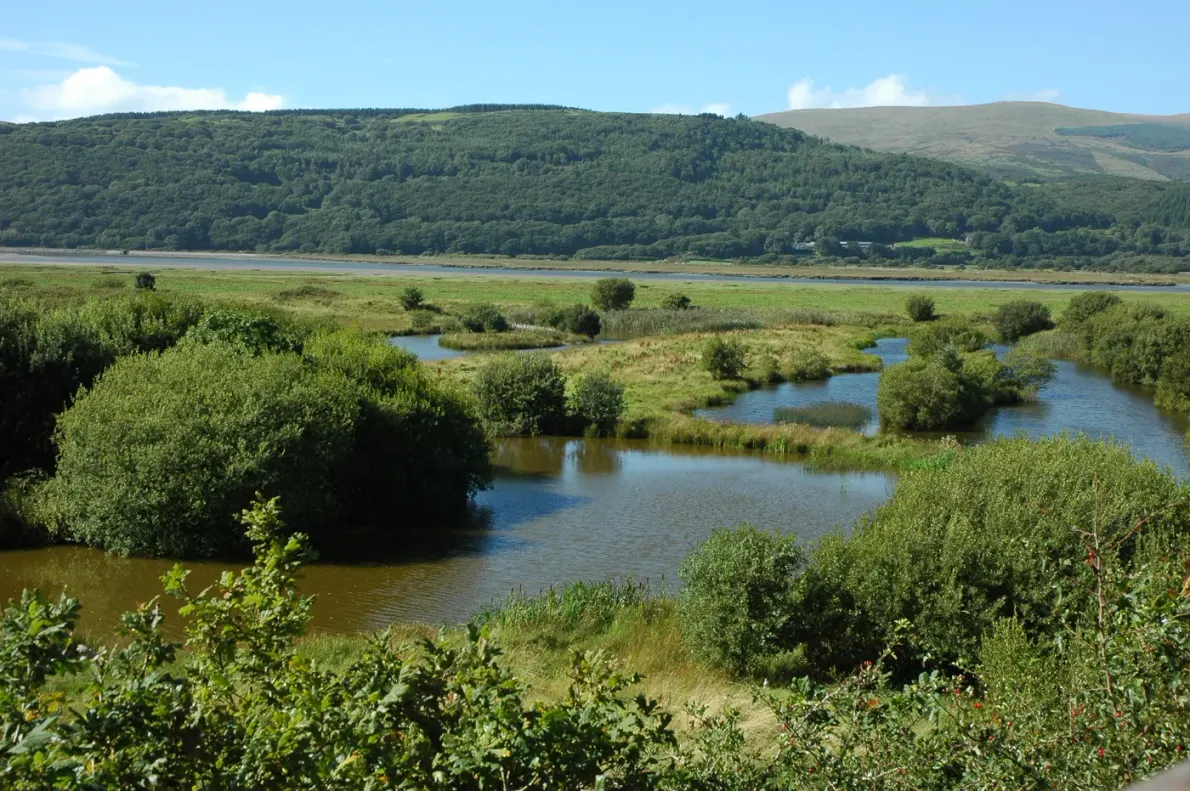
Pied Flycatchers, Redstarts and warblers return to the oakwoods in spring; the estuary and wet grassland hold breeding Lapwings and Redshanks and the only wintering population of Greenland White-fronted Geese in England and Wales.
For a spring woodland comparison at Ynys-hir, read about Pied Flycatchers, Redstarts and Wood Warblers and match their listening seasons to the reserve’s public trails.
Decide if the visit fits.
Last checked 18 October 2026.
Opening and charges information · checked .
Stay nearby →Reserve overview
Pied Flycatchers, Redstarts and warblers return to the oakwoods in spring; the estuary and wet grassland hold breeding Lapwings and Redshanks and the only wintering population of Greenland White-fronted Geese in England and Wales.
Eight checks for a smoother visit.
Conditions change: check the operator and transport notices before travelling.
January: Usually begin at Ynys-Feurig hide for Curlew, Teal and Shoveler. Give the broad wetland view time rather than immediately changing hides. A telescope helps with birds beyond the pools; check the approach to Domen Las before adding its river watch. February: Typically compare Teal and Shoveler at Ynys-Feurig hide, then look for Goosander from Domen Las hide if its path is safe. High-tide flooding can make that second stop unsuitable. Return by the signed route instead of testing a submerged path. March: Lapwing and Redshank usually become especially instructive from Saltings hide. Watch their movements from the building, leaving the grassland undisturbed. Goldcrest and Long-tailed Tit add a woodland alternative along Red Trail woodland section when exposed watching becomes uncomfortable. April: Usually make Red Trail woodland section the priority for returning Pied Flycatcher, Redstart and Blackcap. Listen before lifting binoculars and let birds come into the open. Neither a past arrival date nor a singing bird gives permission to leave the trail. May: Our choice is Red Trail woodland section for Pied Flycatcher and Redstart, followed by Marian Mawr hide for a patient egret scan. The May 2026 visiting society recorded Great White Egret there, but a dated report describes an observation rather than a promise. June: Typically combine Blackcap and Redstart along Red Trail woodland section with Redshank from Saltings hide. Keep away from nest holes and feeding routes. Ask staff which hide approaches are open before planning a complete circuit, especially after heavy rain. July: Usually retain Red Trail woodland section for Redstart and quiet woodland watching, while Marian Mawr hide may reward an early returning Green Sandpiper search. Migration changes the wetland picture gradually. Scan the available edges without assuming a rare bird will return. August: Greenshank and Green Sandpiper typically make Marian Mawr hide worthwhile; Ynys-Feurig hide is an alternative for Ruff. County reports document these public viewing places, not guaranteed annual concentrations. Give settled birds room and ask about current water levels before choosing the longer trail. September: Usually alternate Marian Mawr hide for Greenshank and Black-tailed Godwit with Ynys-Feurig hide for Ruff and returning Teal. Treat identification as a patient comparison of bills, legs and feeding actions. Leave pools and grazing fields to their wildlife. October: Typically watch Teal, Shoveler and Curlew from Ynys-Feurig hide. Marian Mawr hide can add late passage interest when water levels suit. Plan around daylight, the live opening calendar and tide predictions; the old county blog is an archive rather than a live news service. November: Usually concentrate on Teal and Shoveler at Ynys-Feurig hide and Goosander at Domen Las hide when accessible. Carry enough warm layers for a motionless watch. An official dawn-to-dusk listing does not make a flooded approach passable or imply the centre is open. December: Typically choose Ynys-Feurig hide for Curlew and winter ducks, with Goldcrest and Long-tailed Tit along Red Trail woodland section as a sheltered alternative. Keep the day short enough for a relaxed return. Confirm any temporary closure with reserve staff before setting out.
Best conditions: Our choice is a calm spring morning for listening along the woodland trail, followed by an unhurried wetland watch. Typically wind and glare make distant marsh birds harder to separate, so select a permitted hide with comfortable light. Light and scope ratings are editorial guidance. Check tides before Domen Las and never cross a flooded approach.
Admission and opening information checked on 18 October 2026. The current RSPB tariff is £8 per adult, £4 per child and £15 per family; RSPB members and visitors aged 16–24 enter free. Ordinary visits do not need advance booking and payment is at the visitor centre. Groups of ten or more use the RSPB group-booking arrangements. The October 2026 opening calendar lists the reserve, hides, toilets and car park as dawn to dusk, with the visitor centre open 10:00–16:00. Check the calendar, weather and any signed restrictions before travelling. The charges page does not publish a separate parking tariff: confirm any parking-only arrangement with the reserve team beforehand. The visitor car park is at the end of the signed approach from Eglwys Fach; avoid blocking the single-track lane or its passing places.
Access times: Reserve: Current October 2026 RSPB calendar lists dawn–dusk. Check the calendar and temporary notices for your actual date. · Hides: Current calendar lists dawn–dusk; individual approaches can close. Domen Las approach is liable to high-tide flooding. · Car park: Current calendar lists dawn–dusk; visitor centre listed 10:00–16:00 for the checked date. · Dawn access: yes. Operator opening information.
Three colour-coded routes offer different lengths: the green trail is one mile, with an RSPB walking estimate of 45–60 minutes; the blue trail is 1.5 miles, taking about one to one-and-a-half hours; and the red trail is three miles. These are route estimates, so adding repeated listening stops and hide watches can occupy much more of the day. Choose the habitats that suit the season rather than making distance the main objective. The named hide network includes Marian Mawr, Ynys-Feurig, Domen Las, Ynys-hir and Saltings. Use the open-route information to choose a woodland-and-wetland combination. A second viewpoint can be more useful than staying with a difficult angle: vegetation, islands and light may conceal birds visible from elsewhere. Look across the whole landscape between hides, including feeding edges and birds crossing above the reeds. Two-hour plan: begin with a slow woodland walk, making several quiet listening stops, then spend the main watch at an open wetland hide before returning. In spring, give more of those two hours to oakwood song; in winter, shorten the woodland stops and allow longer for distant flocks. Do not try to fit every trail into a short visit. Keeping a modest route leaves room to watch a bird long enough to understand its behaviour. Full-day plan: combine the woodland circuit with the wetland viewpoints and a picnic break, adding the longer red route only when conditions and your pace allow it. Revisit a productive hide after the tide or light changes, instead of simply ticking off buildings. Carry water and keep the map available at junctions. A full day also offers time to compare feeding methods: birds picking at the surface, probing mud and grazing grass are using different parts of the same wetland system. Keep benches and viewing openings available for other visitors, and close hide doors gently.
Use the linked reserve map and directions with current access notices. Species are typical seasonal targets. Light and telescope advice reflects our choice of viewpoint.
Freshwater pools and adjacent wet grassland
Level access without steps; check temporary management restrictions at reception.
Winter: Great White Egret
Spring: Great White Egret
Autumn: Green Sandpiper, Greenshank, Black-tailed Godwit
Light: either. Scope: useful.
Wetland pools, grazing marsh and the Dyfi saltmarsh
Approach on a slope. The 2021 statement also records a lip at the entrance; confirm the present threshold before travelling.
Winter: Curlew, Teal, Shoveler
Spring: Lapwing, Redshank
Summer: Lapwing, Redshank
Autumn: Ruff, Teal
Light: either. Scope: essential.
Tide: Use the managed hide; high water can move birds between estuary and pools.
The river bend and tidal water
One step; high-tide flooding is explicitly noted in the operator accessibility statement.
Winter: Goosander, Little Egret
Spring: Little Egret
Summer: Little Egret
Autumn: Little Egret
Light: either. Scope: useful.
Tide: The narrow approach can flood at high tide: obey closures rather than attempting to get through.
Saltings and wet grassland
Nine steps; viewing is from the official hide, without entering wet grassland.
Spring: Lapwing, Redshank
Summer: Redshank
Light: either. Scope: useful.
Elevated outlook from the Green Trail hide; ask staff which views are currently clear
Seven steps; no low windows in the 2021 access statement.
Light: either. Scope: useful.
The Red Trail viewing-screen outlook; follow the current signs
Step access in the 2021 statement; its individual name and present outlook were not verified.
Light: either. Scope: useful.
Oak woodland beside the established signed trail
Roots, rough stone and slopes: listen from the path without approaching nesting holes.
Winter: Goldcrest, Long-tailed Tit
Spring: Pied Flycatcher, Redstart, Blackcap
Summer: Pied Flycatcher, Redstart, Blackcap
Autumn: Goldcrest, Long-tailed Tit
Light: either. Scope: not needed.
| Spot | Overlooks | Key species by season | Best light | Scope | Tide |
|---|---|---|---|---|---|
| Marian Mawr hideLevel access without steps; check temporary management restrictions at reception. | Freshwater pools and adjacent wet grassland | Winter: Great White Egret Spring: Great White Egret Autumn: Green Sandpiper, Greenshank, Black-tailed Godwit | either | useful | — |
| Ynys-Feurig hideApproach on a slope. The 2021 statement also records a lip at the entrance; confirm the present threshold before travelling. | Wetland pools, grazing marsh and the Dyfi saltmarsh | Winter: Curlew, Teal, Shoveler Spring: Lapwing, Redshank Summer: Lapwing, Redshank Autumn: Ruff, Teal | either | essential | Use the managed hide; high water can move birds between estuary and pools. |
| Domen Las hideOne step; high-tide flooding is explicitly noted in the operator accessibility statement. | The river bend and tidal water | Winter: Goosander, Little Egret Spring: Little Egret Summer: Little Egret Autumn: Little Egret | either | useful | The narrow approach can flood at high tide: obey closures rather than attempting to get through. |
| Saltings hideNine steps; viewing is from the official hide, without entering wet grassland. | Saltings and wet grassland | Spring: Lapwing, Redshank Summer: Redshank | either | useful | — |
| Ynys-hir hideSeven steps; no low windows in the 2021 access statement. | Elevated outlook from the Green Trail hide; ask staff which views are currently clear | — | either | useful | — |
| Red Trail viewing screenStep access in the 2021 statement; its individual name and present outlook were not verified. | The Red Trail viewing-screen outlook; follow the current signs | — | either | useful | — |
| Red Trail woodland sectionRoots, rough stone and slopes: listen from the path without approaching nesting holes. | Oak woodland beside the established signed trail | Winter: Goldcrest, Long-tailed Tit Spring: Pied Flycatcher, Redstart, Blackcap Summer: Pied Flycatcher, Redstart, Blackcap Autumn: Goldcrest, Long-tailed Tit | either | not needed | — |
Month chips show typical presence or our preferred viewing season. Choose birds that suit the time of your visit.
Compare views around the rising tide from official hides only. There is no sourced minimum height or universal arrival offset; the Domen Las approach can flood at high water. Ask staff which routes are safe.
The access arrangements for RSPB Ynys-hir were checked on 18 October 2026. The two Blue Badge bays are about 30 metres from the visitor centre, on compacted stone. The centre has four steps or a moderate-to-steep ramp which the RSPB says is unsuitable for wheelchairs and mobility scooters; contact the team before travelling if you need an alternative way to receive visitor information. There is no hearing loop. Most trails are rugged and can flood seasonally. Natural stone, earth, exposed roots, grass, gravel and boardwalk occur, so a short route is not automatically an easy one. Marian Mawr Hide has level entry, Ynys-Feurig has a sloping approach, Domen Las has one step, Ynys-hir seven and Saltings nine. The linked 2021 access statement additionally describes a raised lip at Ynys-Feurig, so discuss that specific entrance if relevant. The accessible portable toilet is at car-park level; the main toilet block is below steps and a steep ramp. Four picnic tables have dedicated wheelchair spaces and hard-surfaced level access. Describe the surface, gradient and viewing-height requirements of your party when choosing a route with staff.
The visitor centre offers a takeaway Café Lite counter for hot drinks, cakes and flapjacks. Bring a substantial picnic and drinking water if spending the whole day outside. The picnic area overlooks pools and reedbeds, with feeders close to the centre providing another watching opportunity. Binocular hire is listed at £5 per pair in the RSPB facilities information checked on 18 October 2026. Baby changing is provided in the main male and female toilets. Barbecues are prohibited because of fire risk to the reserve.
Pet dogs are not permitted anywhere on the reserve; assistance dogs are welcome throughout. Plan another suitable walk for a pet before the visit rather than bringing it to the reserve entrance or leaving it in a parked car while the rest of the party explores.
Transport sources checked on 18 October 2026. Use Machynlleth for a straightforward rail-and-bus or rail-and-taxi connection. Lloyds Coaches currently publishes T2 and T28 services between Machynlleth and Aberystwyth via Eglwysfach. The RSPB location page still names X28, so use the bus operator's T2/T28 timetable for the current route numbers. Select the journey for the actual day of travel; Sunday and public-holiday journeys differ from the weekday pattern. From the village, follow the signed approach towards the reserve, described by the RSPB location page as one mile. It is a single-track lane, so allow time and space for vehicles rather than treating it as a dedicated footpath. Book a taxi transfer in advance if this walk does not suit your party. Dyfi Junction is another rail option for cyclists: the RSPB describes a three-mile cycle connection and links National Cycle Network Route 8. For drivers, turn off the A487 at Eglwys Fach. The stay-base road estimates use measured OSRM/OpenStreetMap routes to the reserve point and exclude live traffic.
Useful bases for an early start.
Booking.com links are affiliate links: we may earn a commission at no extra cost to you. How these links work.
About 1.4 miles by road, roughly 4 minutes’ drive. OSRM measured the Eglwys Fach journey for RSPB Ynys-hir on 18 October 2026; the estimate excludes live traffic.
Measured driving route · 2026-10-18. Map estimates exclude live traffic.
Closest village base for woodland mornings.Find places to stay in Eglwys Fach on Booking.comAbout 6.7 miles by road, roughly 13 minutes’ drive. OSRM measured the Machynlleth journey for RSPB Ynys-hir on 18 October 2026; the estimate excludes live traffic.
Measured driving route · 2026-10-18. Map estimates exclude live traffic.
Rail arrival and a wider Dyfi Valley visit.Find places to stay in Machynlleth on Booking.comAbout 13.1 miles by road, roughly 27 minutes’ drive. OSRM measured the Aberystwyth journey for RSPB Ynys-hir on 18 October 2026; the estimate excludes live traffic.
Measured driving route · 2026-10-18. Map estimates exclude live traffic.
A coastal town base for a longer mid-Wales break.Find places to stay in Aberystwyth on Booking.comExplore Ceredigion’s full guides and smaller birding sites
For Ynys-hir visitor enquiries, call 01654 700222 or email ynyshir@rspb.org.uk. The postal and visitor address is Ynys-hir, Machynlleth, Powys, SY20 8TA. Contact the reserve directly about route suitability, group visits or a particular viewing requirement. The official reserve updates link provides wildlife and event news. When sending a wildlife observation, include the date, approximate time and named viewpoint; those details help distinguish birds using the reserve from birds seen elsewhere in the wider Dyfi landscape.
Check Ceredigion Birds — county sightings archive (ended April 2026). archive; no new posts after27 April 2026 Reports show what has been seen, not what will be.
Follow the BTO Birders’ Code and give wildlife space.
RSPB Ynys-hir: Non-member adult £8, child £4; members and ages 16–24 free; separate parking price not published.
RSPB Ynys-hir: Pet dogs are not permitted anywhere on the reserve; assistance dogs are welcome throughout.
RSPB Ynys-hir: Spring woodland birds · autumn–winter wetlands.
RSPB Ynys-hir: The centre has four steps or a moderate-to-steep ramp which the RSPB says is unsuitable for wheelchairs and mobility scooters; contact the team before travelling if you need an alternative way to receive visitor information.
RSPB Ynys-hir: Transport sources checked on 18 October 2026.
Shorter stops within 15 miles in a straight line. Use the operator’s arrival directions for the journey.
Tre’r-ddôl · Broadleaved woodland, stream and heath pockets
Rheidol Valley · Ancient upland oak woodland and stream
Arthog · Wet woodland and mire
Pen-Y-Bryn · Oak woodland and heathland
Nearby complete guides.
Stops with a purpose: use one as a contrasting habitat or weather-proof Plan B. Distances are straight-line estimates, not road journeys.