
Short entry8.9 miles away
Ebernoe Wildlands
Ebernoe, north of Petworth · Ancient wood pasture, glades, ponds and grassland
 the ai birderBirding near me
The AI Birder · one-page field sheet
West Sussex, England · RH20 2EL · RH20 2EL

Current planning alert (2026-10-19): Toilet-block construction creates a temporary uneven diversion between the car park and visitor centre. Follow the signed route and contact the reserve before travelling if this affects your access needs.
Wigeon · Lapwing · Snipe · Teal · Pintail · Shoveler
West Mead Hide · Winpenny Hide · Little Hanger Hide · Nettley’s Hide · Hanger View · Jupp’s View · Hail’s View · The Clump · Fattengates Courtyard · Zig-zag path · Redstart Corner · Wooded Heathland Trail
Check current access, hide closures and operator notices before travelling. Seasonal birds are possibilities, not promised sightings. Keep to authorised routes and give wildlife space.
Opening and charges checked 2026-10-18. Operator: https://www.rspb.org.uk/days-out/reserves/pulborough-brooks
Full guide and current source links: https://aibirder.co.uk/reserves/rspb-pulborough-brooks
EN 37 · RSPB reserve guide
West Sussex, England · RH20 2EL
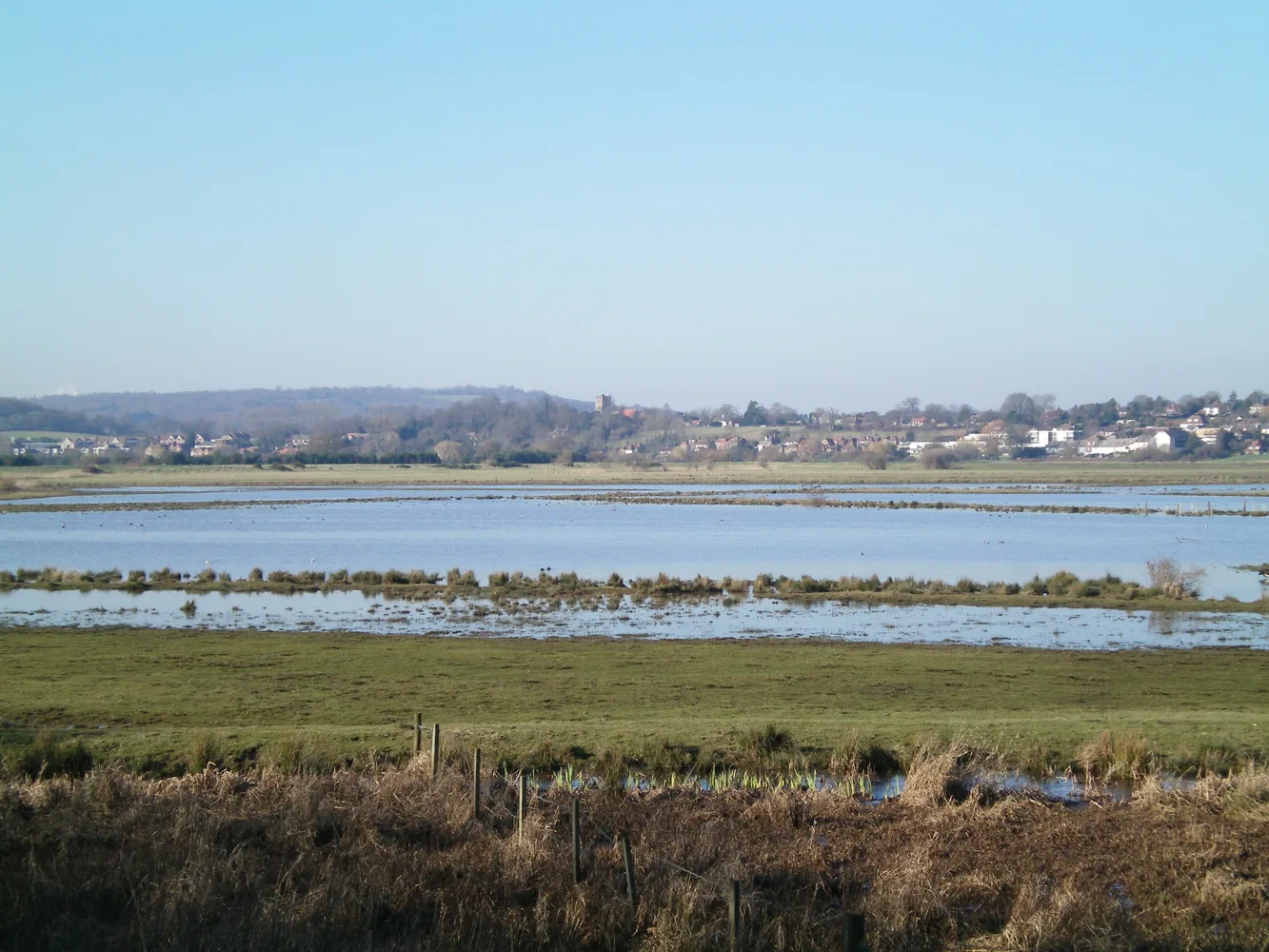
Winter Wigeon and spring Nightingales, with hides over the brooks and a contrasting wooded heath.
Decide if the visit fits.
Last checked 18 October 2026.
Toilet-block construction creates a temporary uneven diversion between the car park and visitor centre. Follow the signed route and contact the reserve before travelling if this affects your access needs.
Opening and charges information · checked .
Stay nearby →Reserve overview
Winter Wigeon and spring Nightingales, with hides over the brooks and a contrasting wooded heath.
Eight checks for a smoother visit.
Conditions change: check the operator and transport notices before travelling.
January: typically use Hanger View for Wigeon, Pintail and Shoveler before walking to West Mead Hide for Snipe. A scope helps across the broad floodplain, while a close muddy edge deserves a slower binocular scan. February: winter ducks remain a strong reason to stop at Little Hanger and Nettley’s hides. Compare Teal and Gadwall carefully, and allow a woodland return for Goldcrests if the wetlands are exposed. March: Lapwing display usually adds activity around West Mead and Winpenny hides. Listen for Chiffchaffs on the Zig-zag path and keep away from birds showing territorial or defensive behaviour. April: typically inspect West Mead for Avocets and Redshanks, then listen for Blackcaps and Garden Warblers along the public Fattengates route. Nightingales return in spring; use public paths or an official walk and leave their cover untouched. May: breeding Lapwings and Redshanks make West Mead a useful settled watch. On the Zig-zag path and around Fattengates, Whitethroat and Blackcap song usually rewards an early, quiet circuit. June: typically combine the South Brooks from Winpenny with woodland birds on the Wooded Heathland Trail. June and July are the operator’s Nightjar season: choose an advertised evening walk rather than searching for resting or nesting birds. July: watch Grey Herons and ducks from Nettley’s and Winpenny hides, with Green Sandpipers possible on suitable shallow margins. The wooded route offers Treecreepers and Goldcrests away from the broad water views. August: typically compare Little Hanger’s margins with the wider brooks for Green Sandpipers, Ruff and occasional Wood Sandpipers. Redstart Corner can add migrant Redstarts; stay on the path and let birds feed. September: migrant waders overlap with increasing Teal and Shoveler at the North Brooks. Begin at Little Hanger Hide, then check Redstart Corner and Nettley’s for chats and small migrants. October: typically give Nettley’s Stonechats time before a wider Hanger View duck scan. Redwings may appear along the Zig-zag path; the wooded trail adds Goldcrests and Treecreepers. November: Wigeon, Pintail and Lapwing flocks usually make the North Brooks rewarding from Hanger View. Finish at West Mead for Snipe if suitable mud is exposed, allowing enough daylight to climb back. December: typically alternate the wider duck views at Hanger with West Mead’s closer winter margins. Fattengates hedgerows can add Bullfinches and Long-tailed Tits, making a shorter route worthwhile when weather limits the full loop.
Best conditions: Typically a calm early visit is best for spring song; broad wetland views work well in bright overcast light. Our choice in strong wind is a shorter hide circuit followed by sheltered woodland. Rain and managed water change which pools have usable margins, so compare North and South Brooks rather than expecting every hide to offer the same birds. The scope and light ratings are editorial; a scope is especially useful at Hanger View.
Admission checked 18 October 2026: the current charges page lists £5 adults, £3 students and £2.50 children, with the first child free. Entry is free for RSPB members, 16–24-year-olds, under-fives and carers. Non-member parking is separately listed at £1 short stay or £3 all day, with members and Blue Badge holders free. No duration for “short stay” is published there, so confirm that before choosing the lower tariff. Parking is not stated to be included in admission. The October visitor centre, shop, café and toilets open 10:00–16:00. The linked older trail leaflet instead prints £6 adult/£3 child admission and 09:30–17:00 centre hours, so its tariff and hours conflict with the current pages. Use the dated calendar and charges page for planning. The main page asks groups of eight or more to book, whereas the generic charges table says ten or more; contact the team from eight upwards. Check notices before travelling, including current construction arrangements.
Access times: Reserve: Dawn–dusk on the RSPB calendar; visitor-centre services have shorter opening hours. · Hides: Four hides and six viewpoints are open dawn–dusk according to the RSPB facilities page. · Car park: Dawn–dusk; no overnight parking or camping. · Dawn access: yes. Operator opening information.
The Wetland Trail and Wooded Heathland Trail offer contrasting visits. The linked map shows a two-mile wetland circuit with four hides and two viewpoints, and a 1.5-mile outer heathland loop. Those lengths should not be mistaken for the time needed to enjoy them: birding involves repeated stops, and a long watch from one hide can easily be the most rewarding part of the day. West Mead, Winpenny, Little Hanger and Nettley’s hides give different views across the brooks. Hanger View is useful for looking over the wetland as a whole, while Fattengates Courtyard and Redstart Corner are places to slow down and listen on a spring walk. Work with the light and the water rather than following a fixed order regardless of conditions. The wooded-heath route visits a different landscape, including Black Pond and the views towards the South Downs. Two-hour plan — our suggestion: choose the Wetland Trail as your main outing, taking a short pause at Fattengates before settling at West Mead or Hanger View. If you find active feeding birds, stay with them instead of racing to every hide. The full two-mile loop may take longer than your available time once you stop frequently, so turn back by a familiar route if necessary. Full-day plan — our suggestion: spend the morning on the wetland circuit, alternating broad scans with a closer look at the pool edges. Return for a meal break, then explore the wooded heath for a change of habitat and a final viewpoint over the valley. In spring, another quiet listening stop at Fattengates may be worth more than adding distance. In winter, put the best of the afternoon light into the hides rather than leaving the main wetland watch until the end. These are editorial plans for independent visitors, not scheduled tours. Follow signs at any management diversion and keep all viewing within the permitted trail network. Leave gateways and hide entrances clear for other visitors. If a bird repeatedly changes its behaviour as you approach, stop and give it more room; a settled flock provides better views than one continually pushed into flight.
Use the linked reserve map and directions with current access notices. Species are typical seasonal targets. Light and telescope advice reflects our choice of viewpoint.
South Brooks pools and wet grassland
Low seated viewing window; mobility vehicles must park outside.
Winter: Snipe, Wigeon, Teal
Spring: Lapwing, Redshank, Avocet
Summer: Lapwing, Redshank
Autumn: Snipe, Lapwing, Teal
Light: either. Scope: useful.
South Brooks wet grassland and open water
The detailed facilities page describes space for mobility vehicles; follow the current team’s instructions.
Winter: Wigeon, Teal, Shoveler
Spring: Lapwing, Redshank, Avocet
Summer: Lapwing, Grey Heron
Autumn: Lapwing, Teal, Shoveler
Light: either. Scope: useful.
North Brooks floodplain, pools and muddy edges
Low seated viewing window; leave mobility vehicles outside.
Winter: Wigeon, Pintail, Shoveler, Snipe
Spring: Teal, Lapwing
Summer: Grey Heron
Autumn: Snipe, Teal, Gadwall
Light: either. Scope: useful.
North Brooks grassland, ditches and wetland margins
No bench-free low viewing window; mobility vehicles park outside.
Winter: Wigeon, Teal, Stonechat
Spring: Lapwing, Redshank
Summer: Grey Heron
Autumn: Stonechat, Snipe, Teal
Light: either. Scope: useful.
North Brooks floodplain and wider Arun Valley
Use the signed Wetland Trail; a wide floodplain watch benefits from a scope.
Winter: Wigeon, Pintail, Shoveler, Lapwing, Peregrine
Spring: Lapwing, Teal, Hobby, Peregrine
Summer: Grey Heron, Hobby
Autumn: Teal, Shoveler, Snipe, Hobby, Peregrine
Light: either. Scope: essential.
Wet grassland, pools and the river-valley landscape
Watch from the existing viewpoint; do not approach feeding flocks.
Winter: Wigeon, Teal, Lapwing
Spring: Lapwing, Redshank
Summer: Grey Heron
Autumn: Lapwing, Teal
Light: either. Scope: useful.
The valley from the wooded heathland route
Reached by the wooded heathland route, which has steep, sandy and rooty sections.
Winter: Goldcrest, Treecreeper
Spring: Green Woodpecker, Chiffchaff
Summer: Goldcrest, Treecreeper
Autumn: Goldcrest, Treecreeper
Light: either. Scope: useful.
The wider valley and wooded heath from the barrow viewpoint
Keep to established paths around the ancient barrow; use official events for evening wildlife.
Winter: Goldcrest, Treecreeper
Spring: Green Woodpecker
Summer: Green Woodpecker, Goldcrest
Autumn: Goldcrest
Light: either. Scope: useful.
Trees, scrub and hedgerows beside the courtyard
Stay in the courtyard and on public paths; leave bird cover undisturbed.
Winter: Long-tailed Tit, Bullfinch
Spring: Blackcap, Garden Warbler, Song Thrush
Summer: Blackcap, Garden Warbler
Autumn: Long-tailed Tit, Bullfinch
Light: either. Scope: not needed.
Hedgerows, scrub and path-side trees
The route descends and climbs; allow for the return gradient.
Winter: Redwing, Long-tailed Tit
Spring: Chiffchaff, Whitethroat, Blackcap, Nightingale
Summer: Whitethroat, Chiffchaff, Nightingale
Autumn: Redwing, Chiffchaff
Light: either. Scope: not needed.
Scrub and hedgerow beside the Wetland Trail
View quietly from the signed trail; migrants need undisturbed cover.
Spring: Blackcap, Whitethroat
Summer: Whitethroat
Autumn: Redstart, Blackcap
Light: either. Scope: not needed.
Pines, mixed woodland and heathland clearings
Steep gradients, roots and sandy tracks; not suitable for the reserve’s mobility scooters.
Winter: Goldcrest, Treecreeper, Nuthatch
Spring: Green Woodpecker, Goldcrest
Summer: Goldcrest, Treecreeper, Nightjar
Autumn: Treecreeper, Goldcrest
Light: either. Scope: not needed.
| Spot | Overlooks | Key species by season | Best light | Scope | Tide |
|---|---|---|---|---|---|
| West Mead HideLow seated viewing window; mobility vehicles must park outside. | South Brooks pools and wet grassland | Winter: Snipe, Wigeon, Teal Spring: Lapwing, Redshank, Avocet Summer: Lapwing, Redshank Autumn: Snipe, Lapwing, Teal | either | useful | — |
| Winpenny HideThe detailed facilities page describes space for mobility vehicles; follow the current team’s instructions. | South Brooks wet grassland and open water | Winter: Wigeon, Teal, Shoveler Spring: Lapwing, Redshank, Avocet Summer: Lapwing, Grey Heron Autumn: Lapwing, Teal, Shoveler | either | useful | — |
| Little Hanger HideLow seated viewing window; leave mobility vehicles outside. | North Brooks floodplain, pools and muddy edges | Winter: Wigeon, Pintail, Shoveler, Snipe Spring: Teal, Lapwing Summer: Grey Heron Autumn: Snipe, Teal, Gadwall | either | useful | — |
| Nettley’s HideNo bench-free low viewing window; mobility vehicles park outside. | North Brooks grassland, ditches and wetland margins | Winter: Wigeon, Teal, Stonechat Spring: Lapwing, Redshank Summer: Grey Heron Autumn: Stonechat, Snipe, Teal | either | useful | — |
| Hanger ViewUse the signed Wetland Trail; a wide floodplain watch benefits from a scope. | North Brooks floodplain and wider Arun Valley | Winter: Wigeon, Pintail, Shoveler, Lapwing, Peregrine Spring: Lapwing, Teal, Hobby, Peregrine Summer: Grey Heron, Hobby Autumn: Teal, Shoveler, Snipe, Hobby, Peregrine | either | essential | — |
| Jupp’s ViewWatch from the existing viewpoint; do not approach feeding flocks. | Wet grassland, pools and the river-valley landscape | Winter: Wigeon, Teal, Lapwing Spring: Lapwing, Redshank Summer: Grey Heron Autumn: Lapwing, Teal | either | useful | — |
| Hail’s ViewReached by the wooded heathland route, which has steep, sandy and rooty sections. | The valley from the wooded heathland route | Winter: Goldcrest, Treecreeper Spring: Green Woodpecker, Chiffchaff Summer: Goldcrest, Treecreeper Autumn: Goldcrest, Treecreeper | either | useful | — |
| The ClumpKeep to established paths around the ancient barrow; use official events for evening wildlife. | The wider valley and wooded heath from the barrow viewpoint | Winter: Goldcrest, Treecreeper Spring: Green Woodpecker Summer: Green Woodpecker, Goldcrest Autumn: Goldcrest | either | useful | — |
| Fattengates CourtyardStay in the courtyard and on public paths; leave bird cover undisturbed. | Trees, scrub and hedgerows beside the courtyard | Winter: Long-tailed Tit, Bullfinch Spring: Blackcap, Garden Warbler, Song Thrush Summer: Blackcap, Garden Warbler Autumn: Long-tailed Tit, Bullfinch | either | not needed | — |
| Zig-zag pathThe route descends and climbs; allow for the return gradient. | Hedgerows, scrub and path-side trees | Winter: Redwing, Long-tailed Tit Spring: Chiffchaff, Whitethroat, Blackcap, Nightingale Summer: Whitethroat, Chiffchaff, Nightingale Autumn: Redwing, Chiffchaff | either | not needed | — |
| Redstart CornerView quietly from the signed trail; migrants need undisturbed cover. | Scrub and hedgerow beside the Wetland Trail | Spring: Blackcap, Whitethroat Summer: Whitethroat Autumn: Redstart, Blackcap | either | not needed | — |
| Wooded Heathland TrailSteep gradients, roots and sandy tracks; not suitable for the reserve’s mobility scooters. | Pines, mixed woodland and heathland clearings | Winter: Goldcrest, Treecreeper, Nuthatch Spring: Green Woodpecker, Goldcrest Summer: Goldcrest, Treecreeper, Nightjar Autumn: Treecreeper, Goldcrest | either | not needed | — |
Month chips show typical presence or our preferred viewing season. Choose birds that suit the time of your visit.
Pulborough’s wetland circuit is described as pushchair suitable, but manual-wheelchair users are warned that a strong helper is required. Do not interpret a gentle-looking landscape as a promise of easy gradients. The RSPB offers two self-drive Tramper mobility scooters that can cover the Wetland Trail and viewpoints; they must be left outside hides. Reserve one in advance and discuss whether the route and equipment meet your needs. The wooded-heath route is unsuitable for those scooters. Five Blue Badge spaces stand outside the visitor centre on tarmac, with a drop-off point nearby. The main car park uses loose gravel. The operator describes step-free, level café access, outdoor seating with wheelchair spaces and picnic tables adapted for wheelchair users. A digital access guide is supplied directly by the reserve team rather than through a working download link on its page. Before making a journey that depends on access, describe your mobility aid, intended circuit and any difficulty with slopes or uneven ground. Confirm the current approach from parking as well as the trail itself, since short diversions can affect an otherwise suitable outing. Build in resting time and a shorter option so that the final return is comfortable. The view from one well-chosen position can still provide a worthwhile birdwatching visit without completing both circuits.
The visitor centre has a shop and café, with a tea terrace and picnic options for a break between habitats. The Wildlife Explorer meadow and play area give families another focus alongside the birds. Binoculars, waterproofs and a small amount of patient listening are enough for a first visit; a telescope is helpful for more distant wetland flocks. Keep food packaging secure in the wind and take litter away. The reserve prohibits barbecues and overnight parking or camping. Check the separate dated construction notice when planning toilet access.
Dogs on leads may use permitted sections of the Wooded Heathland Trail and surrounding public footpaths and bridleways. The Wetland Trail and hides exclude dogs apart from assistance dogs, which are welcome throughout. Dogs are welcome on the tea terrace, with water bowls in the courtyard and waste bins at the car-park edge. Choose your route before setting out so that the restrictions do not interrupt the walk.
Compass Travel service 100 provides the useful rail-to-reserve connection. Its current linked timetable names both Pulborough Station and Pulborough Brooks RSPB, and the reserve identifies the entrance as a request stop. Tell the driver where you want to get off and check the return journey before starting a long walk. The route connects Burgess Hill, Storrington, Pulborough and Horsham, but the timetable’s days and journey notes matter more than the overall line on a map. Pulborough is the nearest railway station. The RSPB’s travel page describes it as roughly two miles away, and separately gives a 2.5-mile approach by road and public footpath. Those are not identical measurements. Use the bus or a booked taxi if the walking connection is unsuitable. The public footpath can be very wet or impassable when the river floods, so it should not be the only return plan after heavy rain. Drivers reach the entrance from the A283 between Pulborough and Storrington. Use the visitor address at Wiggonholt and the signed reserve entrance, not the address of a distant public-footpath access. Bicycle racks are provided for those combining the outing with a cycle journey.
Useful bases for an early start.
Booking.com links are affiliate links: we may earn a commission at no extra cost to you. How these links work.
About 1.8 miles by road, roughly 4 minutes’ drive; OSRM estimate measured 18 October 2026, without live traffic.
Measured driving route · 2026-10-18. Map estimates exclude live traffic.
The closest of these town bases, with a station for the onward bus connection.Find places to stay in Pulborough on Booking.comAbout 2.5 miles by road, roughly 5 minutes’ drive; OSRM estimate measured 18 October 2026, without live traffic.
Measured driving route · 2026-10-18. Map estimates exclude live traffic.
A separate village base on the South Downs side of the wetland.Find places to stay in Storrington on Booking.comAbout 10.3 miles by road, roughly 16 minutes’ drive; OSRM estimate measured 18 October 2026, without live traffic.
Measured driving route · 2026-10-18. Map estimates exclude live traffic.
A riverside town for combining this outing with another Sussex birding day.Find places to stay in Arundel on Booking.comExplore West Sussex’s full guides and smaller birding sites
Pulborough Brooks can be contacted at pulborough.brooks@rspb.org.uk or 01798 875851. The visitor address is Pulborough Brooks, Wiggonholt, Pulborough, West Sussex, RH20 2EL. Contact the team for group booking, an access guide or a Tramper reservation, giving the intended date and what your party needs. Use the main reserve page for current notices and the linked events programme for organised walks. A specific request about the trail or facility you depend on helps the team give a useful answer before you travel.
Check RSPB Pulborough Brooks: species and named reserve localities. irregular; displayed report has no date Reports show what has been seen, not what will be.
Follow the BTO Birders’ Code and give wildlife space.
RSPB Pulborough Brooks: Non-member adult £5, child £2.50; parking £1 short stay or £3 all day; member entry/parking free.
RSPB Pulborough Brooks: Dogs on leads may use permitted sections of the Wooded Heathland Trail and surrounding public footpaths and bridleways.
RSPB Pulborough Brooks: Winter wildfowl · spring Nightingales · summer heathland.
RSPB Pulborough Brooks: Pulborough’s wetland circuit is described as pushchair suitable, but manual-wheelchair users are warned that a strong helper is required.
RSPB Pulborough Brooks: Compass Travel service 100 provides the useful rail-to-reserve connection.
Shorter stops within 15 miles in a straight line. Use the operator’s arrival directions for the journey.
Ebernoe, north of Petworth · Ancient wood pasture, glades, ponds and grassland
Horn Lane, south of Henfield · Lake, reedbeds, wetland scrapes, meadows and ancient woodland
Shoreham-by-Sea · Estuary and saltmarsh
Nearby complete guides.
Stops with a purpose: use one as a contrasting habitat or weather-proof Plan B. Distances are straight-line estimates, not road journeys.