Brandon
The nearest town base for a reedbed morning.
Find stays in Brandon on Booking.com the ai birderBirding near me
Responsible wildlife guide
For a public Crane watch, start with Slimbridge’s year-round guide records, Welney in September–February or Lakenheath Fen in March–September. Ouse Washes offers another September–February option. Use the hides and viewpoints in the table rather than seeking breeding or resting places, and keep current operator access advice beside the seasonal plan. These are choices drawn from existing reserve records: birds can be distant, absent or using a different part of the landscape.
For Cranes, compare a March–September Lakenheath Fen visit with Hickling Broad’s year-round interest, using established public wetland routes and checking weather closures before travel.
Compare these public visit choices using each bird’s local guide season. Months describe bird records, not event or sailing dates. Check current operator access; sightings are never guaranteed.
| Site | Type of view | Best months | Notes and sources |
|---|---|---|---|
| WWT Slimbridge Crane | Public viewpoint | January, February, March, April, May, June, July, August, September, October, November, December | Estuary Tower. Lift serves the levels; check service on arrival. Official source · Source review: 19 October 2026. |
| WWT Welney Crane | Hide / observatory | January, February, September, October, November, December | Main Observatory and wing hides. Heated centre section and accessible wings; admission hours apply. Official source · Source review: 19 October 2026. |
| Lakenheath Fen Crane | Public viewpoint | March, April, May, June, July, August, September | Joist Fen viewpoint. Longer hard-track walk with a grass slope at the viewpoint. Official source · Source review: 19 October 2026. |
| Ouse Washes Crane | Hide / observatory | January, February, September, October, November, December | Welches Dam Hide. Slopes, gates and uneven ground; check flood conditions. Official source · Source review: 19 October 2026. |
| RSPB Greylake Crane | Hide / observatory | January, March | Enclosed hide on Easy-Access Trail Official source · Source review: 19 October 2026. |
Find responsible places to watch wild Common Cranes, understand their seasonal movements and recovery, and plan visits around official reserve advice.
NearestBase is a relevant existing-guide base for the stated arrival, not a new accommodation inspection or an independently ranked distance comparison.
Hickling reserve and visitor centre closed Sunday 25 October due forecast high winds. Operator hopes to reopen Monday but asks visitors to check before travelling. NWT access notice · Checked 2026-10-25. Reopening must be confirmed by the operator.
| Place | Season | Access and booking | Nearby base |
|---|---|---|---|
| Lakenheath Fen | Existing guide gives March–September target window; sightings are not guaranteed. | Public wetland trails, hides and viewpoints; current signs and staff advice govern the visit. Official visit/booking instructions | Brandon |
| NWT Hickling Broad and Marshes | Operator lists Crane year-round; local weather closures can override ordinary hours. | Public reserve viewpoints only when open; no sensitive roost or nest directions. Official visit/booking instructions | Stalham |
Do not book a trip around a promised Crane at one named point. Use the whole public wetland experience and consult the operator for appropriate current access.
Hickling’s ordinary calendar does not override the live high-wind closure. Lakenheath also asks visitors to check adverse-weather access.
Stay on official public routes, let birds remain concealed and avoid following calls into reedbeds. No nest, lek or sensitive roost approach is included.
Some links earn us a small commission at no extra cost to you. These are settlement search bases, with no promise of availability.
The nearest town base for a reedbed morning.
Find stays in Brandon on Booking.comRail connections and a wider Brecks visit.
Find stays in Thetford on Booking.comA nearby small-town base for an early hide visit.
Find stays in Stalham on Booking.comA Broads village for combining wetland walks with the river landscape.
Find stays in Potter Heigham on Booking.com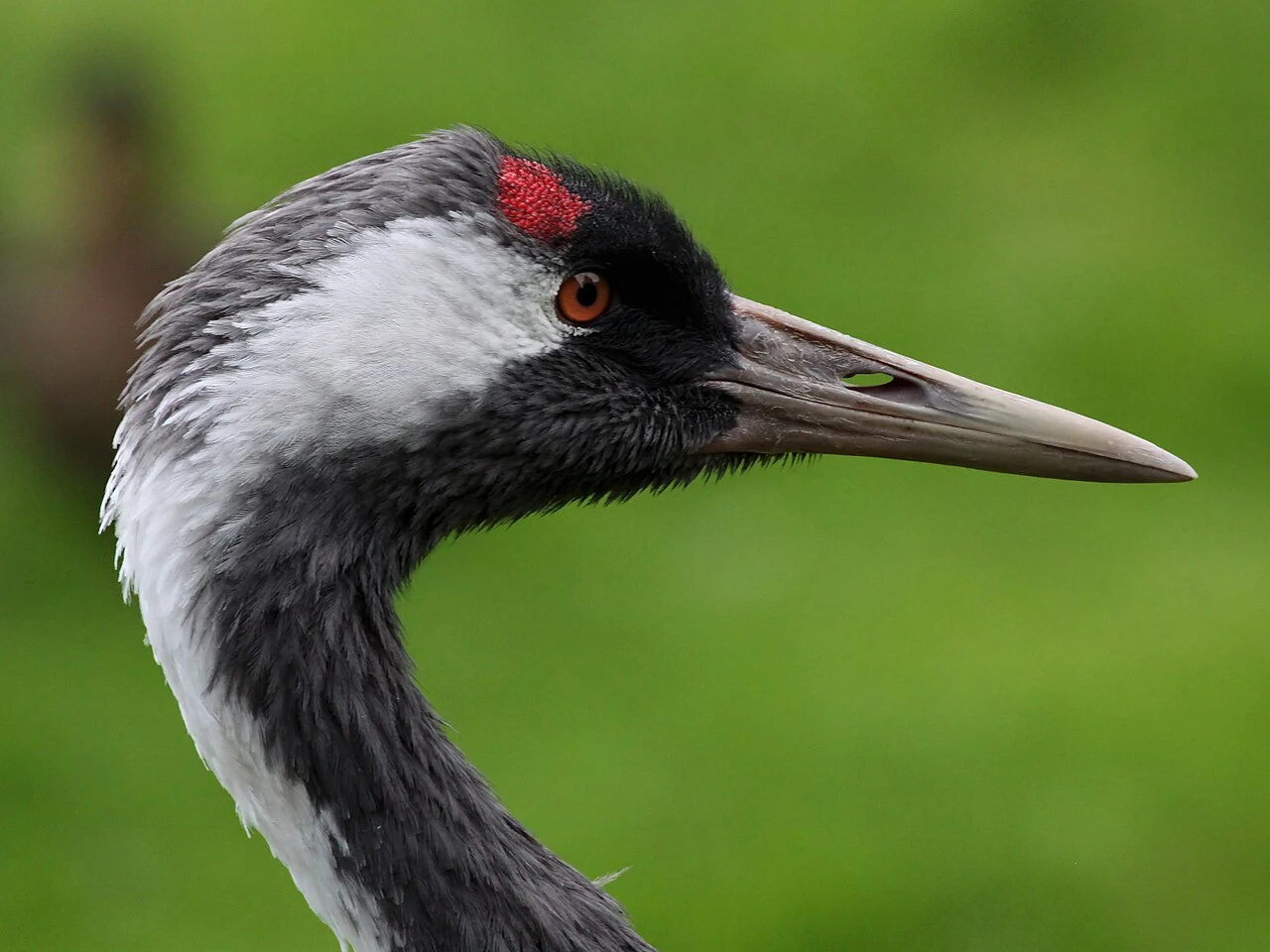
A wild Common Crane is an arresting sight: a tall grey bird stepping through wet grass, then lifting into the air with a long neck and trailing legs. The RSPB’s identification account describes the adult’s black-and-white head pattern and red crown, along with the bugling calls that can accompany spring display. Start with the whole shape and behaviour rather than trying to see a small head detail on a distant bird. A telescope helps from an official viewpoint; it should replace a closer approach, not become equipment you carry while following a bird across fields.
The recovery has two connected strands. Natural recolonisation began in the Norfolk Broads after Cranes had disappeared as British breeding birds, while the Great Crane Project later strengthened the population in southwest England. The RSPB, WWT and Pensthorpe Conservation Trust worked together on that reintroduction, with birds reared at Slimbridge and released in Somerset during 2010–2014. Those are historical project dates, not a programme visitors can book today. Wetland restoration and sympathetic management remain central to the story: the landscape needs to support feeding, nesting and safe movement, as well as provide a place where people might see the birds.
Cranes typically become particularly conspicuous when calling, flying or displaying, yet can be surprisingly difficult to locate while feeding behind vegetation. During the breeding season a pair may spend much of its time out of public view. That secrecy is a reason to accept the view offered by the reserve, not search for a hidden nest. An unsuccessful Crane watch can still be a rich wetland visit if the rest of the day includes ducks, reedbed birds, dragonflies or a patient look at the changing habitat.
After breeding, birds may gather into feeding flocks and move between wetlands and farmland. A reserve that held breeding pairs in spring may not hold the same birds through winter. Choose the region and time of year first, read the current operator account, then plan an outing with enough other wildlife interest to stand on its own. Dawn, daylight feeding and dusk roosting are different opportunities; use whichever the operator’s permitted viewing arrangement actually supports. There is no single universal hour at which Britain’s Cranes appear.
Lakenheath Fen is one of the key full guides for understanding Crane habitat. The RSPB has converted former farmland into reedbeds, grazing marsh and associated wetlands, and its accounts describe the management needed for these large birds to move safely through reeds. Watch from the established paths and viewpoints and let an occasional flight connect the separate pieces of habitat. Avoid treating an old photograph of a pair on a particular patch as a route instruction for your own visit.
There is an important autumn qualification. On the official page checked on 18 October 2026, the RSPB says it believes the reserve’s breeding Cranes have departed to join the wintering flock at the Ouse Washes, although occasional autumn or winter visits remain possible. That makes Lakenheath a poor choice if the entire purpose of an October trip is a promised Crane encounter. Read its full guide for the reedbed visit, and use current official sightings when deciding whether Crane watching is a realistic additional hope.
WWT Welney has a documented autumn feeding-flock tradition. Its September 2020 feature describes birds building from mid-September and becoming less numerous as Whooper Swans arrive around mid-October. That article explains a seasonal pattern, not the size or location of a flock in 2026. WWT also published Crane sightings in May 2026, showing why a single narrow calendar label would be misleading. Use the current sightings page and the visitor centre’s public viewing advice, then select the appropriate hide or visitor viewpoint.
At WWT Slimbridge, the Crane connection includes both the rearing work behind the Great Crane Project and wild birds using the reserve. WWT’s official accounts describe birds released in Somerset travelling up the Severn and some settling around Slimbridge. Keep the distinction between a managed collection and free-living Cranes clear when reading a visitor map or caption. The full Slimbridge guide helps you plan the wider day and choose a public hide; current operator information should decide where you concentrate your attention.
Norfolk Wildlife Trust identifies Stubb Mill at Hickling Broad and Marshes as a winter Crane viewpoint, with November–February sunset arrivals described in its bird FAQs. This is a useful, specific match between species, season and authorised viewing place. Plan the outward walk and return for that dusk session using the Hickling guide. Stand at the lookout, keep noise and light considerate, and let birds settle beyond the viewpoint without following them into their resting habitat.
The Somerset Levels and Moors are a wider working wetland landscape, not one public Crane enclosure. The RSPB confirms Cranes in the area and reported the first successful Ham Wall nesting in 2024. Our Ham Wall guide provides the full public-access visit. West Sedgemoor and Greylake are also named in the RSPB’s Crane coverage, but that does not give permission to enter closed fields or assume a guided access arrangement operates every day. Follow each operator’s own instructions before adding a separate reserve to your itinerary.
The RSPB’s May 2025 national Crane article includes Loch of Strathbeg among its possible viewing reserves. That broad recommendation does not establish routine presence, a dependable season or a current sighting. Use our full Strathbeg guide to plan a general wetland day, and consider Cranes only an additional possibility if recent official information supports it. A long journey deserves a broader birdwatching plan, with time for the reserve’s other seasonal birds even when Cranes are absent.
Settle into a permitted viewing position and scan slowly across open ground, pool edges and the gaps between reeds. When a Crane appears, spend time watching how it feeds or interacts before reaching for a camera. A bird that repeatedly raises its head, stops feeding or walks away in response to your movement needs more space. Remain where the reserve expects visitors to stand; an empty-looking track across the next field may be private, sensitive or unsafe.
Never use playback to attract a Crane, approach a nest, or move a group into flight to create a photograph. Keep pets within the individual reserve’s rules and avoid using intrusive lights near a dusk gathering. Share viewing space so another visitor can enjoy the same distant bird without stepping forward. If you see colour rings from the public viewpoint, note the sequence only if you can do so without disturbance and use the official reporting route. An incomplete identification, honestly recorded, is more useful than a confident guess.
These rows use existing reserve watching-place records and typical local seasons. Sensitive locations are withheld. Follow current operator restrictions.
| Reserve and public watching place | Typical months | Best light | Scope |
|---|---|---|---|
| WWT Slimbridge: Estuary Tower | January, February, March, April, May, June, July, August, September, October, November, December | either | essential |
| WWT Welney: Main Observatory and wing hides | January, February, September, October, November, December | either | useful |
| NWT Hickling Broad and Marshes: Cadbury Hide | January, February, March, April, May, June, July, August, September, October, November, December | either | useful |
| Lakenheath Fen: Joist Fen viewpoint | March, April, May, June, July, August, September | either | essential |
| Ouse Washes: Welches Dam Hide | January, February, September, October, November, December | either | useful |
| RSPB Greylake: Enclosed hide on Easy-Access Trail | January, March | either | useful |
The months below come from each reserve’s local birding guide. They describe typical presence or a preferred watching season; national occurrence can be broader. Reports show past observations and cannot promise an encounter. Sensitive birds have no published watching position.
| Species | Reserve guide | Typical or preferred months |
|---|---|---|
| Crane | WWT Slimbridge | January, February, March, April, May, June, July, August, September, October, November, December |
| Crane | WWT Welney | January, February, September, October, November, December |
| Crane | RSPB Otmoor | March, April, May, June, July, August |
| Crane | NWT Hickling Broad and Marshes | January, February, March, April, May, June, July, August, September, October, November, December |
| Crane | Lakenheath Fen | March, April, May, June, July, August, September |
| Crane | Ouse Washes | January, February, September, October, November, December |
| Crane | RSPB Nene Washes | January, February, March, September, October, November, December |
| Crane | RSPB Greylake | January, March |
Public places covered in this guide include WWT Slimbridge, WWT Welney, RSPB Otmoor.
Spring breeding activity · autumn feeding flocks · selected winter roosts
Watch from authorised paths, hides and roost viewpoints. Never approach a breeding area, follow birds into fields or disclose a sensitive nest location.
Reviewed 2026-10-19.