
Short entry7.7 miles away
Lynford Arboretum
Lynford, near Mundford · woodland · wetland
 the ai birderBirding near me
The AI Birder · one-page field sheet
Near Hockwold cum Wilton, Suffolk, England · IP27 9AD · IP27 9AD

Marsh Harrier · Bearded Tit · Kingfisher · Hobby · Water Rail · Great White Egret
Washland viewpoint · New Fen viewpoint · Trial Wood viewpoint · Mere Hide · Joist Fen viewpoint · Dragonfly platform · Visitor centre pond · Brandon Fen trail · East Wood trail
Check current access, hide closures and operator notices before travelling. Seasonal birds are possibilities, not promised sightings. Keep to authorised routes and give wildlife space.
Opening and charges checked 2026-10-18. Operator: https://www.rspb.org.uk/days-out/reserves/lakenheath-fen
Full guide and current source links: https://aibirder.co.uk/reserves/lakenheath-fen
EN 34 · RSPB reserve guide
Near Hockwold cum Wilton, Suffolk, England · IP27 9AD
Reedbed watches for bitterns, marsh harriers and common cranes.
Decide if the visit fits.
Last checked 18 October 2026.
Opening and charges information · checked .
Stay nearby →Reserve overview
Reedbed watches for bitterns, marsh harriers and common cranes.
Eight checks for a smoother visit.
Conditions change: check the operator and transport notices before travelling.
January: typically begin at New Fen viewpoint for Gadwall and Tufted Duck, then pause at Mere Hide for Water Rail calls. Brandon Fen trail adds Redwing and Fieldfare. February: use Washland viewpoint for Shelduck and Great White Egret before comparing Little Grebe and reed margins from Mere Hide. Long still watches need warm layers. March: Joist Fen viewpoint is the operator’s recommended public place for Bittern and Marsh Harrier. A quieter morning usually helps hear Bittern calls without seeking breeding locations. April: listen for Blackcap at Trial Wood viewpoint and Sedge Warbler around New Fen viewpoint; scan Joist Fen from the official viewing area for Bittern flights. May: Joist Fen viewpoint is our choice for a broad Hobby skywatch once insects are active. Garden Warbler at Trial Wood viewpoint and Reed Warbler near the Dragonfly platform add a closer listening focus. June: combine Marsh Harrier from Joist Fen viewpoint with Gadwall and Great Crested Grebe at New Fen viewpoint. Crane is a seasonal target: watch only from official facilities and do not follow birds into reedbeds. July: Little Grebe at Mere Hide and Kingfisher along the East Wood trail reward a slower visit. Keep to the public paths; a flash of blue never justifies following a bird into cover. August: typically use New Fen viewpoint for Gadwall and the reed-edge routes for Reed Warbler before song becomes sparse. Hobby may still be hawking above Joist Fen. September: give Mere Hide time for Bearded Tit and check New Fen viewpoint for Stonechat as autumn develops. Cranes may leave for the winter washes rather than remain at Lakenheath. October: New Fen viewpoint suits Stonechat and Kestrel; Washland viewpoint can hold Great White Egret and returning Shelduck. Hobby has October records, but should not be the sole reason for a late journey. November: seek winter Reed Bunting at the Visitor centre pond and Redwing along Brandon Fen trail. Compare open-water ducks from New Fen viewpoint while daylight lasts. December: shelter a patient Water Rail and Little Grebe watch in Mere Hide, then scan Washland viewpoint for egrets and Shelduck. Do not plan a winter Crane visit without current operator reports.
Best conditions: Typically a calm morning helps with Bittern calls, warblers and small reedbed birds; stronger wind makes sounds harder to place. Hobby watches may improve after the day warms and insects are flying. Joist Fen involves a longer open walk, so allow a comfortable return before dusk. Choose a viewing angle with the sun behind or beside you; a scope helps on the washland and wider reedbeds, binoculars are usually enough at the pond. These are editorial fieldcraft recommendations.
Admission and operating information checked 18 October 2026: the RSPB charges page lists non-member adults £5, students with valid identification £3 and children £2. Members, 16–24-year-olds, under-fives, the first child and carers enter free. Advance booking is unnecessary for an ordinary visit; pay at the visitor centre. Groups of ten or more use the operator's group arrangements. A separate parking tariff is not listed on that charges page, so do not assume the admission figure is a parking-only charge. The October visitor-centre and toilet hours are 9am–5pm. The facilities page instead describes winter and summer closing times for the separate New Fen accessible parking area; agree that arrangement directly when requesting a vehicle permit. Main parking has 80 spaces and overnight parking or camping is prohibited. Check the reserve's latest notices and date-specific opening calendar before travelling, particularly for a visit outside the visitor centre's staffed period.
Access times: Reserve: Dawn–dusk. · Hides: RSPB facilities confirms Mere Hide and viewpoints open; a separate building-locking schedule is not published. Use dawn–dusk reserve access and current signs. · Car park: Main car park dawn–dusk. The separate permitted New Fen accessible parking closes 4pm in winter and 5pm in summer. · Dawn access: yes. Operator opening information.
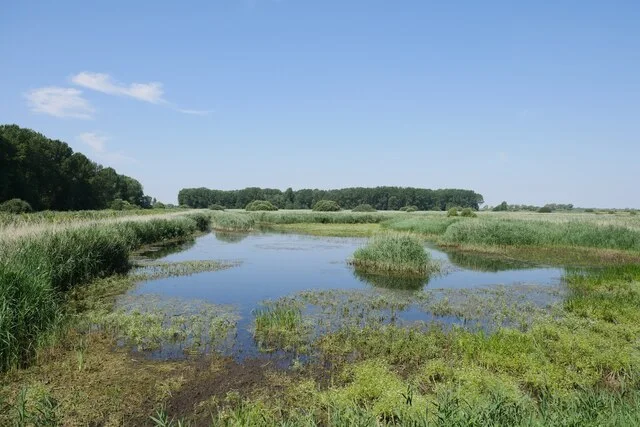
Build the visit around the contrast between the Washland, reedbed viewpoints and the poplar woods. The three-mile Main Circular Trail links three viewpoints and a hide, while the Trial Wood and East Wood routes offer shorter woodland alternatives. Mere Hide gives a lower, more enclosed perspective; New Fen North and Joist Fen encourage broad scans over reeds and open water. Move between these different views slowly enough to notice changes in bird behaviour. A high-flying harrier may be visible over a wide area, while a kingfisher can disappear almost immediately behind a reed fringe. Two-hour plan, editorial suggestion: begin with the Washland, then make New Fen North your principal watch. Spend most of the available time observing, with a brief woodland pause on the return. Choose this compact outing when daylight is limited or when you would rather listen for bitterns than complete a circuit. Resist pushing on to the furthest viewpoint if doing so would leave only a few hurried minutes there. Full-day plan, editorial suggestion: start with the woodland edge and Washland, continue to Mere Hide, and work onwards to Joist Fen for an extended reedbed watch. Break for a packed lunch before deciding whether to return along the main route or use the signed circular option appropriate to conditions. Revisit New Fen North later in the day: different light and bird movements can make a familiar viewpoint more productive than another long walk. Keep the final return within the available daylight. A useful fieldcraft exercise is to select a few visible reed channels and scan each in turn, then raise your eyes to the skyline. Listen between scans. Keep conversation low inside the hide, leave viewing space for other visitors and avoid playing recordings to provoke a response. A crane disappearing into vegetation should be left in peace; watch the habitat from the public viewpoint instead of attempting a closer approach.
Use the linked reserve map and directions with current access notices. Species are typical seasonal targets. Light and telescope advice reflects our choice of viewpoint.
Little Ouse washland pools
Ramped approach with gradients; remain on the public bank.
Winter: Great White Egret, Little Egret, Shelduck, Mute Swan, Buzzard, Barn Owl
Spring: Great White Egret, Little Egret, Shelduck, Mute Swan, Buzzard, Barn Owl
Summer: Great White Egret, Little Egret, Shelduck, Mute Swan, Buzzard
Autumn: Great White Egret, Little Egret, Shelduck, Mute Swan, Buzzard, Barn Owl
Light: either. Scope: useful.
New Fen North reedbed and pool
Hard-track approach; accessible vehicle permit through the visitor centre.
Winter: Grey Heron, Gadwall, Great Crested Grebe, Tufted Duck, Stonechat, Kestrel
Spring: Grey Heron, Gadwall, Great Crested Grebe, Tufted Duck, Stonechat, Kestrel, Sedge Warbler
Summer: Grey Heron, Gadwall, Great Crested Grebe, Kestrel, Sedge Warbler
Autumn: Grey Heron, Gadwall, Great Crested Grebe, Tufted Duck, Stonechat, Kestrel
Light: either. Scope: useful.
New Fen North from the woodland edge
Follow the signed Trial Wood trail.
Spring: Blackcap, Garden Warbler
Summer: Blackcap, Garden Warbler
Autumn: Blackcap
Light: either. Scope: useful.
Reed-fringed pool
Boardwalk access off the main reserve track.
Winter: Bearded Tit, Water Rail, Little Grebe, Cetti’s Warbler
Spring: Bearded Tit, Water Rail, Little Grebe, Cetti’s Warbler
Summer: Bearded Tit, Little Grebe, Cetti’s Warbler
Autumn: Bearded Tit, Water Rail, Little Grebe, Cetti’s Warbler
Light: either. Scope: useful.
Large western reedbeds and open fen
Longer hard-track walk with a grass slope at the viewpoint.
Winter: Marsh Harrier
Spring: Bittern, Marsh Harrier, Hobby, Crane
Summer: Bittern, Marsh Harrier, Hobby, Crane
Autumn: Marsh Harrier, Hobby, Crane
Light: either. Scope: essential.
Ditch and reed-edge water beside the main route
Stay on the platform and signed paths.
Spring: Reed Warbler
Summer: Reed Warbler
Autumn: Reed Warbler
Light: either. Scope: not needed.
Pond edge, shrubs and feeding station
Use the public viewing space.
Winter: Reed Bunting
Spring: Reed Bunting
Autumn: Reed Bunting
Light: either. Scope: not needed.
Grazing marsh, poplar woodland and scrub
Flat surfaced family trail.
Winter: Fieldfare, Redwing, Tawny Owl
Spring: Fieldfare, Redwing, Tawny Owl
Summer: Tawny Owl
Autumn: Fieldfare, Redwing, Tawny Owl
Light: either. Scope: not needed.
Poplar woodland and New Fen pool margins
Grass and stone route; the riverbank alternative is rougher.
Winter: Kingfisher, Treecreeper
Spring: Kingfisher, Treecreeper
Summer: Kingfisher, Treecreeper
Autumn: Kingfisher, Treecreeper
Light: either. Scope: not needed.
| Spot | Overlooks | Key species by season | Best light | Scope | Tide |
|---|---|---|---|---|---|
| Washland viewpointRamped approach with gradients; remain on the public bank. | Little Ouse washland pools | Winter: Great White Egret, Little Egret, Shelduck, Mute Swan, Buzzard, Barn Owl Spring: Great White Egret, Little Egret, Shelduck, Mute Swan, Buzzard, Barn Owl Summer: Great White Egret, Little Egret, Shelduck, Mute Swan, Buzzard Autumn: Great White Egret, Little Egret, Shelduck, Mute Swan, Buzzard, Barn Owl | either | useful | — |
| New Fen viewpointHard-track approach; accessible vehicle permit through the visitor centre. | New Fen North reedbed and pool | Winter: Grey Heron, Gadwall, Great Crested Grebe, Tufted Duck, Stonechat, Kestrel Spring: Grey Heron, Gadwall, Great Crested Grebe, Tufted Duck, Stonechat, Kestrel, Sedge Warbler Summer: Grey Heron, Gadwall, Great Crested Grebe, Kestrel, Sedge Warbler Autumn: Grey Heron, Gadwall, Great Crested Grebe, Tufted Duck, Stonechat, Kestrel | either | useful | — |
| Trial Wood viewpointFollow the signed Trial Wood trail. | New Fen North from the woodland edge | Spring: Blackcap, Garden Warbler Summer: Blackcap, Garden Warbler Autumn: Blackcap | either | useful | — |
| Mere HideBoardwalk access off the main reserve track. | Reed-fringed pool | Winter: Bearded Tit, Water Rail, Little Grebe, Cetti’s Warbler Spring: Bearded Tit, Water Rail, Little Grebe, Cetti’s Warbler Summer: Bearded Tit, Little Grebe, Cetti’s Warbler Autumn: Bearded Tit, Water Rail, Little Grebe, Cetti’s Warbler | either | useful | — |
| Joist Fen viewpointLonger hard-track walk with a grass slope at the viewpoint. | Large western reedbeds and open fen | Winter: Marsh Harrier Spring: Bittern, Marsh Harrier, Hobby, Crane Summer: Bittern, Marsh Harrier, Hobby, Crane Autumn: Marsh Harrier, Hobby, Crane | either | essential | — |
| Dragonfly platformStay on the platform and signed paths. | Ditch and reed-edge water beside the main route | Spring: Reed Warbler Summer: Reed Warbler Autumn: Reed Warbler | either | not needed | — |
| Visitor centre pondUse the public viewing space. | Pond edge, shrubs and feeding station | Winter: Reed Bunting Spring: Reed Bunting Autumn: Reed Bunting | either | not needed | — |
| Brandon Fen trailFlat surfaced family trail. | Grazing marsh, poplar woodland and scrub | Winter: Fieldfare, Redwing, Tawny Owl Spring: Fieldfare, Redwing, Tawny Owl Summer: Tawny Owl Autumn: Fieldfare, Redwing, Tawny Owl | either | not needed | — |
| East Wood trailGrass and stone route; the riverbank alternative is rougher. | Poplar woodland and New Fen pool margins | Winter: Kingfisher, Treecreeper Spring: Kingfisher, Treecreeper Summer: Kingfisher, Treecreeper Autumn: Kingfisher, Treecreeper | either | not needed | — |
Month chips show typical presence or our preferred viewing season. Choose birds that suit the time of your visit.
The RSPB identifies Brandon Fen Family Trail as its easiest mobility option: a flat circuit approximately 1.1km long and 1.8m wide, finished with fine rolled stone. The visitor centre is step-free and has a hearing induction loop. An accessible toilet and baby-changing provision are in the separate block beside its entrance. Six accessible parking spaces are listed, but the facilities text also says they are 700m from the centre; that unusually long published distance should be discussed with the team before relying on it. Visitors with mobility difficulties can request a vehicle pass to the first viewpoint, with a six-car limit. New Fen North has a hard-stone approach and a grass slope; Joist Fen also has a sloping grass approach. The riverbank option is more uneven and includes kissing gates. Mere Hide's final approach uses a boardwalk, so describe the dimensions of your chair or scooter when seeking advice about that destination. The operator links a detailed access guide from its facilities page. Select a route around your preferred viewing position and comfortable return distance, rather than choosing solely by the total trail mileage.
The visitor centre offers hot and cold drinks, pre-packed snacks and local ice creams; bring a picnic for a more substantial lunch. Seating at the picnic area includes tables designed to accommodate wheelchair users. Binocular hire is advertised at £5 on the facilities page checked in October 2026, with the final hire an hour before the centre closes. RSPB events provide another way to explore the reserve. Carry a warm layer for long periods standing at a viewpoint, even after an energetic walk.
Pet dogs are restricted to the Washland Footpath, kept on a lead and under close control around wildlife and livestock. They cannot accompany you on Brandon Fen, Trial Wood, East Wood or the Main Circular Trail. Visitors with assistance dogs are welcome at Lakenheath Fen, including throughout its visitor routes. Choose the correct route before leaving the entrance area.
The RSPB states that no scheduled bus serves the reserve entrance. Its alternative is the on-demand Brecks Bus from Brandon and Thetford, operating Monday–Friday and booked on 01638 664304 by noon on the preceding weekday. Confirm that your requested outward and return journeys have been accepted before buying connecting rail tickets. Some weekend trains call at Lakenheath station; use Greater Anglia's journey planner for the actual date, as a station on the map does not imply a frequent daily service. The operator describes a footpath linking the centre with Station Road north of the station. On weekdays Brandon is the RSPB's recommended railhead, 4.7 miles away: arrange a taxi for the last leg or plan the longer Hereward Way walk as part of the day. Coach Services routes 80 and 80A serve Lakenheath village, not the reserve gate. The village is a different destination, so those route numbers should not be read as a direct visitor-centre connection. Drivers approach via the B1112 and the signed entrance near the level crossing.
Useful bases for an early start.
Booking.com links are affiliate links: we may earn a commission at no extra cost to you. How these links work.
About 6.5 miles by road, roughly 13 minutes’ drive (OSRM estimate measured 18 October 2026).
Measured driving route · 18 October 2026. Map estimates exclude live traffic.
The nearest town base for a reedbed morning.Find places to stay in Brandon on Booking.comAbout 12.9 miles by road, roughly 23 minutes’ drive (OSRM estimate measured 18 October 2026).
Measured driving route · 18 October 2026. Map estimates exclude live traffic.
Rail connections and a wider Brecks visit.Find places to stay in Thetford on Booking.comAbout 16.3 miles by road, roughly 28 minutes’ drive (OSRM estimate measured 18 October 2026).
Measured driving route · 18 October 2026. Map estimates exclude live traffic.
Combining fenland birding with a city stay.Find places to stay in Ely on Booking.comExplore Suffolk’s full guides and smaller birding sites
Contact the reserve on 01842 863400 or lakenheath@rspb.org.uk. Its official address is Lakenheath Fen, Station Road, Lakenheath, Brandon, Suffolk IP27 9AD. Describe any access equipment, intended vehicle-pass arrangement or group visit when contacting the team, so your question reaches the right person. The RSPB's main reserve page carries recent sightings and links to current events; use these to choose a watchpoint while keeping a flexible plan for the day.
Check RSPB Lakenheath Fen recent wildlife reports. irregular reserve updates Reports show what has been seen, not what will be.
Follow the BTO Birders’ Code and give wildlife space.
Lakenheath Fen: Non-member adult £5 / child £2 / student £3; members and listed concessions free.
Lakenheath Fen: Pet dogs are restricted to the Washland Footpath, kept on a lead and under close control around wildlife and livestock.
Lakenheath Fen: Spring reedbeds · autumn harriers.
Lakenheath Fen: The visitor centre is step-free and has a hearing induction loop.
Lakenheath Fen: The RSPB states that no scheduled bus serves the reserve entrance.
Shorter stops within 15 miles in a straight line. Use the operator’s arrival directions for the journey.
Lynford, near Mundford · woodland · wetland
Tuddenham and Icklingham, River Lark · Breck heath, woodland and River Lark wetland
Near Boughton and Stoke Ferry · Fen, reedbed and grassland
Thetford · wetland · woodland · grassland
Fordham Road, south of Isleham · Former railway cutting, chalk grassland and hedgerows
Brook Street approach, Soham · Traditional riverside hay meadow and hedgerows
Chettisham village approach, north of Ely · Traditional hay meadow and thick hedgerows
Hilborough · River and wet meadows
Northeast of Thetford, off the A1075 · Heathland · Woodland · Lakes
Downham Market · River, relief channel and riverside grassland
Stretham Road, Wicken · Managed reedbed, lake, grassland and wetland
Near Hockham, viewed from the Great Eastern Pingo Trail · Reedbeds · Woodland · Lakes
Swaffham · Coniferous woodland and clearings
Nearby complete guides.
Stops with a purpose: use one as a contrasting habitat or weather-proof Plan B. Distances are straight-line estimates, not road journeys.