
Responsible wildlife guide
Where to experience Bearded Tits.
Listen for Bearded Tits in reedbeds, choose calm days and public viewpoints, and learn how autumn flights and changing diets shape a patient visit.
Begin with the sound of a reedbed
A Bearded Tit visit often begins with a sound rather than a sight. The RSPB describes the distinctive pinging calls that can reveal birds moving within the reeds. Stop on the public trail, let other noise settle and listen across a broad patch before deciding where to look. Usually a quiet pause gives a better chance than repeatedly walking the same few metres or playing a recording into the habitat.
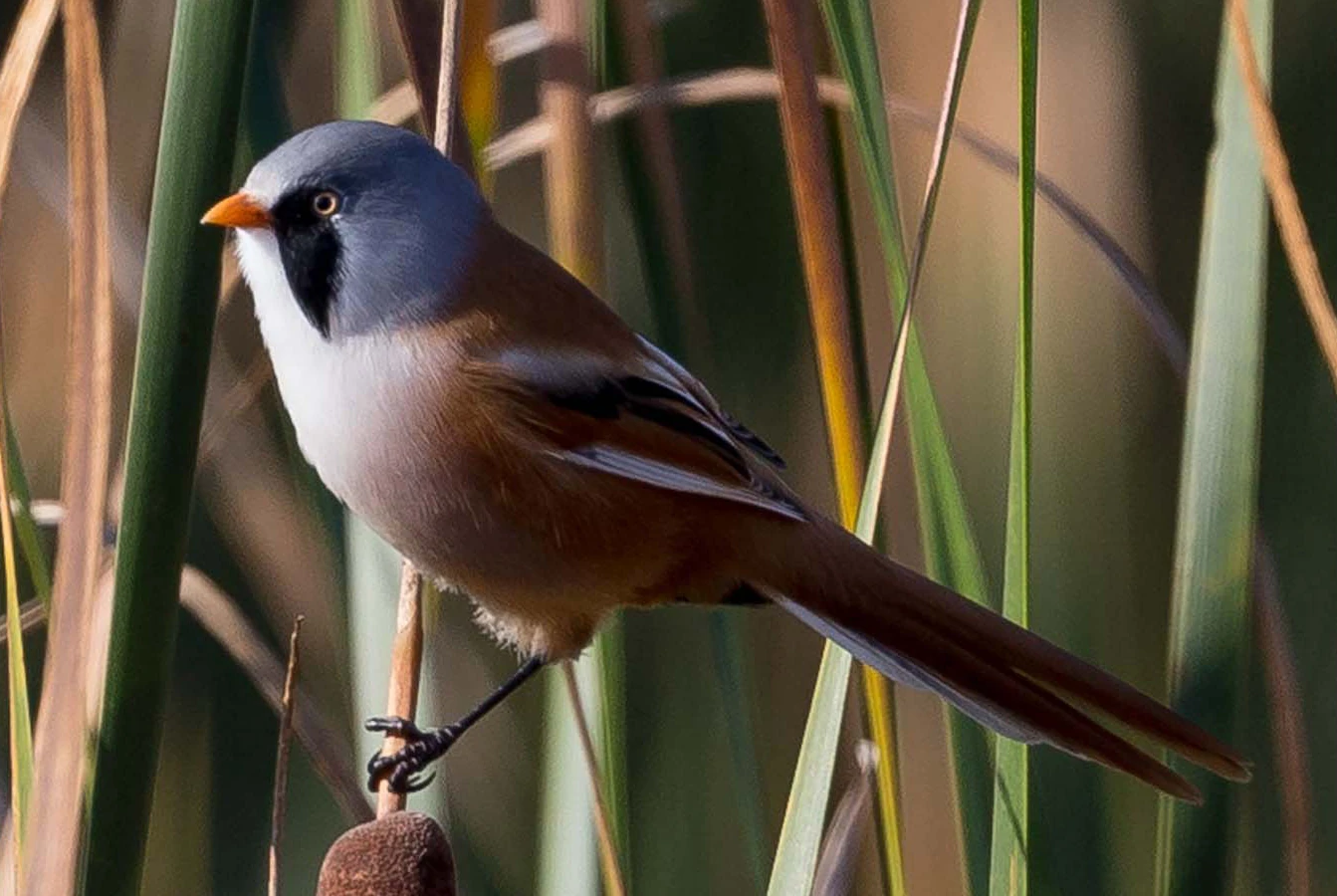
When birds show, their long tails and warm colouring help separate them from many other reedbed birds. Males have conspicuous dark moustache-like markings; the common name can mislead, because the species is neither a true tit nor actually bearded. A brief glimpse is still worthwhile. Follow the bird with your eyes while it remains visible, then let it disappear without moving off the path in pursuit.
The diet changes with the year
The RSPB explains that Bearded Tits switch from feeding mainly on invertebrates in spring and summer to taking reed seeds in the colder months. It also describes birds swallowing grit to help process the seeds. This seasonal change helps explain why a bird that seems hidden for much of the year can become more visible in autumn, but it does not make every open patch beside a path a feeding station.
Use any reserve-managed grit-viewing arrangement exactly as the operator intends. Do not scatter your own grit, seed or food to bring birds within camera range. The interest lies in watching natural behaviour and the conservation work that supports it. Compare a bird clinging to a seed head with one moving lower among the stems, and consider how wind changes the view before deciding a quiet period means the birds have gone.
Why autumn is often rewarding
The RSPB identifies autumn as a particularly useful season because Bearded Tits can make excitable group flights instead of remaining concealed. Usually a calm morning makes it easier to hear calls and follow the first movement above the stems. Watch the reedbed as a whole: a small group may rise from one place and settle somewhere quite different, so concentrating through a narrow camera view can miss the pattern.
A group flight is an opportunity to observe, not a signal to rush towards the landing point. Keep the route clear, tell nearby visitors quietly what you have seen and leave the birds room to settle. If the wind strengthens, try a sheltered official viewpoint rather than forcing a circuit designed for better conditions. An unhurried reedbed day can remain rewarding through Water Rails, Reed Buntings and raptors even when Bearded Tits stay out of sight.
Spring and summer patience
In spring, a reedbed can be full of sound while its smaller residents remain difficult to see. Choose a public path with an open view and give it time. Typically watching the edge of a gap is more effective than searching every stem at once. Do not follow food-carrying birds, investigate concealed movements or publish directions to a nest. Breeding birds need freedom to move through habitat without being repeatedly intercepted.
Summer vegetation can make identification more difficult, so work with what the view actually allows. A bird seen only as a brown shape among reeds may remain unidentified, and that is preferable to forcing a confident name from insufficient detail. Binoculars are useful for keeping a broad field of view. Rest them occasionally, listen again and look for movement with unaided eyes before returning to the optics.
Suffolk and Norfolk choices
RSPB Minsmere explicitly identifies Bearded Tits in its reedbed wildlife. Its wider mixture of lagoons, woodland and coast makes a sensible full-day choice when you want several interests alongside a patient reedbed watch. Use the current operator advice for which trails and hides are available; recent wildfire impacts and maintenance mean an older map alone is insufficient for planning the route.
RSPB Titchwell Marsh also names the species among its resident reedbed attractions. The West Bank path and the separate East Trail offer different outlooks, and a quiet pause can sit naturally within a broader lagoon-and-coast visit. RSPB Fowlmere needs a different expectation: its operator describes Bearded Tits as occasional winter birds. Choose Fowlmere for its overall wetland experience, appreciating the species as a bonus if present rather than promising a routine encounter.
North-west, Humber and Essex visits
RSPB Leighton Moss offers the substantial reedbed setting of Silverdale and is a well-established place for learning to watch this habitat. RSPB Blacktoft Sands provides another major reedbed and lagoon experience on the Humber. Read each full guide for the available public viewing positions and the rest of the seasonal wildlife, then choose a day with enough time to remain in one place rather than rushing between hides.
RSPB Old Hall Marshes is an additional Essex option: the operator specifically invites visitors to listen for Bearded Tits among its mixture of reedbed, pools and estuarine habitats. A visit there can combine close listening with much wider landscape watching. The scale and public route differ from a compact visitor-centre reserve, so choose it for the whole walk and its facilities rather than assuming identical viewing arrangements.
Make a quiet watch work for everyone
Keep conversation low beside occupied hides and narrow reedbed paths, and avoid leaving a tripod across the route. When a bird appears, a clear quiet description of the direction is more helpful than stepping into somebody else’s view. Give children room to watch and explain that hearing the call is part of the experience. A few minutes identifying common reedbed birds can make the wait more absorbing than concentrating on a single target.
Afterwards, contribute observations through the reserve’s usual channels, separating what you heard from what you saw. An accurate account of a small group, its behaviour and the public viewpoint can help the operator without broadcasting sensitive breeding information. Take the wider habitat seriously: healthy reeds, water levels and undisturbed margins are what sustain the encounter. Leaving those conditions intact matters more than ending every visit with a close photograph.
Where to watch
These rows use existing reserve watching-place records and typical local seasons. Sensitive locations are withheld. Follow current operator restrictions.
| Reserve and public watching place | Typical months | Best light | Scope |
|---|---|---|---|
| RSPB Minsmere: North Wall | January, February, March, April, May, June, July, August, September, October, November, December | either | not needed |
| RSPB Leighton Moss: Causeway grit trays | September, October, November | either | not needed |
| RSPB Newport Wetlands: Sculpture Trail reedbed screens and viewing platform | January, February, March, April, May, June, July, August, September, October, November, December | either | useful |
| RSPB Titchwell Marsh: West Bank Path — reedbed section | January, February, March, April, May, June, July, August, September, October, November, December | afternoon | not needed |
| RSPB Blacktoft Sands: Ousefleet viewing screen | January, February, March, April, May, June, July, August, September, October, November, December | either | not needed |
| NWT Cley and Salthouse Marshes: East Bank | March, April, May, June, July, August, September, October | either | useful |
| RSPB Rainham Marshes: Shooting Butts hide | January, February, March, April, May, June, July, August, September, October, November, December | either | useful |
| RSPB Ham Wall: Viewing Platform 2 | January, February, March, April, May, June, July, August, September, October, November, December | either | useful |
| Shapwick Heath National Nature Reserve: Meare Heath Hide | January, February, March, April, May, June, July, August, September, October, November, December | either | useful |
| RSPB Dearne Valley – Old Moor: Bittern Bus Stop | January, February, March, April, May, June, July, August, September, October, November, December | either | useful |
| RSPB Strumpshaw Fen: Accidental Broad — mapped riverbank outlooks | January, February, March, April, May, June, July, August, September, October, November, December | either | useful |
| NWT Hickling Broad and Marshes: Bittern Hide | January, February, March, April, May, June, July, August, September, October, November, December | either | useful |
Where to see bearded tits by month
The months below come from each reserve’s local birding guide. They describe typical presence or a preferred watching season; national occurrence can be broader. Reports show past observations and cannot promise an encounter. Sensitive birds have no published watching position.
| Species | Reserve guide | Typical or preferred months |
|---|---|---|
| Bearded Tit | RSPB Minsmere | January, February, March, April, May, June, July, August, September, October, November, December |
| Bearded Tit | RSPB Leighton Moss | September, October, November |
| Bearded Tit | RSPB Newport Wetlands | January, February, March, April, May, June, July, August, September, October, November, December |
| Bearded Tit | RSPB Titchwell Marsh | January, February, March, April, May, June, July, August, September, October, November, December |
| Bearded Tit | RSPB Blacktoft Sands | January, February, March, April, May, June, July, August, September, October, November, December |
| Bearded Tit | NWT Cley and Salthouse Marshes | March, April, May, June, July, August, September, October |
| Bearded Tit | RSPB Rainham Marshes | January, February, March, April, May, June, July, August, September, October, November, December |
| Bearded Tit | RSPB Ham Wall | January, February, March, April, May, June, July, August, September, October, November, December |
| Bearded Tit | Shapwick Heath National Nature Reserve | January, February, March, April, May, June, July, August, September, October, November, December |
| Bearded Tit | RSPB Dearne Valley – Old Moor | January, February, March, April, May, June, July, August, September, October, November, December |
| Bearded Tit | RSPB Strumpshaw Fen | January, February, March, April, May, June, July, August, September, October, November, December |
| Bearded Tit | NWT Hickling Broad and Marshes | January, February, March, April, May, June, July, August, September, October, November, December |
| Bearded Tit | Lakenheath Fen | January, February, March, April, May, June, July, August, September, October, November, December |
| Bearded Tit | Oare Marshes Nature Reserve | May, June, July, August, September, October |
| Bearded Tit | Elmley National Nature Reserve | September, October, November, December, January, February, March |
| Bearded Tit | Far Ings National Nature Reserve | January, February, March, April, May, June, July, August, September, October, November, December |
| Bearded Tit | RSPB Radipole Lake | January, February, March, April, May, June, July, August, September, October, November, December |
| Bearded Tit | RSPB Lodmoor | January, February, March, April, May, June, July, August, September, October, November, December |
| Bearded Tit | Carlton Marshes Nature Reserve | January, February, March, April, May, June, July, August, September, October, November, December |
| Bearded Tit | RSPB Old Hall Marshes | January, February, March, April, May, June, July, August, September, October, November, December |
| Bearded Tit | Titchfield Haven National Nature Reserve | January, February, March, April, May, June, July, August, September, October, November, December |
| Bearded Tit | Lymington–Keyhaven Marshes Nature Reserve | March, April, May, June, July, August, September, October |
| Bearded Tit | RSPB North Warren | January, February, March, April, May, June, July, August, September, October, November, December |
| Bearded Tit | RSPB Langford Lowfields | October, November |
| Bearded Tit | Farlington Marshes | January, February, March, April, May, June, July, August, September, October, November, December |
Reserve guides for bearded tits
- RSPB Minsmere · England
- RSPB Leighton Moss · England
- RSPB Newport Wetlands · Wales
- RSPB Titchwell Marsh · England
- RSPB Blacktoft Sands · England
- NWT Cley and Salthouse Marshes · England
- RSPB Rainham Marshes · England
- RSPB Ham Wall · England
- Shapwick Heath National Nature Reserve · England
- RSPB Dearne Valley – Old Moor · England
- RSPB Strumpshaw Fen · England
- NWT Hickling Broad and Marshes · England
- Lakenheath Fen · England
- Oare Marshes Nature Reserve · England
- Elmley National Nature Reserve · England
- Far Ings National Nature Reserve · England
- RSPB Radipole Lake · England
- RSPB Lodmoor · England
- Carlton Marshes Nature Reserve · England
- RSPB Old Hall Marshes · England
- Titchfield Haven National Nature Reserve · England
- Lymington–Keyhaven Marshes Nature Reserve · England
- RSPB North Warren · England
- RSPB Langford Lowfields · England
- Farlington Marshes · England
Questions birdwatchers ask
Where is the best place to see bearded tits in the UK?
Public places covered in this guide include RSPB Minsmere, RSPB Leighton Moss, RSPB Newport Wetlands.
When is the best time to see bearded tits?
Resident all year in suitable reedbeds; autumn often offers more visible group flights
How do I watch bearded tits responsibly?
Remain on public routes, keep reed margins undisturbed, and never use playback, bait or nest directions to obtain a closer view.
Sources and review
Reviewed 2026-10-19.