
Short entry4.6 miles away
Peterstone Wentlooge Marshes
Peterstone Wentlooge, Newport · Estuary mudflats and saltmarsh
 the ai birderBirding near me
The AI Birder · one-page field sheet
West Nash Road, Newport, Wales · NP18 2BZ · NP18 2BZ

Bittern · Bearded Tit · Marsh Harrier · Cetti’s Warbler · Mute Swan · Tufted Duck
The Hide · Sculpture Trail reedbed screens and viewing platform · Woodland and Estuary Trail · Wetlands Experience trail · Visitor centre viewing deck
Check current access, hide closures and operator notices before travelling. Seasonal birds are possibilities, not promised sightings. Keep to authorised routes and give wildlife space.
Opening and charges checked 2026-10-25. Operator: https://www.rspb.org.uk/days-out/reserves/newport-wetlands
Full guide and current source links: https://aibirder.co.uk/reserves/rspb-newport-wetlands
WA 05 · RSPB reserve guide
West Nash Road, Newport, Wales · NP18 2BZ
Bitterns and Bearded Tits haunt the reeds; Avocets and Curlews feed around saltmarsh and mudflats, while winter dusk can bring a vast Starling murmuration.
Decide if the visit fits.
Last checked 18 October 2026.
Opening and charges information · checked .
Stay nearby →Reserve overview
Bitterns and Bearded Tits haunt the reeds; Avocets and Curlews feed around saltmarsh and mudflats, while winter dusk can bring a vast Starling murmuration.
Eight checks for a smoother visit.
Conditions change: check the operator and transport notices before travelling.
January: Typically begin at The Hide for Tufted Duck, Coot and Little Grebe. Woodland and Estuary Trail adds Wigeon, Teal and Dunlin when feeding ground is visible. Keep the exposed estuary section optional; cold wind can make a settled pool watch more rewarding.
February: Bearded Tit and Cetti’s Warbler usually reward patient listening from Sculpture Trail reedbed screens and viewing platform. Watch an open channel before moving again. From Woodland and Estuary Trail, compare Lapwing with the smaller Dunlin without approaching resting flocks.
March: Usually combine Mute Swan and Little Grebe at The Hide with Curlew from Woodland and Estuary Trail. Winter ducks may linger, but numbers change rather than following a fixed departure date. Choose your route around usable light, wind and the car-park closing time.
April: Cetti’s Warbler usually makes Sculpture Trail reedbed screens and viewing platform an absorbing listening stop. Cuckoo typically returns later in spring and may be heard along Wetlands Experience trail. Hear the bird from the path instead of tracking it into vegetation.
May: Typically give Sculpture Trail reedbed screens and viewing platform time for Bearded Tit and passing Marsh Harrier. Hobby is a warmer-month possibility over the reedbeds. Return to The Hide for Mute Swan and Little Grebe, watching ordinary behaviour without approaching family groups.
June: Usually split attention between Hobby over Sculpture Trail reedbed screens and viewing platform and Coot on the pools at The Hide. Bird activity changes through a hot day, so try an unhurried early session with water and sun protection rather than an exhausting circuit.
July: Marsh Harrier and Little Grebe typically provide useful midsummer watching from Sculpture Trail reedbed screens and viewing platform and The Hide respectively. Vegetation can make views intermittent. Wait for a natural opening, keeping binoculars ready instead of pushing towards reed edges.
August: Typically look for Hobby above Sculpture Trail reedbed screens and viewing platform, then compare Coot and Tufted Duck at The Hide. This is a transition month rather than a guaranteed spectacle. Check dated Gwent reports before deciding whether to extend the day elsewhere.
September: Bearded Tit and Marsh Harrier usually remain useful interests from Sculpture Trail reedbed screens and viewing platform. Curlew adds an estuary comparison along Woodland and Estuary Trail. Autumn passage varies with conditions, so leave time for slow scans rather than rushing between reports.
October: Usually look for returning Redwing and Fieldfare beside Wetlands Experience trail, with Wigeon and Teal from Woodland and Estuary Trail. Consult current staff advice about seasonal spectacles without seeking a roost. Afternoon watching must fit the separately locked car park.
November: Wigeon, Teal and Dunlin typically justify a Woodland and Estuary Trail session, while Bearded Tit offers a quieter reedbed alternative at Sculpture Trail reedbed screens and viewing platform. Check the tide and forecast first; remaining on dry public paths is essential.
December: Usually start with Tufted Duck and Coot at The Hide and add a short Redwing or Fieldfare search along Wetlands Experience trail. Keep a warm break available. Reports describe previous observations, so a modest winter circuit can be successful without finding a headline species.
Best conditions: Our choice is a calm morning for listening beside reeds, typically with a shorter exposed estuary section if wind strengthens. A telescope helps on distant mudflats; binoculars suit channels and flying harriers. Light and scope ratings are editorial guidance. Check the Newport forecast and car-park gate time before planning dawn or dusk.
October 2026 prices checked 18 October: adult and child reserve entry is free. Car parking is £5 for non-members and free for RSPB members and Blue Badge holders. The official daily opening calendar checked for this review listed the nature reserve and hide open around the clock, car park 09:00–17:00, visitor centre and toilets 09:30–17:00, and café 10:00–16:00. Those are the published October arrangements, not a promise for every season. The distinction matters for an evening Starling visit: being allowed onto the reserve does not make a gated car park available after its closing time. Ordinary visits do not need advance admission booking; groups of ten or more should use the RSPB group-booking route. Binocular hire was listed at £3, £5 or £7 per day, according to equipment choice.
Access times: Reserve: RSPB calendar checked 19 October 2026 lists the nature reserve open 24 hours; use authorised pedestrian paths. · Hides: The Hide is listed open 24 hours. Follow temporary maintenance signs. · Car park: 09:00–17:00 on the checked October calendar; a late reedbed watch does not extend vehicle access. · Dawn access: partly. Operator opening information.
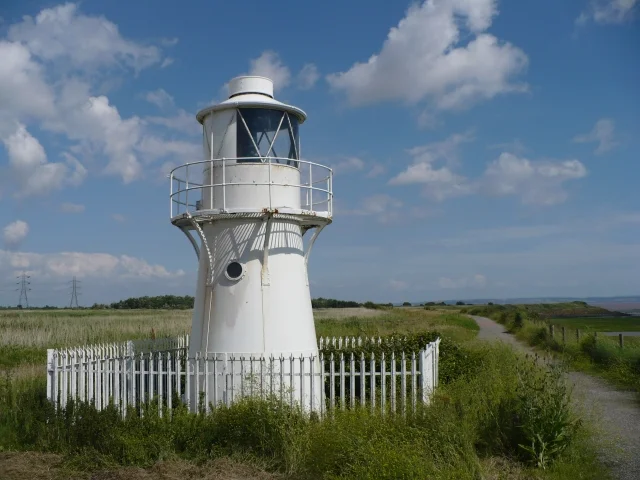
Four named walks let you decide how much walking to combine with birdwatching. The Sculpture Trail is one mile, passing through reeds and across the floating bridge towards the East Usk lighthouse. The Orchid Trail is another one-mile option, especially rewarding for plants in late spring and early summer. The Woodland and Estuary Trail is 1.5 miles and brings together reeds, trees, open water and estuary views. The Wetlands Experience is the longest signed circuit at three miles, combining the Orchid and Woodland and Estuary routes with part of the Wales Coast Path. Download the operator's map and follow the coloured route markings; the lighthouse is a useful landmark, not permission to leave the path for the mudflats. Two-hour plan: walk the Sculpture Trail slowly, stopping at the reedbed screens rather than pressing straight to the lighthouse. Spend part of the second hour watching one lagoon from the hide, looking repeatedly along the same reed edge for movement. Return by the marked route and allow time to consult the centre's interpretation. Full-day plan: begin with the shorter reedbed circuit, have lunch at the visitor centre, then take the Woodland and Estuary Trail or the longer Wetlands Experience according to energy and conditions. Revisit a productive screen on the return rather than adding distance simply to complete every path. For a winter dusk visit, shape the day around the access arrangements in Entry and your booked onward journey. Watch the roost from an authorised path without following descending birds into the reeds. On the estuary leg, compare birds feeding on exposed mud with those resting at the waterline. A telescope helps with distant identification, but binoculars are sufficient for a rewarding reedbed walk. Keep notes of uncertain birds to check later rather than moving closer across sensitive habitat for a definitive photograph.
Use the linked reserve map and directions with current access notices. Species are typical seasonal targets. Light and telescope advice reflects our choice of viewpoint.
Reedbeds, channels and open pools from the mapped wheelchair-accessible hide
Use the signed surfaced route; floating sections elsewhere need care because of buoyancy.
Winter: Tufted Duck, Coot
Spring: Mute Swan, Little Grebe
Summer: Coot, Little Grebe
Autumn: Tufted Duck, Mute Swan
Light: either. Scope: useful.
Uskmouth reedbeds and their open channels from the public route and screens
Screen and platform descriptions are operator facility types, not invented individual hide names. Keep to paths.
Winter: Bittern, Bearded Tit, Marsh Harrier, Barn Owl
Spring: Cetti’s Warbler, Bearded Tit, Barn Owl
Summer: Hobby, Marsh Harrier, Barn Owl
Autumn: Bearded Tit, Cetti’s Warbler, Barn Owl
Light: either. Scope: useful.
Open water, woodland edge and Severn Estuary mudflats beside the official trail
Remain on the surfaced trail and dry seawall route; never descend onto saltmarsh or mud.
Winter: Wigeon, Teal, Dunlin, Lapwing
Spring: Curlew
Summer: Curlew
Autumn: Curlew, Dunlin
Light: either. Scope: essential.
Tide: Typically watch exposed feeding ground before water covers it; return to pools when the shore is distant or submerged.
Reedbed edge, wooded sections and hedgerows along the combined waymarked route
This combines official trails and the Wales Coast Path. Current signs decide any diversion.
Winter: Redwing, Fieldfare, Little Owl
Spring: Cuckoo, Little Owl
Summer: Cuckoo, Little Owl
Autumn: Redwing, Fieldfare, Little Owl
Light: either. Scope: useful.
Wetland landscape from the step-free café-side outdoor viewing area
Available with visitor-centre facilities; use the independent outdoor trails outside staffed hours.
Light: either. Scope: useful.
| Spot | Overlooks | Key species by season | Best light | Scope | Tide |
|---|---|---|---|---|---|
| The HideUse the signed surfaced route; floating sections elsewhere need care because of buoyancy. | Reedbeds, channels and open pools from the mapped wheelchair-accessible hide | Winter: Tufted Duck, Coot Spring: Mute Swan, Little Grebe Summer: Coot, Little Grebe Autumn: Tufted Duck, Mute Swan | either | useful | — |
| Sculpture Trail reedbed screens and viewing platformScreen and platform descriptions are operator facility types, not invented individual hide names. Keep to paths. | Uskmouth reedbeds and their open channels from the public route and screens | Winter: Bittern, Bearded Tit, Marsh Harrier, Barn Owl Spring: Cetti’s Warbler, Bearded Tit, Barn Owl Summer: Hobby, Marsh Harrier, Barn Owl Autumn: Bearded Tit, Cetti’s Warbler, Barn Owl | either | useful | — |
| Woodland and Estuary TrailRemain on the surfaced trail and dry seawall route; never descend onto saltmarsh or mud. | Open water, woodland edge and Severn Estuary mudflats beside the official trail | Winter: Wigeon, Teal, Dunlin, Lapwing Spring: Curlew Summer: Curlew Autumn: Curlew, Dunlin | either | essential | Typically watch exposed feeding ground before water covers it; return to pools when the shore is distant or submerged. |
| Wetlands Experience trailThis combines official trails and the Wales Coast Path. Current signs decide any diversion. | Reedbed edge, wooded sections and hedgerows along the combined waymarked route | Winter: Redwing, Fieldfare, Little Owl Spring: Cuckoo, Little Owl Summer: Cuckoo, Little Owl Autumn: Redwing, Fieldfare, Little Owl | either | useful | — |
| Visitor centre viewing deckAvailable with visitor-centre facilities; use the independent outdoor trails outside staffed hours. | Wetland landscape from the step-free café-side outdoor viewing area | — | either | useful | — |
Month chips show typical presence or our preferred viewing season. Choose birds that suit the time of your visit.
Use Newport predictions to understand when estuary feeding ground is exposed; no operator arrival offset or minimum tide height was found. The reedbed pools offer an alternative through the tide. Stay off mudflats and saltmarsh.
The car park has a tarmac surface, ten Blue Badge spaces and a roughly 180-metre approach to the visitor centre surfaced with compacted limestone chippings and dust. Coloured routes are described by RSPB as suitable for wheelchairs and pushchairs; the paths are generally level, with a zig-zag overcoming one incline. Floating sections can move under load, so consider whether that sensation will suit your mobility equipment. A wheelchair-accessible hide and screens overlook the reedbeds and main lagoons. The visitor-centre entrance uses a wooden walkway with a maximum gradient of 1:40 and manually operated doors. A low counter section and hearing loops at the service counter and in education rooms assist communication. Accessible toilets have level access on the ground floor. Three mobility scooters and two wheelchairs are available to borrow; check availability beforehand and bring an RSPB membership card, or photo identification and proof of address for a non-member loan. Describe your requirements when contacting the team, including whether uneven gravel or a buoyant walkway would restrict your route. Rain can leave paths muddy despite their nominally level design.
A café offers hot and cold food and drinks with indoor and outdoor seating. There are ordinary toilets, two baby-changing facilities, picnic tables, an adventure play area and a covered cycle stand. Binoculars can be hired through the visitor centre. Bring water for the longer circuit and use the facilities before leaving the hub; the estuary-facing stretch is a place for birdwatching rather than a refreshment stop. Barbecues are not permitted at RSPB Newport Wetlands because of fire risk. Cycling is confined to a designated route.
Pet dogs use the signed permissive perimeter route, marked with pawprints, and must remain on leads. Obtain the dog-route map before choosing a circuit. Limited outdoor seating at the front of the centre accommodates dogs, with drinking water and tethering rings at the entrance. Visitors with assistance dogs are welcome at RSPB Newport Wetlands, including throughout its visitor routes. The general coloured birdwatching trails should not be treated as unrestricted pet routes.
Newport railway station is approximately five miles from the reserve according to RSPB. Continue to Newport Bus Station for Newport Bus service 45, whose route is Newport City Centre–International Sports Village–RSPB Wetlands. Check that the particular journey reaches the reserve: the operator's October timetable shows some buses terminating before the Wetlands rather than every departure serving the car park. The checked weekday table showed reserve arrivals at 10:08, 12:08 and 14:08; use the date-specific timetable for your own visit instead of assuming a daily two-hourly service. Sunday operation was not verified. Arrange a taxi from the station if the bus does not fit, especially for an early start or an evening roost watch. National Cycle Network Route 4 has a branch to the reserve using existing roads. Drivers approach using the A48 and A4810, then follow the signed route along Meadows Road rather than improvising a shoreline approach.
Useful bases for an early start.
Booking.com links are affiliate links: we may earn a commission at no extra cost to you. How these links work.
About 6.1 miles by road, roughly 13 minutes’ drive from the mapped centre to the reserve entrance; OSRM/OpenStreetMap estimate measured 18 October 2026, excluding traffic and parking.
Measured driving route · 2026-10-18. Map estimates exclude live traffic.
A city base close to the rail and bus connection.Find places to stay in Newport on Booking.comAbout 7.3 miles by road, roughly 17 minutes’ drive from the mapped centre to the reserve entrance; OSRM/OpenStreetMap estimate measured 18 October 2026, excluding traffic and parking.
Measured driving route · 2026-10-18. Map estimates exclude live traffic.
A smaller settlement northeast of Newport.Find places to stay in Caerleon on Booking.comAbout 17.4 miles by road, roughly 31 minutes’ drive from the mapped centre to the reserve entrance; OSRM/OpenStreetMap estimate measured 18 October 2026, excluding traffic and parking.
Measured driving route · 2026-10-18. Map estimates exclude live traffic.
Combining the reserve with a city break and rail travel.Find places to stay in Cardiff on Booking.comExplore Gwent’s full guides and smaller birding sites
Contact the reserve on 01633 636363 or newport-wetlands@rspb.org.uk. Before travelling, check the official opening calendar and transport operator for changed arrangements, and use the reserve team for specific access questions. Ask about mobility-equipment availability ahead of the day if borrowing is essential to your route. Wildlife photographs and historical roost reports do not establish where birds will be on a particular evening; follow current staff advice and signed viewing arrangements. No temporary closure requiring a dated operational alert was found in the pages checked for this review.
Check Gwent Ornithological Society — county wetland observations. as reports are submitted Reports show what has been seen, not what will be.
Follow the BTO Birders’ Code and give wildlife space.
RSPB Newport Wetlands: Entry free; non-member parking £5, members and Blue Badge holders park free.
RSPB Newport Wetlands: Pet dogs use the signed permissive perimeter route, marked with pawprints, and must remain on leads.
RSPB Newport Wetlands: Autumn–winter · rewarding year-round.
RSPB Newport Wetlands: Coloured routes are described by RSPB as suitable for wheelchairs and pushchairs; the paths are generally level, with a zig-zag overcoming one incline.
RSPB Newport Wetlands: Newport railway station is approximately five miles from the reserve according to RSPB.
Shorter stops within 15 miles in a straight line. Use the operator’s arrival directions for the journey.
Peterstone Wentlooge, Newport · Estuary mudflats and saltmarsh
Whitewall, Magor · Fen, wet woodland, reedbed, pond and drainage ditches
Coed-Cwner near Usk, Monmouthshire · Pasture, hay meadow and ancient woodland
Whitchurch, north Cardiff · Canal, ponds, reedbeds, hay meadow and woodland
Station Road/Shirehampton station approach · Tidal river margin, saltmarsh, scrub and pond
Lavernock Road, near Penarth · Freshwater lakes, reedbeds, woodland and meadows
Near Penarth · Coastal limestone grassland, scrub and woodland
Pentyrch, northwest of Cardiff · Ancient broadleaved woodland and stream valley
Sea Mills station and River Trym mouth · Tidal river and estuary mudflats
Kings Weston Road main visitor arrival, Henbury · Protected woodland, streams, ponds and meadow edges
Bramble Lane public entrance, Sneyd Park · Restored wooded garden, ancient trees and terraced woodland
Nearby complete guides.
Stops with a purpose: use one as a contrasting habitat or weather-proof Plan B. Distances are straight-line estimates, not road journeys.