Short entry1.1 miles away
Hazlewood Marshes
Marsh Lane approach, near Aldeburgh · Tidal marsh, mudflats and estuary pools
 the ai birderBirding near me
The AI Birder · one-page field sheet
Aldeburgh, England · IP15 5BH · IP15 5BH

Bearded Tit · Marsh Harrier · Barnacle Goose · Wigeon · Teal · Shoveler
North Marsh screen · South Marsh screen (0.2km approach) · South Marsh screen (0.4km approach) · South Marsh screen (1.9km approach) · Reedbed viewing platform · Western reedbed screen · Public shore path · Colour-coded public circuits — heathland and woodland sections
Check current access, hide closures and operator notices before travelling. Seasonal birds are possibilities, not promised sightings. Keep to authorised routes and give wildlife space.
Opening and charges checked 2026-10-18. Operator: https://www.rspb.org.uk/days-out/reserves/north-warren
Full guide and current source links: https://aibirder.co.uk/reserves/rspb-north-warren
EN 82 · RSPB reserve guide
Aldeburgh, England · IP15 5BH
Winter marsh flocks and quiet reedbed walks near Aldeburgh.
Decide if the visit fits.
Last checked 18 October 2026.
Opening and charges information · checked .
Stay nearby →Reserve overview
Winter marsh flocks and quiet reedbed walks near Aldeburgh.
Eight checks for a smoother visit.
Conditions change: check the operator and transport notices before travelling.
January: typically start at North Marsh screen for White-fronted Goose and Barnacle Goose, then compare Wigeon and Pintail from the nearer South Marsh screens. Use a scope without walking into grazing fields. February: Teal and Shoveler make the South Marsh screens useful while winter geese remain on North Marsh. For Woodlark, keep to public paths and do not seek nesting ground. March: North Marsh screen offers the winter goose watch and a chance of Spoonbill during spring movements. Reedbed viewing platform is the public place to listen for Bittern as calm weather allows. April: settle at Reedbed viewing platform for Bittern calls and Marsh Harrier over the reeds. Nightingale is a spring interest; listen from public paths without approaching singing cover. May: Reedbed viewing platform suits a Hobby skywatch once insects are flying. Compare North Marsh screen and South Marsh screens for a visiting Spoonbill, allowing for changing feeding locations. June: watch Marsh Harrier over the reedbed from the viewing platform and look for Little Egret from a South Marsh screen. Keep breeding birds’ exact locations out of the visit. July: Hobby remains a possible reedbed-sky target from the public platform, while Great White Egret and Greylag Goose can add marsh interest. Long grass and reed cover favour patience over hurried movement. August: use North Marsh screen for Greylag Goose and the South Marsh screens for egrets; the Reedbed viewing platform gives another angle for Hobby. Do not enter fields for a closer photograph. September: Bearded Tit can become more noticeable from Western reedbed screen in calmer weather, with Marsh Harrier over the wider reedbed. Base any scarce-bird detour on an actual current report. October: returning Wigeon and Teal favour the South Marsh screens; Cattle Egret has recurring October records on South Marsh. Treat it as an additional target, not the basis for a promised sighting. November: typically compare White-fronted Goose from North Marsh screen with Pintail and Shoveler on South Marsh. The Public shore path gives an optional sea scan for Great Black-backed Gull when wind and waves allow. December: choose a short North Marsh and South Marsh screen circuit for geese and winter ducks. Bullfinch may appear in nearby public-path scrub; remain still and let birds emerge rather than pushing into cover.
Best conditions: Typically a still morning is the easiest time to listen across the reeds; warmer daylight can suit Hobby when insects are airborne. A scope helps separate distant grazing geese without disturbing them. The coastal path is exposed to wind and spray, so choose a marsh-screen circuit in poor shore conditions. Use a window with the sun behind or beside you and avoid staring through glare. Marsh water and grazing birds are not governed solely by the sea tide.
North Warren admission is free for adults and children, checked 18 October 2026. This is an unstaffed reserve without a visitor centre, so the generic payment-at-the-centre wording on the charges page does not describe a ticket purchase here. For the coastal approach, use Thorpe Road pay-and-display parking in Aldeburgh. East Suffolk's published 2026 schedule lists £4 for up to two hours, £6 for four or £8 daily from April to October; November to March is £2, £3.50 or £5 respectively. Charging hours are 8am–6pm. The RSPB also mentions a small free parking area off Leiston Road, a separate starting point from the shore car park. Check current reserve notices and the appropriate parking terms before travelling, allowing extra time if a seasonal event or busy coastal weekend affects your preferred approach.
Access times: Reserve: Published reserve access 24 hours; follow all site restrictions. · Hides: No enclosed public hide is listed. Use the open screens and platform from public paths; check any local works or closure signs. · Car park: RSPB lists nearby car-park access 24 hours; follow the local operator’s pay-and-display terms and restrictions. · Dawn access: yes. Operator opening information.
North Warren combines coastal marsh views with reedbed, woodland and heathland walking. The RSPB describes three colour-coded circular routes of approximately three, six and a half, and nine kilometres, though it does not itself manage these trails. Use the current trail map and public waymarks to join the sections. South Marsh has several screens along the coastal side; North Marsh and the reedbed platform provide different outlooks further around the landscape. There are no enclosed hides. Two-hour plan, editorial suggestion: start from the Aldeburgh coastal approach, use a South Marsh screen for an unhurried watch and follow only as much of the shore route as leaves time to return. In winter a flock of geese or ducks can occupy much of the visit. A shorter out-and-back is a sensible choice when wind or poor visibility makes the wider circuit unattractive. Full-day plan, editorial suggestion: combine a morning grazing-marsh watch with one of the mapped longer circuits, taking in the reedbed and woodland as well as the coast. Return to a productive screen in the afternoon to compare bird activity. Carry lunch or plan a town break without forgetting the additional walking needed. For a second reserve day, pair North Warren with the full Minsmere guide, which offers a contrasting hide-based visit; Dunwich Heath remains closed after the 2026 wildfire and should not be used as an assumed walking extension. Stay on the public routes through this mosaic. Spring song and displaying birds are enjoyable from the paths without investigating nesting places. In winter, a telescope is especially useful for maintaining distance from feeding geese, while repeated quiet scans reveal more than walking directly towards a flock.
Use the linked reserve map and directions with current access notices. Species are typical seasonal targets. Light and telescope advice reflects our choice of viewpoint.
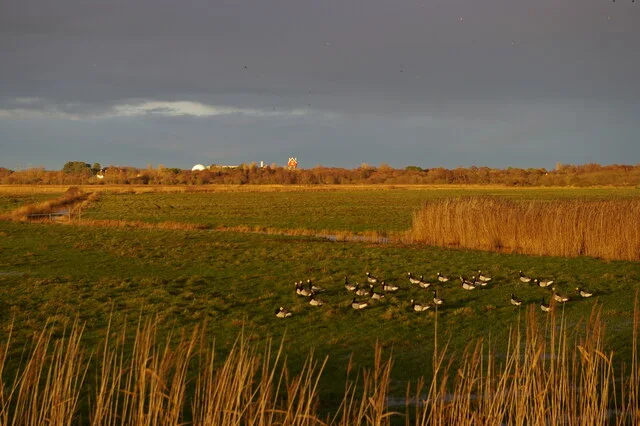
North Marsh grazing marsh and pools
Fixed-height, relatively low viewing slots.
Winter: White-fronted Goose, Barnacle Goose, Greylag Goose
Spring: White-fronted Goose, Barnacle Goose, Greylag Goose, Spoonbill
Summer: Greylag Goose
Autumn: White-fronted Goose, Barnacle Goose, Greylag Goose
Light: either. Scope: useful.
South Marsh pools and grazing marsh
Fixed-height, relatively low slots; use the signed shore approach.
Winter: Wigeon, Pintail, Bullfinch
Spring: Wigeon, Pintail, Bullfinch
Autumn: Wigeon, Pintail, Bullfinch
Light: either. Scope: useful.
South Marsh pools and grassland
Fixed-height, relatively low slots.
Winter: Teal, Great White Egret
Spring: Teal, Great White Egret
Summer: Great White Egret
Autumn: Teal, Great White Egret, Cattle Egret
Light: either. Scope: useful.
South Marsh from the longer signed approach
Fixed-height, relatively low slots; choose a walk within your ability.
Winter: Shoveler, Little Egret
Spring: Shoveler, Little Egret
Summer: Little Egret
Autumn: Shoveler, Little Egret
Light: either. Scope: useful.
Reedbed and open sky
Platform and bench reached by the public trail.
Winter: Marsh Harrier
Spring: Bittern, Marsh Harrier, Hobby
Summer: Bittern, Marsh Harrier, Hobby
Autumn: Marsh Harrier, Hobby
Light: either. Scope: useful.
Western reedbed edge
Keep to the public route and current signs.
Winter: Bearded Tit
Spring: Bearded Tit
Summer: Bearded Tit
Autumn: Bearded Tit
Light: either. Scope: useful.
Shingle beach and North Sea
Exposed shore: avoid wave-washed sections.
Winter: Great Black-backed Gull
Spring: Great Black-backed Gull
Autumn: Great Black-backed Gull
Light: either. Scope: essential.
Tide: Use dry public ground and check waves as well as the predicted tide.
Open heath, woodland and scrub from the existing public circuits
Use the signed public circuits; do not enter breeding habitat or investigate singing birds away from the paths.
Winter: Woodlark
Spring: Woodlark, Nightingale
Summer: Woodlark, Nightingale
Light: either. Scope: not needed.
| Spot | Overlooks | Key species by season | Best light | Scope | Tide |
|---|---|---|---|---|---|
| North Marsh screenFixed-height, relatively low viewing slots. | North Marsh grazing marsh and pools | Winter: White-fronted Goose, Barnacle Goose, Greylag Goose Spring: White-fronted Goose, Barnacle Goose, Greylag Goose, Spoonbill Summer: Greylag Goose Autumn: White-fronted Goose, Barnacle Goose, Greylag Goose | either | useful | — |
| South Marsh screen (0.2km approach)Fixed-height, relatively low slots; use the signed shore approach. | South Marsh pools and grazing marsh | Winter: Wigeon, Pintail, Bullfinch Spring: Wigeon, Pintail, Bullfinch Autumn: Wigeon, Pintail, Bullfinch | either | useful | — |
| South Marsh screen (0.4km approach)Fixed-height, relatively low slots. | South Marsh pools and grassland | Winter: Teal, Great White Egret Spring: Teal, Great White Egret Summer: Great White Egret Autumn: Teal, Great White Egret, Cattle Egret | either | useful | — |
| South Marsh screen (1.9km approach)Fixed-height, relatively low slots; choose a walk within your ability. | South Marsh from the longer signed approach | Winter: Shoveler, Little Egret Spring: Shoveler, Little Egret Summer: Little Egret Autumn: Shoveler, Little Egret | either | useful | — |
| Reedbed viewing platformPlatform and bench reached by the public trail. | Reedbed and open sky | Winter: Marsh Harrier Spring: Bittern, Marsh Harrier, Hobby Summer: Bittern, Marsh Harrier, Hobby Autumn: Marsh Harrier, Hobby | either | useful | — |
| Western reedbed screenKeep to the public route and current signs. | Western reedbed edge | Winter: Bearded Tit Spring: Bearded Tit Summer: Bearded Tit Autumn: Bearded Tit | either | useful | — |
| Public shore pathExposed shore: avoid wave-washed sections. | Shingle beach and North Sea | Winter: Great Black-backed Gull Spring: Great Black-backed Gull Autumn: Great Black-backed Gull | either | essential | Use dry public ground and check waves as well as the predicted tide. |
| Colour-coded public circuits — heathland and woodland sectionsUse the signed public circuits; do not enter breeding habitat or investigate singing birds away from the paths. | Open heath, woodland and scrub from the existing public circuits | Winter: Woodlark Spring: Woodlark, Nightingale Summer: Woodlark, Nightingale | either | not needed | — |
Month chips show typical presence or our preferred viewing season. Choose birds that suit the time of your visit.
Choose the marsh screens for feeding geese and ducks, then add the shore only when the public path stays dry and waves are safe. No operator-published tide height or fixed high-water arrival window was found.
Minsmere is the nearest open neighbouring complete guide: combine North Warren’s open marshland with its contrasting reedbeds and hides. Plan RSPB Minsmere →
Season: Winter: the RSPB describes large Starling flocks gathering over the reedbeds towards dusk.. Arrival time: Reach the official reedbed platform with enough daylight for the approach and return. Birds typically gather towards dusk; use the open public viewpoints and current reserve guidance.. Use designated public parking and leave the viewing slots clear for other visitors. Carry a torch for the return, and stay on the public paths when birds begin settling into the reeds.
The south-eastern shore section is wide and surfaced, making it a useful starting point when planning a shorter visit. The RSPB describes two Blue Badge spaces in the south-eastern car park with access to a tarmac path running north. Elsewhere, paths can narrow, become uneven or include moderate inclines, so the shortest published circuit should not automatically be treated as an all-ability route. The viewing screens have relatively low fixed-height slots. The facilities description also notes steps in connection with the viewpoints, so agree the specific outlook you need with the reserve team before relying on it. A platform and bench overlook the reedbed, and the published routes have six benches, two with backs and arms. If supportive seating, step avoidance or a particular viewing height is essential, identify that requirement when asking for current advice. Car parks are unlit, and a dusk visit requires thought about the complete return route. A coastal screen near your starting point may offer a more manageable experience than committing to a long reedbed or woodland loop simply because the overall ground is mostly flat.
North Warren has no toilets, café, shop or staffed reception. Aldeburgh supplies the nearest town facilities, so make a comfort stop before beginning a long circuit and carry enough water and food for your intended route. The coastal screens provide views rather than the shelter of an enclosed hide; bring clothing suitable for a sustained outdoor watch. Secure wrappers and other loose items in the wind, and take waste home. Barbecues are not permitted at RSPB North Warren. Keep the screen entrances and public paths clear so that other walkers can pass while birdwatchers share the viewing slots.
The RSPB asks visitors to keep dogs under close control and welcomes assistance dogs throughout. Keep an animal beside you when passing grazing marsh or reedbed, and follow any more restrictive local sign. A feeding flock needs quiet space even when a dog remains outside the field boundary.
Saxmundham is the railway station identified by the RSPB for North Warren. Borderbus's current 522 route links Aldeburgh, Saxmundham and Beccles via Leiston and Halesworth, while its 521 serves the wider Aldeburgh–Thorpeness corridor. Use the operator's date-specific timetable to choose a stop and connection that matches your intended reserve entrance. A current Borderbus notice affects Thorpeness from 5–30 October 2026 because of electricity works on Thorpe Road. The operator describes a free shuttle connecting with 521 buses, so a normal timetable alone is insufficient during that period. Check the notice before planning a linear walk or relying on a particular coastal stop. A pre-booked Saxmundham taxi to an agreed entrance is an alternative when bus timings or the final walk are unsuitable. Do not choose the station solely because a road-distance estimate looks short: allow time for the actual transfer, the approach to your viewing screen and a reliable return journey.
Useful bases for an early start.
Booking.com links are affiliate links: we may earn a commission at no extra cost to you. How these links work.
About 1.5 road miles, roughly 4 minutes by car; OSRM estimate measured 18 October 2026, excluding live traffic.
Measured driving route · 18 October 2026. Map estimates exclude live traffic.
A nearby town base for walking to the coastal approach.Find places to stay in Aldeburgh on Booking.comAbout 3.2 road miles, roughly 7 minutes by car; OSRM estimate measured 18 October 2026, excluding live traffic.
Measured driving route · 18 October 2026. Map estimates exclude live traffic.
A coastal village base beside the northern reserve landscape.Find places to stay in Thorpeness on Booking.comAbout 7.2 road miles, roughly 12 minutes by car; OSRM estimate measured 18 October 2026, excluding live traffic.
Measured driving route · 18 October 2026. Map estimates exclude live traffic.
Rail arrival and a practical inland Suffolk base.Find places to stay in Saxmundham on Booking.comExplore Suffolk’s full guides and smaller birding sites
North Warren enquiries go to the Minsmere team at minsmere@rspb.org.uk or 01728 648281. Name the coastal screen, reedbed circuit or parking approach involved when asking for access advice. The operator's official page provides the reserve information, while Borderbus and East Suffolk Council supply the transport and parking details linked here. If a damaged sign or blocked path affects a public route, describe its position clearly rather than relying only on the reserve's general name. For birding, binoculars and an unrushed viewing session are the essentials.
Check RSPB Ipswich group North Warren report — November 2025. dated trip report; not a current daily feed Reports show what has been seen, not what will be.
Follow the BTO Birders’ Code and give wildlife space.
RSPB North Warren: Free entry; Thorpe Road pay-and-display or small free Leiston Road parking area.
RSPB North Warren: The RSPB asks visitors to keep dogs under close control and welcomes assistance dogs throughout.
RSPB North Warren: Birdwatching through the seasons.
RSPB North Warren: The south-eastern shore section is wide and surfaced, making it a useful starting point when planning a shorter visit.
RSPB North Warren: Saxmundham is the railway station identified by the RSPB for North Warren.
Shorter stops within 15 miles in a straight line. Use the operator’s arrival directions for the journey.
Marsh Lane approach, near Aldeburgh · Tidal marsh, mudflats and estuary pools
Church Lane, Iken, near Snape · Saltmarsh and tidal mudflats
Bridge Road, Snape · Reedbed, grazing marsh, dykes and woodland edge
Off the B1069 between Tunstall and Snape · Lowland heath, scrub and woodland edge
Dunwich Road, north-east of Westleton · Lowland heath, grassland and woodland
Dunwich · Coastal wetland and reedbed
Boyton · Coastal wetland
Ore estuary behind Hollesley Bay · Saltmarsh, shingle, intertidal mud and estuary creeks
Common Lane, Bromeswell, near Woodbridge · Wet meadow, woodland, saltmarsh and river edge
A1095 Halesworth Road, near Southwold · Reedbeds, pools, coastal grazing marsh and river wall
Saddlemakers Lane, Melton, near Woodbridge · Woodland, orchard meadow, hedges and rewilding farmland
Near Wangford, north of Southwold · Ancient coppice woodland and sunny rides
Woodbridge, River Deben · Tidal estuary, meadow and public riverside paths
Church Lane, near Martlesham · Deben saltmarsh, river edge, fields, hedges and woodland
Woodbridge Lane, Newbourne · Wooded valley, spring-fed stream, fen and heath edge
Nearby complete guides.
Stops with a purpose: use one as a contrasting habitat or weather-proof Plan B. Distances are straight-line estimates, not road journeys.