
Short entry4.8 miles away
Capel Fleet
Harty · Farmland and wetland
 the ai birderBirding near me
The AI Birder · one-page field sheet
Isle of Sheppey, Kent · ME12 3RW

Lapwing · Redshank · Marsh Harrier · Short-eared Owl · Wigeon · Teal
Well Marsh hide · Counterwall hide · South Fleet hide · Spitend hide · Swale viewing screen · Entrance drive (watch from the vehicle)
Check current access, hide closures and operator notices before travelling. Seasonal birds are possibilities, not promised sightings. Keep to authorised routes and give wildlife space.
Opening and charges checked 2026-10-18. Operator: https://www.elmleynaturereserve.co.uk/spend-the-day
Full guide and current source links: https://aibirder.co.uk/reserves/elmley-national-nature-reserve
EN 39 · Elmley Nature Reserve reserve guide
Isle of Sheppey, Kent
Winter wildfowl and birds of prey; breeding lapwings and redshanks
Decide if the visit fits.
Last checked 18 October 2026.
Opening and charges information · checked .
Stay nearby →Reserve overview
Winter wildfowl and birds of prey; breeding lapwings and redshanks
Eight checks for a smoother visit.
Conditions change: check the operator and transport notices before travelling.
January: Usually make Well Marsh hide the main winter stop for Wigeon, Teal, Shoveler and Pintail. Spitend hide adds a longer view for Black-tailed Godwit and Dunlin if the return walk fits the day’s gate time. Watch the entrance drive from inside the vehicle. February: Wigeon and Pintail typically remain worthwhile at Well Marsh hide, while Marsh Harrier can hunt over the grazing marsh seen from Counterwall hide. Short-eared Owl is a winter possibility: follow the operator’s current watching advice and use only permitted viewpoints or guided visits. March: Typically compare the remaining winter ducks at Well Marsh hide with Lapwing and Redshank on the surrounding wet grassland. Avocet and Little Grebe can reward South Fleet hide. Keep to the marked paths as displaying birds begin to defend territories. April: Lapwing and Redshank usually make Well Marsh hide a good first stop. South Fleet hide gives another angle for Avocet and wetland birds, and Counterwall hide offers a broad Marsh Harrier scan. A quiet session from one hide lets feeding birds approach at their own pace. May: Our choice is a Well Marsh and South Fleet circuit for Lapwing, Redshank and Avocet, adding Yellow Wagtail watched from the entrance vehicle. Hobby is a possible aerial target from Counterwall hide as the weather warms. Do not stop beside alarm-calling adults or enter grazing fields. June: Usually watch Avocet and Little Egret from South Fleet hide, then compare Common Tern over the Swale from the viewing screen. Yellow Wagtail can add interest to the entrance drive. Use the shorter hide circuit if warm weather and shimmer make distant viewing tiring. July: Typically start with Little Egret and Redshank from Well Marsh hide, then try South Fleet hide for the changing pools and occasional Spoonbill. Hobby can hunt over the marsh seen from Counterwall hide. A stationary watch avoids crossing exposed paths repeatedly in the heat. August: South Fleet hide is useful for Avocet, Little Egret and passage interest on the water margins. Watch Common Tern from the Swale viewing screen and scan for Hobby from Counterwall hide. Usually the amount of wet ground determines where birds gather, so revisit productive pools. September: Wigeon and Teal typically begin rebuilding from Well Marsh hide while Yellow Wagtails prepare to leave. Counterwall hide offers reed-edge Bearded Tit possibilities and a Marsh Harrier scan. Keep the day flexible: wind and water can make a shorter, quieter route the better choice. October: Usually look for returning Wigeon, Teal and Pintail at Well Marsh hide and Bearded Tit from Counterwall hide. Short-eared Owl may return, with viewing restricted to the operator’s permitted routes and activities. Check the date-specific calendar: the October 2026 day window shortens from 21 October. November: Winter wildfowl usually justify a long Well Marsh hide session. If conditions and time allow, Spitend hide offers Curlew, Dunlin and Black-tailed Godwit; otherwise choose the near Swale screen. For dusk raptor watching, book an operator-led activity or stay arrangement that explicitly includes it. December: Typically choose Well Marsh hide for Wigeon, Shoveler and Pintail, adding a Swale screen watch for Curlew and Brent Goose near high water. Give Counterwall hide time for hunting Marsh Harrier. Cold, windy conditions favour a shorter circuit with enough daylight for the entrance drive.
Best conditions: Our advice: typically use a calm start within your booked window for the entrance drive and wetland hides; cooler conditions help distant telescope views. A high tide suits the near Swale screen. Exposed walks can be tiring in strong wind, so choose the first hide over a forced Spitend circuit. Light and scope ratings are editorial readings of the reserve map. Dawn and dusk visits need an operator arrangement that includes them.
The operator's day-visit page advertises £10 adult admission, checked in October 2026; its detailed paragraph labels that amount as a 2025 update. The live booking terms admit two children aged 16 and under per adult free and give carers free admission with proof. A dated ticket is needed for each visitor, with vehicle details supplied during booking. The dedicated visiting notice requires prebooking, although an older paragraph on the main day page still mentions paying at the gate: prebook through the linked official system. The current calendar lists Wednesday, Thursday, Saturday and Sunday visits. Use the date-specific calendar and booked slot: the linked October 2026 calendar shortens day opening from 21 October, overriding the generic seasonal paragraph. An accommodation booking or organised safari has its own arrival and access terms. Visitor parking is provided and no separate parking tariff is stated. The booking address uses ME12 3RW while the main operator address uses ME12 3RN; follow the signed entrance rather than treating either postcode as the final gate position. Check the day calendar and conditions before travelling.
Access times: Reserve: Prebooked day visits only. October 2026: Wednesday, Thursday, Saturday and Sunday; 09:00–17:00 to 18 October, 09:00–16:00 from 21 October. The booked date controls entry. · Hides: Within the day-ticket window; accommodation guests and booked wildlife activities have separate operator arrangements. · Car park: Within the booked day window, including the entrance and exit drive. · Dawn access: partly. Operator opening information.
The entrance drive is part of the birdwatching experience. Stay in the vehicle along the two-mile track, as the operator requires, and use the car's outline to watch wildlife without exposing a group of people beside the marsh. Stop considerately without obstructing other vehicles, then continue to the visitor parking area before walking. The barn and accommodation spaces are reserved for overnight guests. From Kingshill Farm, the operator's reserve map marks Well Marsh, Counterwall, South Fleet and Spitend hides, together with the Swale viewing screen. Build the walk around those marked paths rather than choosing a line across grazing fields. Looking through a hide for a sustained spell helps separate resting birds from birds feeding on a farther edge. The more distant hides reward a longer outing, but return distance, wind and your ticket's exit time should determine the turning point. Two-hour plan: allow the entrance drive to take a meaningful part of the visit, then park and use the nearby Swale screen or the route towards Well Marsh. Choose one main watch rather than attempting to collect every hide. Scan water, ditch edges and grassland in turn, and leave a clear margin for the exit drive. This editorial plan is especially useful for a first visit with short winter daylight. Full-day plan: arrive at the beginning of the booked opening window and spend the morning progressing slowly from Well Marsh towards Counterwall and South Fleet. Take lunch in a permitted picnic area, then revisit the most productive viewpoint rather than automatically continuing to the farthest hide. A longer Spitend walk is an option for fit walkers with sufficient time. Finish with another quiet watch from the car on the way out. An overnight booking offers a different stay experience, but does not permit entry into restricted accommodation areas on a day ticket.
Use the linked reserve map and directions with current access notices. Species are typical seasonal targets. Light and telescope advice reflects our choice of viewpoint.
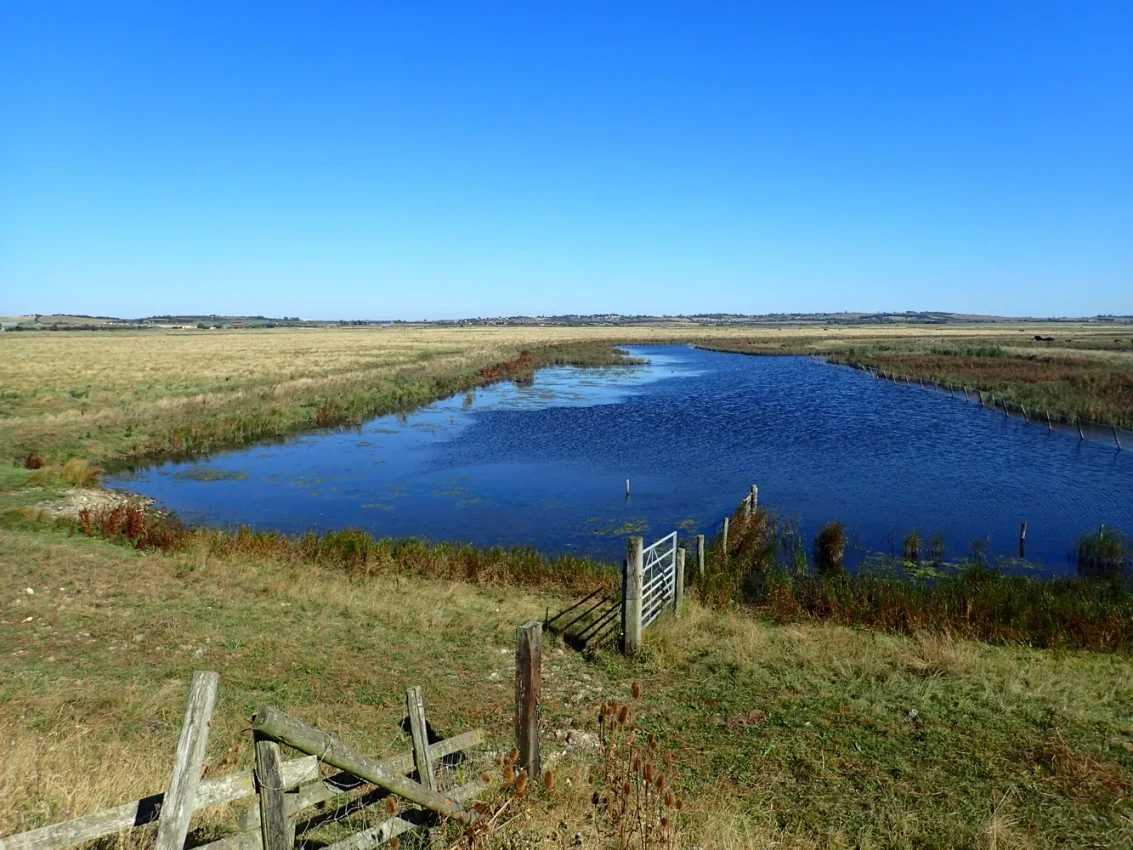
Freshwater pools and wet grazing marsh near the first hide
Operator map shows Blue Badge parking here; arrange the permitted vehicle approach with the visits team.
Winter: Wigeon, Teal, Shoveler, Pintail
Spring: Lapwing, Redshank, Avocet
Summer: Lapwing, Redshank, Little Egret
Autumn: Wigeon, Teal, Marsh Harrier
Light: morning. Scope: useful.
Reed-fringed pools and the wider grazing marsh
Winter: Marsh Harrier, Bearded Tit
Spring: Lapwing, Redshank
Summer: Hobby, Little Egret
Autumn: Bearded Tit, Great White Egret
Light: either. Scope: useful.
South Fleet pools, reed edges and wet grassland
Winter: Shelduck, Gadwall
Spring: Avocet, Little Grebe
Summer: Avocet, Spoonbill, Little Egret
Autumn: Shelduck, Grey Heron
Light: either. Scope: useful.
Eastern pools and Swale-side marshes
The operator gives 5.5 km from the farm; allow the full return inside the ticket window.
Winter: Black-tailed Godwit, Dunlin, Brent Goose, Grey Plover
Spring: Avocet, Curlew
Summer: Little Egret, Redshank
Autumn: Black-tailed Godwit, Golden Plover, Knot
Light: either. Scope: essential.
Tide: Compare birds on tidal margins with those settling on the reserve pools.
Swale shore and open estuary from the fixed screen
About 200 m from the car park; keep off the beach in autumn, winter and spring.
Winter: Brent Goose, Curlew, Dunlin
Spring: Avocet, Shelduck
Summer: Common Tern, Little Egret
Autumn: Curlew, Black-tailed Godwit
Light: either. Scope: useful.
Tide: The operator particularly recommends this view at high tide.
Grazing marsh and roadside ditches
Remain in the vehicle along the entrance track and keep the route clear.
Winter: Marsh Harrier, Wigeon, Short-eared Owl, Barn Owl, Little Owl, Hen Harrier
Spring: Lapwing, Redshank, Short-eared Owl, Barn Owl, Little Owl
Summer: Yellow Wagtail, Little Egret, Barn Owl, Little Owl
Autumn: Marsh Harrier, Teal, Short-eared Owl, Barn Owl, Little Owl, Hen Harrier
Light: either. Scope: not needed.
| Spot | Overlooks | Key species by season | Best light | Scope | Tide |
|---|---|---|---|---|---|
| Well Marsh hideOperator map shows Blue Badge parking here; arrange the permitted vehicle approach with the visits team. | Freshwater pools and wet grazing marsh near the first hide | Winter: Wigeon, Teal, Shoveler, Pintail Spring: Lapwing, Redshank, Avocet Summer: Lapwing, Redshank, Little Egret Autumn: Wigeon, Teal, Marsh Harrier | morning | useful | — |
| Counterwall hide | Reed-fringed pools and the wider grazing marsh | Winter: Marsh Harrier, Bearded Tit Spring: Lapwing, Redshank Summer: Hobby, Little Egret Autumn: Bearded Tit, Great White Egret | either | useful | — |
| South Fleet hide | South Fleet pools, reed edges and wet grassland | Winter: Shelduck, Gadwall Spring: Avocet, Little Grebe Summer: Avocet, Spoonbill, Little Egret Autumn: Shelduck, Grey Heron | either | useful | — |
| Spitend hideThe operator gives 5.5 km from the farm; allow the full return inside the ticket window. | Eastern pools and Swale-side marshes | Winter: Black-tailed Godwit, Dunlin, Brent Goose, Grey Plover Spring: Avocet, Curlew Summer: Little Egret, Redshank Autumn: Black-tailed Godwit, Golden Plover, Knot | either | essential | Compare birds on tidal margins with those settling on the reserve pools. |
| Swale viewing screenAbout 200 m from the car park; keep off the beach in autumn, winter and spring. | Swale shore and open estuary from the fixed screen | Winter: Brent Goose, Curlew, Dunlin Spring: Avocet, Shelduck Summer: Common Tern, Little Egret Autumn: Curlew, Black-tailed Godwit | either | useful | The operator particularly recommends this view at high tide. |
| Entrance drive (watch from the vehicle)Remain in the vehicle along the entrance track and keep the route clear. | Grazing marsh and roadside ditches | Winter: Marsh Harrier, Wigeon, Short-eared Owl, Barn Owl, Little Owl, Hen Harrier Spring: Lapwing, Redshank, Short-eared Owl, Barn Owl, Little Owl Summer: Yellow Wagtail, Little Egret, Barn Owl, Little Owl Autumn: Marsh Harrier, Teal, Short-eared Owl, Barn Owl, Little Owl, Hen Harrier | either | not needed | — |
Month chips show typical presence or our preferred viewing season. Choose birds that suit the time of your visit.
Use the Swale viewing screen around high water, as recommended by the operator. Freshwater pools and grazed marshes respond to water management and rainfall as well as estuary movement. Remain on marked routes and keep off the beach in autumn, winter and spring.
Blue Badge holders may drive down to the first hide, which the operator describes as wheelchair accessible. The reserve map identifies designated parking beside Well Marsh hide. Arrange this access with the visits team before the trip so you know the permitted driving route and where to stop; it is separate from the ordinary pedestrian approach across the marsh. The Swale viewing screen is described as a 200-metre walk from the visitor car park. Perching posts along the walking route provide opportunities to rest. A visit focused on the first hide can reduce the distance spent on exposed marsh paths. Different visitors will find these options useful in different weather, so decide whether your priority is a short screen visit, a hide session or mostly watching from the car. The operator notes uneven ground and shallow shingle around the site. Its accommodation FAQ mentions ramped event-venue access and an accessible toilet, but that does not establish unrestricted day-ticket access to the private barn or guest facilities. Ask the visits team about the day-visitor toilet arrangement, surfaces and the particular hide you need before booking. Numerical path gradients, door widths and the suitability of each distant hide are not supplied in the pages checked.
Day visitors should bring a picnic and drinking water: the day-visit FAQ says there is no public café. Picnic benches are provided beyond the parking area, and the operator identifies visitor facilities there on its map. Overnight guests have separate accommodation and food arrangements. Midweek stays between 1 November 2026 and 19 March 2027 are advertised as self-hosted and self-catering, with food menus at weekends and school holidays. Book a stay through Elmley's own accommodation page and check the terms for the chosen hut, cabin or house.
Pet dogs are excluded from Elmley, including dogs on leads, to reduce disturbance to wildlife. The operator permits registered assistance dogs. Plan another arrangement for a pet before booking a day visit or accommodation, and tell the visits team about an assistance dog when discussing any access requirements.
Elmley's operator recommends rail to Sittingbourne followed by a taxi, rather than depending on a connection at the smaller Swale station. Southeastern trains serve Sittingbourne, with an onward branch train to Swale, but the operator warns that arranging transport from Swale can be difficult. Reserve the taxi in both directions and agree how it will enter the long private drive; a station drop-off is not equivalent to reaching the visitor parking area. For public transport, use the rail-and-taxi connection recommended by Elmley. Day-ticket bookings request vehicle details: discuss how to enter a taxi booking with the visits team before paying. The day FAQ permits bicycles on permissive paths June–September only and says there is no through route; the accommodation FAQ gives different, less restrictive cycling advice. Follow the day-visitor rule and clarify any proposed cycle arrival outside that period. Drivers should follow the operator's map from the Isle of Sheppey road network, not attempt a shortcut through neighbouring farmland.
Useful bases for an early start.
Booking.com links are affiliate links: we may earn a commission at no extra cost to you. How these links work.
On the reserve; no road transfer is required.
Official on-site accommodation · 18 October 2026. No road transfer is needed.
An overnight wildlife stay booked directly with Elmley; check the chosen accommodation’s terms.Book this accommodation with its operatorAbout 9.3 miles by road, roughly 23 minutes’ drive (OSRM, measured 18 October 2026; estimate without live traffic).
Measured driving route · 18 October 2026. Map estimates exclude live traffic.
A station town for a taxi connection to the reserveFind places to stay in Sittingbourne on Booking.comAbout 15.7 miles by road, roughly 36 minutes’ drive (OSRM, measured 18 October 2026; estimate without live traffic).
Measured driving route · 18 October 2026. Map estimates exclude live traffic.
A separate Kent town base for a longer visitFind places to stay in Faversham on Booking.comExplore Kent’s full guides and smaller birding sites
Elmley is independently owned and managed, with day access administered by Elmley Nature Reserve Community Interest Company. Call the visits team on 07931 315271 for day tickets and access arrangements, or use info@elmleynaturereserve.co.uk for a general enquiry. Accommodation has its own official booking system linked from the stay page. Keep day admission and an overnight reservation distinct when making plans, and discuss group visits in advance because the operator restricts organised parties to protect the reserve's wildlife and limited facilities.
Check Kent Ornithological Society: county wildlife reports. as submitted; newest seven days require membership Reports show what has been seen, not what will be.
Follow the BTO Birders’ Code and give wildlife space.
Elmley National Nature Reserve: Adult £10 advertised; two children 16-and-under per adult free; parking tariff not stated.
Elmley National Nature Reserve: Pet dogs are excluded from Elmley, including dogs on leads, to reduce disturbance to wildlife.
Elmley National Nature Reserve: Winter wildfowl and raptors; spring breeding waders.
Elmley National Nature Reserve: Blue Badge holders may drive down to the first hide, which the operator describes as wheelchair accessible.
Elmley National Nature Reserve: Elmley's operator recommends rail to Sittingbourne followed by a taxi, rather than depending on a connection at the smaller Swale station.
Shorter stops within 15 miles in a straight line. Use the operator’s arrival directions for the journey.
Harty · Farmland and wetland
Shoebury Common Road, Shoeburyness · Coastal grassland, pond, remnant dunes and estuary edge
Rough Common · Woodland
Public island approach off Belton Way, Leigh-on-Sea · Thames Estuary mudflats, saltmarsh, saline lagoon, reedbed and rough grassland
Canvey Island · Grazing marsh, reedbeds, lagoons and saltmarsh
Canvey Island · Grassland and scrub
Nearby complete guides.
Stops with a purpose: use one as a contrasting habitat or weather-proof Plan B. Distances are straight-line estimates, not road journeys.