

SC 41 · North Ronaldsay Bird Observatory reserve guide
North Ronaldsay Bird Observatory
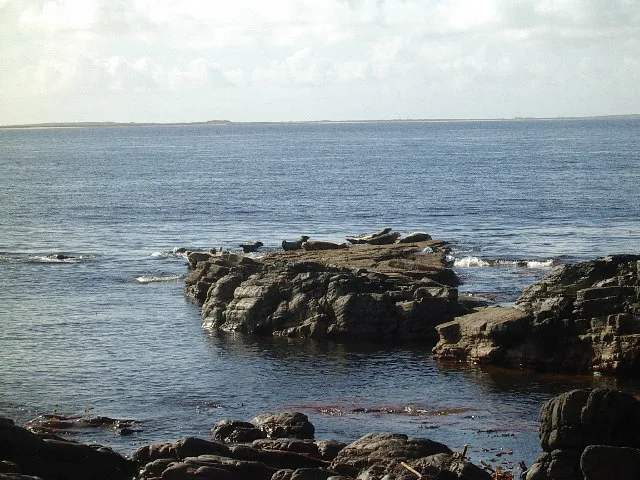
Twingness, North Ronaldsay, Orkney
Eiders, Wheatears, Whooper swans, Arctic terns
Decide if the visit fits.
North Ronaldsay Bird Observatory at a glance
Last checked 18 October 2026.
- Open
- Observatory open all year; arrange accommodation and visits with staff.More about open
- Price / parking
- 2026 guesthouse half-board £85 one night, £79 for 2+ nights, £75 for 7+; hostel bunk £25.More about price / parking
- Best time
- Spring and autumn passage; seasonal breeding and winter birdsMore about best time
- Dogs
- The reviewed accommodation pages do not provide a clear general…More about dogs
- Toilets
- See facilitiesMore about toilets
- Step-free
- The guesthouse has a ground-floor twin room adapted for disabled…More about step-free
Opening and charges information · checked .
Stay nearby →On this page
Reserve overview
North Ronaldsay reserve and habitat
Eiders, Wheatears, Whooper swans, Arctic terns
Eight checks for a smoother visit.
Planning your visit to North Ronaldsay
Conditions change: check the operator and transport notices before travelling.
North Ronaldsay best time to visit and seasonal birds
January: typically look for Long-tailed Duck from Nouster Bay public shore. Choose permitted public access after speaking to staff, with no entry to croft gardens or ringing areas. Weather drives migrant arrivals, and a report is evidence of a previous observation only. February: typically look for Gadwall from Ancum Loch public approach. Choose permitted public access after speaking to staff, with no entry to croft gardens or ringing areas. Weather drives migrant arrivals, and a report is evidence of a previous observation only. March: typically look for Meadow Pipit from Observatory croft permitted paths. Choose permitted public access after speaking to staff, with no entry to croft gardens or ringing areas. Weather drives migrant arrivals, and a report is evidence of a previous observation only. April: typically look for Great Northern Diver from Nouster Bay public shore. Choose permitted public access after speaking to staff, with no entry to croft gardens or ringing areas. Weather drives migrant arrivals, and a report is evidence of a previous observation only. May: typically look for Turnstone from Nouster Bay public shore. Choose permitted public access after speaking to staff, with no entry to croft gardens or ringing areas. Weather drives migrant arrivals, and a report is evidence of a previous observation only. June: typically look for Wheatear from Observatory croft permitted paths. Choose permitted public access after speaking to staff, with no entry to croft gardens or ringing areas. Weather drives migrant arrivals, and a report is evidence of a previous observation only. July: typically look for Dunlin from Gretchen Loch outside the sheep dyke. Choose permitted public access after speaking to staff, with no entry to croft gardens or ringing areas. Weather drives migrant arrivals, and a report is evidence of a previous observation only. August: typically look for Sooty Shearwater from Old Light public seawatching area. Choose permitted public access after speaking to staff, with no entry to croft gardens or ringing areas. Weather drives migrant arrivals, and a report is evidence of a previous observation only. September: typically look for Wheatear from Observatory croft permitted paths. Choose permitted public access after speaking to staff, with no entry to croft gardens or ringing areas. Weather drives migrant arrivals, and a report is evidence of a previous observation only. October: typically look for Redwing from Observatory croft permitted paths. Choose permitted public access after speaking to staff, with no entry to croft gardens or ringing areas. Weather drives migrant arrivals, and a report is evidence of a previous observation only. November: typically look for Wigeon from Gretchen Loch outside the sheep dyke. Choose permitted public access after speaking to staff, with no entry to croft gardens or ringing areas. Weather drives migrant arrivals, and a report is evidence of a previous observation only. December: typically look for Eider from Nouster Bay public shore. Choose permitted public access after speaking to staff, with no entry to croft gardens or ringing areas. Weather drives migrant arrivals, and a report is evidence of a previous observation only.
Best conditions: Usually compare the sheltered side of the island with the forecast before committing to a long walk. SOC notes that Dennis Ness seawatching can face awkward morning sun; shift viewpoint or wait rather than treating first light as automatically best. Migration can be strong with suitable winds, but exposed low shores become unsafe in swell. Watch from firm ground and keep a disruption contingency for flights and ferries.
North Ronaldsay opening times, entry and facilities
Its room tariff checked on 18 October 2026 is explicitly headed 2026: guesthouse half-board costs £85 per person for one night, £79 for stays of two nights or more, and £75 for seven nights or more. The corresponding bed-and-breakfast rates are £63, £57 and £53. Hostel bunk space, including linen and a towel, is £25 per person per night; additional meal packages have separate rates. A £15 supplement applies to single use of a double, twin or en-suite room. Book the selected room and meal arrangement directly. These rates do not constitute a confirmed 2027 tariff. The listed mainland postcode is Kirkwall Airport, for the flight approach; the reserve map marks the offshore Observatory.
Access times: Reserve: Observatory advertises year-round operation. Book accommodation and ask staff about current access; island public routes are subject to conditions and responsible access. · Hides: No fixed daily public hide opening timetable verified. Birding positions here are recognised public views; ringing gardens, traps and any staffed facility require permission. · Car park: No reserve car-park locking timetable published; travel and local parking arrangements are separate. Do not block croft or working accesses. · Dawn access: partly. Operator opening information.
North Ronaldsay trails, hides and visit length
Use the Observatory as a base for repeated walks, rather than treating North Ronaldsay as a single marked reserve circuit. Nouster Bay, Gretchen Loch and the public island roads provide a varied first introduction to shore, freshwater and croftland birds. Observatory staff can explain current access arrangements and whether visitors can accompany a ringing session. Traps, nets and croft gardens require permission; an open gate or a reported bird is not an invitation to enter. Two-hour plan: begin with a local watch around the Observatory and Nouster Bay. Read the tide and scan the shoreline without forcing resting birds to move, then compare the nearby freshwater view from a permitted public position. Return slowly along the same route, noticing birds missed on the outward walk. A compact loop of observation and discussion can be more useful on arrival than setting out to the far end of the island with incomplete local knowledge. Full-day plan: choose one longer morning walk after speaking to staff, with food, weather protection and a sensible turnaround point. Return for a break and use the afternoon for a different habitat or a repeat of the local shore. Contribute observations to the daily log if invited, distinguishing an identification you are confident about from a provisional impression. Keep the sheep dyke and agricultural gates intact and avoid disturbance around livestock. When migration is quiet, practise sorting common waders, ducks and gulls; the island remains worth watching without a scarce bird to pursue. Coastal walking must fit the conditions, particularly when wind, swell or wet rock limits the usable shore. Choose a few identification questions for each outing, such as the differences between feeding waders, and compare notes afterwards rather than simply accumulating distant names.
Where to watch at North Ronaldsay
Use the linked reserve map and directions with current access notices. Species are typical seasonal targets. Light and telescope advice reflects our choice of viewpoint.
Nouster Bay public shoreWinter · Spring · Summer · Autumn
Sheltered bay and feeding shore
Keep away from livestock and resting flocks; use firm public shore.
Winter: Eider, Long-tailed Duck, Great Northern Diver
Spring: Great Northern Diver, Oystercatcher
Summer: Eider, Oystercatcher
Autumn: Eider, Turnstone, Ringed Plover
Light: either. Scope: useful.
Gretchen Loch outside the sheep dykeWinter · Spring · Summer · Autumn
Freshwater loch, mud margin and nearby grass
SOC recommends watching from outside/behind the sheep dyke; never climb or dismantle it.
Winter: Wigeon, Teal, Mallard
Spring: Wigeon, Teal, Dunlin
Summer: Mallard, Dunlin
Autumn: Teal, Wigeon, Ringed Plover
Light: either. Scope: useful.
Ancum Loch public approachWinter · Spring · Summer · Autumn
Freshwater loch and marshy margins
Watch from established public approach; do not enter marsh, private crofts or ringing areas.
Winter: Gadwall, Shoveler, Tufted Duck
Spring: Gadwall, Shoveler
Summer: Gadwall, Mallard
Autumn: Teal, Wigeon, Gadwall
Light: either. Scope: useful.
Old Light public seawatching areaWinter · Spring · Summer · Autumn
Offshore passage between northern lighthouse corners
Low exposed shore; move inland or stop if swell makes the position unsafe.
Winter: Great Northern Diver
Spring: Gannet, Kittiwake
Summer: Gannet, Kittiwake
Autumn: Gannet, Sooty Shearwater
Light: either. Scope: essential.
Observatory croft permitted pathsWinter · Spring · Summer · Autumn
Managed migrant cover and croft vegetation
Ask staff which paths and ringing sessions are available; gardens, traps and nets require permission.
Winter: Twite
Spring: Wheatear, Meadow Pipit
Summer: Wheatear, Meadow Pipit
Autumn: Wheatear, Twite, Redwing
Light: either. Scope: not needed.
| Spot | Overlooks | Key species by season | Best light | Scope | Tide |
|---|---|---|---|---|---|
| Nouster Bay public shoreKeep away from livestock and resting flocks; use firm public shore. | Sheltered bay and feeding shore | Winter: Eider, Long-tailed Duck, Great Northern Diver Spring: Great Northern Diver, Oystercatcher Summer: Eider, Oystercatcher Autumn: Eider, Turnstone, Ringed Plover | either | useful | — |
| Gretchen Loch outside the sheep dykeSOC recommends watching from outside/behind the sheep dyke; never climb or dismantle it. | Freshwater loch, mud margin and nearby grass | Winter: Wigeon, Teal, Mallard Spring: Wigeon, Teal, Dunlin Summer: Mallard, Dunlin Autumn: Teal, Wigeon, Ringed Plover | either | useful | — |
| Ancum Loch public approachWatch from established public approach; do not enter marsh, private crofts or ringing areas. | Freshwater loch and marshy margins | Winter: Gadwall, Shoveler, Tufted Duck Spring: Gadwall, Shoveler Summer: Gadwall, Mallard Autumn: Teal, Wigeon, Gadwall | either | useful | — |
| Old Light public seawatching areaLow exposed shore; move inland or stop if swell makes the position unsafe. | Offshore passage between northern lighthouse corners | Winter: Great Northern Diver Spring: Gannet, Kittiwake Summer: Gannet, Kittiwake Autumn: Gannet, Sooty Shearwater | either | essential | — |
| Observatory croft permitted pathsAsk staff which paths and ringing sessions are available; gardens, traps and nets require permission. | Managed migrant cover and croft vegetation | Winter: Twite Spring: Wheatear, Meadow Pipit Summer: Wheatear, Meadow Pipit Autumn: Wheatear, Twite, Redwing | either | not needed | — |
Target species at North Ronaldsay
Month chips show typical presence or our preferred viewing season. Choose birds that suit the time of your visit.
Headline birds
- JanFebMarAprMayOctNovDec
- MarAprMayJunJulAugSepOct
Regular birds
- JanFebMarAprMayJunJulAugSepOctNovDec
- JanFebMarAprOctNovDec
- JanFebMarAprMayJunJulAugSepOctNovDec
- JanFebMarAprMayAugSepOctNovDec
- JanFebMarAprMayJunJulAugSepOctNovDec
- JanFebMarAprMayJulAugSepOctNovDec
- JanFebMarOctNovDec
- JanFebMarOctNovDec
- JanFebMarAprMayJunJulAugSepOctNovDec
- JanFebMarAprMayJunJulAugSepOctNovDec
- JanFebMarOctNovDec
- JanFebMarOctNovDec
- MarAprMayJunJulAugSepOct
- MarAprMayJunJulAugSepOct
- AugSepOct
- MarAprMayJunJulAugSepOct
- JanFebMarAprMayJunJulAugSepOctNovDec
- MarAprSepOctNov
Tide planning
Kettletoft Pier is the nearest prediction station found in the UKHO catalogue and is on Sanday, not North Ronaldsay. Use its predictions only as regional context and obtain local advice for the actual shore. Watch feeding birds without entering channels; swell can cover low rock independently of a convenient predicted tide. Boat travel follows operator service information.
North Ronaldsay accessibility and step-free routes
The guesthouse has a ground-floor twin room adapted for disabled visitors, according to the Observatory accommodation page. Discuss bathroom layout, doorway requirements and any assistance needed before reserving it. The hostel and camping options are different arrangements and should not be assumed to offer the same features. Book the arrival transfer and explain any mobility equipment, because the small inter-island aircraft has space and handling constraints. North Ronaldsay's low relief can make a road-based outing more manageable than a cliff walk, but distance, wind exposure and uneven verges still matter. A flat island is not the same as a fully accessible visitor trail. Ask staff to suggest nearby public viewpoints suited to your needs and avoid planning a long coast walk solely from a map. Sandy bays, loose stone and wet grass can be awkward for wheels or balance. Keep a short return option available, and allow for sitting still in cold wind while birdwatching. Flight assistance belongs with Loganair; ferry boarding assistance should be discussed with Orkney Ferries.
North Ronaldsay visitor facilities
Accommodation choices include the guesthouse, a self-contained hostel and camping with use of hostel facilities. The Observatory has a café, bar/lounge, grocery shop and Wi-Fi. The hostel provides cooking and washing facilities, while meals can be added through the guesthouse. Explain dietary requirements and intended meal times when booking rather than assuming a full evening restaurant service without arrangement. Bring a small day bag for water, snacks and spare clothing on longer walks away from the building.
North Ronaldsay dog rules
The reviewed accommodation pages do not provide a clear general pet policy. Confirm any dog booking with the Observatory and the chosen transport operator before paying. Keep dogs under close control around sheep, crofts and ground-nesting birds; the coastal dyke and livestock are part of a working island landscape, not an exercise enclosure.
North Ronaldsay public transport and getting there
Loganair operates the Orkney inter-island air service between Kirkwall and North Ronaldsay. Reserve the flight with the accommodation and check the baggage allowance for the particular service. Orkney Ferries also serves North Ronaldsay from Kirkwall, with sailings dependent on the published timetable, tides and conditions. Its current timetable page specifically directs passengers to news updates for Saturday sailing times; do not turn an occasional service into a daily ferry promise. Reach Mainland Orkney by air or its external ferry routes before making the inter-island connection. A stay in Kirkwall can provide a useful buffer, while Stromness offers a different mainland base with a road transfer to the departure point. Arrange collection on North Ronaldsay directly with the Observatory. There is no need to invent an island bus number for that final transfer.
Useful bases for an early start.
Where to stay near North Ronaldsay
Booking.com links are affiliate links: we may earn a commission at no extra cost to you. How these links work.
- 01
North Ronaldsay Bird Observatory
Once you have arrived at North Ronaldsay Bird Observatory, staying on the island removes the daily road transfer.
Official on-site accommodation · 18 October 2026. No road transfer is needed.
Time for repeated watches across a booked island stayBook this accommodation with its operator - 02
Kirkwall
About 3.5 miles by road, roughly 7 minutes’ drive to Kirkwall Airport on Mainland Orkney, before the flight (OSRM, measured 18 October 2026; estimate without live traffic).
Measured driving route · 18 October 2026. Map estimates exclude live traffic.
A distinct mainland base for the island journeyFind places to stay in Kirkwall on Booking.com - 03
Stromness
About 19.1 miles by road, roughly 31 minutes’ drive to Kirkwall Airport on Mainland Orkney, before the flight (OSRM, measured 18 October 2026; estimate without live traffic).
Measured driving route · 18 October 2026. Map estimates exclude live traffic.
A distinct mainland base for the island journeyFind places to stay in Stromness on Booking.com
Explore Orkney’s full guides and smaller birding sites
North Ronaldsay official sightings, safety and contact
Telephone North Ronaldsay Bird Observatory on 01857 633200 or use its official contact form to discuss rooms, meals, transfers and visitor activities. The rates page is the source for the dated accommodation tariff; Loganair and Orkney Ferries are the sources for bookable transport. State your expected arrival and whether you need an adapted room. Share wildlife observations through the staff's normal recording arrangements, keeping sensitive breeding information out of public directions.
North Ronaldsay recent bird sightings
Check North Ronaldsay Bird Observatory actual census and ringing blog. irregular multi-day summaries; latest visible post 4 October 2026 covers 28 September–3 October Reports show what has been seen, not what will be.
- North Ronaldsay Bird Observatory actual census and ringing blogoperator · updated irregular multi-day summaries; latest visible post 4 October 2026 covers 28 September–3 October
- SOC 2026 actual spring arrivals, including North Ronaldsaycounty club or recorder · updated completed seasonal table, data to 9 June 2026
Birding sources
- NRBO year-round visitor information
- NRBO primary month-by-month seasonal bird guide
- SOC recognised island viewing places and fieldcraft
- NRBO actual 2026 observation summaries
- SOC 2026 spring arrival observations
- SOC Orkney recorder and report directory
- NRBO embedded location map
- UKHO EasyTide named prediction station
Follow the BTO Birders’ Code and give wildlife space.
Questions visitors ask
Is North Ronaldsay Bird Observatory free to visit?
North Ronaldsay Bird Observatory: 2026 guesthouse half-board £85 one night, £79 for 2+ nights, £75 for 7+; hostel bunk £25.
Can I take my dog to North Ronaldsay Bird Observatory?
North Ronaldsay Bird Observatory: The reviewed accommodation pages do not provide a clear general pet policy.
When is the best time to visit North Ronaldsay Bird Observatory?
North Ronaldsay Bird Observatory: Spring and autumn passage; seasonal breeding and winter birds.
Is North Ronaldsay Bird Observatory accessible for wheelchairs?
North Ronaldsay Bird Observatory: A flat island is not the same as a fully accessible visitor trail.
How do I get to North Ronaldsay Bird Observatory without a car?
North Ronaldsay Bird Observatory: Loganair operates the Orkney inter-island air service between Kirkwall and North Ronaldsay.
Best months for this reserve
Nearby complete guides.
Bird reserves near North Ronaldsay
Stops with a purpose: use one as a contrasting habitat or weather-proof Plan B. Distances are straight-line estimates, not road journeys.
- About 22 miles away · A useful habitat changeRSPB Noup CliffsSpring and autumn passage; seasonal breeding and winter birds
- About 31 miles away · A useful habitat changeRSPB Cottascarth and Rendall MossSpring and autumn passage; seasonal breeding and winter birds
- About 31 miles away · A useful habitat changeFair Isle Bird ObservatorySpring and autumn passage; seasonal breeding and winter birds