Short entry6.8 miles away
North Hill
Papa Westray · Maritime heath and sea cliffs
 the ai birderBirding near me
The AI Birder · one-page field sheet
Noup Head, Westray, Orkney · KW17 2DW

Spring and autumn passage; seasonal breeding and winter birds
Noup Coastal Trail
Check current access, hide closures and operator notices before travelling. Seasonal birds are possibilities, not promised sightings. Keep to authorised routes and give wildlife space.
Opening and charges checked 2026-10-25. Operator: https://www.rspb.org.uk/days-out/reserves/noup-cliffs
Full guide and current source links: https://aibirder.co.uk/reserves/rspb-noup-cliffs
SC 36 · RSPB reserve guide
Noup Head, Westray, Orkney
Gannets, Guillemots, Puffins, Kittiwakes
Decide if the visit fits.
Last checked 18 October 2026.
Opening and charges information · checked .
Stay nearby →Reserve overview
Gannets, Guillemots, Puffins, Kittiwakes
Eight checks for a smoother visit.
Conditions change: check the operator and transport notices before travelling.
January: January is an exposed coastal visit rather than a reliable colony spectacle. The Noup Coastal Trail is the official watching route, but the summer Gannet and auk targets should not be expected on occupied ledges. Assess wind before committing and accept that a brief landscape stop may be enough.
February: Use the Noup Coastal Trail only when conditions make a clifftop walk sensible. The reserve's Gannet, Guillemot and Puffin story is chiefly a summer reason to return. Winter watching requires a flexible aim and an easy retreat, rather than an attempt to reproduce a crowded breeding-season view.
March: Typically spring begins to change seabird activity, but the directly supported target window here is deliberately conservative. Use the Noup Coastal Trail for a broad sea-and-cliff assessment rather than assuming every auk has returned. Keep the visit's length tied to safe visibility and the exposed route underfoot.
April: A spring visit can compare offshore movement with any activity on the cliffs from the Noup Coastal Trail. The operator's summer highlights include Gannet and Guillemot, but their May–July target chips are not a fixed arrival schedule. Watch what is present and leave space for changing conditions.
May: Typically May is a strong time to settle on the Noup Coastal Trail for Gannet, Guillemot and Kittiwake activity. The historical reserve-manager inventory also supports Fulmar and Shag. Keep the observation within the official route and use optics instead of moving closer to a cliff edge.
June: Our choice is a generous June watch from safe positions on the Noup Coastal Trail. Compare Guillemot and Razorbill shapes, then search patiently for Puffin amongst the movement. A scope can help with distant birds, but it should stand securely without narrowing the space other walkers need.
July: Use the Noup Coastal Trail for a mixed summer watch: Gannet and the auks first, then Fulmar, Shag and the gulls. Great and Arctic Skua are supported by the historical reserve monitoring inventory. Their presence is a possibility to assess from the route, not an invitation to approach breeding habitat.
August: Typically the colony's character changes as summer progresses, and an August visit should not assume the May–July picture. Begin with a broad scan from the Noup Coastal Trail and let actual bird activity set the pace. The historical inventory is evidence of occurrence, not an annual abundance guarantee.
September: Autumn makes visibility and safe wind conditions more useful planning questions than an expectation of occupied auk ledges. The Noup Coastal Trail remains the permitted viewpoint sequence for any offshore seabirds. Puffin and Guillemot are summer targets here; do not promise them from an empty-looking September cliff.
October: An October watch should be a weather-led decision on the Noup Coastal Trail. Summer Gannet and auk interest does not establish a dependable autumn checklist. A clear, manageable coastal view can still be worthwhile, but deteriorating light or wind is a reason to shorten the visit promptly.
November: Use the middle of a suitable daylight window if walking the Noup Coastal Trail in November. Keep expectations separate from the breeding-season Gannet and auk spectacle. The rough, potentially wet route deserves as much attention as the sea, and a sheltered alternative elsewhere may be the better decision.
December: A winter return is about a safe coastal observation rather than a guaranteed seabird list. Assess the Noup Coastal Trail before committing beyond an easy retreat. The verified Gannet, Kittiwake and auk targets belong to the conservative summer window, while the day's actual offshore movement remains unpredictable.
Best conditions: Typically clear visibility and manageable wind are more important than a fixed time of day. Use safe positions on the Noup Coastal Trail, with light behind or to one side where the permitted route allows. A scope is useful for offshore birds; binoculars are easier in gusts. Do not approach occupied ledges or cross breeding habitat.
Our choice is to give the official coastal trail enough time for a settled seabird watch, rather than treating Noup as a quick lighthouse photograph. The path is rough and can be wet, while the cliffs demand room and caution even when the birds are close. Use binoculars first to understand the flight lines and the larger groups, then a steady telescope for a distant bird if conditions permit. The final gravel approach is specifically advised for four-wheel-drive vehicles by the RSPB; ordinary road access should not be inferred from the existence of parking at the lighthouse. Check the wider island travel arrangements separately and allow a safe return. No hide or chain of constructed viewpoints has been invented to make the facilities sound more elaborate. The official coastal trail is the public watching route, and the broader island bird list is not a promise of what will appear from it.
Access times: Reserve: Noup Cliffs has round-the-clock reserve access in the RSPB calendar checked on 19 October 2026. Daylight and safe weather remain the practical visiting limits. · Hides: No public hide or separately named built viewpoint verified; the Noup Coastal Trail is the public watching route. · Car park: Small unmarked lighthouse-end parking; final gravel approach advised for 4x4 only. No separate parking gate-hours verified. · Dawn access: yes. Operator opening information.
Noup Cliffs is a cliff-top walk with seabirds beneath you and open sea beyond. The Noup Coastal Trail is part of the wider West Westray cliffs walk between Noup Head and Kirbest. The RSPB also describes a circular option from Backarass Farm, using road and track towards the lighthouse before returning along the coastal trail and turning inland. Carry a map and choose a route that fits the conditions; the coast is a landscape to read slowly, rather than a sequence of hides. Two-hour plan: if you have safely reached the lighthouse entrance, devote the first part of the visit to scanning the nearest cliff faces. Pick out the larger white gannets before working through the smaller auks and kittiwakes. Continue only a modest distance along the marked coastal line, pause again, then return by your outward route. If approaching on foot from farther away, use the available time for the approach and a shorter watch instead of trying to force in the same itinerary. Full-day plan: make Westray the day's destination, with the reserve as its main birdwatching stop. In suitable weather, experienced walkers can choose the RSPB's longer Backarass circuit, allowing generous pauses to compare the seabird ledges and watch the offshore water. Keep a reserve of time for the inland return and onward island travel. Finish with a final stationary scan rather than extending the walk until the transport margin disappears. Take all litter away and keep food securely packed in wind. In calm conditions, compare the birds sitting on ledges with those arriving from the sea: the changing balance tells more about colony activity than a single count. Keep a notebook accessible so a gust does not scatter loose papers across the grass.
Use the linked reserve map and directions with current access notices. Species are typical seasonal targets. Light and telescope advice reflects our choice of viewpoint.
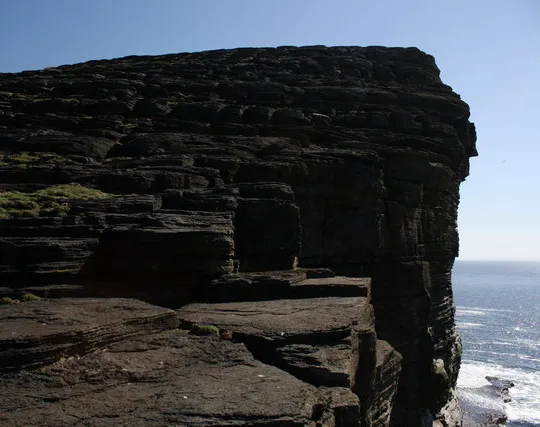
Sea cliffs and offshore water along the official clifftop route
Rough uneven grass can be wet or boggy; remain well back from unfenced cliff edges. Lighthouse-end parking approach is a gravel track advised for 4x4 only.
Spring: Gannet, Guillemot, Kittiwake, Razorbill, Puffin, Fulmar, Shag, Great Skua, Arctic Skua, Common Gull, Herring Gull, Great Black-backed Gull
Summer: Gannet, Guillemot, Kittiwake, Razorbill, Puffin, Fulmar, Shag, Great Skua, Arctic Skua, Common Gull, Herring Gull, Great Black-backed Gull
Light: either. Scope: useful.
| Spot | Overlooks | Key species by season | Best light | Scope | Tide |
|---|---|---|---|---|---|
| Noup Coastal TrailRough uneven grass can be wet or boggy; remain well back from unfenced cliff edges. Lighthouse-end parking approach is a gravel track advised for 4x4 only. | Sea cliffs and offshore water along the official clifftop route | Spring: Gannet, Guillemot, Kittiwake, Razorbill, Puffin, Fulmar, Shag, Great Skua, Arctic Skua, Common Gull, Herring Gull, Great Black-backed Gull Summer: Gannet, Guillemot, Kittiwake, Razorbill, Puffin, Fulmar, Shag, Great Skua, Arctic Skua, Common Gull, Herring Gull, Great Black-backed Gull | either | useful | — |
Month chips show typical presence or our preferred viewing season. Choose birds that suit the time of your visit.
Clifftop seabird watching has no verified operator high-water threshold or required tide state. Use Pierowall predictions for the wider coastal plan, not as permission to approach the cliff base; weather and the official path govern this visit.
The RSPB describes rough, uneven grass terrain which can be wet and boggy. The Noup cliff-top trail has a kissing gate and no stiles or steps, but that description should not be read as an accessible surfaced route. There is no shelter or seating provision identified for the coastal walk. Exposed edges and crosswinds make balance, confidence and weather judgement particularly important; stay well back from the drop and abandon the coastal section if gusts make standing difficult. The gravel approach to the reserve entrance should only be attempted in a 4x4 vehicle, according to the operator. The alternative approach from Noup Farm to the lighthouse is a 2.4 km walk. Do not drive an ordinary hire car up the track on the assumption that a lighthouse car park makes the approach a standard road. Discuss any vehicle restrictions with the hire provider and use the RSPB access statement to assess the whole journey. A view from the car park may suit someone unable to complete the cliff path, but reaching it remains the significant obstacle.
There is no reserve café, shop, visitor centre or toilet block, and no staff are normally based on site. Bring food, drinking water and the clothing needed for a self-contained coastal outing. The RSPB identifies public toilets and food options in Pierowall village. Arrange those stops before heading towards the headland, especially when travelling with children. Binoculars are the most useful equipment; a telescope is worthwhile only where it can be set up securely away from the edge.
RSPB Scotland asks visitors to keep dogs on a short lead during the ground-nesting season, 1 April to 15 August, and wherever livestock are present. Clean up after them and prevent chasing or disturbance. Visitors with assistance dogs are welcome at RSPB Noup Cliffs. The exposed coastal route requires close control at all times.
Westray is reached through Orkney's inter-island network. Orkney Ferries publishes the Kirkwall–Westray sailing timetable and booking information, while Loganair operates inter-island flights from Kirkwall. Book the outward and return island connection together and leave space for disruption; a mainland Orkney arrival is only the first stage of this outing. The RSPB states that there is no public transport to the reserve itself. Arrange an island taxi or suitable local transfer in advance, discussing where the vehicle can safely leave you and collect you. Walking the final approach can be a sensible part of the day, but it needs to be included in the available time. Do not assume that the ferry arrival, a transfer and the cliff walk form a guaranteed day-trip connection. The current Orkney Ferries timetable is the source for sailings, not a generic journey planner's suggested connection.
Useful bases for an early start.
Booking.com links are affiliate links: we may earn a commission at no extra cost to you. How these links work.
About 4.0 miles by road, roughly 16 minutes’ drive to the reserve approach (OSRM, measured 18 October 2026; estimate without live traffic).
Measured driving route · 18 October 2026. Map estimates exclude live traffic.
A base in Pierowall suits a longer break that includes RSPB Noup Cliffs.Find places to stay in Pierowall on Booking.comAbout 12.2 miles by road, roughly 33 minutes’ drive to the reserve approach (OSRM, measured 18 October 2026; estimate without live traffic).
Measured driving route · 18 October 2026. Map estimates exclude live traffic.
A base in Rapness suits a longer break that includes RSPB Noup Cliffs.Find places to stay in Rapness on Booking.comAbout 9.9 miles by road, roughly 27 minutes’ drive to the reserve approach (OSRM, measured 18 October 2026; estimate without live traffic).
Measured driving route · 18 October 2026. Map estimates exclude live traffic.
A base in Skelwick suits a longer break that includes RSPB Noup Cliffs.Find places to stay in Skelwick on Booking.comExplore Orkney’s full guides and smaller birding sites
For reserve advice contact the RSPB Orkney team at orkney@rspb.org.uk or 01856 850176. Their Noup Cliffs pages provide the access statement, location information and seasonal birdwatching overview. Describe the vehicle and walking limitations of your party when seeking access advice, rather than simply asking whether the reserve is open. Ferry and flight bookings belong with the respective transport operators. Report a damaged gate or unsafe section with a clear description of the public route affected.
Check RSPB reserve-manager historical seabird monitoring observations. historical reserve monitoring summary, published 2016; surveys chiefly 2000–2013 Reports show what has been seen, not what will be.
Follow the BTO Birders’ Code and give wildlife space.
RSPB Noup Cliffs: Free entry; see operator for parking.
RSPB Noup Cliffs: RSPB Scotland asks visitors to keep dogs on a short lead during the ground-nesting season, 1 April to 15 August, and wherever livestock are present.
RSPB Noup Cliffs: Spring and autumn passage; seasonal breeding and winter birds.
RSPB Noup Cliffs: The Noup cliff-top trail has a kissing gate and no stiles or steps, but that description should not be read as an accessible surfaced route.
RSPB Noup Cliffs: Westray is reached through Orkney's inter-island network.
Shorter stops within 15 miles in a straight line. Use the operator’s arrival directions for the journey.
Papa Westray · Maritime heath and sea cliffs
Egilsay · Wet grassland and coast
Brinian · Moorland and wet heath
Nearby complete guides.
Stops with a purpose: use one as a contrasting habitat or weather-proof Plan B. Distances are straight-line estimates, not road journeys.