Marloes
A short mainland transfer
Find stays in Marloes on Booking.com the ai birderBirding near me
Responsible wildlife guide
For a first Puffin trip, choose Skomer from mid-April to July or Bempton’s mainland viewpoints from April to mid-July; choose the Farnes for a separately booked summer boat visit.
Find UK Puffin watching places, compare island landings with mainland cliffs, and choose the season, access and travel arrangements that suit your trip.
NearestBase is a relevant existing-guide base for the stated arrival, not a new accommodation inspection or an independently ranked distance comparison.
| Place | Season | Access and booking | Nearby base |
|---|---|---|---|
| Skomer Island | Mid-April–July; birds begin leaving in mid-July. | Booked landing from Martin’s Haven; marked island paths and allocated return. Official visit/booking instructions | Marloes |
| RSPB Bempton Cliffs | April–mid-July for Puffins. | Mainland public clifftop platforms; route-specific access information. Official visit/booking instructions | Bempton |
| Farne Islands | April–July; departures develop in August. | Book an authorised boat/landing product from Seahouses; ranger-approved routes. Official visit/booking instructions | Seahouses |
Skomer 2027 day tickets: December 2026 is the confirmed release month; do not turn legacy 1 December wording into a verified exact 2027 release day.
A sea cruise and an island landing are different products. Weather or operator restrictions can prevent landing.
Use official clifftop platforms and marked island paths. Avoid burrow ground, maintain space around birds and follow rangers rather than seeking an approach to a nest.
Some links earn us a small commission at no extra cost to you. These are settlement search bases, with no promise of availability.
A short mainland transfer
Find stays in Marloes on Booking.comStaying in the boat departure village
Find stays in Seahouses on Booking.comBest for early colony visits and village B&Bs or cottages.
Find stays in Bempton on Booking.comBest for the broadest local mix of seafront hotels, guesthouses and self-catering.
Find stays in Bridlington on Booking.com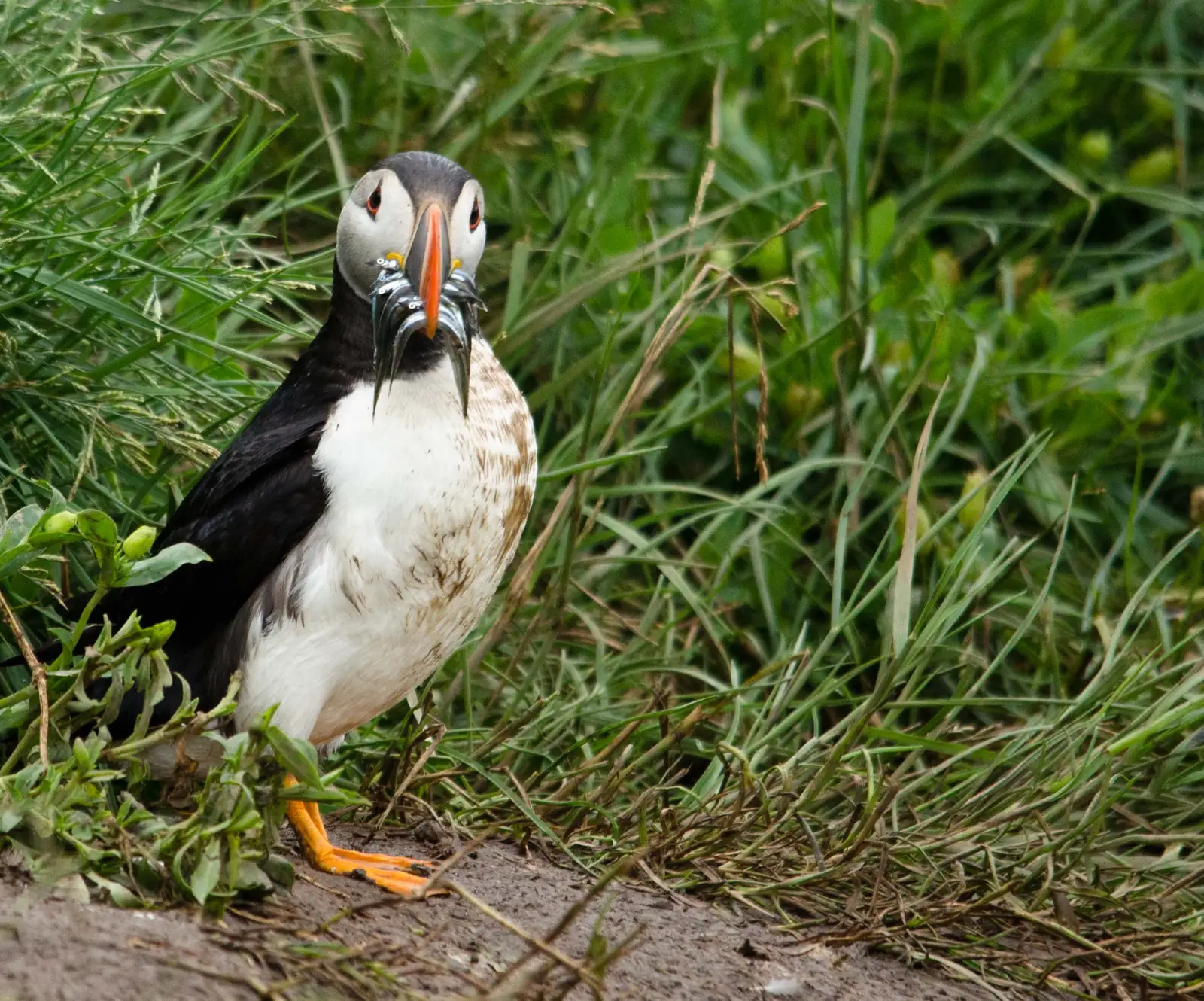
Puffins usually become easiest to watch from land during the breeding season, when they return to coastal colonies. A summer photograph can make them look like permanent residents of a grassy cliff, but much of their year is spent far offshore. Winter is therefore a poor choice for a holiday built around close views. Begin with the local reserve’s seasonal advice, then check whether its visitor route or boat landing operates on the dates you can travel.
May and June usually provide the widest overlap between birds ashore, active colonies and visitor services. April can be rewarding, but arrival and settling vary; late July can already feel very different from early July. Skomer’s operator specifically describes arrivals from mid-April and departure by the end of July. The Farne Islands’ National Trust guidance similarly warns of greatly reduced seabird numbers after the breeding season. A bookable August sailing is not evidence that the Puffins will still be standing beside the path.
Choose two or three possible days in the area when a boat journey is central to your trip. A weather cancellation can remove the landing opportunity even in the middle of the strongest wildlife season. Mainland colonies offer a useful alternative when you want to avoid that dependency. The guides below bring together the individual access arrangements so that the seasonal decision leads to a workable journey.
Puffins typically use burrows or crevices for nesting. Adults may spend long periods out of sight underground or away at sea, so an apparently quiet slope can still be part of an active colony. Their familiar upright stance and colourful breeding bill are only one part of the day. Watch the approaches over the water, the quick wingbeats on arrival and the pause before a bird reaches its nest entrance.
The RSPB describes a single egg and strong attachment to nesting places. During chick feeding, an adult returning with small fish has a job to finish. Give it a clear route rather than edging closer for a frame. Compare a fish-carrying bird with one resting on the water, and look for the broad pattern of commuting flights. Binoculars often reveal this behaviour more comfortably than a tightly cropped phone photograph.
Take time to separate Puffins from other auks. Guillemots usually look longer and more upright on densely occupied ledges, while Razorbills have a heavier-looking dark bill. A Puffin’s pale cheek and compact outline can help, but distant birds on a rough sea are difficult. Stay with an identification you can support. A mixed colony is worth watching even when the species you came for remains elusive.
Keep to the signed visitor route and follow the warden or guide’s instructions. Burrows may extend beneath apparently ordinary turf, so stepping off a path can damage a nest without any visible sign above ground. Leave entrances unobstructed and give other visitors room to pass. If a bird is hesitating because people block its route, move back slowly and let it continue.
Do not lure birds with food, use playback, touch a bird or approach a nest opening. Remain behind cliff barriers and keep camera straps and loose equipment under control. Where a boat crew chooses a viewing distance, accept that position rather than requesting a closer approach. The useful photograph is one taken without changing the bird’s behaviour or putting anyone at a cliff edge.
Follow island biosecurity instructions before you leave the harbour. Securely closed luggage helps reduce the risk of carrying unwanted animals to seabird islands. Carry food and rubbish back as required, and check each destination’s dog policy before taking an animal to the departure point. These practical choices protect the colony and prevent a difficult decision beside a boat that is ready to leave.
Our choice for an immersive Pembrokeshire island walk is Skomer. The Wick and other authorised areas combine Puffin watching with a broader seabird landscape, but the landing and island paths demand a realistic assessment of mobility. Book the actual landing product through the named operator; a cruise around the island is a different experience. The Skomer guide explains check-in, the allocated return and the mainland bases that work for an early start.
Choose the Farne Islands when Seahouses and the Northumberland coast suit the rest of your holiday. Several independent companies sell trips, and a National Trust landing ticket is separate from the boat fare. Read the product carefully: an Inner Farne landing, a general cruise and another island excursion are not interchangeable. The marked colony route can be intensely busy with wildlife in season, while the sea journey adds cliff and seal viewing. Confirm current landing arrangements rather than relying on an old itinerary that includes Staple Island.
Bempton is our practical mainland starting point for a broad seabird day. Its managed cliff viewpoints allow you to watch auks alongside the conspicuous Gannets, without arranging an island boat connection. Puffins may be farther away or hidden among the cliff structure, so bring binoculars and allow time at more than one official viewpoint. The reserve guide helps match the walk to access needs and nearby accommodation.
South Stack suits an Anglesey holiday and a day combining cliffs with heathland. Set expectations around Guillemots and Razorbills as the main auk spectacle; the Puffin colony is small. Patient scanning from the authorised Ellin’s Tower area is more sensible than treating a close Puffin encounter as the purpose of every visit. Choughs and the coastal landscape add interest when the Puffins are not visible. Read the guide’s route distinctions before choosing a path, especially if steps or exposed walking affect your plans.
Rathlin rewards visitors who want the seabird trip to be part of an island day in Northern Ireland. The journey has separate stages: the ferry from Ballycastle, a transfer across Rathlin and the West Light Seabird Centre visit. Choose the centre’s operating season, not simply a date when a ferry runs. Our guide explains how those parts fit together and why a mainland drive estimate cannot describe the full journey.
The Isle of May is the Firth of Forth option for a dedicated seabird island visit. NatureScot identifies April to July as the main period for its Puffins and other breeding auks. Sailings and landing time control the route, so choose the operator and departure harbour before fixing the day’s timetable. Compared with a mainland cliff visit, the commitment is greater; compared with racing between several distant sites, settling into one island landscape can make the watching much more rewarding.
Use the six linked reserve guides to compare access, available time and where to stay. Our recommendation is to choose the trip you can enjoy comfortably and responsibly, with enough time to watch ordinary colony behaviour. A patient visit to one suitable place usually teaches more than a hurried attempt to collect every famous Puffin destination.
These rows use existing reserve watching-place records and typical local seasons. Sensitive locations are withheld. Follow current operator restrictions.
The months below come from each reserve’s local birding guide. They describe typical presence or a preferred watching season; national occurrence can be broader. Reports show past observations and cannot promise an encounter. Sensitive birds have no published watching position.
| Species | Reserve guide | Typical or preferred months |
|---|---|---|
| Puffin | Bass Rock and Scottish Seabird Centre | April, May, June, July |
| Puffin | Farne Islands | April, May, June, July |
| Puffin | Skomer Island | April, May, June, July |
| Puffin | RSPB Bempton Cliffs | April, May, June, July |
| Puffin | RSPB Rathlin Island | April, May, June, July, August |
| Puffin | RSPB South Stack | April, May, June, July |
| Puffin | RSPB Fowlsheugh | May, June, July |
| Puffin | Flamborough Head and Flamborough Bird Observatory | May, June, July |
| Puffin | RSPB Sumburgh Head | April, May, June, July, August |
| Puffin | RSPB Troup Head | May, June, July |
| Puffin | RSPB Marwick Head | May, June, July |
| Puffin | Handa Island | May, June, July |
| Puffin | RSPB Dunnet Head | May, June, July |
| Puffin | Lunga and the Treshnish Isles | April, May, June, July |
| Puffin | RSPB Hoy | April, May, June, July |
| Puffin | RSPB Noup Cliffs | May, June, July |
| Puffin | Fair Isle Bird Observatory | April, May, June, July, August |
| Puffin | Skokholm Island | April, May, June, July |
| Puffin | Hermaness National Nature Reserve | April, May, June, July, August |
| Puffin | St Kilda | April, May, June, July, August |
| Puffin | Lundy | March, April, May, June, July |
Public places covered in this guide include Bass Rock and Scottish Seabird Centre, Farne Islands, Skomer Island.
Typically April–July around breeding colonies; choose the local operator’s season
Keep burrow entrances clear, stay on authorised paths and give returning birds space to reach their nests.
Reviewed 2026-10-19.