

SC 52 · National Trust for Scotland reserve guide
St Kilda
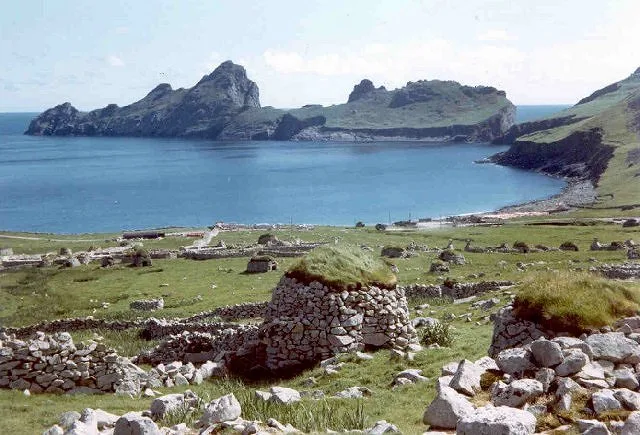
Hirta, Outer Hebrides, Scotland · Harris departure postal postcode HS5 3TW
A major Atlantic expedition, with the weather and the skipper deciding whether a landing is possible.

Decide if the visit fits.
St Kilda at a glance
Last checked 18 October 2026.
NTS still displays its Conachair landslide warning: avoid the affected slope and follow the ranger’s current route advice.
- Open
- Open all year daily; visit by booked weather-dependent boat.More about open
- Price / parking
- Island entry free; Kilda Cruises 2026 adult fare £310; operator landing charge £8/person.More about price / parking
- Best time
- Late spring and summer boat trips · seabird coloniesMore about best time
- Dogs
- NTS asks visitors to keep dogs and other animals aboard their ve…More about dogs
- Toilets
- NTS lists public toilets and drinking water on Hirta, but the da…More about toilets
- Step-free
- NTS describes access by boat and tender, uneven surfaces and a s…More about step-free
Opening and charges information · checked .
Stay nearby →On this page
Reserve overview
Reserve and habitat
A major Atlantic expedition, with the weather and the skipper deciding whether a landing is possible.
Eight checks for a smoother visit.
Planning your visit
Conditions change: check the operator and transport notices before travelling.
Best time to visit and seasonal birds
These monthly suggestions describe seasonal possibilities; they do not report birds present during your particular visit. January: Fulmar is usually worth looking for from Village Bay public landing area. This is ecological context rather than a winter day-trip recommendation: published summer sailings do not imply January transport. February: Eider is usually worth looking for from Village Bay public landing area. Resident birds do not make the Atlantic crossing feasible; check specialist arrangements and weather instead of assuming an ordinary scheduled service. March: Fulmar is usually worth looking for from Village Street public visitor path. A pre-season plan must be agreed with an operator. No extra cliff route or independent landing is recommended here. April: Gannet is usually worth looking for from Operator-run archipelago boat viewing. Match any trip to the operator’s actual dated programme, retain contingency days and accept that landing may be cancelled. May: Guillemot is usually worth looking for from Operator-run archipelago boat viewing. The sea view avoids publishing nesting ledge directions. A moving boat normally favours binoculars over a tripod-mounted scope. June: Puffin is usually worth looking for from Operator-run archipelago boat viewing. Listen to the ranger briefing before choosing a public path, and keep off unstable ground highlighted by the live landslide notice. July: Razorbill is usually worth looking for from Operator-run archipelago boat viewing. This is typically a strong seabird month, but the skipper decides whether conditions allow a circuit or a Hirta landing. August: Kittiwake is usually worth looking for from Operator-run archipelago boat viewing. Late-season numbers and departure dates vary; check fresh operator observations and never treat a breeding-season label as a guarantee. September: Gannet is usually worth looking for from Operator-run archipelago boat viewing. Most regular day-trip programmes finish before autumn is established. An ocean crossing needs a confirmed booking and a workable weather window. October: Shag is usually worth looking for from Village Bay public landing area. A bay bird is an ecological possibility, not a promise that a day boat runs. Consult the live timetable before committing accommodation. November: Fulmar is usually worth looking for from Village Street public visitor path. The low public village route does not bypass closed unstable slopes. No winter cliff-top itinerary is supplied for this exposed archipelago. December: Eider is usually worth looking for from Village Bay public landing area. No festive or winter sailing is invented. If access is independently arranged, follow daylight tendering and current NTS biosecurity instructions.
Best conditions: Usually plan the crossing around an operator’s weather window, not around a self-selected tide or a promised bird count. A safe landing and cliff circuit depend on Atlantic swell, wind and the skipper’s decision. NTS’s live August 2025 Conachair landslide warning still excludes the unstable area. Use the ordinary village route and the briefing supplied on arrival; sensitive petrels and shearwaters are not reasons to seek a night landing or approach burrows.
Opening times, entry and facilities
Entry and landing, checked 18 October 2026: the National Trust for Scotland lists individual island admission as free, while charging vessels for use of the landing facilities. These are different arrangements from your commercial boat fare. The NTS landing page publishes a rate calculated at £8 per person for the listed vessel categories, payable by the boat operator; establish what your ticket includes before payment. Overnight camping is a separate, pre-booked NTS arrangement with limited capacity and published seasonal windows. Check the NTS visitor advice and your boat confirmation before travelling, since weather, sea conditions and local safety decisions can alter the route or prevent a landing.
Access times: Reserve: NTS lists open all year daily, but public access requires a suitable boat and current crew/ranger permission; open status is not a sailing schedule. · Hides: No public bird-hide network is advertised. Visitors use the supplied map and ranger briefing; do not enter research/breeding sectors or the unstable Conachair landslide area. · Car park: No public visitor car park on Hirta. Departure-point parking and boarding follow the booked operator’s instructions; private-boat tenders must land during daylight. · Dawn access: no. Operator opening information.
Trails, hides and visit length
All ordinary visitor landings begin at Village Bay on Hirta, where the ranger briefing and current visitor map should determine your route. Start with the village and its immediate setting, letting the scale of the bay and surrounding slopes settle before deciding whether to walk farther. The wildlife spectacle also includes the views from the boat around the archipelago; a closer land-based approach is not necessarily the best way to appreciate a cliff colony. Stay on the permitted visitor routes and keep away from active nesting ground, fragile structures and any area the wardens have restricted. Two-hour plan, editorial suggestion: if the landing window or your walking range is short, explore the public village route, pause for a shore watch and spend time understanding the human landscape. Return to the agreed assembly point early enough to remove any pressure from the transfer back to the boat. Do not attempt a rapid high-level circuit to make the short visit feel complete. Full-day plan, editorial suggestion: treat the advertised day cruise as the whole outing, with the voyage, wildlife viewing, landing and return all contributing. Once ashore, choose one manageable walk in consultation with the ranger, eat your packed lunch and retain time to revisit Village Bay before departure. A steeper walk needs its own energy and weather margin. If the boat cannot land, accept the alternative safe itinerary or the operator's cancellation arrangements; no photograph or species target justifies asking for an unsafe transfer.
Where to watch
Use the linked reserve map and directions with current access notices. Species are typical seasonal targets. Light and telescope advice reflects our choice of viewpoint.
Village Bay public landing areaWinter · Spring · Summer · Autumn
Village Bay water and offshore seabirds
Land at the small Village Bay pier under crew/ranger instructions; no cliff scramble or private boat landing alternative.
Winter: Eider, Fulmar, Shag
Spring: Eider, Shag, Guillemot
Summer: Eider, Shag, Puffin
Autumn: Eider, Fulmar
Light: either. Scope: useful.
Village Street public visitor pathWinter · Spring · Summer · Autumn
Public village approach, bay panorama and birds in flight
Use the map and briefing supplied on arrival. August 2025 Conachair landslide warning remains live; avoid the unstable area.
Winter: Fulmar, Wren
Spring: Fulmar, Wren, Snipe
Summer: Fulmar, Kittiwake, Wren, Snipe
Autumn: Fulmar, Wren
Light: either. Scope: not needed.
Operator-run archipelago boat viewingWinter · Spring · Summer · Autumn
Sea stacks, cliffs and surrounding water from an authorised tour
Boat route, sea state and landing are skipper decisions. Keep optics secure and do not request approaches to nesting ledges.
Winter: Fulmar
Spring: Gannet, Guillemot, Razorbill
Summer: Gannet, Puffin, Kittiwake, Guillemot, Razorbill
Autumn: Gannet, Fulmar
Light: either. Scope: not needed.
| Spot | Overlooks | Key species by season | Best light | Scope | Tide |
|---|---|---|---|---|---|
| Village Bay public landing areaLand at the small Village Bay pier under crew/ranger instructions; no cliff scramble or private boat landing alternative. | Village Bay water and offshore seabirds | Winter: Eider, Fulmar, Shag Spring: Eider, Shag, Guillemot Summer: Eider, Shag, Puffin Autumn: Eider, Fulmar | either | useful | — |
| Village Street public visitor pathUse the map and briefing supplied on arrival. August 2025 Conachair landslide warning remains live; avoid the unstable area. | Public village approach, bay panorama and birds in flight | Winter: Fulmar, Wren Spring: Fulmar, Wren, Snipe Summer: Fulmar, Kittiwake, Wren, Snipe Autumn: Fulmar, Wren | either | not needed | — |
| Operator-run archipelago boat viewingBoat route, sea state and landing are skipper decisions. Keep optics secure and do not request approaches to nesting ledges. | Sea stacks, cliffs and surrounding water from an authorised tour | Winter: Fulmar Spring: Gannet, Guillemot, Razorbill Summer: Gannet, Puffin, Kittiwake, Guillemot, Razorbill Autumn: Gannet, Fulmar | either | not needed | — |
Target species
Month chips show typical presence or our preferred viewing season. Choose birds that suit the time of your visit.
Headline birds
- AprMayJunJulAugSep
- AprMayJunJulAug
- JanFebMarAprMayJunJulAugSepOctNovDec
Regular birds
- JanFebMarAprMayJunJulAugSepOctNovDec
- AprMayJunJulAug
- AprMayJunJulAug
- AprMayJunJulAugSep
- JanFebMarAprMayJunJulAugSepOctNovDec
- JanFebMarAprMayJunJulAugSepOctNovDec
- AprMayJunJulAug
- Great SkuaFollow the operator’s sensitive-species advice.AprMayJunJulAugSep
- Arctic SkuaFollow the operator’s sensitive-species advice.MayJunJulAug
- Manx ShearwaterFollow the operator’s sensitive-species advice.AprMayJunJulAugSep
- Leach's Storm PetrelFollow the operator’s sensitive-species advice.MayJunJulAugSep
Tide planning
Hirta Village Bay predictions are planning context only. There is no public tidal walk to St Kilda. Crossing, boat circuit and landing depend on swell, wind and skipper/ranger instructions; never derive a safe landing or cliff route from tide height alone.
Boat access and landing
Operator: Kilda Cruises and St Kilda Sea Tours, departing Leverburgh, Harris.
Booking opens: Advance booking essential. St Kilda Sea Tours states that its 2027 bookings open in October 2026, without a specific day on the checked page. Choose only a released date and retain the full advertised weather window.. Season: Kilda Cruises publishes 27 April–29 August for its 2026 season. This is a dated 2026 programme; a later season requires its own operator calendar.. Fares: Kilda Cruises advertises 2026 £310 per person and £280 for under-14s. St Kilda Sea Tours lists £300 with a £100 deposit. Check the selected operator’s final total and inclusions rather than combining the two tariffs.; landing fee: NTS charges the vessel for landing-facility use, calculated at £8 per person under the published categories. Ask your operator whether this is included; it is not a separate admission ticket for the island..
Time ashore: Determined by the operator, weather and actual itinerary. Keep the full day free; St Kilda Sea Tours advertises an 8am Leverburgh departure and return around 7pm.. Landing access: Tender transfer and a small pier at Village Bay, followed by steep and uneven ground. Listen to the ranger briefing, clean footwear and follow all biosecurity and route restrictions.. Weather policy: A crossing or landing can be cancelled or altered for sea conditions. The two-day-window option requires availability on both days; the operator decides which day can sail. Read the applicable refund and rescheduling terms before buying travel to Harris.
Accessibility and step-free routes
NTS describes access by boat and tender, uneven surfaces and a steep approach from the landing. This is a substantial mobility consideration before a ticket is bought. Discuss the complete sequence with the boat operator: vessel boarding, long sea passage, transfer into a smaller tender, the pier and the route ashore. The NTS guidance does not recommend the island for wheelchair users because of gradients and difficult surfaces. A comfortable seat on the outward boat should not be confused with an accessible landing. People with balance, back, heart or other relevant conditions should explain their needs directly to the operator and consider whether a cruise without landing would still meet their aims. Carry essential medication, warm layers and food in a bag you can manage during transfers. On Hirta, choose a shorter village-based visit if a longer walk would make the return stressful. Stay well clear of cliff edges, stop before using optics and allow any person who wants a slower pace to retain that pace without feeling responsible for delaying the group.
Visitor facilities
Bring all food and drink for the day, along with warm waterproof clothing and sturdy clean footwear. NTS lists public toilets and drinking water on Hirta, but the day should be provisioned before departure. Its visitor page contains differing shop wording, so do not make food or an essential purchase depend on an island shop. Secure bags against spray and check them for stowaways before travel. Follow the disinfectant-footwear arrangements and keep food in closed containers to protect the islands' biosecurity.
Dog rules
NTS asks visitors to keep dogs and other animals aboard their vessel and off the islands. Arrange the whole trip on that basis with the boat operator before booking. Do not assume a general dog policy elsewhere in the Hebrides applies to St Kilda, where biosecurity and sensitive wildlife require particular care.
Public transport and getting there
Verified day-trip planning here centres on Leverburgh in Harris, using Kilda Cruises or St Kilda Sea Tours and the departure details on the actual booking. Reach Harris first by a confirmed CalMac ferry or an appropriate flight-and-road connection, then allow time for the drive to the harbour. If travelling car-free, arrange a taxi that explicitly serves the early departure and a flexible collection, rather than assuming a village bus fits the return. The NTS mentions boats from several regions, including Skye, but a historic listing is insufficient to establish a current Skye day service. Select a presently advertised operator and avoid building a holiday around an unconfirmed departure. The measured road journeys below end at Leverburgh harbour and exclude every sea crossing, check-in and the offshore journey to St Kilda. Staying nearby is the simplest option for an early start.
Useful bases for an early start.
Where to stay
Booking.com links are affiliate links: we may earn a commission at no extra cost to you. How these links work.
- 01
Leverburgh
About 1 miles by road, roughly 3 minutes’ drive to Leverburgh Harris departure; OSRM/OpenStreetMap estimate measured 18 October 2026. After the road journey from Leverburgh, add check-in, the sea crossings and onward island travel for St Kilda.
Measured driving route · 2026-10-18. Map estimates exclude live traffic.
Keeping the early Harris boat departure local.Find places to stay in Leverburgh on Booking.com - 02
Tarbert Harris
About 21.1 miles by road, roughly 30 minutes’ drive to Leverburgh Harris departure; OSRM/OpenStreetMap estimate measured 18 October 2026. After the road journey from Tarbert Harris, add check-in, the sea crossings and onward island travel for St Kilda.
Measured driving route · 2026-10-18. Map estimates exclude live traffic.
A ferry-connected Harris base with a separate harbour transfer.Find places to stay in Tarbert Harris on Booking.com - 03
Stornoway
About 56.8 miles by road, roughly 78 minutes’ drive to Leverburgh Harris departure; OSRM/OpenStreetMap estimate measured 18 October 2026. After the road journey from Stornoway, add check-in, the sea crossings and onward island travel for St Kilda.
Measured driving route · 2026-10-18. Map estimates exclude live traffic.
A larger Lewis base; allow a substantial early road journey to Harris.Find places to stay in Stornoway on Booking.com
Explore Na h-Eileanan Siar’s full guides and smaller birding sites
Official sightings, safety and contact
For island access and camping use the NTS St Kilda visitor page and its contact details; its published general telephone is 01463 232034. For Kilda Cruises call 01859 502060 or email info@kildacruises.co.uk, quoting the trip date. Use St Kilda Sea Tours' own booking channel for its sailings. Confirm that the operator can reach you on the email address or number supplied while you are on Harris, and read the weather-window terms before making inflexible onward arrangements.
Recent bird sightings
Check NTS St Kilda ranger actual 2026 bird observations. dated ranger blog 21 May 2026; not a daily current feed Reports show what has been seen, not what will be.
- NTS St Kilda ranger actual 2026 bird observationsoperator · updated dated ranger blog 21 May 2026; not a daily current feed
- SOC actual 2026 spring migrant records including Hirtacounty club or recorder · updated fixed seasonal table; 2026 records to 9 June reviewed, not October news
Birding sources
- NTS public access, daylight tendering, biosecurity and landslide warning
- NTS verified seabird and landbird baseline
- NTS ranger actual 21 May 2026 census observations
- Kilda Cruises verified boat-viewing route and supplied visitor map
- SOC actual 2026 spring observations, including Hirta
- UKHO EasyTide named prediction station
- NTS St Kilda Wren protected status
Follow the BTO Birders’ Code and give wildlife space.
Questions visitors ask
Is St Kilda free to visit?
St Kilda: Island entry free; Kilda Cruises 2026 adult fare £310; operator landing charge £8/person.
Can I take my dog to St Kilda?
St Kilda: NTS asks visitors to keep dogs and other animals aboard their vessel and off the islands.
When is the best time to visit St Kilda?
St Kilda: Late spring and summer boat trips · seabird colonies.
Is St Kilda accessible for wheelchairs?
St Kilda: The NTS guidance does not recommend the island for wheelchair users because of gradients and difficult surfaces.
How do I get to St Kilda without a car?
St Kilda: Verified day-trip planning here centres on Leverburgh in Harris, using Kilda Cruises or St Kilda Sea Tours and the departure details on the actual booking.
Best months for this reserve
Nearby complete guides.
Bird reserves
Stops with a purpose: use one as a contrasting habitat or weather-proof Plan B. Distances are straight-line estimates, not road journeys.
- About 41 miles away · A useful habitat changeRSPB BalranaldLate spring and summer for corncrakes and breeding waders; year-round coastal birds
- About 101 miles away · A useful habitat changeIsle of Rum National Nature ReserveSpring and summer wildlife · autumn deer · Manx shearwaters offshore
- About 111 miles away · A useful habitat changeRSPB CollSeasonal wildlife throughout the year