Short entry14.5 miles away
Broubster Leans
Thurso · Wet grassland and pools
 the ai birderBirding near me
The AI Birder · one-page field sheet
Near Brough, Caithness · KW14 8XS

Seasonal wildlife throughout the year
Cliff-top viewpoint · Summit viewpoint · Council car-park public view
Check current access, hide closures and operator notices before travelling. Seasonal birds are possibilities, not promised sightings. Keep to authorised routes and give wildlife space.
Opening and charges checked 2026-10-25. Operator: https://www.rspb.org.uk/days-out/reserves/dunnet-head
Full guide and current source links: https://aibirder.co.uk/reserves/rspb-dunnet-head
SC 30 · RSPB reserve guide
Near Brough, Caithness
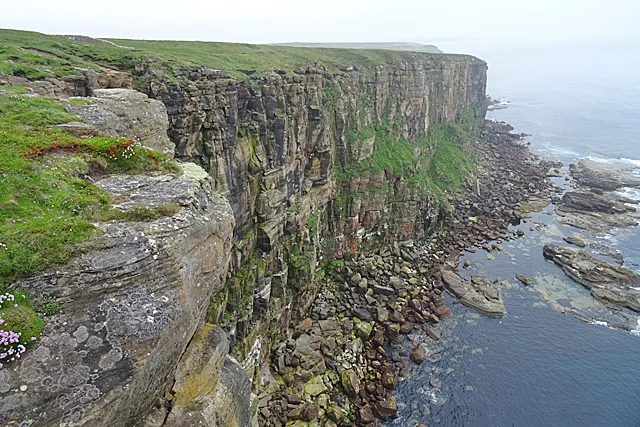
Summer auk colonies at mainland Britain’s northernmost headland
Decide if the visit fits.
Last checked 18 October 2026.
Opening and charges information · checked .
Stay nearby →Reserve overview
Summer auk colonies at mainland Britain’s northernmost headland
Eight checks for a smoother visit.
Conditions change: check the operator and transport notices before travelling.
January: Winter changes the aim of a Dunnet visit: use the safe summit viewpoint for a broad scan and any incidental Starling or Snow Bunting, rather than expecting the summer auk colony. The county report confirms those landbirds locally, while their winter timing is typical seasonal guidance, not a guaranteed flock.
February: A clear February interval can suit a short summit-viewpoint watch, with Starling and possible Snow Bunting part of the cautious winter target list. Keep the attention on birds already visible from the public area. There is no resting-site direction here, and weather may make a brief visit the sensible limit.
March: Typically spring begins to change activity around the cliffs. Start at the official cliff-top viewpoint for a broad assessment, but do not read May–July Puffin and Guillemot chips as an exact arrival calendar. Empty ledges are a useful observation too, especially when the sea view is clear.
April: Typically watch for Gannet offshore from the official cliff-top viewpoint, keeping a steady scan over open water. The RSPB’s archived June 2022 seasonal guide names this sea-watching opportunity; the older county April record also confirms local occurrence. Gannets are offshore visitors here, rather than part of the nesting auk colony, and no current count is implied.
May: Use the cliff-top viewpoint for the operator's Puffin, Guillemot, Razorbill, Fulmar and Kittiwake highlights. An actually read RSPB May visit also supports Cormorant and Great Black-backed Gull. Compare shapes and flight patterns before moving the scope, and remain entirely within the public viewing area.
June: Typically June offers the most straightforward colony-focused visit from the cliff-top viewpoint. Give Guillemot and Razorbill groups time before searching for smaller Puffins amongst them. The NatureScot site citation supports Shag and gulls as well, but no historical colony total is presented as today's number.
July: A July visit can still concentrate on Puffin and the other auks from the cliff-top viewpoint; actual county 2025 observations corroborate local summer Puffin interest. Use the permitted viewing platform and a steady scan. Do not follow a bird along an unprotected edge to improve the angle.
August: Typically the colony picture changes later in summer, so assess the cliff-top viewpoint before deciding how long to stay. Fulmar and offshore activity may be a more useful focus than expecting crowded auk ledges. The conservative May–July target window is a planning aid, not a precise departure date.
September: September is a different visit from the breeding-season spectacle. Watch offshore movement from the cliff-top viewpoint only if conditions are manageable, without promising Puffin or Guillemot on the ledges. A broad sea scan and changing light can still reward a patient stop, while strong gusts justify leaving early.
October: Use the cliff-top viewpoint for a weather-led autumn sea watch, keeping the route and your retreat in view. The verified summer Fulmar and auk list does not create an October guarantee. A scope helps only when it can be held steadily from a safe public position.
November: Winter landbird interest is a cautious extra from the summit viewpoint, with local county evidence for Starling and Snow Bunting. Their chips use typical winter seasonality rather than a dated annual arrival series. Do not search rough grassland or follow birds away from the established public view.
December: Plan a short daylight stop at the summit viewpoint or council car-park public view according to the wind. Starling and possible Snow Bunting are the winter targets supported locally, but a quiet visit is entirely plausible. Save the occupied auk-colony expectation for the conservative summer window and keep your route safe.
Best conditions: Typically clear visibility and moderate wind favour a safe, steady cliff watch. The cliff-top viewpoint is our choice for the colony; the summit and car park provide broader perspectives. A scope is useful for the sea, but binoculars may be steadier in gusts. Choose a safe permitted stance with glare to one side and shorten the visit when balance or visibility suffers.
Our choice is a slow visit to the official cliff-top viewpoint, with the summit as a second perspective if the conditions remain comfortable. The surfaced approach and improved summit viewing area make this a different proposition from an improvised scramble along the headland. Keep that distinction when choosing a place for a tripod or photograph. Start with the larger groups and the flight line, then search carefully for Puffins among the other auks during the summer window. A broad view from the car park is also legitimate, particularly when you need a shorter stop. The parking area is operated by Highland Council rather than the RSPB, so its current signs govern parking arrangements. No new charge or gate timetable has been inferred here. In winter, a brief landscape and sea watch can be the better plan; a quiet cliff is not evidence that you chose the wrong viewpoint.
Access times: Reserve: The RSPB calendar checked on 19 October 2026 permits access to Dunnet Head throughout the day and night. Daylight and safe weather remain the practical visiting limits. · Hides: No public hide. Official cliff-top and summit viewpoints are outdoor facilities. · Car park: Large car park belongs to Highland Council, not the RSPB. No separately verified gate-hours; obey current council signs. · Dawn access: yes. Operator opening information.
Dunnet Head is particularly suited to a patient viewpoint visit. The principal cliff-top viewing area allows a careful study of the breeding seabirds, while the hill-top viewpoint provides a wider sense of the peninsula and surrounding sea. Views from the car park can also be worthwhile. The reserve's official facilities information does not describe a long, waymarked birding circuit or a chain of hides. Begin by watching the water below the cliffs, then work across the rock faces and the flight line. Guillemots often form dense groups, while razorbills can be picked out by shape and pattern when the view is clear. Puffins need a slower search, particularly among moving birds. Spend time comparing what is actually visible rather than walking farther simply to improve a photograph. Two-hour plan: devote most of the visit to the cliff-top viewpoint, taking a break before a second watch in different light. If conditions suit, add the summit view and finish with a scan from the car park. This leaves time to watch behaviour without treating the headland as a route to complete at speed. Full-day plan: build the day around two separated sea watches, with a generous meal break away from the exposed edge. Use the wider Caithness coast between watches if that fits your transport, then return to compare colony activity or offshore movement. A whole day need not mean continuous exposure at one windy spot. Keep the cliff boundary and all local signs central to the plan, especially when visibility changes.
Use the linked reserve map and directions with current access notices. Species are typical seasonal targets. Light and telescope advice reflects our choice of viewpoint.
Breeding cliffs and offshore water from the official public viewpoint
Firm all-abilities path; cliff-edge safety still matters.
Spring: Puffin, Razorbill, Guillemot, Fulmar, Kittiwake, Shag, Cormorant, Herring Gull, Great Black-backed Gull, Gannet
Summer: Puffin, Razorbill, Guillemot, Fulmar, Kittiwake, Shag, Cormorant, Herring Gull, Great Black-backed Gull, Gannet
Light: either. Scope: useful.
Broad sea and peninsula view from the summit
Gravelled viewpoint, no steps described; no rough-ground bird pursuit.
Winter: Starling, Snow Bunting
Light: either. Scope: useful.
Offshore water visible from the council parking area
Public parking view only; keep vehicles, pedestrians and equipment clear of each other.
Light: either. Scope: useful.
| Spot | Overlooks | Key species by season | Best light | Scope | Tide |
|---|---|---|---|---|---|
| Cliff-top viewpointFirm all-abilities path; cliff-edge safety still matters. | Breeding cliffs and offshore water from the official public viewpoint | Spring: Puffin, Razorbill, Guillemot, Fulmar, Kittiwake, Shag, Cormorant, Herring Gull, Great Black-backed Gull, Gannet Summer: Puffin, Razorbill, Guillemot, Fulmar, Kittiwake, Shag, Cormorant, Herring Gull, Great Black-backed Gull, Gannet | either | useful | — |
| Summit viewpointGravelled viewpoint, no steps described; no rough-ground bird pursuit. | Broad sea and peninsula view from the summit | Winter: Starling, Snow Bunting | either | useful | — |
| Council car-park public viewPublic parking view only; keep vehicles, pedestrians and equipment clear of each other. | Offshore water visible from the council parking area | — | either | useful | — |
Month chips show typical presence or our preferred viewing season. Choose birds that suit the time of your visit.
No operator tide height or required state verified for the official clifftop viewpoints. Use Scrabster predictions only for the wider coast plan; cliff watching is governed by weather and safe public access, not a claimed low-water route.
The RSPB describes a firm-surfaced, all-abilities path to the cliff-top viewpoint. It also says the summit viewpoint has been improved with a gravel surface and no steps. These are useful distinctions from the rougher coastal terrain nearby, but they do not establish that every point on the headland is accessible in all conditions. Visitors using a wheelchair or pushchair should keep to the described surfaced route and consider the effect of wind on balance, comfort and equipment. A cliff-edge setting can feel exposed even where the path itself is firm. Ask the RSPB about current surface condition, gradients and turning space if those details determine whether you can visit; numerical measurements were not supplied in the facilities page examined. The car park provides an alternative place for a stationary sea watch. Position equipment so that it does not obstruct other visitors or vehicles, and choose a view that can be enjoyed without approaching an unprotected edge. Warm clothing and a waterproof outer layer can make a short seated watch much more comfortable. No accessible toilet is listed at the reserve, so take that into account when deciding the length of the visit.
This is an outdoor coastal stop, with cliff-top and hill-top viewing areas rather than a visitor centre or a staffed hide. Bring food and drinking water, keep litter secure in the wind and take it away with you. The RSPB identifies the Seadrift-Dunnet visitor centre at Dunnet Sands, around four miles away, as the nearest toilet provision during its opening hours. That is a separate destination, not an on-site facility. Barbecues are forbidden on the reserve.
Dogs should remain close to their handler, preferably on a short lead during the RSPB's ground-nesting season of 1 April to 15 August. Use a lead near cliff edges throughout the year and collect waste. The reserve follows the Scottish Outdoor Access Code, and assistance dogs are welcome in all parts.
The final road approach is the B855 through Brough from the A836. Thurso is the nearest railway station named by the RSPB. Arrange the remaining journey by taxi if travelling without a car, with a collection booked for the end of the watch rather than depending on finding a vehicle at the headland. For a bus-assisted journey, current Traveline information lists Stagecoach service 80 between Thurso and John o' Groats with a stop at Dunnet's Telephone Kiosk. The reserve's older directions call it Rapsons route 80; the operator name has changed. The village stop is not the lighthouse or cliff viewpoint, so a further planned road connection is needed. Check the actual day's journeys in the operator or Traveline planner, particularly outside the main visitor season. The road estimates for nearby stay bases finish at the reserve point and are not live traffic forecasts; slow local traffic and single-track sections can lengthen the trip.
Useful bases for an early start.
Booking.com links are affiliate links: we may earn a commission at no extra cost to you. How these links work.
About 13.1 miles by road, roughly 24 minutes’ drive to the stated arrival point (OSRM, measured 18 October 2026; estimate without live traffic).
Measured driving route · 18 October 2026. Map estimates exclude live traffic.
A stay in Thurso with time for the wider areaFind places to stay in Thurso on Booking.comAbout 7.7 miles by road, roughly 13 minutes’ drive to the stated arrival point (OSRM, measured 18 October 2026; estimate without live traffic).
Measured driving route · 18 October 2026. Map estimates exclude live traffic.
A stay in Castletown with time for the wider areaFind places to stay in Castletown on Booking.comAbout 15.6 miles by road, roughly 25 minutes’ drive to the stated arrival point (OSRM, measured 18 October 2026; estimate without live traffic).
Measured driving route · 18 October 2026. Map estimates exclude live traffic.
A stay in John o’ Groats with time for the wider areaFind places to stay in John o’ Groats on Booking.comExplore Highland’s full guides and smaller birding sites
The North Scotland RSPB office gives nsro@rspb.org.uk and 01463 715000 as the Dunnet Head contact. Use it for current reserve access questions and any mobility requirements that the published path description does not answer. Highland Council is responsible for the car park, while Stagecoach and Traveline provide bus information. Keep enquiries about parking charges separate from questions about the seabird reserve so they reach the organisation able to answer them.
Check RSPB local-group Dunnet observations, May 2022. historical dated field trip: 21 May 2022 Reports show what has been seen, not what will be.
Follow the BTO Birders’ Code and give wildlife space.
RSPB Dunnet Head: Free entry; council car park.
RSPB Dunnet Head: Dogs should remain close to their handler, preferably on a short lead during the RSPB's ground-nesting season of 1 April to 15 August.
RSPB Dunnet Head: Seasonal wildlife throughout the year.
RSPB Dunnet Head: These are useful distinctions from the rougher coastal terrain nearby, but they do not establish that every point on the headland is accessible in all conditions.
RSPB Dunnet Head: The final road approach is the B855 through Brough from the A836.
Shorter stops within 15 miles in a straight line. Use the operator’s arrival directions for the journey.
Thurso · Wet grassland and pools
Nearby complete guides.
Stops with a purpose: use one as a contrasting habitat or weather-proof Plan B. Distances are straight-line estimates, not road journeys.