

Short entry2.4 miles away
Yellowcraig
Near Dirleton · Coastal woodland, dune grassland and rocky shore
 the ai birderBirding near me
The AI Birder · one-page field sheet
North Berwick, East Lothian, Scotland · EH39 4SS · EH39 4SS

Gannet · Shag · Cormorant · Eider · Turnstone · Knot
Bass Rock (guided boat circuit) · Bass Rock (operator-led landing route) · Craigleith (guided boat circuit) · Discovery Experience (live island cameras) · North Berwick harbour (public shoreline) · North Berwick shore (public seaward view)
Check current access, hide closures and operator notices before travelling. Seasonal birds are possibilities, not promised sightings. Keep to authorised routes and give wildlife space.
Opening and charges checked 2026-10-25. Operator: https://www.seabird.org/
Full guide and current source links: https://aibirder.co.uk/reserves/bass-rock-and-scottish-seabird-centre
SC 01 · Scottish Seabird Centre reserve guide
North Berwick, East Lothian, Scotland · EH39 4SS
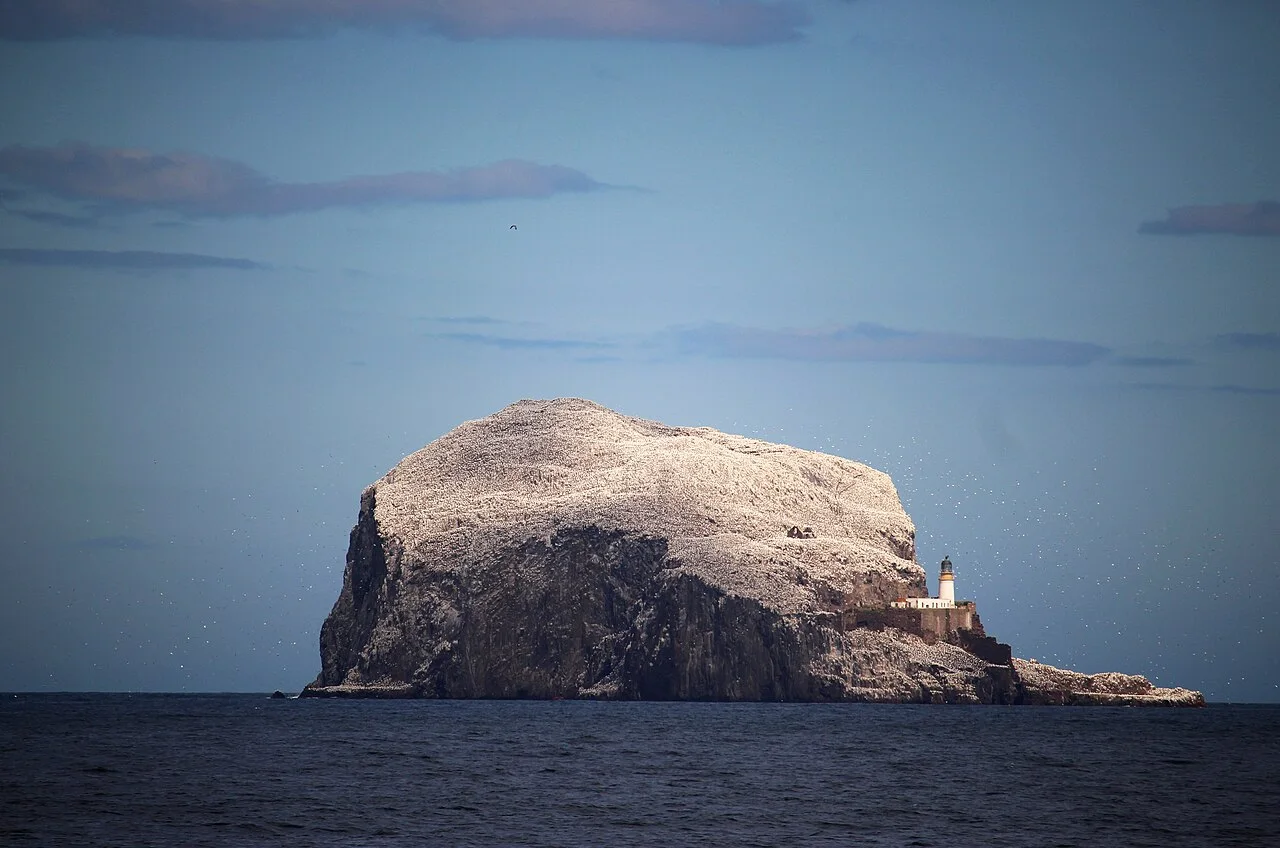
Watch the Bass Rock gannets by guided boat or through the Centre's live island cameras.
Decide if the visit fits.
Last checked 2026-10-18.
Opening and charges information · checked .
Stay nearby →Reserve overview
Watch the Bass Rock gannets by guided boat or through the Centre's live island cameras.
Eight checks for a smoother visit.
Conditions change: check the operator and transport notices before travelling.
January: typically choose the public North Berwick harbour shoreline for Eiders, Turnstones and Purple Sandpipers. A scope from a safe mainland seaward position can help with Long-tailed Ducks. The Centre supplies a sheltered alternative during its winter hours; this is not the ordinary Bass Rock landing season.
February: usually combine Eiders and winter waders beside North Berwick harbour with the Discovery Experience’s Bass Rock cameras. Gannets begin building up during late winter, but the operator’s pages differ on whether the first return is lateJanuary or lateFebruary. The main boat programme is a later-season decision.
March: typically watch for Gannets on the Bass Rock cameras and Fulmars around Craigleith where an advertised sailing is available. North Berwick harbour remains useful for Eiders and departing winter waders. Read the actual trip calendar; the general spring season does not establish a departure on every day.
April: usually select an operator-run circuit for Gannets at Bass Rock and Puffins around Craigleith as they return. Guillemots, Razorbills and Shags add variety. Keep the indoor camera session as a second way to watch behaviour if a safe sailing cannot be provided.
May: typically combine Gannets from the Bass Rock boat circuit with Puffins, Fulmars and auks around Craigleith. An operator-led Bass Rock landing is a separate booking and needs suitable mobility. It is not an extension of a standard cruise ticket or an invitation to wander through the colony.
June: usually choose this month for the broadest breeding-seabird combination: Gannets at Bass Rock, Puffins and Kittiwakes around Craigleith and Shags on the lower rocks. The boat determines the sequence and viewing side. Binoculars are more useful than trying to stabilise a telescope afloat.
July: typically keep Bass Rock Gannets as the principal target, with Craigleith Puffins and other auks a stronger prospect early in the month. Guillemots and Razorbills usually head to sea during July, and most Puffins leave by its end. Choose June if seeing several auk species is essential.
August: usually switch the island emphasis towards Gannets, Shags, Kittiwakes and the large gulls seen around Craigleith. Returning Turnstones and Redshanks make the public North Berwick harbour shore worthwhile again. Do not book a late-summer trip expecting the full Puffin season to continue.
September: typically watch Gannets from the booked Bass Rock circuit while numbers change, then compare Cormorants, Shags and returning shorebirds from North Berwick. A full day can work as a short mainland watch, cruise and sheltered camera session, without trying to fit in a separate landing.
October: usually favour Eiders, Turnstones, Purple Sandpipers and Redshanks from the public harbour shoreline, with Gannets still possible offshore before the main departure. Only take a cruise if the operator advertises that particular sailing. Sea state and daylight govern the useful length of the shore watch.
November: typically spend time on Eiders and winter waders at North Berwick harbour, then scan the mainland offshore water for Long-tailed Ducks with a scope. Discovery Experience cameras and displays can extend a wet-weather visit. Most Bass Rock Gannets have left and ordinary landing trips are outside their advertised season.
December: usually make the harbour shoreline the focus for Turnstones, Purple Sandpipers, Redshanks and Eiders. Watch feeding edges from dry public paths without approaching resting flocks on exposed rocks. Keep a shorter route and use the Centre’s winter and festive opening details when planning a warm indoor stop.
Best conditions: Typically choose a clear, settled interval for a boat circuit or distant mainland scope watch. A slight change in wind and swell can prevent landing even when birding from shore is comfortable. The boat’s side and the guide’s route determine the useful light; do not insist on a fixed viewpoint in unsafe conditions. North Berwick’s shoreline is the dawn option, while the Centre and island landing follow their advertised hours. Indoor cameras provide close views without an exposed crossing.
Mainland admission and parking, checked 18 October 2026: the Discovery Experience lists adults £13.50, children aged 3–15 £9, concessions £11.25 and a two-adult/two-child family £38.50; under-threes and registered carers enter free. The café and shop have free entry. Festive exceptions are closure on 25–26 December, a 3pm finish on 24 and 31 December, and an 11am opening on 1 January. The Centre's pay-and-display tariff, 9am–6pm, is £3.50 for one hour, £6 for two, £8 for three or £10 all day; parking is free from 1 October to the end of February. Recreation Park on Dunbar Road is another free option. Boat fares and booking conditions are in the boat-access panel. Check the Centre's operating notices and sailing confirmation before travelling, because marine conditions can change the day's arrangements. Bass Rock and Craigleith joined the RSPB reserve network in June 2026; the Scottish Seabird Centre continues managing the islands with the RSPB and operating its boat trips.
Access times: Reserve: Mainland Centre: January and November–December 10am–4pm; February–March and September–October 10am–5pm; April–August 10am–6pm. Festive exceptions are on the operator page. · Hides: No public hide circuit. Discovery last entry is one hour before closing; Bass Rock paths are accessible only during your booked guided landing. · Car park: Centre pay-and-display charging hours are 9am–6pm; parking is free 1 October–endFebruary. These are charging hours, not a published gate-opening guarantee. · Dawn access: partly. Operator opening information.
The most useful viewing areas are the mainland shoreline, the Discovery Experience's cameras and viewing balcony, and the boat routes past the islands. There is no conventional public hide circuit here. Decide first whether you want to understand breeding behaviour, photograph birds from water level, or join the more demanding guided landing. A catamaran or RIB circuit and a landing are different experiences; select the advertised itinerary that matches your priority before choosing a departure time. From shore, use binoculars to locate moving birds and a telescope for the distant rock. Avoid interpreting a white patch on the island as a precise count. On a moving boat, practise following flying birds with binoculars before bringing a long lens to your eye, and keep bags secure while listening to the guide's directions. Two-hour plan, editorial suggestion: allow twenty minutes to settle into the mainland viewing area and identify the islands, spend about an hour examining the cameras and displays, then finish with a short harbour-side watch. This gives a satisfying visit without relying on a sailing fitting a tight arrival and departure window. If you already hold a cruise ticket, build your short visit around that instead and leave the exhibition for another occasion. Full-day plan, editorial suggestion: begin with a quiet shore watch, take your pre-booked cruise, and have lunch back in North Berwick. Use the afternoon indoors to compare the gannet behaviour you saw at sea with close camera views, then finish by scanning the shore in changing light. A landing day needs its own spacious schedule: keep the time either side clear rather than trying to combine every trip type in one outing.
Use the linked reserve map and directions with current access notices. Species are typical seasonal targets. Light and telescope advice reflects our choice of viewpoint.
Sea cliffs, Gannet colony and lower auk ledges viewed from the boat
Use the booked operator-run cruise; the skipper chooses the safe circuit.
Winter: Peregrine
Spring: Gannet, Shag, Guillemot, Razorbill, Peregrine
Summer: Gannet, Shag, Guillemot, Razorbill, Peregrine
Autumn: Gannet, Shag, Peregrine
Light: either. Scope: not needed.
Tide: Sailing and the safe viewing distance depend on sea conditions and the skipper’s decision.
The colony visible from the guided, permitted island path
Advance-booked guided landing only, late April–September as advertised; remain with the guide.
Spring: Gannet
Summer: Gannet
Autumn: Gannet
Light: either. Scope: not needed.
Tide: Landing is conditional on sea and weather; a ticket cannot guarantee landing.
Island slopes, rocky margins and the inshore sea
View afloat on the advertised cruise; no ordinary landing permission is implied.
Spring: Puffin, Fulmar, Shag, Herring Gull
Summer: Puffin, Kittiwake, Lesser Black-backed Gull, Great Black-backed Gull
Autumn: Shag, Cormorant, Herring Gull
Light: either. Scope: not needed.
Remote views of Bass Rock and neighbouring island wildlife
Indoor visitor attraction with seasonal hours and last admission one hour before closing.
Spring: Gannet, Puffin
Summer: Gannet, Puffin, Shag
Autumn: Gannet, Shag
Winter: Shag, Cormorant
Light: not applicable. Scope: not needed.
Nearby rocky shore, beach feeding edge and inshore water
Use public harbour-side paths; leave working berths, slipways and the lifeboat route clear.
Winter: Eider, Turnstone, Purple Sandpiper, Redshank, Knot, Sanderling
Spring: Eider, Oystercatcher, Turnstone
Summer: Eider, Oystercatcher, Herring Gull
Autumn: Turnstone, Purple Sandpiper, Redshank, Oystercatcher
Light: either. Scope: useful.
Tide: Watch exposed feeding edges as the tide falls; give resting birds space as the tide covers rocks.
Open water off the mainland public shoreline
Choose a safe landward public position; do not walk onto slippery tidal rocks.
Winter: Long-tailed Duck, Eider
Spring: Eider
Summer: Gannet, Shag
Autumn: Eider, Cormorant
Light: either. Scope: essential.
Tide: An offshore watch does not require a channel crossing; stay above wave wash.
| Spot | Overlooks | Key species by season | Best light | Scope | Tide |
|---|---|---|---|---|---|
| Bass Rock (guided boat circuit)Use the booked operator-run cruise; the skipper chooses the safe circuit. | Sea cliffs, Gannet colony and lower auk ledges viewed from the boat | Winter: Peregrine Spring: Gannet, Shag, Guillemot, Razorbill, Peregrine Summer: Gannet, Shag, Guillemot, Razorbill, Peregrine Autumn: Gannet, Shag, Peregrine | either | not needed | Sailing and the safe viewing distance depend on sea conditions and the skipper’s decision. |
| Bass Rock (operator-led landing route)Advance-booked guided landing only, late April–September as advertised; remain with the guide. | The colony visible from the guided, permitted island path | Spring: Gannet Summer: Gannet Autumn: Gannet | either | not needed | Landing is conditional on sea and weather; a ticket cannot guarantee landing. |
| Craigleith (guided boat circuit)View afloat on the advertised cruise; no ordinary landing permission is implied. | Island slopes, rocky margins and the inshore sea | Spring: Puffin, Fulmar, Shag, Herring Gull Summer: Puffin, Kittiwake, Lesser Black-backed Gull, Great Black-backed Gull Autumn: Shag, Cormorant, Herring Gull | either | not needed | — |
| Discovery Experience (live island cameras)Indoor visitor attraction with seasonal hours and last admission one hour before closing. | Remote views of Bass Rock and neighbouring island wildlife | Spring: Gannet, Puffin Summer: Gannet, Puffin, Shag Autumn: Gannet, Shag Winter: Shag, Cormorant | not applicable | not needed | — |
| North Berwick harbour (public shoreline)Use public harbour-side paths; leave working berths, slipways and the lifeboat route clear. | Nearby rocky shore, beach feeding edge and inshore water | Winter: Eider, Turnstone, Purple Sandpiper, Redshank, Knot, Sanderling Spring: Eider, Oystercatcher, Turnstone Summer: Eider, Oystercatcher, Herring Gull Autumn: Turnstone, Purple Sandpiper, Redshank, Oystercatcher | either | useful | Watch exposed feeding edges as the tide falls; give resting birds space as the tide covers rocks. |
| North Berwick shore (public seaward view)Choose a safe landward public position; do not walk onto slippery tidal rocks. | Open water off the mainland public shoreline | Winter: Long-tailed Duck, Eider Spring: Eider Summer: Gannet, Shag Autumn: Eider, Cormorant | either | essential | An offshore watch does not require a channel crossing; stay above wave wash. |
Month chips show typical presence or our preferred viewing season. Choose birds that suit the time of your visit.
For the mainland shore, exposed feeding edges are usually useful on a falling tide; view from public paths and give resting waders room as rocks disappear. Boat departures and Bass Rock landing access are selected by the operator according to tide, wind and sea state. No minimum height is published in the sources checked.
Operator: Scottish Seabird Centre / Seafari Adventures (Forth).
Booking opens: Advance booking through the Centre's sailing calendar; a 2027 release date was not found on the checked official pages.. Season: Published 2026 programme: catamaran April–September; Three Islands RIB season described as Easter–autumn; Bass Rock landings late April–September. Individual sailings depend on availability and weather.. Fares: 2026 advertised tariffs, checked 18 October: 75-minute catamaran £32 adult/£15 child aged 16 and under, under-threes free; 75-minute Three Islands RIB £39 adult/£28 child; two-hour Isle of May round-island RIB £47/£42; Bass Rock landing £200, advertised as over-16s only. The Three Islands detail page still shows an older £32/£22 tariff and contradicts the main page on waterproofs: confirm the current checkout total before payment and bring your own waterproofs..
Time ashore: Cruises remain afloat. The guided Bass Rock landing advertises around three hours on the island; its duration and safe route are controlled by the guide.. Landing access: Landings require advance booking and a completed liability waiver. Follow the guide and use only the permitted landing route. RIB minimum height is 1.3m; children aged 16 and under must have an accompanying adult on non-landing trips.. Weather policy: The operator may cancel landings at short notice because of sea or weather conditions. Read the published terms for the booked experience, retain the confirmation and allow flexibility in an island-focused stay.
The operator's accessibility page distinguishes the mainland building from the boats. The Centre has level access, a lift connecting its two floors and a harbour ramp. A wheelchair can be borrowed by prior arrangement, and a walking aid is available. Blue Badge spaces are provided beside the Centre and in its car park; the ground floor has an accessible toilet. Marine Parade has coach and minibus drop-off points. The Centre also links to Beach Wheelchairs for separately booked outdoor access. Its boat trips are unsuitable for wheelchair users and people with limited mobility because of the harbour and boarding arrangements. A Bass Rock landing additionally needs good mobility and balance on exposed, difficult ground. Discuss pregnancy and any relevant back or neck condition with the boat team before purchasing a RIB ticket. For sensory needs, the Centre recognises sunflower lanyards and can advise on quieter visits. A staff member offers BSL support by advance arrangement, while the published access page says the hearing-loop system needs replacement. Read its linked AccessAble survey for details relevant to your own equipment and transfer needs, then describe those needs to the Centre before committing to the journey.
The mainland Seabird Café provides food and refreshments with sea views, and the gift shop sells books and other items. The Discovery Experience includes interactive exhibits, wildlife films and island cameras, so allow time to watch a sequence of behaviour rather than simply moving from screen to screen. Choose clothing for an exposed day at sea, with layers you can adjust when standing still. Protect binoculars and cameras from spray and bring only luggage that you can keep securely under control aboard.
The Centre's Pooch Policy permits clean, well-behaved dogs on short leads throughout its indoor and outdoor public areas, including assistance dogs. Drinking water is available at the entrance and café decking. Catamaran travel with a dog requires pre-booking and the skipper's permission. Arrange that permission before buying your own ticket, and plan a separate mainland outing if your chosen sailing cannot accommodate the dog.
ScotRail's North Berwick branch connects Edinburgh Waverley with North Berwick; use the dated operator timetable and journey planner for your travel day. The Centre describes a roughly 35-minute train journey and a 15-minute walk from the station, downhill towards the harbour and uphill on the return. That makes Edinburgh a workable base without driving into town. Build a generous margin between the train's scheduled arrival and the check-in time on your boat confirmation, particularly when carrying photography equipment. East Coast Buses publishes service 124 between Edinburgh and North Berwick and service 120 between North Berwick and Dunbar. Consult the individual route timetable for the appropriate town-centre stop and the last return rather than assuming buses meet boats. The station approach and the harbour are different locations, so save a walking map before leaving the train. If the walk is unsuitable, arrange a local taxi in advance and explain your mobility or luggage requirements when reserving it. Cycling visitors can use the John Muir Way approach identified by the Centre.
Useful bases for an early start.
Booking.com links are affiliate links: we may earn a commission at no extra cost to you. How these links work.
About 0.3 miles by road from the measured town-centre point, roughly 2 minutes' drive to the Centre; OSRM/OpenStreetMap estimate measured 18 October 2026, excluding parking and walking.
Measured driving route · 2026-10-18. Map estimates exclude live traffic.
Keeping your departure morning local and spending time on the harbour shoreline.Find places to stay in North Berwick on Booking.comAbout 13.7 miles by road from central Dunbar, roughly 23 minutes' drive; OSRM/OpenStreetMap estimate measured 18 October 2026, excluding traffic delays.
Measured driving route · 2026-10-18. Map estimates exclude live traffic.
Combining the Bass Rock visit with a second East Lothian coastal base.Find places to stay in Dunbar on Booking.comAbout 26.4 miles by road from central Edinburgh, roughly 45 minutes' drive; OSRM/OpenStreetMap estimate measured 18 October 2026, excluding traffic delays.
Measured driving route · 2026-10-18. Map estimates exclude live traffic.
A city stay with a direct rail option for your birdwatching day.Find places to stay in Edinburgh on Booking.comExplore Edinburgh and the Lothians’s full guides and smaller birding sites
For the mainland visit, contact the Scottish Seabird Centre at info@seabird.org or 01620 890202. Send sailing questions to boats@seabird.org, quoting the trip name and booking reference where applicable. For a landing, explain the composition of your party and any relevant access requirements before booking. Keep your booking telephone and email details current so a changed sailing can reach you. Use the operator's linked booking system for tickets and read the terms attached to your selected experience; these establish how a cancellation or altered itinerary is handled. The postcode below identifies the mainland Centre, where visitors begin, rather than a landing point on Bass Rock.
Check Scottish Seabird Centre: Bass Rock wildlife observations. irregular dated reports; newest update read19 August 2026 Reports show what has been seen, not what will be.
Follow the BTO Birders’ Code and give wildlife space.
Bass Rock and Scottish Seabird Centre: Centre adult £13.50; catamaran £32 adult Apr–Sep; Bass Rock landing £200 (over-16s). Parking free Oct–Feb.
Bass Rock and Scottish Seabird Centre: The Centre's Pooch Policy permits clean, well-behaved dogs on short leads throughout its indoor and outdoor public areas, including assistance dogs.
Bass Rock and Scottish Seabird Centre: Gannets in spring and summer · shorebirds in winter.
Bass Rock and Scottish Seabird Centre: The Centre has level access, a lift connecting its two floors and a harbour ramp.
Bass Rock and Scottish Seabird Centre: ScotRail's North Berwick branch connects Edinburgh Waverley with North Berwick; use the dated operator timetable and journey planner for your travel day.
Shorter stops within 15 miles in a straight line. Use the operator’s arrival directions for the journey.
Near Dirleton · Coastal woodland, dune grassland and rocky shore
Dunbar (3 mi / 4.8 km) · Mixed woodland with regenerating native trees
Leven (4 mi / 6.4 km) · Lime-rich dune grassland beside Largo Bay
Dalkeith (3 mi / 4.8 km) · Scrub, grassland and broadleaved woodland
Levenhall, east of Musselburgh · Wetland scrapes, lagoons, grassland and shoreline
Nearby complete guides.
Stops with a purpose: use one as a contrasting habitat or weather-proof Plan B. Distances are straight-line estimates, not road journeys.