
Responsible wildlife guide
Where to experience Wild Swans.
Compare Bewick’s and Whooper Swans, choose winter wetlands and official hides, and plan a responsible visit around natural flights and seasonal feeds.
Two winter visitors, two different journeys
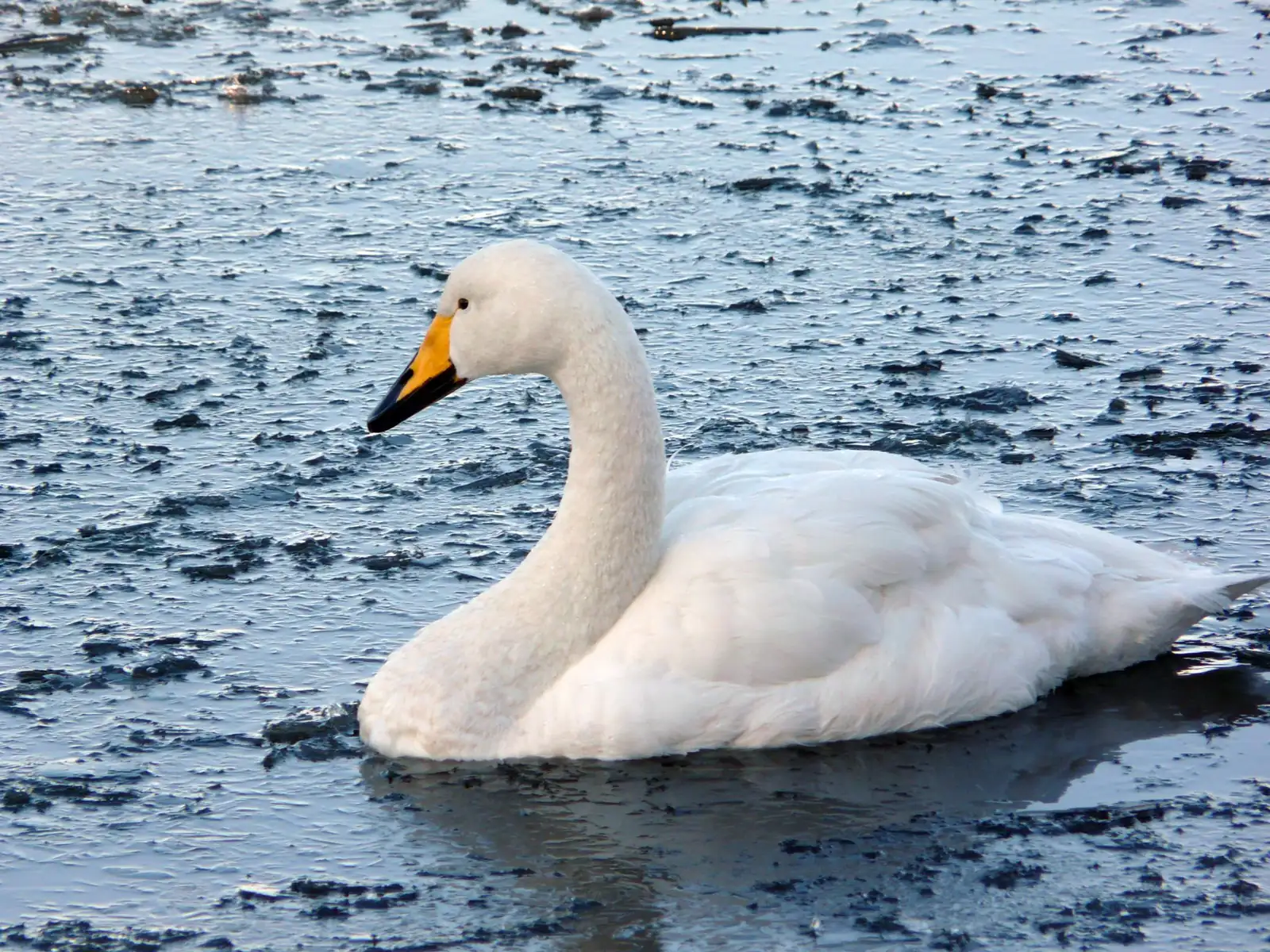
Whooper and Bewick’s Swans bring a different character to a winter wetland from the familiar resident Mute Swan. WWT describes Whoopers arriving from Iceland and Bewick’s arriving from their Arctic Russian breeding range. Their journeys make a quiet view of birds resting on a washland or feeding beside an official hide especially meaningful. Choose a site with established public facilities and allow the visit to include resting and social behaviour as well as flight.
Typically arrivals build through autumn and departures follow in spring, but each species and winter differs. An October record from one reserve does not establish the date when another reserve will hold birds. The linked guides explain the setting, while current operator sightings help decide whether the intended visit suits the stage of the season. Avoid using a historical first-arrival report as though it describes the present year.
Learn the bill pattern and the whole shape
WWT’s identification advice highlights the larger size and longer neck of the Whooper Swan, together with a larger wedge of yellow on the bill. Bewick’s Swans are smaller and usually have less yellow, with the yellow not reaching as far towards the nostril. Compare birds side by side if the opportunity arises, looking at proportions before relying on the exact outline of colour in a distant view.
A Mute Swan’s orange bill with a dark knob provides a useful contrast, but young birds complicate any simple white-bird identification. Juveniles of the wild swans can appear grey, and their bills do not immediately show the adult pattern. Watch the family group and listen as well as look. An uncertain young swan can remain unidentified until there is a better view; a distant photograph should not be made to carry more certainty than the observation itself.
Welney and the Ouse Washes
WWT Welney offers an established way to watch swans using the Ouse Washes, with hides and seasonal organised feeding experiences. The operator’s account of Whooper Swans returning describes birds moving between wetland and nearby arable feeding areas. This makes timing important: a long quiet view from a hide and a natural arrival flight are complementary experiences, rather than interchangeable promises about what every hour will bring.
RSPB Ouse Washes is a separate visitor destination within the wider washland landscape. The RSPB identifies winter Whooper Swans alongside large wildfowl flocks, while seasonal flooding creates the habitat and can also alter visitor access. Read that reserve’s guide before choosing the journey. A flooded field that attracts birds is not a route to cross, and an open view over water does not prove a path beyond it is usable.
Slimbridge and Bewick’s Swans
WWT Slimbridge has a long association with studying Bewick’s Swans, including recognising individuals through their bill markings. Its seasonal blogs record the arrivals and departures of named birds and families. Those accounts give the watching another dimension: a resting group can contain individuals with several winters of history, yet any precise number or named bird belongs to the dated report in which it appears.
Choose a comfortable official viewpoint and take time to compare bill patterns, family relationships and the movements between water and feeding areas. Use the current Slimbridge guide for access and the operator’s live season information for organised activities. The wildlife reserve and the centre’s living collection offer different kinds of encounter, so establish which birds you are looking at before describing them as wild migrants. A close collection bird is not evidence of that winter’s arrival.
Martin Mere and Caerlaverock
WWT Martin Mere is another established winter wildfowl destination, particularly for Whooper Swans. Its programme for 2026–27 includes organised daily wild-bird feeds, but dates and participation arrangements belong to that programme and should be checked with the operator. An afternoon in a hide can also include geese and ducks, giving a good alternative focus if some swans are away feeding in the surrounding landscape.
At WWT Caerlaverock, the operator identifies Whooper Swans among the autumn arrivals returning to the Solway setting. Combine their watching with the reserve’s broader seasonal wildfowl and saltmarsh interest. Its opening pattern matters when planning a Scottish winter journey: the current operator page, checked in October 2026, says Tuesday–Saturday. Use the complete guide and current opening information rather than assuming a daily visitor service because birds remain on the reserve throughout the week.
More places for a wider winter outing
RSPB Loch of Strathbeg explicitly includes Whooper Swans among its wintering wildfowl. It offers a different landscape from a visitor-centre feeding session, with the large dune loch and surrounding wetland as the setting. Choose it when the broader north-east Scottish birdwatching day is the attraction, and use public hides and paths instead of approaching swans in the neighbouring fields.
Wicken Fen’s National Trust wildlife information also identifies Whooper Swans in the colder months. The wider wet grasslands, alongside the historic fen, can make a winter trip rewarding for several species. Match the route to current conditions and the available daylight. The right choice may be the site nearest your accommodation with a comfortable hide, rather than the one associated with the largest count in an old report.
Enjoy the flights without causing them
Usually the most memorable flight is one the birds choose themselves. Settle before expected activity where the operator permits it, keep a broad view and listen for calls as groups approach. Do not walk towards a resting flock to make it take off for a photograph. Winter energy budgets matter, and repeated disturbance can turn a seemingly brief reaction into a substantial interruption to feeding or rest.
Leave all managed feeding to reserve staff and follow the centre’s instructions during a feed. Keep dogs within local rules and well clear of birds on nearby public paths. If a swan carries a readable ring, note it from your existing viewpoint and use the operator’s recommended reporting channel rather than moving closer for the code. A careful observation shared accurately is more useful than a forced close encounter, and an ordinary winter watch can be deeply satisfying without either a ring number or a dramatic mass departure.
Where to watch
These rows use existing reserve watching-place records and typical local seasons. Sensitive locations are withheld. Follow current operator restrictions.
| Reserve and public watching place | Typical months | Best light | Scope |
|---|---|---|---|
| RSPB Lough Foyle: Public roadside lay-by views of Lough Foyle | November, December, January, February | either | essential |
| RSPB Loch Lomond: Lomond Trail boardwalk | January, February, November, December | either | useful |
| WWT Slimbridge: Peng Observatory | January, February, November, December | either | useful |
| WWT Martin Mere: Discovery Hide | January, February, March, October, November, December | either | useful |
| WWT Caerlaverock: Sir Peter Scott Observatory | January, February, March, October, November, December | either | useful |
| RSPB Lochwinnoch: Aird Meadow Trail | January, February, November, December | either | useful |
| RSPB Portmore Lough: Viewing platform | January, February, March, April, October, November, December | either | useful |
| RSPB Loch of Strathbeg: Tower Pool Hide | January, February, March, April, October, November, December | either | essential |
| WWT Welney: Main Observatory and wing hides | January, February, March, October, November, December | either | useful |
| WWT Welney: Main Observatory and wing hides | January, February, November, December | either | useful |
| RSPB Montiaghs Moss: Boardwalk through the peat-pool network | January, February, March, October, November, December | either | not needed |
| Loch Leven National Nature Reserve: East Brackley public viewpoint | January, February, March, April, October, November, December | either | essential |
Where to see wild swans by month
The months below come from each reserve’s local birding guide. They describe typical presence or a preferred watching season; national occurrence can be broader. Reports show past observations and cannot promise an encounter. Sensitive birds have no published watching position.
| Species | Reserve guide | Typical or preferred months |
|---|---|---|
| Whooper Swan | RSPB Lough Foyle | November, December, January, February |
| Whooper Swan | RSPB Loch Lomond | January, February, November, December |
| Bewick’s Swan | WWT Slimbridge | January, February, November, December |
| Whooper Swan | WWT Martin Mere | January, February, March, October, November, December |
| Whooper Swan | WWT Caerlaverock | January, February, March, October, November, December |
| Whooper Swan | RSPB Lochwinnoch | January, February, November, December |
| Whooper Swan | RSPB Portmore Lough | January, February, March, April, October, November, December |
| Whooper Swan | RSPB Loch of Strathbeg | January, February, March, April, October, November, December |
| Whooper Swan | WWT Welney | January, February, March, October, November, December |
| Bewick’s Swan | WWT Welney | January, February, November, December |
| Whooper Swan | RSPB Montiaghs Moss | January, February, March, October, November, December |
| Whooper Swan | Loch Leven National Nature Reserve | January, February, March, April, October, November, December |
| Whooper Swan | RSPB Insh Marshes | January, February, March, October, November, December |
| Whooper Swan | Lindisfarne National Nature Reserve | November, December, January, February, March |
| Whooper Swan | Ouse Washes | January, February, March, October, November, December |
| Bewick’s Swan | Ouse Washes | January, February, November, December |
| Whooper Swan | Wicken Fen | January, February, March, April, November, December |
| Whooper Swan | RSPB Langford Lowfields | October |
| Whooper Swan | RSPB Loch of Spiggie | October, November, December, January, February, March |
| Whooper Swan | Kielder Water ospreys | March, April, October, November |
| Whooper Swan | John Muir Country Park and Tyninghame | January, February, March, October, November, December |
| Whooper Swan | RSPB Crook of Baldoon | December, January, February, March |
Reserve guides for wild swans
- RSPB Lough Foyle · Northern Ireland
- RSPB Loch Lomond · Scotland
- WWT Slimbridge · England
- WWT Martin Mere · England
- WWT Caerlaverock · Scotland
- RSPB Lochwinnoch · Scotland
- RSPB Portmore Lough · Northern Ireland
- RSPB Loch of Strathbeg · Scotland
- WWT Welney · England
- RSPB Montiaghs Moss · Northern Ireland
- Loch Leven National Nature Reserve · Scotland
- RSPB Insh Marshes · Scotland
- Lindisfarne National Nature Reserve · England
- Ouse Washes · England
- Wicken Fen · England
- RSPB Langford Lowfields · England
- RSPB Loch of Spiggie · Scotland
- Kielder Water ospreys · England
- John Muir Country Park and Tyninghame · Scotland
- RSPB Crook of Baldoon · Scotland
Questions birdwatchers ask
Where is the best place to see wild swans in the UK?
Public places covered in this guide include RSPB Lough Foyle, RSPB Loch Lomond, WWT Slimbridge.
When is the best time to see wild swans?
Autumn arrivals through winter, with spring departures varying between species, sites and weather
How do I watch wild swans responsibly?
Watch from official hides and viewpoints, keep away from feeding fields and roosts, and leave organised feeding entirely to reserve staff.
Sources and review
Reviewed 2026-10-19.
- WWT identification: which swan is which
- WWT November seasonal migration
- WWT Welney Whooper return, October2025historical
- WWT Slimbridge Bewick’s season2025–26historical
- WWT Martin Mere seasonal wildlife
- WWT Martin Mere2026–27feedprogramme
- WWT Caerlaverock wildlife
- RSPB Ouse Washes
- RSPB Loch of Strathbeg
- National Trust Wicken Fen wildlife