
Short entry6.4 miles away
Lurgan Park
Lurgan · Urban park lake, mature woodland and grassland
 the ai birderBirding near me
The AI Birder · one-page field sheet
Gawley's Gate, County Antrim, Northern Ireland · BT67 0DW · BT67 0DW

Whooper Swan · Tree Sparrow · Greylag Goose · Pochard · Tufted Duck · Teal
Loughside hide · Viewing platform · Cereal-field public trail · Wildlife garden and picnic area
Check current access, hide closures and operator notices before travelling. Seasonal birds are possibilities, not promised sightings. Keep to authorised routes and give wildlife space.
Opening and charges checked 2026-10-25. Operator: https://www.rspb.org.uk/days-out/reserves/portmore-lough
Full guide and current source links: https://aibirder.co.uk/reserves/rspb-portmore-lough
NI 05 · RSPB reserve guide
Gawley's Gate, County Antrim, Northern Ireland · BT67 0DW
Whooper Swans and Greylag Geese arrive from Iceland for winter, when rafts of Pochards and Tufted Ducks, hunting harriers and swirling Lapwing and Golden Plover can fill the open landscape.
Decide if the visit fits.
Last checked 18 October 2026.
Opening and charges information · checked .
Stay nearby →Reserve overview
Whooper Swans and Greylag Geese arrive from Iceland for winter, when rafts of Pochards and Tufted Ducks, hunting harriers and swirling Lapwing and Golden Plover can fill the open landscape.
Eight checks for a smoother visit.
Conditions change: check the operator and transport notices before travelling.
January: January usually makes the Loughside hide the main destination for Pochard, Tufted Duck and Teal, with Whooper Swan and Greylag Goose viewed from the Viewing platform. Compare the open water with grazing fields from the public route. Check the access calendar and leave space for a slow return along the boardwalk.
February: In February, use the Viewing platform for Whooper Swan and Lapwing, then settle into the Loughside hide for Wigeon and Shoveler. The Cereal-field public trail can add Tree Sparrow and Reed Bunting. Keep to the crop margin and let birds continue feeding without repeated approaches or playback.
March: March typically combines lingering Whooper Swan and Pochard with increasing Lapwing activity. Start at the Viewing platform, then use the Loughside hide for Great Crested Grebe and Tufted Duck. A warmer afternoon may feel like spring, but it does not establish a fixed date for the last departing winter swans.
April: April usually brings Lapwing display and Skylark song over the meadows, heard and watched from the Viewing platform and permitted paths. The Loughside hide offers Great Crested Grebe and Mute Swan. Common Tern arrival varies; use actual reports before planning around returning birds, and do not approach raft or meadow habitat.
May: May is our choice for Common Tern from the Viewing platform and Reed Bunting along the Cereal-field public trail. Combine that with a long Loughside hide session for Tufted Duck and Great Crested Grebe. Watch the broad habitat from established facilities rather than following an adult bird towards concealed young.
June: In June, watch Common Tern and Black-headed Gull over the lagoon from the Viewing platform, with Grey Heron and Moorhen on nearer margins. The Loughside hide adds Mute Swan and diving ducks. Operator reports show what public viewpoints can reveal; they do not promise the same family groups each summer.
July: July usually remains worthwhile for Common Tern from the Viewing platform and Mallard or Tufted Duck from the Loughside hide. The operator local group recorded these views in July 2025. Use binoculars for nearby movement and a scope for distant waterbirds, keeping the whole approach on the public boardwalk.
August: August typically shifts the balance towards changing duck groups, with Coot, Tufted Duck and Teal from the Loughside hide. Some Common Terns may remain visible from the Viewing platform. Distinguish seasonal possibilities from a fixed departure deadline, and be prepared to spend longer identifying birds in eclipse plumage.
September: September usually brings more Pochard and Tufted Duck onto the lough, watched from the Loughside hide, while the Viewing platform gives a wider Coot and wet-grassland watch. The Cereal-field public trail offers Reed Bunting. Any raptor encounter should remain undisturbed, without searching for a resting or breeding location.
October: In October, Greylag Goose and Whooper Swan typically return, best assessed from the Viewing platform before a Loughside hide session for Pochard and Teal. Autumn arrivals depend on weather. The first regional report is useful context, but does not mean every expected flock has already reached this particular reserve.
November: November usually combines a lough watch for Teal, Wigeon and Shoveler with Tree Sparrow and Reed Bunting on the Cereal-field public trail. The operator’s November 2022 visit documented both habitats. Wet ground and changing water levels need checking; an old report of a passable boardwalk is not a current condition guarantee.
December: December suits a short, careful circuit: Whooper Swan from the Viewing platform, Pochard and Tufted Duck from the Loughside hide, then Tree Sparrow by the Wildlife garden and picnic area. Check the calendar’s holiday arrangements independently. Free admission does not remove gate times or make staff and equipment hire continuously available.
Best conditions: Our choice is a calm clear day with time for both the lough and the seed-crop trail. A scope is essential for confident identification of the more distant diving ducks from the Loughside hide; binoculars are better for nearby sparrows and buntings. Broad seasonal habitat advice comes from RSPB, with actual public-viewpoint observations in November 2022 and July 2025. Light recommendations are editorial: use another viewing slot to reduce glare and do not assume morning or afternoon is always best.
The RSPB’s 2026 admission table, consulted on 18 October, lists free entry for both adults and children, whether members or non-members. The car park has 14 spaces. A separate parking tariff was not published in the operator pages consulted, so do not infer a charge from the generic payment wording above the free admission table. Ordinary visits require no advance booking. For organised activities or a larger group, arrange the visit with the reserve rather than assuming a staffed programme will be available. Equipment hire is available when the site is staffed, rather than continuously. Check the linked RSPB charges, access notices and facilities information before departure; a quiet free-entry reserve still needs a realistic arrival and return plan.
Access times: Reserve: RSPB October 2026 calendar displays 9am–5pm; check the intended date. No unrestricted dawn admission established. · Hides: Loughside hide reached by the public boardwalk within the reserve visit; no separate earlier hide hours verified. · Car park: Calendar displays 9am–5pm. Facilities separately says Christmas Day car park and toilets 11am–3pm and advises parking outside closed gates; that is not confirmation of unrestricted reserve admission. · Dawn access: no. Operator opening information.
Portmore is suited to looking closely rather than covering a large mileage. The principal route takes you through woodland and meadows to the loughside hide. A shorter wildlife-garden circuit adds a pond and a different collection of small birds and insects; there is also a crop-field path. Use the map and reserve signs to keep to the public route, particularly where working grassland and nesting habitat lie beside the path. Two-hour plan — an editorial itinerary: begin with the wildlife garden and a look across the meadows, then make the hide the centre of the visit. Allow most of the first hour for getting there slowly and settling into a useful position. Spend the next half-hour watching rather than continually moving between windows. Finish by retracing the main path, listening for birds that were silent on the outward walk. Keep the final part of the two hours free for the return to your transport. Full-day plan — an editorial itinerary: arrive with food and use a first lough watch to establish the main species present. After a break, explore the garden and crop-field route, then return to the hide with a fresh question: are the terns fishing in a different patch, have diving ducks shifted, or are geese using another meadow? Compare notes with your earlier view. A full day here should involve repeat watches and long pauses rather than an expectation of a long-distance trail. For better identification, note body shape and behaviour before reaching for a photograph. Follow one diving duck through several dives and look for where it resurfaces; compare the size of terns with gulls sharing the same raft. Keep noise and sudden movements down at the hide so that another visitor's close view is not interrupted.
Use the linked reserve map and directions with current access notices. Species are typical seasonal targets. Light and telescope advice reflects our choice of viewpoint.
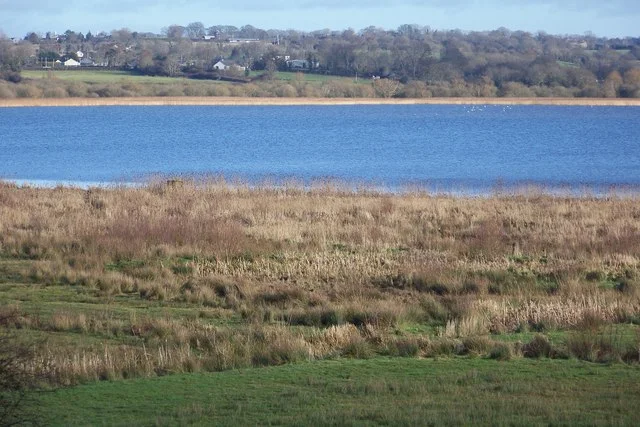
Portmore Lough open water, reedbed and nearer lagoon margins
Official step-free boardwalk approach; low slots and fixed benches without backs or arms. Check flooding and closures.
Winter: Pochard, Tufted Duck, Teal, Wigeon, Shoveler, Great Crested Grebe
Spring: Tufted Duck, Great Crested Grebe, Mute Swan
Summer: Mute Swan, Mallard, Tufted Duck, Water Rail
Autumn: Pochard, Tufted Duck, Coot, Teal
Light: either. Scope: essential.
Lagoon, wet grassland and distant lough
Public platform explicitly used in operator local-group reports; stay inside the official viewing space.
Winter: Whooper Swan, Greylag Goose, Shelduck, Lapwing, Marsh Harrier
Spring: Lapwing, Skylark, Redshank
Summer: Common Tern, Black-headed Gull, Grey Heron, Moorhen, House Martin, Swallow, Marsh Harrier
Autumn: Greylag Goose, Whooper Swan, Coot, Marsh Harrier
Light: either. Scope: useful.
Bird-seed crop fields and adjoining hedges
Short crop route includes cut-grass path. Observe from its public margin; do not enter seed crops.
Winter: Tree Sparrow, Reed Bunting, Redwing, Chaffinch, Goldcrest
Spring: Reed Bunting, Chaffinch
Summer: Reed Bunting, Chaffinch
Autumn: Tree Sparrow, Reed Bunting, Redwing
Light: either. Scope: not needed.
Garden, feeders and woodland edge beside the information shelter
All-weather garden circuit with pond; wheelchair picnic position in information shelter. Staff presence not guaranteed.
Winter: Tree Sparrow, Chaffinch, Blue Tit, Coal Tit, Great Tit, Bullfinch
Spring: Tree Sparrow, Blue Tit, Great Tit
Summer: Tree Sparrow, Blue Tit
Autumn: Tree Sparrow, Goldcrest, Bullfinch
Light: either. Scope: not needed.
| Spot | Overlooks | Key species by season | Best light | Scope | Tide |
|---|---|---|---|---|---|
| Loughside hideOfficial step-free boardwalk approach; low slots and fixed benches without backs or arms. Check flooding and closures. | Portmore Lough open water, reedbed and nearer lagoon margins | Winter: Pochard, Tufted Duck, Teal, Wigeon, Shoveler, Great Crested Grebe Spring: Tufted Duck, Great Crested Grebe, Mute Swan Summer: Mute Swan, Mallard, Tufted Duck, Water Rail Autumn: Pochard, Tufted Duck, Coot, Teal | either | essential | — |
| Viewing platformPublic platform explicitly used in operator local-group reports; stay inside the official viewing space. | Lagoon, wet grassland and distant lough | Winter: Whooper Swan, Greylag Goose, Shelduck, Lapwing, Marsh Harrier Spring: Lapwing, Skylark, Redshank Summer: Common Tern, Black-headed Gull, Grey Heron, Moorhen, House Martin, Swallow, Marsh Harrier Autumn: Greylag Goose, Whooper Swan, Coot, Marsh Harrier | either | useful | — |
| Cereal-field public trailShort crop route includes cut-grass path. Observe from its public margin; do not enter seed crops. | Bird-seed crop fields and adjoining hedges | Winter: Tree Sparrow, Reed Bunting, Redwing, Chaffinch, Goldcrest Spring: Reed Bunting, Chaffinch Summer: Reed Bunting, Chaffinch Autumn: Tree Sparrow, Reed Bunting, Redwing | either | not needed | — |
| Wildlife garden and picnic areaAll-weather garden circuit with pond; wheelchair picnic position in information shelter. Staff presence not guaranteed. | Garden, feeders and woodland edge beside the information shelter | Winter: Tree Sparrow, Chaffinch, Blue Tit, Coal Tit, Great Tit, Bullfinch Spring: Tree Sparrow, Blue Tit, Great Tit Summer: Tree Sparrow, Blue Tit Autumn: Tree Sparrow, Goldcrest, Bullfinch | either | not needed | — |
Month chips show typical presence or our preferred viewing season. Choose birds that suit the time of your visit.
The RSPB describes the aggregate main route and its boardwalk as suitable for wheelchair users and pushchairs, without steps or stiles. It gives the main hide walk as approximately one kilometre return and the garden route as about 200 metres. The optional crop-field section includes cut grass, so its surface differs from the principal path. The lough hide has a step-free approach, low viewing openings and fixed benches without backs or arms. Consider whether you need your own back support or a companion's help for a longer seated watch. Two gates are described as the full width of the boardwalk; discuss any particular chair dimensions or handling requirements with the reserve team before travelling. An accessible toilet and a wheelchair space at the information-shelter picnic table are listed. The RSPB's trail description also includes an unusually steep gradient notation, which needs clarification from the team rather than interpretation as a reliable slope assessment. Tell them which route you want to use and what gradient or cross-slope you can manage. A short visit to a comfortable viewing position can provide plenty to watch without using every optional section.
Bring your own refreshments for an extended watch. The RSPB lists a picnic area, information shelter and toilets; baby-changing provision is listed as unavailable. When staff are present, binoculars and pond-dipping equipment may be borrowed without charge. Reserve a place on any organised activity rather than relying on equipment being available at an unstaffed moment. Barbecues are not permitted at RSPB Portmore Lough. For a school or community outing, guided walks and pond dipping can be arranged for groups of at least eight, and a community room can be booked in advance.
Dogs may use the paths and trails under control, subject to reserve signs, and owners must remove their waste. Visitors with assistance dogs are welcome at RSPB Portmore Lough, including throughout its visitor routes. Keep a pet close when passing resting or feeding birds and give other visitors room on the approach to the hide; a short lead is a sensible editorial choice near wildlife.
The RSPB's recommended road approach is through Aghalee and Gawley's Gate to George's Island Road. Follow the reserve signs for the final approach: a route to Lough Neagh generally may finish at a different shore access. The visitor postcode is BT67 0DW. For public transport, Translink's official Ulsterbus 53 timetable connects Lurgan, Aghalee and Lower Ballinderry and includes Gawley's Gate journeys. These are village services, not a confirmed bus to the reserve entrance. Use Translink's date-specific journey planner to find a suitable arrival and return, then arrange the remaining journey to the reserve. Do not assume every departure serves the same village stops. A rail-and-taxi option through Lurgan avoids relying on an unverified roadside walking connection. Book the outward and return taxi with the actual George's Island Road destination and agree a collection point. This is particularly helpful for a full day with a telescope or for anyone who cannot comfortably walk rural roads. No fare or taxi availability is implied by this suggested connection.
Useful bases for an early start.
Booking.com links are affiliate links: we may earn a commission at no extra cost to you. How these links work.
About 8.2 miles by road, roughly 14 minutes’ drive from Moira centre; OSRM / OpenStreetMap estimate measured 18 October 2026, excluding live traffic.
Measured driving route · 2026-10-18. Map estimates exclude live traffic.
A village base for the eastern Lough Neagh approach.Find places to stay in Moira on Booking.comAbout 13.3 miles by road, roughly 20 minutes’ drive from Lisburn centre; OSRM / OpenStreetMap estimate measured 18 October 2026, excluding live traffic.
Measured driving route · 2026-10-18. Map estimates exclude live traffic.
A city base for combining the wetland with other local visits.Find places to stay in Lisburn on Booking.comAbout 8.6 miles by road, roughly 14 minutes’ drive from Lurgan centre; OSRM / OpenStreetMap estimate measured 18 October 2026, excluding live traffic.
Measured driving route · 2026-10-18. Map estimates exclude live traffic.
A town base for a rail-and-taxi visit or other Lough Neagh stops.Find places to stay in Lurgan on Booking.comExplore County Antrim’s full guides and smaller birding sites
The RSPB lists 028 9265 1936 and Laura.Smith@rspb.org.uk for Portmore Lough. Use those details for activity bookings, access questions and any practical requirement that affects your ability to visit. A local-group account of 26 May 2026 describes common terns carrying fish to the rafts, with reed bunting and willow warbler on the approach. It is a dated visit report rather than a live sightings service. Compare such reports with the time of year you plan to travel, and keep your own list of birds, locations and behaviour. A quiet spell can still reveal a useful change in how the wetland is being used.
Check Operator actual seasonal sightings update. seasonal; update date not published Reports show what has been seen, not what will be.
Follow the BTO Birders’ Code and give wildlife space.
RSPB Portmore Lough: Free adult and child entry; separate parking price not published.
RSPB Portmore Lough: Dogs may use the paths and trails under control, subject to reserve signs, and owners must remove their waste.
RSPB Portmore Lough: Autumn–winter · rewarding year-round.
RSPB Portmore Lough: The RSPB describes the aggregate main route and its boardwalk as suitable for wheelchair users and pushchairs, without steps or stiles.
RSPB Portmore Lough: The RSPB's recommended road approach is through Aghalee and Gawley's Gate to George's Island Road.
Shorter stops within 15 miles in a straight line. Use the operator’s arrival directions for the journey.
Lurgan · Urban park lake, mature woodland and grassland
Craigavon · Lakes, wet meadow and planted woodland
Flowbog Road, Belfast Hills · Unimproved meadows, rush pasture and grassland
Divis Road, Hannahstown, near Belfast · Upland heath, blanket bog and grassland
Milltown Row, west Belfast · Reedbeds, ponds, floodplain meadows and hedgerows
Near Derryhubbert, south-west of Lough Neagh · Raised bog, fen, woodland and orchards
Nearby complete guides.
Stops with a purpose: use one as a contrasting habitat or weather-proof Plan B. Distances are straight-line estimates, not road journeys.