

EN 27 · Natural England reserve guide
Lindisfarne National Nature Reserve
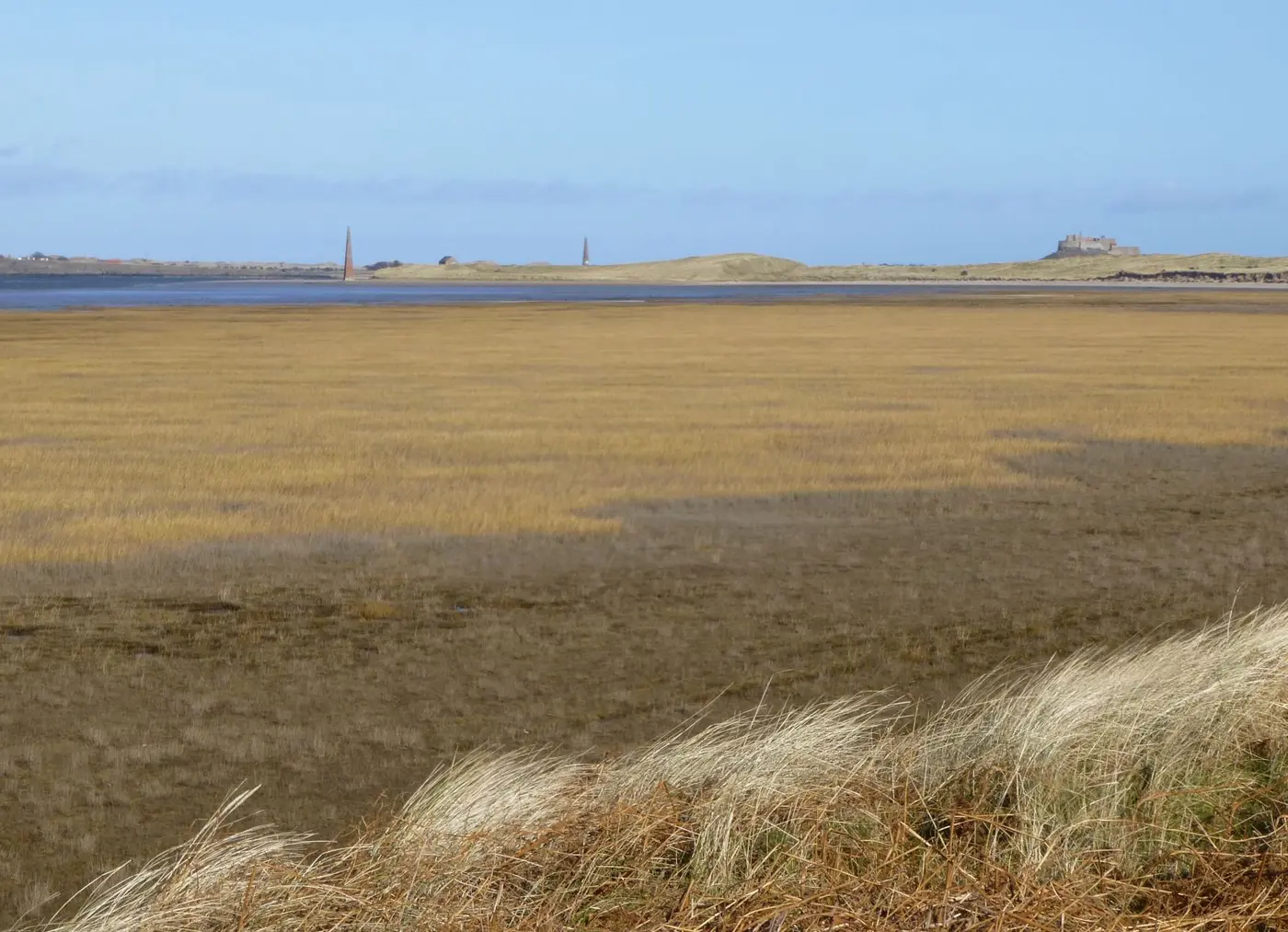
Holy Island, Northumberland, England · TD15 2SH
Light-bellied Brent Geese and winter waders across a tidal reserve encompassing Holy Island and the mainland shore.

Decide if the visit fits.
Lindisfarne National Nature Reserve at a glance
Last checked 18 October 2026.
- Open
- Open-access reserve; Holy Island road journeys must fit council safe-crossing windows.More about open
- Price / parking
- Free nature-trail access; Chare Ends parking £7/3h, £8/4h, £9/5h or £10.50/24h.More about price / parking
- Best time
- Winter wildfowl · spring breeding birds · autumn migrationMore about best time
- Dogs
- Natural England requires dogs on a lead or at heel, without dist…More about dogs
- Toilets
- The council lists Green Lane public toilets as open year-round a…More about toilets
- Step-free
- This is an extensive outdoor coastal landscape rather than a sin…More about step-free
Opening and charges information · checked .
Stay nearby →On this page
Reserve overview
Lindisfarne reserve and habitat
Light-bellied Brent Geese and winter waders across a tidal reserve encompassing Holy Island and the mainland shore.
Eight checks for a smoother visit.
Planning your visit to Lindisfarne
Conditions change: check the operator and transport notices before travelling.
Lindisfarne best time to visit and seasonal birds
January: Typically Brent Goose, Wigeon and Bar-tailed Godwit make the mainland hides worthwhile. Try Fenham-le-Moor or Elwick on an incoming tide, then use Budle Bay's roadside viewpoint. Crossing Holy Island's causeway is optional: check the council's safe road-crossing window before committing to the island.
February: On Holy Island, the Lough Hide offers a freshwater alternative for Shoveler, Tufted Duck or an occasional Whooper Swan. The waggon-way viewpoints provide a more exposed search for Red-throated Diver and Red-necked Grebe. Wind may make the sheltered hide the better decision.
March: Typically wintering Brent Goose and Wigeon overlap with spring movement. Use the harbour trail viewpoint for wildfowl, or pause along Straight Lonnen for Goldcrest. A bird-filled tide does not extend the safe crossing window: decide the return time before walking away from the village.
April: The Lough Hide is a useful starting point for Little Grebe, Mallard and Coot. Along the official trail, listen for Skylark and Meadow Pipit from Straight Lonnen. Spring exclusions protect shorebirds; use the marked track rather than following birds into dunes or cordoned shore.
May: Use the harbour nature-trail viewpoint for Eider, Cormorant and Shelduck. The Castle waggon-way gives a public view towards Fulmar and Rock Pipit habitat. Check current signs before continuing, and do not leave the trail to investigate a bird carrying food or giving alarm calls.
June: A shorter summer circuit can combine the harbour's Eider and Cormorant with Little Grebe at the Lough Hide. Skylark and Meadow Pipit may be heard from Straight Lonnen. These are normal habitat targets, not directions to nests; remain on the visitor route throughout.
July: Try the Castle waggon-way public viewpoints for Rock Pipit and Fulmar, then the Lough Hide for Little Grebe and Coot. The exposed shore and dunes remain sensitive. Keep an eye on weather and the causeway clock even if the day's wildlife looks quiet.
August: Typically the emphasis begins to move towards passage and post-breeding change. The waggon-way still offers Rock Pipit habitat while the Lough Hide provides Mallard and Little Grebe. Use current club reports to decide whether a short island circuit or mainland watch makes more sense.
September: Typically Brent Goose return and waders become more central. Start from Fenham-le-Moor Hide or Budle Bay's roadside viewpoint for the intertidal picture. On Holy Island, check Straight Lonnen for migrating Goldcrest. Easterly conditions can bring arrivals, but do not guarantee a fall.
October: Choose between an incoming-tide wildfowl watch and a migrant walk. Brent Goose and Wigeon are mainland-hide targets; Redwing, Fieldfare and Goldcrest can be sought from Straight Lonnen's public track. Keep hedges and gardens undisturbed, and treat individual current reports as yesterday's evidence.
November: Typically the winter mix is established. Scan from the Heugh public viewpoint for Red-breasted Merganser and Red-throated Diver, or use the Lough Hide for Shoveler and Tufted Duck in worse wind. There is no need to cross the causeway if the timetable makes a mainland visit safer.
December: Short daylight favours one well-timed stop. Fenham-le-Moor or Elwick can give a broad view of Wigeon, Grey Plover and Bar-tailed Godwit, with a telescope useful at range. On the island, use the harbour for Brent Goose and Curlew while keeping the safe return crossing firmly in view.
Best conditions: The operator recommends an incoming tide for hide views. Mainland hides can avoid a poorly timed causeway crossing. In easterly weather, typically check public hawthorn-lined tracks for passage birds without entering fields or gardens. Use a scope for offshore ducks and distant flats; choose a safe public stance with the light behind or to one side.
Lindisfarne opening times, entry and facilities
The reserve’s outdoor nature trails have no general admission charge. The council’s Chare Ends car-park tariff checked 18 October 2026 is £7 for three hours, £8 for four, £9 for five and £10.50 for 24 hours; longer stays are also listed. PayByPhone location is 804140. A parking ticket does not permit a crossing outside the safe road period. Historic attractions such as the castle and priory have separate admissions and are not included in this nature-reserve guide. Essential access rule: before leaving, enter your exact travel date in Northumberland County Council’s Holy Island Safe Crossing Times tool and plan both the outward and return journeys within its ROAD windows. The council says to allow an extra 30 minutes for weather variables; complete both road crossings within the published safe periods. These times do not apply to the sand or Pilgrims’ Way. Weather can alter conditions: never drive through water or continue because another vehicle has done so. If the window cannot accommodate your visit, stay mainland-side. Check the reserve’s notices and the current crossing advice before travelling; do not substitute a general high-tide calculation for the council’s dated information.
Access times: Reserve: Open-access reserve, subject to signed seasonal restrictions. Island access additionally depends on the council’s safe causeway crossing windows. · Hides: Lough, Fenham-le-Moor and Elwick are current official hides. No separate verified door-locking schedule was published in the sources read; check signs before relying on early entry. · Car park: Use designated mainland or island car parks. Parking tariffs, toilet hours and safe crossing windows do not establish car-park gate hours; no universal gate schedule verified. · Dawn access: partly. Operator opening information.
Lindisfarne trails, hides and visit length
Natural England’s visitor leaflet describes a five-kilometre, roughly three-mile island nature trail taking about one and a half to three hours before prolonged birdwatching stops. It begins by Window on Wild Lindisfarne and links the harbour area, the old waggon-way, the Lough hide and Straight Lonnen. The leaflet is an older official route description, revised February 2014, so use present signs for the permitted line rather than assuming every detail is unchanged. The Lough is a useful place to compare freshwater ducks with the birds feeding on the tidal shore. Keep the distinction between the two habitats in mind when deciding where to spend limited time. Two-hour plan, editorial suggestion: if the crossing window leaves enough time beyond the visit itself, begin with a slow harbour watch, follow the signed route towards the Lough and devote a substantial stop to the hide. Return by the permitted route with a generous margin for reaching your vehicle or bus. Do not force the entire circuit into a short visit if a flock is worth watching or walking conditions are slower than expected. Full-day plan, editorial suggestion: select a day whose safe road window genuinely permits a long island stay, or arrange legitimate overnight accommodation first. Work through the nature trail at a relaxed pace, pausing at the harbour, rocky shore and Lough, with a village food break. Use the later session to revisit the habitat that has changed most with the tide. Alternatively, keep the day entirely on the mainland and choose signed coastal access around the reserve’s shore. Do not improvise a link across mud, creeks or sands between two places that appear close on a map; the reserve is larger than the village and its safe footpaths do not follow every waterline.
Where to watch at Lindisfarne
Use the linked reserve map and directions with current access notices. Species are typical seasonal targets. Light and telescope advice reflects our choice of viewpoint.
Lough HideWinter · Spring · Summer
Freshwater Lough and reed-fringed water
Use the official nature-trail approach; check signs and current hide condition.
Winter: Shoveler, Tufted Duck, Whooper Swan
Spring: Little Grebe, Mallard, Coot
Summer: Little Grebe, Mallard
Light: either. Scope: useful.
Fenham-le-Moor HideWinter · Autumn
Mainland intertidal flats and channels
Winter: Brent Goose, Wigeon, Bar-tailed Godwit, Grey Plover
Autumn: Brent Goose, Dunlin
Light: either. Scope: essential.
Tide: Operator recommends an incoming tide; keep inside the hide.
Elwick HideWinter · Autumn
Intertidal water, saltmarsh and feeding edges
Winter: Wigeon, Grey Plover, Bar-tailed Godwit
Autumn: Dunlin, Brent Goose
Light: either. Scope: essential.
Tide: Operator recommends an incoming tide; do not pursue birds onto the flats.
Holy Island harbour nature-trail viewpointWinter · Summer
The Ouse and harbour shore from the official nature-trail start
Winter: Brent Goose, Curlew, Dunlin, Red-breasted Merganser
Summer: Eider, Cormorant, Shelduck
Light: either. Scope: useful.
Tide: Birds change position with the water; stay on the public shore route.
Castle waggon-way public viewpointsWinter · Summer
Castle-side shore and sea from the public waggon-way
Public trail only; castle ticketed interiors are not required for this view.
Winter: Red-throated Diver, Red-necked Grebe, Knot, Turnstone
Summer: Fulmar, Rock Pipit
Light: either. Scope: useful.
Heugh public viewpointWinter · Summer
The channel and open water south of Holy Island
Use the public viewpoint on the Heugh; tower interior access is not implied.
Winter: Red-breasted Merganser, Red-throated Diver
Summer: Eider, Cormorant
Light: either. Scope: essential.
Straight Lonnen public trackSpring · Summer · Autumn
Hawthorn hedges, fields and the sky along the marked public track
Keep to the track; no entry into fields, gardens or seasonal exclusions.
Spring: Goldcrest, Meadow Pipit
Summer: Skylark, Meadow Pipit
Autumn: Redwing, Fieldfare, Goldcrest
Light: either. Scope: useful.
Budle Bay roadside viewpointWinter · Spring · Autumn
Budle Bay channels, intertidal mud and saltmarsh
View from the roadside railings and interpretation point; do not descend onto the flats.
Winter: Brent Goose, Wigeon, Grey Plover, Bar-tailed Godwit, Peregrine, Short-eared Owl
Spring: Peregrine, Short-eared Owl
Autumn: Dunlin, Curlew, Peregrine, Short-eared Owl
Light: either. Scope: essential.
Tide: Typically the incoming tide brings feeding birds closer; leave resting birds undisturbed.
| Spot | Overlooks | Key species by season | Best light | Scope | Tide |
|---|---|---|---|---|---|
| Lough HideUse the official nature-trail approach; check signs and current hide condition. | Freshwater Lough and reed-fringed water | Winter: Shoveler, Tufted Duck, Whooper Swan Spring: Little Grebe, Mallard, Coot Summer: Little Grebe, Mallard | either | useful | — |
| Fenham-le-Moor Hide | Mainland intertidal flats and channels | Winter: Brent Goose, Wigeon, Bar-tailed Godwit, Grey Plover Autumn: Brent Goose, Dunlin | either | essential | Operator recommends an incoming tide; keep inside the hide. |
| Elwick Hide | Intertidal water, saltmarsh and feeding edges | Winter: Wigeon, Grey Plover, Bar-tailed Godwit Autumn: Dunlin, Brent Goose | either | essential | Operator recommends an incoming tide; do not pursue birds onto the flats. |
| Holy Island harbour nature-trail viewpoint | The Ouse and harbour shore from the official nature-trail start | Winter: Brent Goose, Curlew, Dunlin, Red-breasted Merganser Summer: Eider, Cormorant, Shelduck | either | useful | Birds change position with the water; stay on the public shore route. |
| Castle waggon-way public viewpointsPublic trail only; castle ticketed interiors are not required for this view. | Castle-side shore and sea from the public waggon-way | Winter: Red-throated Diver, Red-necked Grebe, Knot, Turnstone Summer: Fulmar, Rock Pipit | either | useful | — |
| Heugh public viewpointUse the public viewpoint on the Heugh; tower interior access is not implied. | The channel and open water south of Holy Island | Winter: Red-breasted Merganser, Red-throated Diver Summer: Eider, Cormorant | either | essential | — |
| Straight Lonnen public trackKeep to the track; no entry into fields, gardens or seasonal exclusions. | Hawthorn hedges, fields and the sky along the marked public track | Spring: Goldcrest, Meadow Pipit Summer: Skylark, Meadow Pipit Autumn: Redwing, Fieldfare, Goldcrest | either | useful | — |
| Budle Bay roadside viewpointView from the roadside railings and interpretation point; do not descend onto the flats. | Budle Bay channels, intertidal mud and saltmarsh | Winter: Brent Goose, Wigeon, Grey Plover, Bar-tailed Godwit, Peregrine, Short-eared Owl Spring: Peregrine, Short-eared Owl Autumn: Dunlin, Curlew, Peregrine, Short-eared Owl | either | essential | Typically the incoming tide brings feeding birds closer; leave resting birds undisturbed. |
Target species at Lindisfarne
Month chips show typical presence or our preferred viewing season. Choose birds that suit the time of your visit.
Headline birds
- SepOctNovDecJanFebMar
- SepOctNovDecJanFebMar
Regular birds
- SepOctNovDecJanFebMar
- SepOctNovDecJanFebMar
- OctNovDecJanFebMar
- SepOctNovDecJanFebMar
- SepOctNovDecJanFebMar
- Red-breasted MerganserHeugh public viewpointHeugh public viewpointOctNovDecJanFebMar
- JanFebMarAprMayJunJulAugSepOctNovDec
- JanFebMarAprMayJunJulAugSepOctNovDec
- MarAprMayJunJul
- NovDecJanFebMar
- MarAprMayJunJulAug
- JanFebMarAprMayJunJulAugSepOctNovDec
- SepOctNovDecJanFebMar
- SepOctNovDecJanFebMar
- Little GrebeLough HideLough HideJanFebMarAprMayJunJulAugSepOctNovDec
- ShovelerLough HideLough HideSepOctNovDecJanFebMar
- MallardLough HideLough HideJanFebMarAprMayJunJulAugSepOctNovDec
- JanFebMarAprMayJunJulAugSepOctNovDec
- Tufted DuckLough HideLough HideNovDecJanFebMar
- OctNov
- OctNov
- MarAprSepOctNov
- MarAprMayJunJul
- MarAprMayJunJulAug
- OctNovDecJanFebMar
- OctNovDecJanFebMar
Scarce but regular birds
- NovDecJanFeb
- NovDecJanFebMar
Tide planning
An incoming tide is the operator’s recommended hide-viewing state. For the road, obey the council’s separate safe crossing times at https://holyislandcrossingtimes.northumberland.gov.uk/Default.aspx; never calculate a crossing from high water alone or use the Pilgrims’ Way as a shortcut.
Lindisfarne accessibility and step-free routes
This is an extensive outdoor coastal landscape rather than a single surfaced visitor-centre circuit. The council identifies Green Lane parking for Blue Badge holders, free of charge, separately from ordinary visitor parking. Its public-toilet list identifies an accessible facility at Green Lane. Consider the distance from the place you can leave a vehicle to the particular birdwatching viewpoint, rather than treating a village postcode as a measurement of the walk. Natural England’s older leaflet calls its nature trail suitable for all fitness levels, but that is not a detailed wheelchair or mobility-scooter access survey. It also describes a kissing gate and walking through dune terrain; neither should be ignored when planning with mobility equipment. Ask the reserve team about current gates, ground firmness and hide thresholds before committing to that route. Explain your chair width, transfer needs and maximum comfortable distance. A shorter shoreline watch from a suitable firm position may fit your needs better than the full circuit. Wind, rain and sand can substantially change the effort involved even where gradients appear modest. Carry a means of contacting your companion and agree a comfortable turning point before fatigue makes the return difficult.
Lindisfarne visitor facilities
Holy Island village provides places to obtain food and drink, separate from the reserve’s outdoor viewing areas. The council lists Green Lane public toilets as open year-round and 24 hours. Bring water and enough food for your planned outing rather than making a remote viewpoint dependent on finding refreshments nearby. A telescope helps across the flats; a windproof layer and a dry cover for optics are useful when standing still. Keep all packaging in your bag and avoid feeding gulls around the harbour.
Lindisfarne dog rules
Natural England requires dogs on a lead or at heel, without disturbing birds or grazing livestock. A short lead is the clearest way to maintain that control near flocks. Follow seasonal signs and exclusion zones, and prevent your dog carrying invasive pirri-pirri burs to another site by checking its coat before leaving.
Lindisfarne public transport and getting there
Berwick-upon-Tweed railway station is the starting point for Glen Valley Tours service 477 to Holy Island, via Scremerston, Haggerston Castle and Beal. The operator’s 2026 timetable normally runs Wednesdays and Saturdays, with additional Monday–Saturday operation during the specified Northumberland Easter, Whitsun, summer and October school holidays. It states no Sunday or public-holiday service. There are two journeys each way on an operating day, selected according to the tides: the printed timetable’s whole list of possible journey times is not a list of departures that all run that day. Read the date-by-date 2026 journey table and save the exact return departure before boarding. Some listed days have no service because a useful crossing cannot be provided. For travel in 2027, obtain the new dated timetable rather than reusing these journey codes. If a bus day does not suit, book a taxi from Berwick with the crossing window agreed by the operator in advance. Neither a taxi nor a rail connection overrides a flooded causeway. Allow time for the walk between the bus stop and your first viewpoint, especially when carrying a telescope.
Useful bases for an early start.
Where to stay near Lindisfarne
Booking.com links are affiliate links: we may earn a commission at no extra cost to you. How these links work.
- 01
Berwick-upon-Tweed
About 13.3 miles by road, roughly 20 minutes’ drive to Chare Ends car park; OSRM/OpenStreetMap estimate measured 18 October 2026, excluding traffic, parking and walking. The estimate excludes waiting for a safe causeway window.
Measured driving route · 2026-10-18. Map estimates exclude live traffic.
Rail connections and the date-specific477 bus.Find places to stay in Berwick-upon-Tweed on Booking.com - 02
Belford
About 11.8 miles by road, roughly 18 minutes’ drive to Chare Ends car park; OSRM/OpenStreetMap estimate measured 18 October 2026, excluding traffic, parking and walking. The estimate excludes waiting for a safe causeway window.
Measured driving route · 2026-10-18. Map estimates exclude live traffic.
A mainland village base without island crossing constraints overnight.Find places to stay in Belford on Booking.com - 03
Bamburgh
About 15.9 miles by road, roughly 22 minutes’ drive to Chare Ends car park; OSRM/OpenStreetMap estimate measured 18 October 2026, excluding traffic, parking and walking. The estimate excludes waiting for a safe causeway window.
Measured driving route · 2026-10-18. Map estimates exclude live traffic.
Combining mainland coastal birdwatching with a carefully timed island visit.Find places to stay in Bamburgh on Booking.com
Explore Northumberland’s full guides and smaller birding sites
Lindisfarne official sightings, safety and contact
Natural England’s published reserve contact is 01289 381470 for information about Lindisfarne, guided walks and volunteering. Describe the access point and route you mean, because the protected coast extends beyond Holy Island. For service 477 travel questions, Glen Valley Tours publishes 01668 281578 and enquiries@glenvalley.co.uk. Give the actual travel date when discussing a return journey. Use the council’s crossing service for the dated road window rather than seeking a prediction from a wildlife sightings report. If you report a bird disturbance concern, note a location and time without approaching the flock yourself.
Lindisfarne recent bird sightings
Check Northumberland & Tyneside Bird Club observations. irregular; visible feed includes January 2026 observations Reports show what has been seen, not what will be.
- Northumberland & Tyneside Bird Club observationscounty club or recorder · updated irregular; visible feed includes January 2026 observations
Birding sources
Follow the BTO Birders’ Code and give wildlife space.
Questions visitors ask
Is Lindisfarne National Nature Reserve free to visit?
Lindisfarne National Nature Reserve: Free nature-trail access; Chare Ends parking £7/3h, £8/4h, £9/5h or £10.50/24h.
Can I take my dog to Lindisfarne National Nature Reserve?
Lindisfarne National Nature Reserve: Natural England requires dogs on a lead or at heel, without disturbing birds or grazing livestock.
When is the best time to visit Lindisfarne National Nature Reserve?
Lindisfarne National Nature Reserve: Winter wildfowl · spring breeding birds · autumn migration.
Is Lindisfarne National Nature Reserve accessible for wheelchairs?
Lindisfarne National Nature Reserve: Its public-toilet list identifies an accessible facility at Green Lane.
How do I get to Lindisfarne National Nature Reserve without a car?
Lindisfarne National Nature Reserve: Berwick-upon-Tweed railway station is the starting point for Glen Valley Tours service 477 to Holy Island, via Scremerston, Haggerston Castle and Beal.
Best months for this reserve
Nearby complete guides.
Bird reserves near Lindisfarne
Stops with a purpose: use one as a contrasting habitat or weather-proof Plan B. Distances are straight-line estimates, not road journeys.
- About 7 miles away · A useful habitat changeFarne IslandsTypically May–July for the breeding seabird colonies
- About 44 miles away · A useful habitat changeKielder Water ospreysTypically April–August for ospreys · reservoir walks year-round
- About 55 miles away · A useful habitat changeWWT WashingtonSpring heronry and breeding waders · autumn migration · winter Curlew roost