
Short entry1.7 miles away
Mere Sands Wood
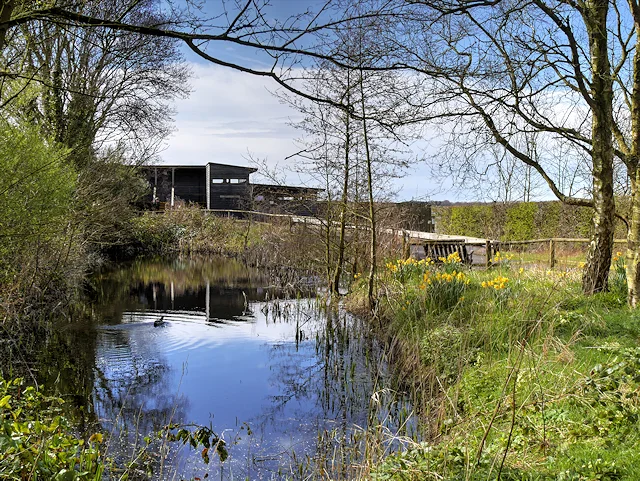
Holmeswood Road, near Rufford · Lakes · reedbed · woodland · wet meadow
 the ai birderBirding near me
The AI Birder · one-page field sheet
Burscough, Lancashire, England · L40 0TA · L40 0TA

Whooper Swan · Pink-footed Goose · Marsh Harrier · Wigeon · Pintail · Teal
Mere View Hide · Hale Hide · Raines Observatory · Discovery Hide · Gladstone Hide · Ron Barker Hide · Janet Kear Hide · United Utilities Hide · Harrier Hide · Rees Hide · Gordon Taylor Hide · Tomlinson Hide · Reedbed platforms · Mere viewing platforms · Kingfisher Hide
Check current access, hide closures and operator notices before travelling. Seasonal birds are possibilities, not promised sightings. Keep to authorised routes and give wildlife space.
Opening and charges checked 2026-10-09. Operator: https://www.wwt.org.uk/wetland-centres/martin-mere
Full guide and current source links: https://aibirder.co.uk/reserves/wwt-martin-mere
EN 08 · WWT reserve guide
Burscough, Lancashire, England · L40 0TA
Wide wetlands and reedbeds draw Whooper Swans, Pink-footed Geese and wintering wildfowl, with Marsh Harriers quartering the reeds.
Decide if the visit fits.
Last checked 9 October 2026.
Opening and charges information · checked .
Stay nearby →Reserve overview
Wide wetlands and reedbeds draw Whooper Swans, Pink-footed Geese and wintering wildfowl, with Marsh Harriers quartering the reeds.
Eight checks for a smoother visit.
Conditions change: check the operator and transport notices before travelling.
January: start at Discovery Hide for Whooper Swan, Wigeon and Pintail on the Mere. United Utilities Hide offers a different view across Woodend Marsh for Marsh Harrier and concealed Water Rail. February: Raines Observatory and Hale Hide usually suit a patient wildfowl watch, including Pintail and Pochard. Use Ron Barker Hide for Little Egret and possible Great White Egret along wet margins. March: the winter Whooper Swans typically begin leaving; see them from Discovery Hide without assuming a fixed departure date. Rees Hide becomes useful for returning Avocet and Oystercatcher. April: compare Rees Hide and Gordon Taylor Hide for Avocet, Lapwing and Redshank. From Harrier Hide listen for Cetti’s Warbler before heading onto the Reedbed Walk. May: the Mere islands are usually active with Black-headed Gulls, watched from Discovery Hide. Sedge Warbler and Marsh Harrier add interest from Tomlinson Hide without needing to approach any nesting area. June: Reedbed platforms usually suit listening for Reed Warbler, Sedge Warbler and Reed Bunting. A shorter Janet Kear Hide session offers Great Spotted Woodpecker and other feeding-station birds. July: Harrier Hide remains useful for Great Crested Grebe and Marsh Harrier. Compare wet margins from Rees Hide for Avocet and Redshank as summer water levels change. August: try United Utilities Hide for Marsh Harrier and watch the Mere from Gladstone Hide for Gadwall and Teal. Great White Egret is worth checking from Ron Barker Hide, guided by dated reports. September: the main migrant Pink-footed Goose season usually develops; Discovery Hide and Ron Barker Hide provide public viewing. Kingfisher Hide offers a quieter pool-edge watch for Kingfisher. October: Whooper Swans typically return and the Mere builds its winter duck population. Raines Observatory offers Wigeon and Pintail; United Utilities Hide adds Marsh Harrier, Reed Bunting and possible Cattle Egret. November: allow time at Hale Hide for Wigeon, Pochard and Shoveler. Water Rail is often heard more easily than seen near United Utilities Hide; remain on the visitor route. December: keep the route compact between Discovery Hide for Whooper Swan and Ron Barker Hide for egrets. Winter admission hours limit daylight; special dawn or late-opening events require their own current booking.
Best conditions: Usually choose dry, lighter-wind conditions for the exposed Reedbed Walk, then use the Mere hides if rain or glare makes distant identification difficult. Winter birds can be enjoyed during ordinary opening hours; no unrestricted dawn access is implied. Light and scope ratings are editorial, using the mapped views.
Use Fish Lane, Burscough, L40 0TA for the visitor entrance. Prices checked on 9 October 2026: advance adult tickets are £17.10 without Gift Aid or £18.85 with it; on-the-day adults are £19.00 or £20.90. Advance juniors aged 3–17 are £11.12 or £12.25, and concessions aged 65+, full-time students and young adults aged 18–24 are £15.53 or £17.10. At WWT Martin Mere, admission is free for children under three and for carers assisting disabled visitors. WWT membership includes admission. The advance discount ends at midnight before the visit. Visitor and visiting-coach parking are free.
Access times: Reserve: Ordinary admission: 09:30–18:00 until 23 October 2026; 09:30–16:30 from 24 October 2026 to 28 March 2027. Last entry one hour before closing. Christmas Eve closes 15:00; Christmas Day closed. · Hides: Within ordinary admission hours; special dawn or late visits only through the advertised operator event. · Car park: Plan arrival and collection within the published centre opening period; a separate gate-opening timetable was not found. · Dawn access: no. Operator opening information.
The wild reserve and the international waterbird collection provide different experiences. For wild birding, follow the paved nature trail beside the mere rather than spending the whole visit among collection birds. Discovery Hide and Raines Observatory are sensible orientation stops, with United Utilities offering another angle on the mere and adjoining fields. Ron Barker overlooks more open marsh, while Harrier introduces the reedbed. The reedbed walk extends the visit towards Gordon Taylor, Rees and Tomlinson hides and Woodend Marsh. Use the official map to judge the return journey: the principal nature trail is linear, so each extra outward stop adds distance on the way back. The map also identifies Kingfisher Pool, the sluice and feeding areas, useful landmarks when interpreting the latest sightings. Two-hour plan: spend the first 20 minutes finding the main mere birds from Discovery or Raines. Allow around 40 minutes for United Utilities and a careful scan of the shallows, then choose either Ron Barker for open-marsh birds or Harrier for reedbed watching. Keep the remaining time for an unhurried return and a final comparison of ducks. This is an editorial route, not a timed guided walk. Full-day plan: begin with the mere, continue through Ron Barker and Harrier, then explore the reedbed walk and Woodend Marsh viewpoints. Return for lunch and revisit the most productive hide as the light changes. Add the waterbird gardens if they interest you, but retain a distinction between captive collection species and wild reserve sightings. Seasonal boat activities are optional additions, not substitutes for the hide circuit.
Use the linked reserve map and directions with current access notices. Species are typical seasonal targets. Light and telescope advice reflects our choice of viewpoint.
The Mere and adjoining grassland
Use the signed nature-reserve trail during admission hours.
Winter: Whooper Swan, Pink-footed Goose, Wigeon, Pintail
Spring: Avocet, Black-headed Gull
Summer: Black-headed Gull, Gadwall
Autumn: Pink-footed Goose, Teal, Shoveler
Light: either. Scope: useful.
The Mere and adjoining grassland
Use the signed nature-reserve trail during admission hours.
Winter: Whooper Swan, Pink-footed Goose, Wigeon, Pintail
Spring: Avocet, Black-headed Gull
Summer: Black-headed Gull, Gadwall
Autumn: Pink-footed Goose, Teal, Shoveler
Light: either. Scope: useful.
The Mere and adjoining grassland
Use the signed nature-reserve trail during admission hours.
Winter: Whooper Swan, Pink-footed Goose, Wigeon, Pintail
Spring: Avocet, Black-headed Gull
Summer: Black-headed Gull, Gadwall
Autumn: Pink-footed Goose, Teal, Shoveler
Light: either. Scope: useful.
The Mere and adjoining grassland
Use the signed nature-reserve trail during admission hours.
Winter: Whooper Swan, Pink-footed Goose, Wigeon, Pintail
Spring: Avocet, Black-headed Gull
Summer: Black-headed Gull, Gadwall
Autumn: Pink-footed Goose, Teal, Shoveler
Light: either. Scope: useful.
The Mere and adjoining grassland
Use the signed nature-reserve trail during admission hours.
Winter: Whooper Swan, Pink-footed Goose, Wigeon, Pintail
Spring: Avocet, Black-headed Gull
Summer: Black-headed Gull, Gadwall
Autumn: Pink-footed Goose, Teal, Shoveler
Light: either. Scope: useful.
Pools, ditches and rough wet grassland
Winter: Little Egret, Great White Egret, Water Rail
Spring: Kingfisher, Marsh Harrier
Summer: Kingfisher, Marsh Harrier
Autumn: Pink-footed Goose, Little Egret
Light: either. Scope: useful.
Woodland feeding station
Winter: Brambling, Goldcrest, Long-tailed Tit
Spring: Great Spotted Woodpecker, Reed Bunting
Summer: Great Spotted Woodpecker, Chaffinch
Autumn: Goldcrest, Long-tailed Tit
Light: either. Scope: not needed.
Woodend Marsh and reed-fringed sluice
Winter: Water Rail, Marsh Harrier, Grey Heron
Spring: Avocet, Reed Bunting
Summer: Marsh Harrier, Reed Bunting
Autumn: Kingfisher, Cattle Egret, Marsh Harrier
Light: either. Scope: useful.
Reedbed, open pools and Reedbed Walk entrance
Winter: Cetti’s Warbler, Gadwall
Spring: Cetti’s Warbler, Great Crested Grebe
Summer: Reed Warbler, Great Crested Grebe
Autumn: Cetti’s Warbler, Marsh Harrier
Light: either. Scope: useful.
Woodend Marsh scrapes and islands
Winter: Lapwing, Gadwall
Spring: Avocet, Redshank, Oystercatcher
Summer: Avocet, Marsh Harrier
Autumn: Lapwing, Teal
Light: either. Scope: useful.
Reedbed pools and islands
Winter: Gadwall, Water Rail
Spring: Avocet, Lapwing
Summer: Reed Warbler, Avocet
Autumn: Teal, Gadwall
Light: either. Scope: useful.
Wet scrapes, islands and rough marsh
Winter: Lapwing, Marsh Harrier
Spring: Avocet, Sedge Warbler
Summer: Marsh Harrier, Sedge Warbler
Autumn: Lapwing, Marsh Harrier
Light: either. Scope: useful.
Pools and reeds along the Reedbed Walk
The Reedbed Walk can be muddy; use only the signed platforms.
Winter: Cetti’s Warbler, Reed Bunting
Spring: Sedge Warbler, Reed Warbler
Summer: Reed Warbler, Reed Bunting
Autumn: Reed Bunting, Cetti’s Warbler
Light: either. Scope: useful.
Open water of the Mere
Winter: Whooper Swan, Wigeon
Spring: Black-headed Gull, Avocet
Summer: Black-headed Gull, Gadwall
Autumn: Pink-footed Goose, Teal
Light: either. Scope: useful.
Pool margins beside the Ron Barker area
Winter: Water Rail, Kingfisher
Spring: Kingfisher
Summer: Kingfisher
Autumn: Kingfisher, Water Rail
Light: either. Scope: useful.
| Spot | Overlooks | Key species by season | Best light | Scope | Tide |
|---|---|---|---|---|---|
| Mere View HideUse the signed nature-reserve trail during admission hours. | The Mere and adjoining grassland | Winter: Whooper Swan, Pink-footed Goose, Wigeon, Pintail Spring: Avocet, Black-headed Gull Summer: Black-headed Gull, Gadwall Autumn: Pink-footed Goose, Teal, Shoveler | either | useful | — |
| Hale HideUse the signed nature-reserve trail during admission hours. | The Mere and adjoining grassland | Winter: Whooper Swan, Pink-footed Goose, Wigeon, Pintail Spring: Avocet, Black-headed Gull Summer: Black-headed Gull, Gadwall Autumn: Pink-footed Goose, Teal, Shoveler | either | useful | — |
| Raines ObservatoryUse the signed nature-reserve trail during admission hours. | The Mere and adjoining grassland | Winter: Whooper Swan, Pink-footed Goose, Wigeon, Pintail Spring: Avocet, Black-headed Gull Summer: Black-headed Gull, Gadwall Autumn: Pink-footed Goose, Teal, Shoveler | either | useful | — |
| Discovery HideUse the signed nature-reserve trail during admission hours. | The Mere and adjoining grassland | Winter: Whooper Swan, Pink-footed Goose, Wigeon, Pintail Spring: Avocet, Black-headed Gull Summer: Black-headed Gull, Gadwall Autumn: Pink-footed Goose, Teal, Shoveler | either | useful | — |
| Gladstone HideUse the signed nature-reserve trail during admission hours. | The Mere and adjoining grassland | Winter: Whooper Swan, Pink-footed Goose, Wigeon, Pintail Spring: Avocet, Black-headed Gull Summer: Black-headed Gull, Gadwall Autumn: Pink-footed Goose, Teal, Shoveler | either | useful | — |
| Ron Barker Hide | Pools, ditches and rough wet grassland | Winter: Little Egret, Great White Egret, Water Rail Spring: Kingfisher, Marsh Harrier Summer: Kingfisher, Marsh Harrier Autumn: Pink-footed Goose, Little Egret | either | useful | — |
| Janet Kear Hide | Woodland feeding station | Winter: Brambling, Goldcrest, Long-tailed Tit Spring: Great Spotted Woodpecker, Reed Bunting Summer: Great Spotted Woodpecker, Chaffinch Autumn: Goldcrest, Long-tailed Tit | either | not needed | — |
| United Utilities Hide | Woodend Marsh and reed-fringed sluice | Winter: Water Rail, Marsh Harrier, Grey Heron Spring: Avocet, Reed Bunting Summer: Marsh Harrier, Reed Bunting Autumn: Kingfisher, Cattle Egret, Marsh Harrier | either | useful | — |
| Harrier Hide | Reedbed, open pools and Reedbed Walk entrance | Winter: Cetti’s Warbler, Gadwall Spring: Cetti’s Warbler, Great Crested Grebe Summer: Reed Warbler, Great Crested Grebe Autumn: Cetti’s Warbler, Marsh Harrier | either | useful | — |
| Rees Hide | Woodend Marsh scrapes and islands | Winter: Lapwing, Gadwall Spring: Avocet, Redshank, Oystercatcher Summer: Avocet, Marsh Harrier Autumn: Lapwing, Teal | either | useful | — |
| Gordon Taylor Hide | Reedbed pools and islands | Winter: Gadwall, Water Rail Spring: Avocet, Lapwing Summer: Reed Warbler, Avocet Autumn: Teal, Gadwall | either | useful | — |
| Tomlinson Hide | Wet scrapes, islands and rough marsh | Winter: Lapwing, Marsh Harrier Spring: Avocet, Sedge Warbler Summer: Marsh Harrier, Sedge Warbler Autumn: Lapwing, Marsh Harrier | either | useful | — |
| Reedbed platformsThe Reedbed Walk can be muddy; use only the signed platforms. | Pools and reeds along the Reedbed Walk | Winter: Cetti’s Warbler, Reed Bunting Spring: Sedge Warbler, Reed Warbler Summer: Reed Warbler, Reed Bunting Autumn: Reed Bunting, Cetti’s Warbler | either | useful | — |
| Mere viewing platforms | Open water of the Mere | Winter: Whooper Swan, Wigeon Spring: Black-headed Gull, Avocet Summer: Black-headed Gull, Gadwall Autumn: Pink-footed Goose, Teal | either | useful | — |
| Kingfisher Hide | Pool margins beside the Ron Barker area | Winter: Water Rail, Kingfisher Spring: Kingfisher Summer: Kingfisher Autumn: Kingfisher, Water Rail | either | useful | — |
Month chips show typical presence or our preferred viewing season. Choose birds that suit the time of your visit.
WWT provides 25 Blue Badge parking spaces close to the entrance. The waterbird-garden paths and principal nature trail are paved, with benches for rest stops. The nature trail is not a circular route, so plan the outward distance with the return in mind. Most hides have low viewing windows; the detailed accessibility guide is the better source for individual hide arrangements. Manual wheelchairs are available free. The mobility scooter requires advance booking and a £12 non-refundable booking deposit; users must be at least 18, with an 18-stone weight limit. Book through the accessibility team rather than assuming equipment will be waiting. Seasonal boat tours can accommodate two wheelchairs, and accompanying carers travel free. Four accessible toilets include facilities near the café, nature trail, play area and main building. The main corridor toilet has a hoist and adjustable adult changing table. Hearing loops, large-print information, a visual story and sensory bags support different needs; sensory bags require a £15 refundable deposit. Quiet areas appear on the accessible map. The dedicated accessibility telephone is 01704 891220, with text relay on 01704 892343.
The visitor centre has a shop, toilets and Mere Side Café, with breakfast sandwiches, hot lunch, snacks and drinks. Breakfast is served until 11:00 and hot lunch until 14:30, so place a café stop before a long afternoon circuit. Picnic places are available for a packed lunch. The shop stocks bird books, bird-care items and optics, useful if you arrive without a field guide. Cycle parking has eight Sheffield stands for 16 bicycles. Carry binoculars and drinking water into the more distant hide circuit.
Pet dogs and other pets are not allowed anywhere on site. Trained assistance dogs are welcome on a lead and under control; remove waste and follow staff guidance if collection birds or wildlife react to their presence. WWT specifically asks visitors not to leave dogs in parked cars.
Burscough Bridge, on the Southport–Manchester railway, is WWT's recommended rail stop for walkers. Its published approach is 2.5 miles along Red Cat Lane, Tarlscough Lane and Fish Lane. An alternative signed field route may be overgrown or affected by farm work and is less suitable for wheelchairs or pushchairs. Plan this approach as a substantial part of the day, not a short station transfer. New Lane is nearer at a published 1.2-mile walk, but WWT does not recommend it on foot because the country lane has no pavement. Burscough Junction, reached via Ormskirk, has a longer 3.1-mile approach. A pre-booked taxi from a suitable station removes the lane walk; WWT lists Premier Taxi on 01704 892000. Lancashire County Council confirms bus 375 between Southport and Wigan via Burscough, including Pippin Street stops. It serves the town rather than the reserve gate, so arrange the remaining taxi, cycle or walking leg separately. Do not interpret a Burscough bus arrival as door-to-door access. The centre also has cycle parking and links with the New Lane Circuit and West Lancashire touring routes.
Useful bases for an early start.
Booking.com links are affiliate links: we may earn a commission at no extra cost to you. How these links work.
About 2.0 miles by road, roughly 5 minutes’ drive from Burscough to the visitor arrival point. Check the final approach to your accommodation in Burscough.
Measured driving route · 2026-10-09. Map estimates exclude live traffic.
Best for early starts, self-catering and village inns.Find places to stay in Burscough on Booking.comAbout 5.1 miles by road, roughly 15 minutes’ drive from Ormskirk to the visitor arrival point. Check the final approach to your accommodation in Ormskirk.
Measured driving route · 2026-10-09. Map estimates exclude live traffic.
Best for practical hotels and connecting through Liverpool.Find places to stay in Ormskirk on Booking.comAbout 10.8 miles by road, roughly 20 minutes’ drive from Southport to the visitor arrival point. Check the final approach to your accommodation in Southport.
Measured driving route · 2026-10-09. Map estimates exclude live traffic.
Best for seafront hotels and combining Martin Mere with Ribble estuary birding.Find places to stay in Southport on Booking.comExplore Lancashire’s full guides and smaller birding sites
Contact the centre on 01704 895181 or info.martinmere@wwt.org.uk for admission, group visits and operational questions. Mobility equipment and individual access planning use the dedicated team listed in Accessibility. The official WWT sightings log gives dated reports and names the hides or marsh areas involved, making it useful for choosing the day's route. Read the reserve map alongside those place names; a reported bird on Woodend Marsh may require a different visit plan from one on the main mere.
Check WWT Martin Mere latest wildlife reports. usually twice weekly; dated archive Reports show what has been seen, not what will be.
Follow the BTO Birders’ Code and give wildlife space.
WWT Martin Mere: Adult £17.10 advance/£19 on day without Gift Aid; WWT members free; parking free.
WWT Martin Mere: Pet dogs and other pets are not allowed anywhere on site.
WWT Martin Mere: Autumn & winter.
WWT Martin Mere: Manual wheelchairs are available free.
WWT Martin Mere: Burscough Bridge, on the Southport–Manchester railway, is WWT's recommended rail stop for walkers.
Shorter stops within 15 miles in a straight line. Use the operator’s arrival directions for the journey.
Holmeswood Road, near Rufford · Lakes · reedbed · woodland · wet meadow
Hesketh Bank · Saltmarsh, lagoons and estuary
Montagu Road approach from Freshfield station, Formby, Sefton · Lowland dune heath, acidic grassland, scrub, birch and pine woodland
Lunt Road, Thornton, Sefton · Wet grassland, reedbeds, pools, ponds and flood-storage wetland
Welham Road, Wigan · Open water, reedbeds, marsh and wet woodland
Nearby complete guides.
Stops with a purpose: use one as a contrasting habitat or weather-proof Plan B. Distances are straight-line estimates, not road journeys.