
Short entry2.8 miles away
Inchcailloch
North Pier, Inchcailloch, reached by boat from Balmaha or Luss · Island oak woodland and loch shore
 the ai birderBirding near me
The AI Birder · one-page field sheet
High Wards Farm, Gartocharn, West Dunbartonshire, Scotland · G83 8SB · G83 8SB

Current planning alert (2026-10-18): RSPB reports a walking diversion on the Aber Right of Way from Gartocharn because of a damaged bridge. Follow current signs and confirm the approach before using this entrance.
Pink-footed Goose · Greylag Goose · Great Crested Grebe · Bullfinch · Treecreeper · Goldcrest
Gaels View (Skein Dial viewpoint) · Airey Woodland Trail · Lomond Trail boardwalk · Ring Wood public path · Net Bay viewpoint · Endrick viewpoint · Nature Hub feeding area · Shore Wood Path · Airey Woodland Trail pond shelter
Check current access, hide closures and operator notices before travelling. Seasonal birds are possibilities, not promised sightings. Keep to authorised routes and give wildlife space.
Opening and charges checked 2026-10-25. Operator: https://www.rspb.org.uk/days-out/reserves/loch-lomond
Full guide and current source links: https://aibirder.co.uk/reserves/rspb-loch-lomond
SC 03 · RSPB reserve guide
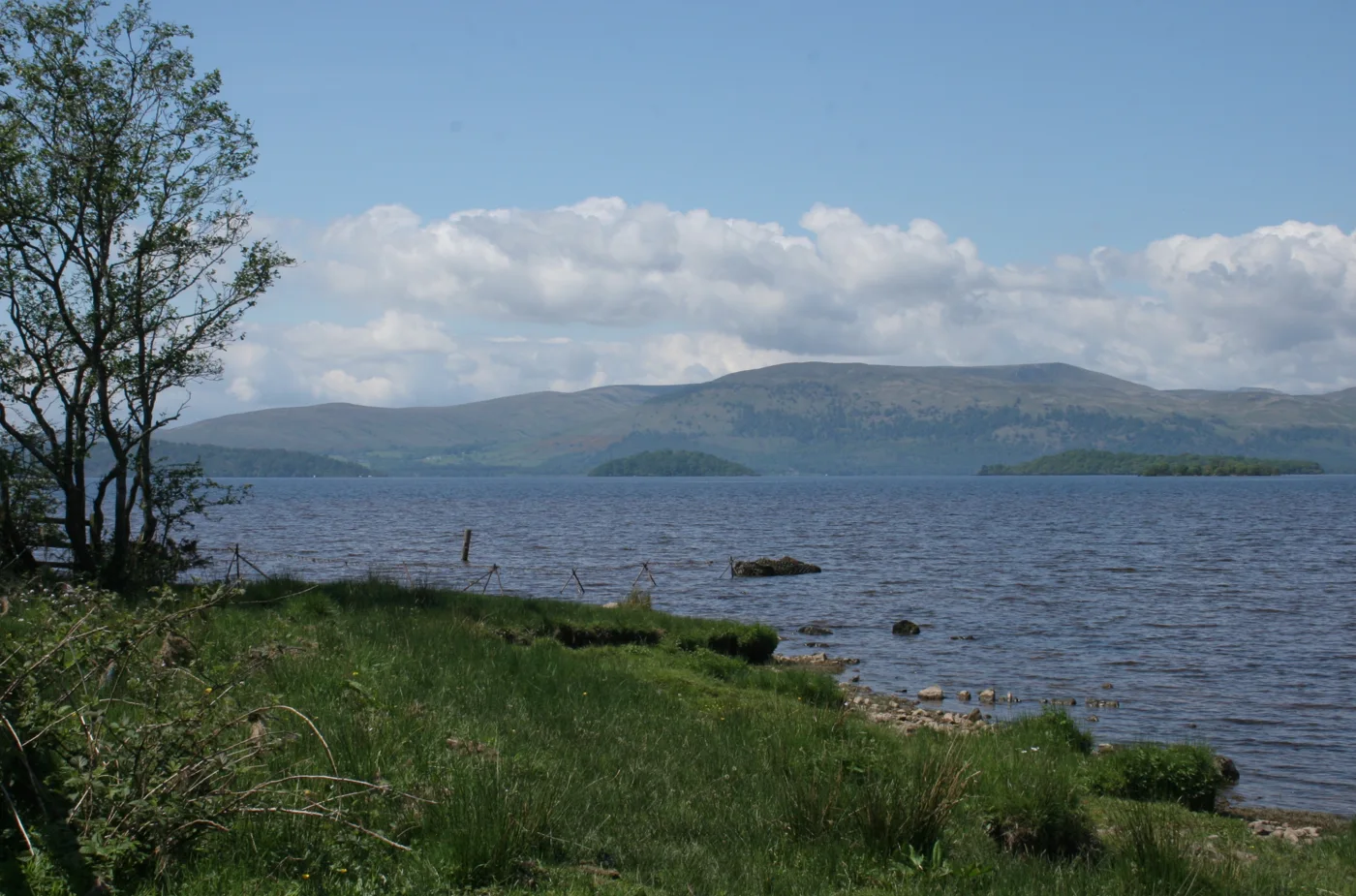
High Wards Farm, Gartocharn, West Dunbartonshire, Scotland · G83 8SB
Ospreys and Redstarts use the reserve in the warmer months, while Greenland White-fronted Geese return with Pink-footed and Greylag Geese, Whooper Swans, Teal, Tufted Ducks and Wigeons for winter.
Decide if the visit fits.
Last checked 18 October 2026.
RSPB reports a walking diversion on the Aber Right of Way from Gartocharn because of a damaged bridge. Follow current signs and confirm the approach before using this entrance.
Opening and charges information · checked .
Stay nearby →Reserve overview
Ospreys and Redstarts use the reserve in the warmer months, while Greenland White-fronted Geese return with Pink-footed and Greylag Geese, Whooper Swans, Teal, Tufted Ducks and Wigeons for winter.
Eight checks for a smoother visit.
Conditions change: check the operator and transport notices before travelling.
January: Typically begin at Net Bay viewpoint for Goldeneye and Tufted Duck, using a telescope when birds sit well offshore. The Airey Woodland Trail adds Treecreeper and Goldcrest without depending on a long, exposed loch-shore session.
February: Whooper Swans and Lapwings are typically worth checking from the Lomond Trail boardwalk, with winter ducks at Net Bay viewpoint. Keep to the constructed route: attractive open fen is not an invitation to walk closer to birds.
March: Typically compare lingering Pink-footed Geese from Gaels View with early woodland activity along the Airey Woodland Trail. Treecreepers are a useful patient target on trunks; a calm pause often gives more than repeatedly walking the loop.
April: Ospreys usually return during spring, so scan the loch from Net Bay viewpoint between woodland stops. Tree Pipits become relevant along the Airey Woodland Trail; listen from the public route and never follow a singing bird into cover.
May: Typically combine Tree Pipits on the Airey Woodland Trail with a sustained fishing-Osprey watch from Net Bay viewpoint. Goosanders have actual late-May Net Bay records, but birds range over water and cannot be promised at one seat.
June: Ospreys usually remain a summer draw from Net Bay viewpoint. Break the longer watch with Nuthatches along the Ring Wood public path and resident tits near the Nature Hub feeding area, keeping equipment clear of other visitors.
July: Typically spend the quieter part of the morning on the Airey Woodland Trail for Bullfinch and Treecreeper, then scan from Net Bay viewpoint for Osprey. Insect activity and foliage can change how easily small birds are found.
August: Nuthatch and Goldcrest usually make the Ring Wood public path worth a slow stop even when open-water action is limited. Try Net Bay viewpoint for a late-summer Osprey, watching only the open water rather than seeking a nesting area.
September: Typically combine late Osprey possibilities at Net Bay viewpoint with Stonechat on the fen margins from the Lomond Trail boardwalk. Migration and water conditions decide the day; an old report of a scarce visitor is not an itinerary promise.
October: Pink-footed Geese usually become more relevant from Gaels View as winter approaches, while Net Bay viewpoint offers returning Goldeneye and Tufted Duck. Choose a safe daylight watch and do not enter the inaccessible NatureScot marsh to follow a flock.
November: Typically compare Whooper Swans from the Lomond Trail boardwalk with Goldeneye from Net Bay viewpoint. The Nature Hub feeding area can add Chaffinch and Siskin possibilities when wind makes the distant loch view difficult to hold steady.
December: Winter usually favours wildfowl and a shorter woodland circuit. Begin at Net Bay viewpoint for Goldeneye, then try Treecreeper on the Airey Woodland Trail; vehicle access has a separate gate timetable, so reserve access does not mean unrestricted overnight parking.
Best conditions: Our choice is a calm Net Bay watch with the Airey woodland loop as a sheltered alternative. Typically light wind helps listening for woodland birds, while winter wildfowl are easier to identify on calmer water. Keep to the operator’s accessible viewpoint at Net Bay rather than the uneven beach. NatureScot explicitly says its Endrick Mouth marsh has no visitor facilities and is difficult to access; use the RSPB section. Light and scope ratings are editorial.
October 2026 arrangements checked 18 October: reserve admission is free for adults and children. Non-member parking costs £3 for up to one hour, then £1 for each additional hour. Parking at RSPB Loch Lomond is free for RSPB members and Blue Badge holders. The official opening calendar lists the reserve open around the clock and the car park 07:00–21:00; the facilities page lists the Nature Hub 10:00–16:00 daily. Match your visit to those staffed hours if facilities or advice are essential. Ordinary reserve entry needs no advance booking; groups of ten or more should arrange a group visit. Guided events have their own charges and bookings. There are thirty parking spaces, so at busy times the team may ask visitors to wait or return later. Plan a longer birdwatching session into the parking budget rather than paying only for the walking distance.
Access times: Reserve: Open24hours on the October2026 RSPB calendar; obey local closures. · Hides: Outdoor viewpoints and trails; no separate hide opening schedule published. Nature Hub normally10:00–16:00. · Car park: 07:00–21:00 on the current calendar. · Dawn access: partly. Operator opening information.
The Airey Woodland Trail is a 950-metre loop through the wooded part of the reserve. A separate 200-metre Viewpoint Trail leads to a sundial sculpture and a view over woodland and wetlands. The Lomond Trail continues towards the loch and is reached through the Airey route; the named route is 1.3 kilometres, so check the map when calculating your whole outing from the car park. Shore Wood Path adds another woodland-and-shore option of 1.5 kilometres. These are trails to open viewpoints, rather than a succession of enclosed hides. Two-hour plan: start with the Nature Hub information, take the Airey loop slowly and add the short Viewpoint Trail. Stop where the woodland opens out and compare bird calls before moving on. If your main objective is a loch view, use the current map to choose the Lomond extension instead of trying to complete every branch in the same short visit. Full-day plan: walk towards the loch in the morning, spending a sustained period scanning the water and wetland margins. Bring lunch, then revisit the woodland on the return when you have time to investigate calls without rushing. Add Shore Wood only if its terrain suits your party and there is enough daylight. In winter, devote more time to stationary goose watching; in spring, put the quiet woodland sections first. Keep clear of livestock and gates, leave room for other visitors to pass and photograph birds from the trail rather than crossing wet ground towards them. The changing woodland edges are productive places to wait, even when the larger view appears quiet.
Use the linked reserve map and directions with current access notices. Species are typical seasonal targets. Light and telescope advice reflects our choice of viewpoint.
Wetland, woodland and distant hills from the short Viewpoint Trail
Viewpoint Trail is200m, level hardcore. The2025RSPB trip names Gaels View beside the gnomon; the access guide calls the sculpture Skein Dial.
Winter: Pink-footed Goose, Greylag Goose, Raven
Spring: Osprey, Great Spotted Woodpecker
Summer: Osprey
Autumn: Pink-footed Goose, Greylag Goose
Light: either. Scope: useful.
Ancient woodland, its path edges and stream
950m loop with gradients; firm path, with the current operator access guide describing surfaces and slopes.
Winter: Bullfinch, Treecreeper, Goldcrest, Robin, Wren
Spring: Tree Pipit, Bullfinch, Treecreeper
Summer: Tree Pipit, Bullfinch
Autumn: Treecreeper, Goldcrest
Light: either. Scope: not needed.
Aber Bog fen and wet grassland from the permitted boardwalk
The1.3km Lomond Trail is reached via Airey Woodland Trail; its boardwalk is at least120cm wide. Remain on the boardwalk.
Winter: Whooper Swan, Mute Swan, Stonechat, Lapwing
Spring: Mute Swan, Lapwing
Summer: Mute Swan
Autumn: Whooper Swan, Stonechat
Light: either. Scope: useful.
Woodland on the official onward route towards Net Bay
Named in the2025RSPB outing on the permitted trail. Use current signs and do not enter wet ground beside the path.
Winter: Nuthatch, Treecreeper, Goldcrest
Spring: Nuthatch, Treecreeper
Summer: Nuthatch
Autumn: Nuthatch, Goldcrest
Light: either. Scope: not needed.
Open loch water from the official Net Bay viewing area
Operator access guide describes level access and benches at Net Bay. The beach has uneven slopes and no access path: stay at the official view.
Winter: Goldeneye, Tufted Duck, Great Crested Grebe
Spring: Great Crested Grebe, Osprey
Summer: Osprey, Goosander
Autumn: Goldeneye, Tufted Duck
Light: either. Scope: essential.
Wetland and wider reserve from the named public viewpoint
Named as a public stop in the2025RSPB outing. Do not use this as permission to enter the inaccessible NatureScot Endrick Mouth marsh.
Winter: Buzzard, Rook, Magpie
Spring: Buzzard
Summer: Buzzard
Autumn: Buzzard, Magpie
Light: either. Scope: useful.
Visitor-area feeding station and surrounding vegetation
Watch from the public visitor area without crowding feeders. Hub facilities have shorter hours than the reserve.
Winter: Chaffinch, Goldfinch, Blue Tit, Great Tit, Coal Tit, Siskin
Spring: Chaffinch, Blue Tit, Great Tit
Summer: Blue Tit, Great Tit
Autumn: Chaffinch, Goldfinch
Light: either. Scope: not needed.
Loch-edge woodland from the rough public Shore Wood Path
1.5km route with large stones, summer vegetation and gates. No additional unsourced birds are assigned to this path.
Light: either. Scope: not needed.
Small woodland pond from its official shelter
The operator access guide verifies this shelter and picnic area, but no separate bird assemblage was sourced.
Light: either. Scope: not needed.
| Spot | Overlooks | Key species by season | Best light | Scope | Tide |
|---|---|---|---|---|---|
| Gaels View (Skein Dial viewpoint)Viewpoint Trail is200m, level hardcore. The2025RSPB trip names Gaels View beside the gnomon; the access guide calls the sculpture Skein Dial. | Wetland, woodland and distant hills from the short Viewpoint Trail | Winter: Pink-footed Goose, Greylag Goose, Raven Spring: Osprey, Great Spotted Woodpecker Summer: Osprey Autumn: Pink-footed Goose, Greylag Goose | either | useful | — |
| Airey Woodland Trail950m loop with gradients; firm path, with the current operator access guide describing surfaces and slopes. | Ancient woodland, its path edges and stream | Winter: Bullfinch, Treecreeper, Goldcrest, Robin, Wren Spring: Tree Pipit, Bullfinch, Treecreeper Summer: Tree Pipit, Bullfinch Autumn: Treecreeper, Goldcrest | either | not needed | — |
| Lomond Trail boardwalkThe1.3km Lomond Trail is reached via Airey Woodland Trail; its boardwalk is at least120cm wide. Remain on the boardwalk. | Aber Bog fen and wet grassland from the permitted boardwalk | Winter: Whooper Swan, Mute Swan, Stonechat, Lapwing Spring: Mute Swan, Lapwing Summer: Mute Swan Autumn: Whooper Swan, Stonechat | either | useful | — |
| Ring Wood public pathNamed in the2025RSPB outing on the permitted trail. Use current signs and do not enter wet ground beside the path. | Woodland on the official onward route towards Net Bay | Winter: Nuthatch, Treecreeper, Goldcrest Spring: Nuthatch, Treecreeper Summer: Nuthatch Autumn: Nuthatch, Goldcrest | either | not needed | — |
| Net Bay viewpointOperator access guide describes level access and benches at Net Bay. The beach has uneven slopes and no access path: stay at the official view. | Open loch water from the official Net Bay viewing area | Winter: Goldeneye, Tufted Duck, Great Crested Grebe Spring: Great Crested Grebe, Osprey Summer: Osprey, Goosander Autumn: Goldeneye, Tufted Duck | either | essential | — |
| Endrick viewpointNamed as a public stop in the2025RSPB outing. Do not use this as permission to enter the inaccessible NatureScot Endrick Mouth marsh. | Wetland and wider reserve from the named public viewpoint | Winter: Buzzard, Rook, Magpie Spring: Buzzard Summer: Buzzard Autumn: Buzzard, Magpie | either | useful | — |
| Nature Hub feeding areaWatch from the public visitor area without crowding feeders. Hub facilities have shorter hours than the reserve. | Visitor-area feeding station and surrounding vegetation | Winter: Chaffinch, Goldfinch, Blue Tit, Great Tit, Coal Tit, Siskin Spring: Chaffinch, Blue Tit, Great Tit Summer: Blue Tit, Great Tit Autumn: Chaffinch, Goldfinch | either | not needed | — |
| Shore Wood Path1.5km route with large stones, summer vegetation and gates. No additional unsourced birds are assigned to this path. | Loch-edge woodland from the rough public Shore Wood Path | — | either | not needed | — |
| Airey Woodland Trail pond shelterThe operator access guide verifies this shelter and picnic area, but no separate bird assemblage was sourced. | Small woodland pond from its official shelter | — | either | not needed | — |
Month chips show typical presence or our preferred viewing season. Choose birds that suit the time of your visit.
Hardcore paths have varying gradients following the natural landscape; a surfaced route should not be read as uniformly flat. Airey has sloping sections, while the short Viewpoint Trail is described as level. The Lomond route includes boardwalk narrowing to 120 centimetres at its smallest point. Shore Wood is substantially rougher, with large stones, possible summer vegetation and gates with long handles. The beach approach is uneven and has no constructed path, whereas Net Bay has level access. The Nature Hub has an accessible toilet with baby changing and a separate Changing Places toilet. RSPB's facilities list gives two accessible parking spaces, although its directions page mentions one Blue Badge space; confirm the current allocation if your visit depends on a bay being available. Picnic benches at the hub, pond and along the named trails include wheelchair spaces. Use the linked AccessAble guide to compare the detailed surfaces and facilities with your own requirements. Contact the reserve ahead if boardwalk width, gradients or toilet equipment will determine which route you can use, and allow turning space when sharing narrow sections.
The Nature Hub provides a practical starting point for reserve information, and RSPB offers guided walks and other bookable activities. Ordinary toilets are available on site. Picnic benches are distributed around the hub and trails, with covered seating beside the pond. Bring food and drinking water for a full day; do not assume a staffed nature hub includes a café or a full catering service. Binocular hire is listed among the facilities, but a current tariff was not verified. Pack a waterproof layer for prolonged viewing beside the loch.
Keep dogs on a short lead, remain on paths and clean up after them, following RSPB Scotland's request for responsible access. Livestock are present, so give animals ample space and avoid letting a dog run into grazing fields. Visitors with assistance dogs are welcome at RSPB Loch Lomond, including throughout its visitor routes. Owners should choose a route they can complete without disturbing feeding geese or other wildlife.
Balloch is the nearest railway station; a pre-arranged taxi to the Nature Hub is the most straightforward final connection for many rail visitors. McColl's route 309 links Alexandria, Balloch, Gartocharn, Drymen and Balmaha, with Gartocharn Church Road shown in the operator timetable. The reserve warns that the nearest village bus stop is around one mile from its entrance and the busy road approach has no pavement, so do not assume the bus delivers a safe roadside walk to the hub. Ask the team about an appropriate walking approach before choosing that option. The alternative Aber Right of Way begins near Gartocharn's Millennium Hall; its current restriction is described in the dated alert rather than treated as a permanent route feature. Drivers should search for the reserve by name: RSPB explicitly says its postal postcode does not work for sat-nav. The entrance is off the A811 between Gartocharn and Drymen.
Useful bases for an early start.
Booking.com links are affiliate links: we may earn a commission at no extra cost to you. How these links work.
About 4.7 miles by road, roughly 7 minutes’ drive from the mapped town centre to the reserve point; OSRM/OpenStreetMap estimate measured 18 October 2026, excluding live traffic.
Measured driving route · 2026-10-18. Map estimates exclude live traffic.
A rail-connected base near the southern end of the loch.Find places to stay in Balloch on Booking.comAbout 3.4 miles by road, roughly 6 minutes’ drive from the mapped town centre to the reserve point; OSRM/OpenStreetMap estimate measured 18 October 2026, excluding live traffic.
Measured driving route · 2026-10-18. Map estimates exclude live traffic.
A smaller village east of the reserve.Find places to stay in Drymen on Booking.comAbout 10.2 miles by road, roughly 16 minutes’ drive from the mapped town centre to the reserve point; OSRM/OpenStreetMap estimate measured 18 October 2026, excluding live traffic.
Measured driving route · 2026-10-18. Map estimates exclude live traffic.
A town base south of Loch Lomond.Find places to stay in Dumbarton on Booking.comExplore Glasgow and the Clyde’s full guides and smaller birding sites
Call 01389 830670 or email loch.lomond@rspb.org.uk for route-specific advice; RSPB also lists 07712 697721. Check reserve conditions, the car-park arrangements and your transport before travelling. Make clear whether you mean the Nature Hub entrance or the village right of way when discussing a meeting point. Report an access problem to the reserve team rather than creating an informal diversion through the wetland. For wildlife watching, use current staff guidance on which viewpoint is most suitable without seeking sensitive nesting locations.
Check RSPB Edinburgh: actual9February2025 Loch Lomond outing report. dated trip report Reports show what has been seen, not what will be.
Follow the BTO Birders’ Code and give wildlife space.
RSPB Loch Lomond: Free entry; non-member parking £3 first hour, then £1/hour; members/Blue Badge free.
RSPB Loch Lomond: Keep dogs on a short lead, remain on paths and clean up after them, following RSPB Scotland's request for responsible access.
RSPB Loch Lomond: Spring song · autumn migration · winter geese.
RSPB Loch Lomond: Airey has sloping sections, while the short Viewpoint Trail is described as level.
RSPB Loch Lomond: Balloch is the nearest railway station; a pre-arranged taxi to the Nature Hub is the most straightforward final connection for many rail visitors.
Shorter stops within 15 miles in a straight line. Use the operator’s arrival directions for the journey.
North Pier, Inchcailloch, reached by boat from Balmaha or Luss · Island oak woodland and loch shore
Rowardennan and Ardess, east Loch Lomond · Mountain slopes, upland grassland and lower woodland
Strathblane (1 mi / 1.6 km) · Loch, wetland woodland and moorland
Kilmacolm (0 mi / 0 km) · Marshland, woodland, wet heath and sheltered pools
Lendrick Hill Visitor Gateway, Brig o’ Turk · Wood pasture, broadleaved woodland, river glens and upland ground
Lambhill, Glasgow, beside the Forth and Clyde Canal · Freshwater loch, marsh, fen, willow scrub and grassland
Carse of Stirling, near Thornhill · Lowland raised bog and peatland pools
Nearby complete guides.
Stops with a purpose: use one as a contrasting habitat or weather-proof Plan B. Distances are straight-line estimates, not road journeys.