Short entry1.7 miles away
Shepreth L-Moor
Meldreth Road between Shepreth and Meldreth · Unploughed meadow, chalk stream and pollarded willows
 the ai birderBirding near me
The AI Birder · one-page field sheet
Fowlmere near Royston, Cambridgeshire · SG8 6EZ

Kingfisher · Water Rail · Reed Bunting · Blackcap · Blackbird · Song Thrush
Drewer Hide · Spring Hide · Reedbed Hide · River Shep public boardwalk · Circular trail woodland and scrub section
Check current access, hide closures and operator notices before travelling. Seasonal birds are possibilities, not promised sightings. Keep to authorised routes and give wildlife space.
Opening and charges checked 2026-10-18. Operator: https://www.rspb.org.uk/days-out/reserves/fowlmere
Full guide and current source links: https://aibirder.co.uk/reserves/rspb-fowlmere
EN 84 · RSPB reserve guide
Fowlmere near Royston, Cambridgeshire
Kingfishers, Reed Buntings and reedbed song
Decide if the visit fits.
Last checked 18 October 2026.
Opening and charges information · checked .
Stay nearby →Reserve overview
Kingfishers, Reed Buntings and reedbed song
Eight checks for a smoother visit.
Conditions change: check the operator and transport notices before travelling.
January: typically look for Water Rail from Drewer Hide. Watch from the named public hide or trail section and listen before moving on. Keep reed margins undisturbed; there is no need to locate a nest, roost or private-bank perch. February: typically look for Reed Bunting from Reedbed Hide. Watch from the named public hide or trail section and listen before moving on. Keep reed margins undisturbed; there is no need to locate a nest, roost or private-bank perch. March: typically look for Willow Warbler from River Shep public boardwalk. Watch from the named public hide or trail section and listen before moving on. Keep reed margins undisturbed; there is no need to locate a nest, roost or private-bank perch. April: typically look for Cuckoo from Spring Hide. Watch from the named public hide or trail section and listen before moving on. Keep reed margins undisturbed; there is no need to locate a nest, roost or private-bank perch. May: typically look for Reed Warbler from Spring Hide. Watch from the named public hide or trail section and listen before moving on. Keep reed margins undisturbed; there is no need to locate a nest, roost or private-bank perch. June: typically look for Kingfisher from River Shep public boardwalk. Watch from the named public hide or trail section and listen before moving on. Keep reed margins undisturbed; there is no need to locate a nest, roost or private-bank perch. July: typically look for Reed Warbler from Reedbed Hide. Watch from the named public hide or trail section and listen before moving on. Keep reed margins undisturbed; there is no need to locate a nest, roost or private-bank perch. August: typically look for Goldfinch from Circular trail woodland and scrub section. Watch from the named public hide or trail section and listen before moving on. Keep reed margins undisturbed; there is no need to locate a nest, roost or private-bank perch. September: typically look for Blackcap from Circular trail woodland and scrub section. Watch from the named public hide or trail section and listen before moving on. Keep reed margins undisturbed; there is no need to locate a nest, roost or private-bank perch. October: typically look for Redwing from Circular trail woodland and scrub section. Watch from the named public hide or trail section and listen before moving on. Keep reed margins undisturbed; there is no need to locate a nest, roost or private-bank perch. November: typically look for Siskin from Circular trail woodland and scrub section. Watch from the named public hide or trail section and listen before moving on. Keep reed margins undisturbed; there is no need to locate a nest, roost or private-bank perch. December: typically look for Goldcrest from Circular trail woodland and scrub section. Watch from the named public hide or trail section and listen before moving on. Keep reed margins undisturbed; there is no need to locate a nest, roost or private-bank perch.
Best conditions: Usually favour a calm morning for listening to Water Rail and reedbed song, with slow pauses along the stream for Kingfisher. Use a sheltered woodland section in wind; after rain the Spring Hide approach may be muddy. Reedbed Hide gives a broader view but its steep stairs do not suit every visitor.
Fowlmere is an RSPB reserve with free adult and child admission for members and non-members. The charges page checked on 18 October 2026 lists parking at £3 for non-members, free for RSPB members and Blue Badge holders. Use the October 2026 tariff for the costs shown here, and consult the RSPB charges page when budgeting for a visit in a later season. The arrival address is Fowlmere, Royston, Cambridgeshire, SG8 6EZ. Follow the RSPB-signed approach after turning from the Fowlmere–Shepreth road; the village name alone is insufficient for locating the entrance. Groups of ten or more should use the RSPB group-booking contact. Check the official reserve page before setting out for changes affecting that day's visit.
Access times: Reserve: RSPB lists daily dawn–dusk reserve access; follow any signed work or closure. · Hides: Plan hides within reserve access; no separate earlier hide-opening window stated. Welcome Centre is volunteer staffed on an ad hoc basis, often weekends. · Car park: Daily dawn–dusk, unlit, per operator facilities; no overnight access assumed. · Dawn access: yes. Operator opening information.
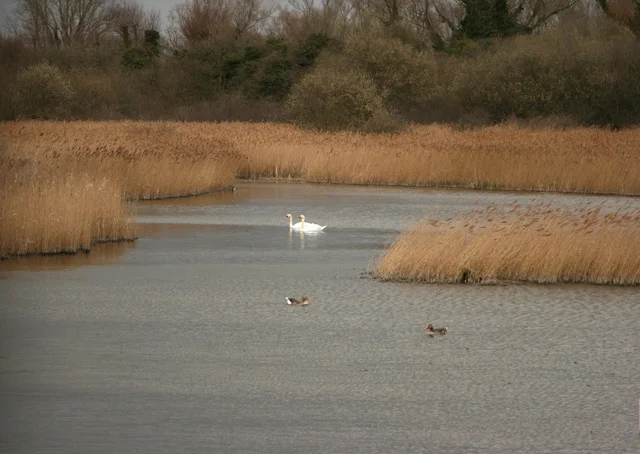
Fowlmere's circular public trail brings together reedbed, fen, scrub, woodland and the chalk-fed River Shep. The RSPB describes the former watercress beds as the foundation of today's wetland. Use the boardwalk and the signed viewing places to understand that transition: a small patch of moving water can hold completely different birds from an apparently still reedbed only a short distance away. The best approach is to alternate listening and looking. At a reedbed opening, stand still before raising binoculars, then scan the waterline from near to far. Beside the stream, allow time for a Kingfisher to appear naturally. Walking repeatedly along a promising bank can disturb the very bird you hoped to see. Keep all observations on the visitor route and leave reed margins undisturbed. Two-hour plan: begin with a gentle section of the circular trail and stop at the first useful reedbed viewpoint. Devote the middle of the visit to a longer watch over open water, followed by the stream and wooded edge. Finish with a second look at the place where activity was strongest, rather than racing to add another circuit. Full-day plan: make an unhurried morning circuit, recording the broad mix of habitats and common birds. Pause for a packed lunch, then revisit the reedbed from a different permitted viewpoint as the light changes. In winter, reserve the last part of the afternoon for Reed Buntings gathering; in spring, give more time to listening along the public path. A full day here is about patient observation at a compact wetland, with breaks between watches, rather than covering a long expedition route.
Use the linked reserve map and directions with current access notices. Species are typical seasonal targets. Light and telescope advice reflects our choice of viewpoint.
Wetland edge and surrounding scrub
200m from parking on level hard surfaces; individual chairs and door latch.
Winter: Water Rail, Reed Bunting
Spring: Reed Bunting, Blackcap
Summer: Reed Warbler, Reed Bunting
Autumn: Water Rail, Reed Bunting
Light: either. Scope: useful.
Spring-fed wetland and reed edge
500m from parking; approach less passable when wet, movable benches.
Winter: Water Rail, Reed Bunting
Spring: Reed Warbler, Cuckoo
Summer: Reed Warbler, Cuckoo
Autumn: Water Rail, Reed Bunting
Light: either. Scope: useful.
Open mere and reedbed panorama
800m from parking; steep 12-step staircase, handrail, fixed benches, no door.
Winter: Reed Bunting, Water Rail
Spring: Reed Warbler, Cuckoo
Summer: Reed Warbler, Reed Bunting
Autumn: Reed Bunting, Water Rail
Light: either. Scope: useful.
Chalk stream and waterside vegetation
Stay on public boardwalk/path; do not enter stream margins.
Winter: Kingfisher, Wren
Spring: Kingfisher, Willow Warbler
Summer: Kingfisher, Willow Warbler
Autumn: Kingfisher, Wren
Light: either. Scope: not needed.
Scrub, berry-bearing trees and alder woodland
Generally boardwalk/hard surface, with some soft or muddy sections after rain.
Winter: Blackbird, Song Thrush, Goldcrest, Siskin
Spring: Blackcap, Willow Warbler, Goldfinch
Summer: Blackcap, Goldfinch
Autumn: Redwing, Fieldfare, Song Thrush
Light: either. Scope: not needed.
| Spot | Overlooks | Key species by season | Best light | Scope | Tide |
|---|---|---|---|---|---|
| Drewer Hide200m from parking on level hard surfaces; individual chairs and door latch. | Wetland edge and surrounding scrub | Winter: Water Rail, Reed Bunting Spring: Reed Bunting, Blackcap Summer: Reed Warbler, Reed Bunting Autumn: Water Rail, Reed Bunting | either | useful | — |
| Spring Hide500m from parking; approach less passable when wet, movable benches. | Spring-fed wetland and reed edge | Winter: Water Rail, Reed Bunting Spring: Reed Warbler, Cuckoo Summer: Reed Warbler, Cuckoo Autumn: Water Rail, Reed Bunting | either | useful | — |
| Reedbed Hide800m from parking; steep 12-step staircase, handrail, fixed benches, no door. | Open mere and reedbed panorama | Winter: Reed Bunting, Water Rail Spring: Reed Warbler, Cuckoo Summer: Reed Warbler, Reed Bunting Autumn: Reed Bunting, Water Rail | either | useful | — |
| River Shep public boardwalkStay on public boardwalk/path; do not enter stream margins. | Chalk stream and waterside vegetation | Winter: Kingfisher, Wren Spring: Kingfisher, Willow Warbler Summer: Kingfisher, Willow Warbler Autumn: Kingfisher, Wren | either | not needed | — |
| Circular trail woodland and scrub sectionGenerally boardwalk/hard surface, with some soft or muddy sections after rain. | Scrub, berry-bearing trees and alder woodland | Winter: Blackbird, Song Thrush, Goldcrest, Siskin Spring: Blackcap, Willow Warbler, Goldfinch Summer: Blackcap, Goldfinch Autumn: Redwing, Fieldfare, Song Thrush | either | not needed | — |
Month chips show typical presence or our preferred viewing season. Choose birds that suit the time of your visit.
The RSPB describes the main trail as having no stiles or steps. Much of it uses boardwalk and hard surfaces intended to support wheelchair access, while other sections can be uneven, soft or muddy after rain. The circular walk is also described as suitable for pushchairs. Those descriptions should be considered alongside the actual surface conditions, especially after prolonged wet weather. The parking area has one Blue Badge space within a total of 35 spaces, and the RSPB says there are no height restrictions. There is no car-park lighting. An accessible, unisex toilet is identified beside the Welcome Centre. If your visit depends on transferring from a vehicle close to the trail or on a particular hide's doorway and viewing height, discuss those requirements with the reserve beforehand; the main page does not provide dimensions for every viewing position. A shorter out-and-back to a comfortable viewpoint can be a satisfying alternative to committing to the entire loop. Keep the return distance in mind before passing from hard surfaces onto softer ground. Boardwalk edges and wet timber warrant attention when turning or stopping with a mobility aid.
Cycle racks and benches are listed by the RSPB. Bring drinking water and whatever food you need for a longer visit; the facilities information does not establish an operating public café. Baby-changing facilities are not provided, with Royston identified by the operator as the nearest alternative. Keep food packed away while watching and carry litter home. Barbecues are prohibited because of fire risk to visitors and the reserve's habitats. The stream and open water also need close supervision when visiting with children.
Pet dogs on leads may use only the private track along the eastern boundary. They are excluded from the rest of the reserve to protect sensitive wildlife and habitats. Visitors with assistance dogs are welcome at RSPB Fowlmere, including throughout its visitor routes. Choose a different walk for an ordinary dog rather than attempting to adapt the birdwatching circuit.
Shepreth is the nearest railway station in the RSPB directions, approximately two miles or 3.5 km from the reserve. Rail followed by a prebooked taxi is a practical car-free option if you do not want that walk. Arrange the return collection before leaving the station and identify the signed reserve entrance to the driver. For buses, the operator's reserve page names Dunsbridge Turnpike, outside Country Homes & Gardens, approximately one mile or 1.5 km away. Fowlmere Parish Council's notice dated 5 October 2026 confirms that services 26 and 17 returned to their normal village stops after the A10 works. The council's earlier route-change consultation is not the current operating timetable. Check the chosen day's route and walking connection rather than assuming every journey passes the same stop. The reserve approach includes minor roads; assess the roadside walking conditions separately from the surfaced paths within the reserve.
Useful bases for an early start.
Booking.com links are affiliate links: we may earn a commission at no extra cost to you. How these links work.
About 6.2 miles by road, roughly 11 minutes’ drive to the reserve visitor approach. OSRM measured the Royston journey for RSPB Fowlmere on 18 October 2026; the estimate excludes live traffic.
Measured driving route · 18 October 2026. Map estimates exclude live traffic.
A shorter road transfer and a town base south of Fowlmere.Find places to stay in Royston on Booking.comAbout 9.9 miles by road, roughly 21 minutes’ drive to the reserve visitor approach. OSRM measured the Cambridge journey for RSPB Fowlmere on 18 October 2026; the estimate excludes live traffic.
Measured driving route · 18 October 2026. Map estimates exclude live traffic.
A city base for combining birdwatching with a longer Cambridgeshire visit.Find places to stay in Cambridge on Booking.comAbout 14.1 miles by road, roughly 25 minutes’ drive to the reserve visitor approach. OSRM measured the Saffron Walden journey for RSPB Fowlmere on 18 October 2026; the estimate excludes live traffic.
Measured driving route · 18 October 2026. Map estimates exclude live traffic.
A separate small-town base east of the Fowlmere wetland.Find places to stay in Saffron Walden on Booking.comExplore Cambridgeshire’s full guides and smaller birding sites
Use fowlmere@rspb.org.uk or the reserve's published telephone number, 01767 693013, for questions about visiting Fowlmere. Explain whether your enquiry concerns a group, a mobility requirement or the availability of a particular facility so the answer can address the whole visit. The linked RSPB location, charges and facilities pages provide the practical information behind this guide. Report wildlife observations through the reserve's own channels, keeping any sensitive breeding information out of public directions.
Check RSPB Nottingham group actual14June2026 Fowlmere observations. individual dated outing report published29June2026; not a rolling feed Reports show what has been seen, not what will be.
Follow the BTO Birders’ Code and give wildlife space.
RSPB Fowlmere: Free entry; non-member parking £3; members and Blue Badge holders free.
RSPB Fowlmere: Pet dogs on leads may use only the private track along the eastern boundary.
RSPB Fowlmere: All year; spring song and winter Reed Buntings.
RSPB Fowlmere: Much of it uses boardwalk and hard surfaces intended to support wheelchair access, while other sections can be uneven, soft or muddy after rain.
RSPB Fowlmere: Shepreth is the nearest railway station in the RSPB directions, approximately two miles or 3.5 km from the reserve.
Shorter stops within 15 miles in a straight line. Use the operator’s arrival directions for the journey.
Meldreth Road between Shepreth and Meldreth · Unploughed meadow, chalk stream and pollarded willows
Flambards Close, Meldreth · Small riverside woodland, thickets and grassy ride
Grantchester Road, Trumpington · River Cam, woodland and small ponds
Grantchester Road, Trumpington, Cambridge · Riverside meadow, hedgerows and woodland
Therfield Road, near Royston · Small beech woodland within the Therfield Heath landscape
Footpath from Granham’s Road, Great Shelford · Chalk springs, woodland, scrub and grassland
Wort’s Causeway, Cambridge · Mature beech and regenerating broadleaved woodland
Owlstone Road and Lammas Land, Cambridge · Wet woodland, marsh and riverbank
Limekiln Road, Cambridge · Former chalk quarry, woodland and hilltop grassland
Highfields Caldecote approach, west of Cambridge · Ancient coppiced woodland
Uphall Road and Barnwell Road, Cambridge · Grassland, scrub and a small pond
Coldham’s Lane and Barnwell Road, Cambridge · Chalky grassland, scrub, woodland and streams
Logan’s Way and Riverside footbridge, Cambridge · Riverbank, reedbed, backwaters and wet woodland
Oyster Row and Riverside, Cambridge · Riverside floodplain, chalk brook and grassland
Stonebridge Lane, Fulbourn · Meadows, wet fen, woodland and hedges
Laxton Way and Discovery Way, Cambridge · Grassland, scrub and two small ponds
Cambourne country park · Meadows, wetland lakes and woodland
Long Lane approach from Gamlingay · Ancient oak, ash and field-maple woodland
Church-lane approach, Knapwell · Elm woodland and old oak trees
Cockfen Lane, Landbeach · Grazed meadow, hedgerows, ponds and plantation woodland
Nearby complete guides.
Stops with a purpose: use one as a contrasting habitat or weather-proof Plan B. Distances are straight-line estimates, not road journeys.