

EN 15 · RSPB reserve guide
RSPB Frampton Marsh
Frampton Roads, Frampton, Boston, Lincolnshire, England · PE20 1AY
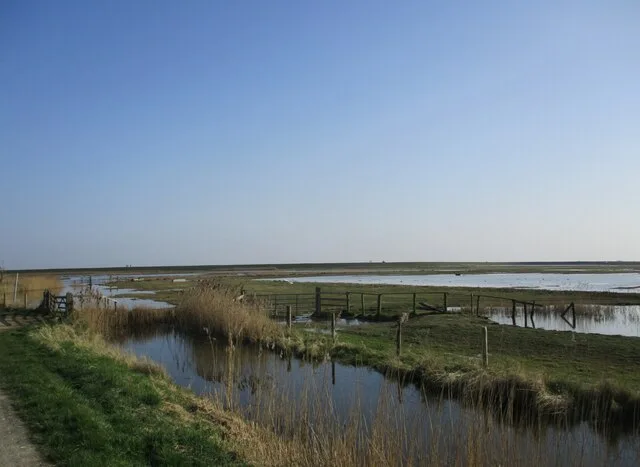
Avocets and Redshanks bring the shallow freshwater pools to life in summer; winter ducks and passage waders reward repeated scans. The Wash provides a broader estuary setting beyond the managed wetlands.
Decide if the visit fits.
RSPB Frampton Marsh at a glance
Last checked 18 October 2026.
Sea bank work currently closes the sea bank sections of the Wash and Grassland trails, Seabank Viewpoint and Seabank car park. Use the main car park and open reserve trails; check RSPB before travelling. No reopening date is confirmed.
- Open
- Reserve/main parking dawn–dusk; Seabank car park closed during works.More about open
- Price / parking
- Non-member vehicle £6/day; members and Blue Badge holders free.More about price / parking
- Best time
- Spring and autumn passage · summer Avocets · winter ducks and ge…More about best time
- Dogs
- Pet dogs are allowed on public footpaths including the sea bank…More about dogs
- Toilets
- General toilets, baby changing, bicycle racks and a picnic area…More about toilets
- Step-free
- Four Blue Badge bays on concrete are listed approximately 24 met…More about step-free
Opening and charges information · checked .
Stay nearby →On this page
Reserve overview
Frampton Marsh reserve and habitat
Avocets and Redshanks bring the shallow freshwater pools to life in summer; winter ducks and passage waders reward repeated scans. The Wash provides a broader estuary setting beyond the managed wetlands.
Eight checks for a smoother visit.
Planning your visit to Frampton Marsh
Conditions change: check the operator and transport notices before travelling.
Frampton Marsh best time to visit and seasonal birds
January: typically compare Wigeon and Golden Plover from 360 Hide with Teal and Pochard at Reedbed Hide. Check open routes before choosing any saltmarsh viewpoint. February: 360 Hide is our choice for a careful Pintail, Ruff and Black-tailed Godwit scan, with Merlin possible above the flocks. Reedbed Hide can add Goldeneye among the diving ducks. March: watch Black-tailed Godwit and returning Avocet from East Hide and 360 Hide. Winter Brent Geese can remain, but their departure timing varies. April: compare Ringed Plover and Little Ringed Plover from East Hide, then Black-headed Gull and possible Mediterranean Gull from Reedbed Hide. Do not approach breeding islands. May: East Hide suits Avocet, Common Tern and passage Dunlin. At Hidden viewpoint look over the grassland for Yellow Wagtail and listen for Corn Bunting without seeking a nest. June: watch Common Tern and Little Ringed Plover from East Hide and Great Crested Grebe from Reedbed Hide. Spotted Redshank can occur on return passage before the calendar says autumn. July: use 360 Hide for Ruff and Spotted Redshank, then East Hide for returning Green Sandpiper. Spoonbill may use the wider freshwater marsh viewed from Fen viewpoint. August: give East Hide time for Little Stint and Curlew Sandpiper; compare those shapes with Dunlin before looking across Fen viewpoint for Great White Egret or Spoonbill. September: typically work the scrapes from East Hide and 360 Hide for Black-tailed Godwit, Ruff and passage waders. Tide-driven movement is a reason to stay longer rather than enter closed paths. October: returning Brent Goose, Wigeon and Golden Plover shift the focus towards winter at 360 Hide. In October 2026 the sea bank routes, Seabank Viewpoint and its car park remain restricted by works; use RSPB’s current update. November: Reedbed Hide offers Teal and Pochard, while 360 Hide gives wider Golden Plover and Lapwing flocks. A raptor may pass, but do not use a previous report as a promised encounter. December: choose a compact circuit between Reedbed Hide and 360 Hide for Goldeneye, Pintail and Black-tailed Godwit. Leave enough daylight for exposed paths and check temporary access first.
Best conditions: Typically use a rising tide towards high water to compare Wash birds moving to the freshwater scrapes, but reserve water levels and management also affect what is visible. Wind makes the sea bank exposed; sheltered hide windows and a scope improve distant identification. Low winter sun can produce glare, so the 360 Hide’s choice of windows is useful. Check the current bank-work restrictions rather than following an old complete circuit.
Frampton Marsh opening times, entry and facilities
Autumn 2026 prices, checked 18 October: the official tariff is £6 per non-member vehicle for the day, covering the reserve car parks; RSPB members and Blue Badge holders park free. Non-member coach parking is £24. Payment is available at the visitor centre or through PayByPhone, location 809416. The published charges table gives parking rather than a separate adult admission price. No advance booking is required for an ordinary visit. The October visitor centre and main toilets open 09:30–16:00, and the café 10:00–16:00. Last hot-food orders are at 15:00. These are the published autumn arrangements; check your visit date and the access notice before travelling, since facilities, trails and wildlife conditions can change.
Access times: Reserve: Dawn–dusk, with current sea bank closures overriding the general trail map. · Hides: Dawn–dusk for the accessible open hide network; follow current restrictions. · Car park: Main car park dawn–dusk; Seabank car park currently locked during works. · Dawn access: yes. Operator opening information.
Frampton Marsh trails, hides and visit length
Access checked 19 October 2026: sea bank works currently prevent the complete Wash and Grassland trail circuits, access to Seabank Viewpoint and use of Seabank car park. Choose the open Reedbed Trail and hides after checking the RSPB notice; do not treat the projected October work period as a guaranteed reopening date. The mapped network has three named trails. The Reedbed Trail is 1.9 km and passes two hides; the Wash Trail is 3.5 km and incorporates all three hides; the Grassland Trail is 4.5 km and explores a wider mixture of hedgerow and open wetland. Those distances describe the usual signed network, not a promise that every section is available during engineering or habitat work. Read the current alert before deciding whether a complete loop is appropriate. Two-hour plan: concentrate on the Reedbed Trail and the hide views rather than trying to include the whole reserve. Spend the opening part of the visit establishing where birds are feeding, then move to a second angle to examine water depths and the far margins. Keep enough time for the return and a final scan near the visitor centre. Distances that look modest on a map can take much longer when there are several flocks to identify. Full-day plan: use the freshwater hides in the morning, make a proper break, and devote the afternoon to a second pass through the most productive open areas. If the wider routes are officially available, add the Wash or Grassland circuit according to weather, energy and daylight. During sea-bank restrictions, keep the day centred on the accessible inland network and repeated hide sessions; do not turn a closure into an improvised diversion over banks or working areas. Birds can often be watched from the paths themselves. Pause before entering a hide, avoid blocking its entrance with tripods, and leave space at viewing openings. The best route is the one that gives sustained views without crowding feeding edges, rather than necessarily the longest circuit.
Where to watch at Frampton Marsh
Use the linked reserve map and directions with current access notices. Species are typical seasonal targets. Light and telescope advice reflects our choice of viewpoint.
Reedbed HideWinter · Spring · Summer · Autumn
Reedbed Lagoon and shallow margins
Use the open Reedbed Trail.
Winter: Teal, Gadwall, Pochard, Tufted Duck, Goldeneye, Black-headed Gull, Great Crested Grebe
Spring: Teal, Gadwall, Pochard, Tufted Duck, Goldeneye, Mediterranean Gull, Black-headed Gull, Great Crested Grebe
Summer: Gadwall, Tufted Duck, Mediterranean Gull, Black-headed Gull, Great Crested Grebe
Autumn: Teal, Gadwall, Pochard, Tufted Duck, Goldeneye, Black-headed Gull, Great Crested Grebe
Light: either. Scope: useful.
360 HideWinter · Spring · Summer · Autumn
Freshwater scrapes and wet grassland
Choose the window with less reflection.
Winter: Black-tailed Godwit, Brent Goose, Wigeon, Pintail, Golden Plover, Lapwing, Ruff, Peregrine, Merlin, Redshank
Spring: Black-tailed Godwit, Brent Goose, Wigeon, Pintail, Golden Plover, Lapwing, Ruff, Spotted Redshank, Peregrine, Merlin, Redshank
Summer: Black-tailed Godwit, Lapwing, Ruff, Spotted Redshank, Redshank
Autumn: Black-tailed Godwit, Brent Goose, Wigeon, Pintail, Golden Plover, Lapwing, Ruff, Spotted Redshank, Peregrine, Merlin, Redshank
Light: either. Scope: useful.
East HideWinter · Spring · Summer · Autumn
Eastern scrape margins and islands
Keep to the signed hide approach.
Winter: Dunlin
Spring: Avocet, Dunlin, Ringed Plover, Little Ringed Plover, Common Tern, Wood Sandpiper, Little Stint, Curlew Sandpiper
Summer: Avocet, Dunlin, Ringed Plover, Little Ringed Plover, Common Tern, Wood Sandpiper, Green Sandpiper, Little Stint, Curlew Sandpiper
Autumn: Avocet, Dunlin, Ringed Plover, Common Tern, Wood Sandpiper, Green Sandpiper, Little Stint, Curlew Sandpiper
Light: either. Scope: useful.
Fen viewpointWinter · Spring · Summer · Autumn
Freshwater marsh and reedbed edges
Follow the current marked public route.
Winter: Great White Egret, Little Egret
Spring: Great White Egret, Little Egret
Summer: Spoonbill, Great White Egret, Cattle Egret, Little Egret
Autumn: Spoonbill, Great White Egret, Cattle Egret, Little Egret
Light: either. Scope: useful.
Raptor viewpointWinter · Spring · Autumn
Saltmarsh and open estuary
Sea bank work may prevent approach; confirm with RSPB before using.
Winter: Peregrine, Marsh Harrier, Hen Harrier, Short-eared Owl
Spring: Hen Harrier, Short-eared Owl
Autumn: Hen Harrier, Short-eared Owl
Light: not applicable. Scope: essential.
Seabank viewpointWinter
Wash saltmarsh and estuary
Currently inaccessible during sea bank works; no reopening date confirmed.
Winter: Brent Goose, Dunlin
Light: not applicable. Scope: essential.
Tide: High tide can move waders to reserve scrapes, but this viewpoint is currently inaccessible.
Visitor Hub viewing areaWinter · Spring · Summer · Autumn
Nearby freshwater lagoon and scrapes
Visitor Hub opening is separate from dawn access to trails.
Winter: Shoveler
Spring: Shoveler
Summer: Shoveler
Autumn: Shoveler
Light: either. Scope: useful.
| Spot | Overlooks | Key species by season | Best light | Scope | Tide |
|---|---|---|---|---|---|
| Reedbed HideUse the open Reedbed Trail. | Reedbed Lagoon and shallow margins | Winter: Teal, Gadwall, Pochard, Tufted Duck, Goldeneye, Black-headed Gull, Great Crested Grebe Spring: Teal, Gadwall, Pochard, Tufted Duck, Goldeneye, Mediterranean Gull, Black-headed Gull, Great Crested Grebe Summer: Gadwall, Tufted Duck, Mediterranean Gull, Black-headed Gull, Great Crested Grebe Autumn: Teal, Gadwall, Pochard, Tufted Duck, Goldeneye, Black-headed Gull, Great Crested Grebe | either | useful | — |
| 360 HideChoose the window with less reflection. | Freshwater scrapes and wet grassland | Winter: Black-tailed Godwit, Brent Goose, Wigeon, Pintail, Golden Plover, Lapwing, Ruff, Peregrine, Merlin, Redshank Spring: Black-tailed Godwit, Brent Goose, Wigeon, Pintail, Golden Plover, Lapwing, Ruff, Spotted Redshank, Peregrine, Merlin, Redshank Summer: Black-tailed Godwit, Lapwing, Ruff, Spotted Redshank, Redshank Autumn: Black-tailed Godwit, Brent Goose, Wigeon, Pintail, Golden Plover, Lapwing, Ruff, Spotted Redshank, Peregrine, Merlin, Redshank | either | useful | — |
| East HideKeep to the signed hide approach. | Eastern scrape margins and islands | Winter: Dunlin Spring: Avocet, Dunlin, Ringed Plover, Little Ringed Plover, Common Tern, Wood Sandpiper, Little Stint, Curlew Sandpiper Summer: Avocet, Dunlin, Ringed Plover, Little Ringed Plover, Common Tern, Wood Sandpiper, Green Sandpiper, Little Stint, Curlew Sandpiper Autumn: Avocet, Dunlin, Ringed Plover, Common Tern, Wood Sandpiper, Green Sandpiper, Little Stint, Curlew Sandpiper | either | useful | — |
| Fen viewpointFollow the current marked public route. | Freshwater marsh and reedbed edges | Winter: Great White Egret, Little Egret Spring: Great White Egret, Little Egret Summer: Spoonbill, Great White Egret, Cattle Egret, Little Egret Autumn: Spoonbill, Great White Egret, Cattle Egret, Little Egret | either | useful | — |
| Raptor viewpointSea bank work may prevent approach; confirm with RSPB before using. | Saltmarsh and open estuary | Winter: Peregrine, Marsh Harrier, Hen Harrier, Short-eared Owl Spring: Hen Harrier, Short-eared Owl Autumn: Hen Harrier, Short-eared Owl | not applicable | essential | — |
| Seabank viewpointCurrently inaccessible during sea bank works; no reopening date confirmed. | Wash saltmarsh and estuary | Winter: Brent Goose, Dunlin | not applicable | essential | High tide can move waders to reserve scrapes, but this viewpoint is currently inaccessible. |
| Visitor Hub viewing areaVisitor Hub opening is separate from dawn access to trails. | Nearby freshwater lagoon and scrapes | Winter: Shoveler Spring: Shoveler Summer: Shoveler Autumn: Shoveler | either | useful | — |
Target species at Frampton Marsh
Month chips show typical presence or our preferred viewing season. Choose birds that suit the time of your visit.
Headline birds
- MarAprMayJunJulAugSep
- JanFebMarAprMayJunJulAugSepOctNovDec
- JanFebMarAprMayOctNovDec
- JanFebMarOctNovDec
- JanFebMarOctNovDec
Regular birds
- JanFebMarOctNovDec
- JanFebMarOctNovDec
- JanFebMarAprMayJunJulAugSepOctNovDec
- JanFebMarOctNovDec
- GadwallReedbed HideReedbed HideJanFebMarAprMayJunJulAugSepOctNovDec
- PochardReedbed HideReedbed HideJanFebMarOctNovDec
- Tufted DuckReedbed HideReedbed HideJanFebMarAprMayJunJulAugSepOctNovDec
- JanFebMarAprMayJunJulAugSepOctNovDec
- JanFebMarAprMayJunJulAugSepOctNovDec
- JanFebMarAprMayJulAugSepOctNovDec
- MarAprMayJulAugSep
- AprMayJunJulAug
- AprMayJunJulAugSep
- Black-headed GullReedbed HideReedbed HideJanFebMarAprMayJunJulAugSepOctNovDec
- Great Crested GrebeReedbed HideReedbed HideJanFebMarAprMayJunJulAugSepOctNovDec
- JulAugSepOct
- JulAugSepOctNovDecJanFebMar
- JanFebMarOctNovDec
- Corn BuntingHidden viewpointHidden viewpointMayJunJul
- Yellow WagtailHidden viewpointHidden viewpointAprMayJunJulAugSep
- JanFebMarAprMayJunJulAugSepOctNovDec
- JanFebMarAprMayJunJulAugSepOctNovDec
- StarlingFollow the operator’s sensitive-species advice.JanFebNovDec
Scarce but regular birds
- GoldeneyeReedbed HideReedbed HideJanFebMarOctNovDec
- Mediterranean GullReedbed HideReedbed HideAprMayJunJul
- AprMayJunJulAugSepOct
- AprMayJulAugSep
- MayAugSepOct
- MayAugSep
- JunJulAugSep
- JulAugSep
- JanFebMarOctNovDec
- JanFebMarOctNovDec
Tide planning
The county bird club recommends high water for waders pushed off the Wash; compare the freshwater scrapes as the tide rises. Use open hides while bank routes are closed and never step onto mudflats.
Frampton Marsh accessibility and step-free routes
Four Blue Badge bays on concrete are listed approximately 24 metres from the visitor centre. The general car-park surface is loose aggregate. The building has either steps or a ramp with handrails; an automatic outward-opening door may still require consideration if you are manoeuvring with a mobility aid. RSPB identifies accessible toilets in the centre and provides an access map and a detailed accessibility guide. The Reedbed Trail is mainly level compacted aggregate. Other paths can introduce grass, uneven ground, gentle slopes or steps. On the mapped Wash Trail there are three predator gates which the operator warns may be difficult for a visitor travelling alone. A companion's presence does not remove the need to assess the gate arrangement against your own equipment and reach. A ramp serves the usual sea-bank viewpoint, but that infrastructure should not be read as confirmation that access is available during the current works. Before travel, ask the reserve specifically about the open step-free route, resting opportunities, gate operation and the hide you intend to use. Send chair or scooter dimensions where useful. Plan an out-and-back alternative if a continuous loop depends on a surface or obstruction that has not been checked for your needs.
Frampton Marsh visitor facilities
The visitor centre provides indoor information and views towards the reedbed lagoon. General toilets, baby changing, bicycle racks and a picnic area are available; an additional toilet beside the front door is listed for use beyond the main indoor service. The café serves drinks, light meals and cakes, with plant-based and gluten-free choices and staff able to discuss allergens. Bring your own supplies if a particular dietary need determines the day. Barbecues are not permitted at RSPB Frampton Marsh. Guided events are separate from an independent walk and should be checked and booked through RSPB where required.
Frampton Marsh dog rules
Pet dogs are allowed on public footpaths including the sea bank and Grassland Trail, on a lead and under close, effective control. They are excluded from the Reedbed Trail, paths to the hides, visitor centre and café. Visitors with assistance dogs are welcome at RSPB Frampton Marsh, including throughout its visitor routes. Follow the current route restrictions when selecting a dog walk; a public path shown on the map may still be temporarily unavailable.
Frampton Marsh public transport and getting there
Boston is the nearest railway station identified by RSPB, approximately four miles from the reserve; its directions note a taxi rank there. A prearranged taxi to the main visitor entrance is the clearest rail connection if you do not want a long approach on local roads. Book the return pickup as well, especially when finishing near dusk. Brylaine's current B3/B3X services connect Boston and Spalding through Kirton. The operator introduced revised timings on 12 October 2026, so use that timetable rather than an older screenshot. RSPB places the nearest Kirton bus stop about three miles from the reserve: the bus is not a doorstep service. Its older directions also name B8, but the current Brylaine listing checked here does not verify that as a suitable present-day option. Boston Callconnect is a bookable on-demand alternative; ask the booking service to confirm the exact reserve endpoint and both journeys. A zone map or operating day alone does not guarantee your requested pickup. National Cycle Route 1 passes near the entrance corridor, according to the reserve directions.
Useful bases for an early start.
Where to stay near Frampton Marsh
Booking.com links are affiliate links: we may earn a commission at no extra cost to you. How these links work.
- 01
Boston
From Boston settlement centre: about 5.63 miles by road, roughly 14.9 minutes' drive to the main reserve entrance. OSRM/OpenStreetMap model measured 18 October 2026; allows no live-traffic or parking delay.
Measured driving route · 2026-10-18. Map estimates exclude live traffic.
The nearest rail town identified in the reserve directions, useful for train arrivals and arranging a taxi connection.Find places to stay in Boston on Booking.com - 02
Kirton
From Kirton settlement centre: about 3.78 miles by road, roughly 12.2 minutes' drive to the main reserve entrance. OSRM/OpenStreetMap model measured 18 October 2026; allows no live-traffic or parking delay.
Measured driving route · 2026-10-18. Map estimates exclude live traffic.
A village base for a shorter road approach. Check the exact accommodation address rather than assuming a village name means walking access.Find places to stay in Kirton on Booking.com - 03
Spalding
From Spalding settlement centre: about 14.5 miles by road, roughly 27.9 minutes' drive to the main reserve entrance. OSRM/OpenStreetMap model measured 18 October 2026; allows no live-traffic or parking delay.
Measured driving route · 2026-10-18. Map estimates exclude live traffic.
A separate town base south of the reserve for combining the wetlands with a wider Lincolnshire visit.Find places to stay in Spalding on Booking.com
Explore Lincolnshire’s full guides and smaller birding sites
Frampton Marsh official sightings, safety and contact
Contact the Lincolnshire Wash reserves team on 01205 724678 or lincolnshirewashreserves@rspb.org.uk for site-specific questions. The official Frampton Facebook page is linked for access announcements and sightings; RSPB says reports are generally posted daily. Keep the report date separate from the date you intend to visit, and use a species list as context rather than a guarantee. For a useful observation report, include when and where the bird was seen, its behaviour and any uncertainty in identification.
Frampton Marsh recent bird sightings
Check Lincolnshire Bird Club latest bird news. most days Reports show what has been seen, not what will be.
- Lincolnshire Bird Club latest bird newscounty club or recorder · updated most days
Birding sources
- RSPB Frampton Marsh 2025–26 trail map
- RSPB live sea bank closure and daily sightings link
- RSPB October 2026 reserve/hide/car-park hours
- Lincolnshire Bird Club seasonal site guide; historic access superseded by current RSPB
- Lincolnshire Bird Club actual 2026 records
- RSPB Bedford group February 2026 hide-specific winter report
- RSPB Bedford group June 2026 hide and path species
- UKHO station catalogue: Tabs Head 0165
Follow the BTO Birders’ Code and give wildlife space.
Questions visitors ask
Is RSPB Frampton Marsh free to visit?
RSPB Frampton Marsh: Non-member vehicle £6/day; members and Blue Badge holders free.
Can I take my dog to RSPB Frampton Marsh?
RSPB Frampton Marsh: Pet dogs are allowed on public footpaths including the sea bank and Grassland Trail, on a lead and under close, effective control.
When is the best time to visit RSPB Frampton Marsh?
RSPB Frampton Marsh: Spring and autumn passage · summer Avocets · winter ducks and geese.
Is RSPB Frampton Marsh accessible for wheelchairs?
RSPB Frampton Marsh: The building has either steps or a ramp with handrails; an automatic outward-opening door may still require consideration if you are manoeuvring with a mobility aid.
How do I get to RSPB Frampton Marsh without a car?
RSPB Frampton Marsh: Boston is the nearest railway station identified by RSPB, approximately four miles from the reserve; its directions note a taxi rank there.
Best months for this reserve
Nearby complete guides.
Bird reserves near Frampton Marsh
Stops with a purpose: use one as a contrasting habitat or weather-proof Plan B. Distances are straight-line estimates, not road journeys.
- About 3 miles away · A familiar habitatFreiston ShoreWinter wildfowl · spring breeding birds · autumn migration
- About 17 miles away · A familiar habitatGibraltar Point National Nature ReserveSpring seabirds · autumn migration · winter coast
- About 18 miles away · A useful habitat changeRSPB SnettishamLate summer–winter