
Short entry0.7 miles away
Snettisham Coastal Park public paths
Snettisham · Estuary and reedbed
 the ai birderBirding near me
The AI Birder · one-page field sheet
Snettisham, Norfolk, England · PE31 7RA · PE31 7RA

Knot · Pink-footed Goose · Oystercatcher · Dunlin · Bar-tailed Godwit · Black-tailed Godwit
Rotary Hide · Shore Hide · Knot’s Landing · Wader Watch point · Sea wall — first Wash view · Car park to sea wall path
Check current access, hide closures and operator notices before travelling. Seasonal birds are possibilities, not promised sightings. Keep to authorised routes and give wildlife space.
Opening and charges checked 2026-10-09. Operator: https://www.rspb.org.uk/days-out/reserves/snettisham
Full guide and current source links: https://aibirder.co.uk/reserves/rspb-snettisham
EN 04 · RSPB reserve guide
Snettisham, Norfolk, England · PE31 7RA
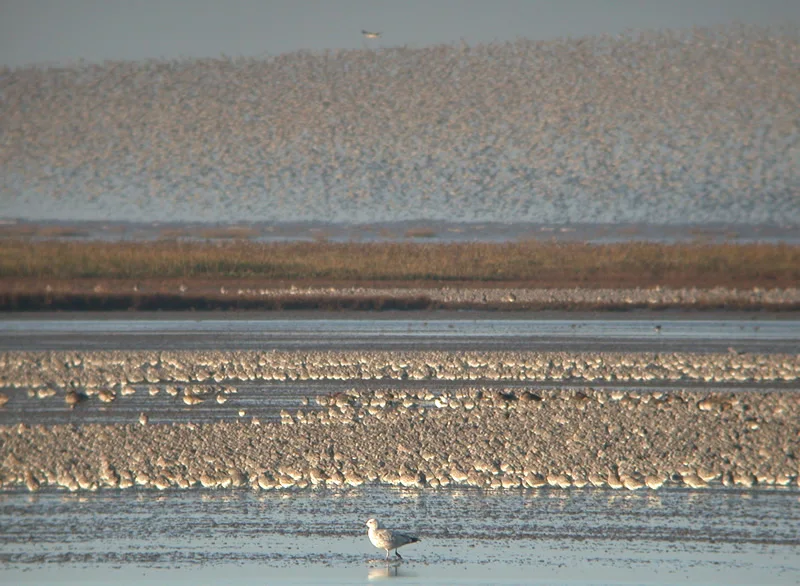
On selected very high spring tides, vast flocks of Knot, Dunlin, Oystercatchers and godwits lift from the Wash; winter dawn can also bring tens of thousands of Pink-footed Geese.
Decide if the visit fits.
Last checked 9 October 2026.
Opening and charges information · checked .
Stay nearby →Pink-footed Geese usually arrive towards the end of October and leave by mid-January, flying out at dawn and returning at dusk.
Next spectacle dates: the RSPB publishes Snettisham’s high-tide wader dates each year. Its 2026 list names March, August, September and October; check the RSPB’s current list before planning.
RSPB spectacle dates, tide planning and parking bookings · RSPB Pink-footed Goose season guide. Goose-season source checked ; wader-date source checked .
Review by: .
Reserve overview
On selected very high spring tides, vast flocks of Knot, Dunlin, Oystercatchers and godwits lift from the Wash; winter dawn can also bring tens of thousands of Pink-footed Geese.
Eight checks for a smoother visit.
Conditions change: check the operator and transport notices before travelling.
January: Pink-footed Geese typically leave the Wash around first light: watch from the first sea-wall view without illuminating the resting flock. Later try Rotary Hide for Teal and Wigeon, or Shore Hide for Oystercatchers and Redshank as the tide changes.
February: Compare winter Grey Plover and Golden Plover from the first sea-wall view with Teal and Shoveler on the lagoons from Rotary Hide. Pink-footed Geese begin departing during late winter, so a dawn watch is seasonal guidance rather than a promised flight.
March: Knot, Dunlin and Bar-tailed Godwits can still provide a substantial winter-wader watch. On the operator-selected spectacular dates leave the car park about two hours before high water for Wader Watch, then try Shore Hide for Avocets and Shelduck.
April: Use Rotary Hide for Avocets and Black-headed Gulls and Shore Hide for Ringed Plover and Shelduck. Spring passage changes the mix on the flats; watch Dunlin and Bar-tailed Godwits from Wader Watch without assuming the great autumn gatherings will be present.
May: Avocets from Rotary Hide and Oystercatchers from Wader Watch are typically more realistic targets than a huge Knot spectacular. Ringed Plovers use the shore: stay within signed visitor routes, outside protection areas, and do not approach any breeding birds.
June: Take a quieter lagoon visit from Rotary Hide for Avocets and Black-headed Gulls, and check the approach lagoons for Mallard and Coot from the public path. The long exposed walk is often more comfortable early; large winter-wader flocks are not a summer expectation.
July: Returning waders usually start changing the scene: look from Wader Watch for Dunlin and Curlew and compare Redshank from Shore Hide. Summer Avocets remain worth checking from Rotary Hide, but use the current operator calendar before planning a spectacular visit.
August: Knot, Dunlin and Bar-tailed Godwits typically build on the Wash. For a selected spectacular date use Wader Watch at the operator’s advised arrival time, then watch settled birds quietly from Knot’s Landing. Rotary Hide gives a separate comparison of lagoon birds.
September: Work through Grey Plover, Bar-tailed Godwit and Dunlin from Wader Watch as the incoming tide contracts the feeding flats. Shore Hide can add Black-tailed Godwit and Turnstone. High water, bird numbers and weather must coincide; a date on a calendar remains a prediction.
October: Knot and Oystercatcher are usually central targets from Wader Watch, with Bar-tailed Godwit and Grey Plover worth careful telescope work. Pink-footed Geese typically return during autumn; their first-light movements from the first sea-wall view are a separate event from the tide spectacle.
November: Plan a dawn sea-wall watch for Pink-footed Geese or a daylight rising-tide visit for Knot and Oystercatchers. Rotary Hide is useful for Wigeon, Teal and Shoveler. Avoid combining an early start and a late tide unless the weather and walking arrangements are manageable.
December: Use the first sea-wall view for a typical winter Pink-footed Goose flight, then Shore Hide for Redshank and Turnstone or Rotary Hide for Teal. Morning light usually helps looking west across the Wash; shelter, warm clothing and enough daylight for the return matter.
Best conditions: Morning usually gives better light looking west over the Wash; hide views vary with the window and weather. RSPB advises that a strong north-easterly can bring the tide and display earlier, while offshore wind can delay it. Use selected spectacular dates and a safe forecast, not a tide height alone. A scope helps on distant feeding flats; the close Knot’s Landing spectacle does not require one.
The reserve arrival postcode is PE31 7RA, reached along Beach Road. Access on foot or by bicycle is free. Parking must be booked in advance on designated Spectacular dates, including for members and visitors using accessible parking arrangements. The reserve parking is shared with anglers and has limited capacity; an ordinary parking ticket is not a substitute for an event-date booking. RSPB’s current ordinary parking information conflicts: its charges table says £5 for non-members, while the newer Spectacular explainer says £4 outside event dates. Budget £5 and use the current payment or booking screen to resolve the charge for your visit. Members park free outside event dates but should obtain the required ticket. A 2.1m height barrier restricts vehicles; the separate paid Snettisham Beach car park has different arrangements and is not the same arrival point. No overnight stays are allowed in the reserve car park.
Access times: Reserve: Open 24 hours on the October 2026 operator calendar; follow any event or route restrictions. · Hides: Four hides advertised; separate locking hours are not published. Reserve-wide 24-hour opening is not confirmation that every hide is always unlocked. · Car park: Open 24 hours; no overnight parking or camping. Advance booking required on designated Spectacular dates. · Dawn access: yes. Operator opening information.
The reserve has three waymarked trails and four hides, with Shore and Rotary among the named viewing stops. The main attraction is a sequence of mudflat feeding, movement with the incoming tide and lagoon roosting. A walk can be rewarding outside the major event, but it is important to distinguish a normal circuit from a visit built around the Wader Spectacular. For a two-hour ordinary visit, walk from the car park to the first Wash view, then use Shore Hide or a nearby lagoon viewpoint before returning. RSPB suggests about 20 minutes to the first seawall view. Set a turnaround point that leaves time to watch rather than spending the whole visit walking. The full Wader Spectacular does not fit comfortably into this two-hour plan. For a full day on a published Spectacular date, leave the car park two hours before high tide and allow for the 2km approach to Wader Watch. Watch the birds being displaced from the mudflats, then use authorised lagoon-roost viewpoints. Birds can return to the mud about an hour after high tide, adding another part of the movement. Follow their return from the seawall without approaching the roost. Between tide watches, compare ducks and waders from Shore and Rotary hides and use the signed trails for quieter observation. Take food and water, with no café break assumed. These are editorial plans for time on the reserve; their success depends on choosing the right tide and allowing for your actual walking pace.
Use the linked reserve map and directions with current access notices. Species are typical seasonal targets. Light and telescope advice reflects our choice of viewpoint.
Brackish reserve lagoons and their islands
Adapted viewing flaps and seating; special-access arrangements must be booked in advance.
Winter: Teal, Wigeon, Black-headed Gull
Spring: Avocet, Shelduck, Mediterranean Gull
Summer: Avocet, Black-headed Gull
Autumn: Redshank, Black-tailed Godwit
Light: either. Scope: useful.
The southern lagoon and high-water resting birds
Concrete approach from the special-access parking area; adapted viewing flaps.
Winter: Oystercatcher, Knot, Redshank
Spring: Ringed Plover, Shelduck, Avocet
Summer: Oystercatcher, Avocet
Autumn: Knot, Turnstone, Bar-tailed Godwit
Light: either. Scope: useful.
Tide: Most useful when high water displaces waders from the Wash; do not assume every high tide fills the lagoon roost.
High-tide lagoon refuge from the official enclosed hide
A long walk beyond the first Wash view; follow the signed visitor route.
Winter: Knot, Oystercatcher
Spring: Knot, Dunlin
Summer: Oystercatcher
Autumn: Knot, Dunlin, Black-tailed Godwit
Light: either. Scope: not needed.
Tide: Use the operator-selected spectacular dates; wait quietly while birds settle.
Wash mudflats and the approaching tide
Stay on the official watching route and behind fences.
Winter: Knot, Oystercatcher, Bar-tailed Godwit
Spring: Knot, Dunlin
Summer: Oystercatcher, Curlew
Autumn: Knot, Dunlin, Grey Plover
Light: morning. Scope: useful.
Tide: On the RSPB’s selected dates, leave the main car park about two hours before high tide.
The Wash feeding flats and sky above the public approach
Stepped approach and exposed bank; keep lamps away from birds on the mudflats.
Winter: Pink-footed Goose, Brent Goose, Shelduck
Spring: Grey Plover, Redshank
Summer: Curlew, Oystercatcher
Autumn: Pink-footed Goose, Bar-tailed Godwit
Light: morning. Scope: essential.
Tide: Low water leaves feeding birds distant; rising water gradually reduces feeding space.
Approach lagoons, scrub and the public path edges
The ordinary approach includes steps and uneven compacted gravel and sand.
Winter: Tufted Duck, Coot, Mallard
Spring: Tufted Duck, Cormorant, Little Egret
Summer: Mallard, Coot
Autumn: Cormorant, Little Egret
Light: either. Scope: not needed.
| Spot | Overlooks | Key species by season | Best light | Scope | Tide |
|---|---|---|---|---|---|
| Rotary HideAdapted viewing flaps and seating; special-access arrangements must be booked in advance. | Brackish reserve lagoons and their islands | Winter: Teal, Wigeon, Black-headed Gull Spring: Avocet, Shelduck, Mediterranean Gull Summer: Avocet, Black-headed Gull Autumn: Redshank, Black-tailed Godwit | either | useful | — |
| Shore HideConcrete approach from the special-access parking area; adapted viewing flaps. | The southern lagoon and high-water resting birds | Winter: Oystercatcher, Knot, Redshank Spring: Ringed Plover, Shelduck, Avocet Summer: Oystercatcher, Avocet Autumn: Knot, Turnstone, Bar-tailed Godwit | either | useful | Most useful when high water displaces waders from the Wash; do not assume every high tide fills the lagoon roost. |
| Knot’s LandingA long walk beyond the first Wash view; follow the signed visitor route. | High-tide lagoon refuge from the official enclosed hide | Winter: Knot, Oystercatcher Spring: Knot, Dunlin Summer: Oystercatcher Autumn: Knot, Dunlin, Black-tailed Godwit | either | not needed | Use the operator-selected spectacular dates; wait quietly while birds settle. |
| Wader Watch pointStay on the official watching route and behind fences. | Wash mudflats and the approaching tide | Winter: Knot, Oystercatcher, Bar-tailed Godwit Spring: Knot, Dunlin Summer: Oystercatcher, Curlew Autumn: Knot, Dunlin, Grey Plover | morning | useful | On the RSPB’s selected dates, leave the main car park about two hours before high tide. |
| Sea wall — first Wash viewStepped approach and exposed bank; keep lamps away from birds on the mudflats. | The Wash feeding flats and sky above the public approach | Winter: Pink-footed Goose, Brent Goose, Shelduck Spring: Grey Plover, Redshank Summer: Curlew, Oystercatcher Autumn: Pink-footed Goose, Bar-tailed Godwit | morning | essential | Low water leaves feeding birds distant; rising water gradually reduces feeding space. |
| Car park to sea wall pathThe ordinary approach includes steps and uneven compacted gravel and sand. | Approach lagoons, scrub and the public path edges | Winter: Tufted Duck, Coot, Mallard Spring: Tufted Duck, Cormorant, Little Egret Summer: Mallard, Coot Autumn: Cormorant, Little Egret | either | not needed | — |
Month chips show typical presence or our preferred viewing season. Choose birds that suit the time of your visit.
For an RSPB-selected Wader Spectacular date, leave the main car park about two hours before high tide and follow the signed route to Wader Watch. Very high spring tides can cover feeding mud and bring birds to lagoon refuges; ordinary high tides may leave much of the flock distant.
The approach includes narrow, uneven compacted gravel and sand. There are 53 steps with handrails on the route, an important distinction from the flatter or gently undulating reserve trails. Shore and Rotary hides have adapted viewing arrangements with variable-height flaps, fixed and movable seating, while the loop from the special-access parking area to Shore Hide is concrete. Limited closer parking can be arranged by permit. Request it at least five working days before travel; on Spectacular dates the relevant parking must still be booked online, while other access requests go to the reserve team. Closer parking does not make every viewing position identical or remove all outdoor exposure. An accessible waterless toilet is provided at the car park, but there is no staffed visitor centre offering daily assistance. Large-print information is available. For a mobility-dependent tide visit, agree the arrival point and suitable hide before committing to the event. Consider the waiting time, wind and return distance as well as the path surface. A quieter lagoon visit may be easier to manage than the busiest Spectacular viewpoint, and the reserve team’s access guidance should shape that choice.
There is no staffed visitor centre, café or dependable food and drinking-water supply on the reserve. Bring everything needed for a long tide watch. Cycle parking is provided at the car park. Pack enough food and drinking water for the whole outing, particularly when a tide watch extends your visit. Baby-changing facilities are not provided. Public toilets at Heacham South Beach are a separate journey. Keep picnic waste secured, carry it away, and do not use barbecues. A torch is useful for an authorised dawn approach or dark return.
Well-behaved dogs, including assistance dogs, are allowed on a lead at all times. Keep them close on trails and well back from feeding or roosting birds. Do not use the open-looking shore as an invitation to approach a flock; disturbance can move birds from valuable resting areas.
King’s Lynn is the useful rail gateway. Lynx routes 34, 35 and Coastliner 36 serve the Snettisham corridor and the Grapes stop, but there is no direct public-transport service to the reserve car park. Beach Road leaves a substantial rural final leg, followed by the reserve approach. A bus to the village is therefore not equivalent to a bus to Wader Watch. For a dawn goose visit or a precisely timed Spectacular, pre-book a taxi from King’s Lynn or your accommodation, including the return. Use the current Lynx timetable for a daylight village connection and check the final service before choosing a long tide visit. Do not assume a winter dawn can be reached by the first bus. Drivers should use the designated reserve arrival and the event parking booking when required. The stay routes below are measured to the published car-arrival point; reserve walking time comes afterwards. Do not count the road estimate as the complete journey to the birds.
Useful bases for an early start.
Booking.com links are affiliate links: we may earn a commission at no extra cost to you. How these links work.
About 2.6 miles by road, roughly 5 minutes’ drive from Snettisham to the visitor arrival point. Allow extra time around Snettisham for traffic.
Measured driving route · 2026-10-09. Map estimates exclude live traffic.
Choose Snettisham for cottages, holiday parks and making the spectacle the trip's focus.Find places to stay in Snettisham on Booking.comAbout 4.9 miles by road, roughly 10 minutes’ drive from Heacham to the visitor arrival point. Allow extra time around Heacham for traffic.
Measured driving route · 2026-10-09. Map estimates exclude live traffic.
Choose Heacham for cottages, holiday parks and making the spectacle the trip's focus.Find places to stay in Heacham on Booking.comAbout 6.8 miles by road, roughly 15 minutes’ drive from Hunstanton to the visitor arrival point. Allow extra time around Hunstanton for traffic.
Measured driving route · 2026-10-09. Map estimates exclude live traffic.
Best for a North Norfolk coast weekend and seaside hotels or guesthouses.Find places to stay in Hunstanton on Booking.comAbout 13.0 miles by road, roughly 25 minutes’ drive from King's Lynn to the visitor arrival point. Allow extra time around King's Lynn for traffic.
Measured driving route · 2026-10-09. Map estimates exclude live traffic.
Best for rail arrivals who plan to hire a car or arrange a taxi.Find places to stay in King's Lynn on Booking.comExplore Norfolk’s full guides and smaller birding sites
Contact 01485 210779 or snettisham@rspb.org.uk for reserve enquiries. Accessible parking requests should use the arrangements on the facilities page, including the notice period and separate event booking. The official Wader Spectacular page supplies dates and the tide-led arrival advice; use it before buying or booking travel. Read current reserve information for parking and access, rather than relying on a photograph of a previous flock as evidence of today’s conditions.
Check RSPB local-group Snettisham field report — October 2024. dated archive report; not a live reserve feed Reports show what has been seen, not what will be.
Follow the BTO Birders’ Code and give wildlife space.
RSPB Snettisham: Free walking/cycling entry; ordinary non-member parking £4/£5 conflict; Spectacular booking required.
RSPB Snettisham: Well-behaved dogs, including assistance dogs, are allowed on a lead at all times.
RSPB Snettisham: Late summer–winter.
RSPB Snettisham: An accessible waterless toilet is provided at the car park, but there is no staffed visitor centre offering daily assistance.
RSPB Snettisham: King’s Lynn is the useful rail gateway.
Shorter stops within 15 miles in a straight line. Use the operator’s arrival directions for the journey.
Snettisham · Estuary and reedbed
Wolferton, near King’s Lynn · heathland · woodland · wetland
Sandringham, near King's Lynn · Mixed woodland and parkland
West Newton · River, farmland and woodland edges
Between Ringstead and Hunstanton · Grassland · Woodland
East of King’s Lynn, near Roydon and Grimston · Heathland · Grassland · Woodland
King’s Lynn · Estuary, saltmarsh and mudflat
Flitcham · Wetland and farmland
Holme-next-the-Sea · wetland · grassland
Holme-next-the-Sea · coast · wetland · scrub
Holme-next-the-Sea, near Hunstanton · Coast · Grassland · Woodland
Great Massingham · Farmland and remnant heath
East Winch, east of King’s Lynn · Heathland · Woodland · Grassland
Blackborough End · Gravel pits and woodland
South of Syderstone village, west Norfolk · Heathland · Woodland · Lakes
Brancaster and Brancaster Staithe · coast · wetland · grassland
Pentney · Gravel-pit lakes and riverside
Off Burnham Overy Staithe · coast · wetland
Shouldham · Coniferous woodland and clearings
South of Narborough village, off Chalk Lane · Grassland · Woodland
West Raynham · Lake, parkland, reedbed and grazing fields
Nearby complete guides.
Stops with a purpose: use one as a contrasting habitat or weather-proof Plan B. Distances are straight-line estimates, not road journeys.