Short entry2.2 miles away
The Hermitage
West of Dunkeld · River gorge · mixed woodland · wooded riverside
 the ai birderBirding near me
The AI Birder · one-page field sheet
Near Dunkeld, Perth and Kinross, Scotland · PH8 0HH · PH8 0HH

Access notice: The visitor centre and car park are closed for a private event on 23 October 2026.
Goldeneye · Great Crested Grebe · Mallard · Goosander · Tufted Duck · Wigeon
Double-decker Hide (Main Hide) · Crannog Hide · Photographer viewpoint · Visitor-centre wildlife window · Wildlife-viewing screen near the visitor centre · Woodland Trail wildlife-viewing screen
Check current access, hide closures and operator notices before travelling. Seasonal birds are possibilities, not promised sightings. Keep to authorised routes and give wildlife space.
Opening and charges checked 2026-10-25. Operator: https://scottishwildlifetrust.org.uk/reserve/loch-of-the-lowes/
Full guide and current source links: https://aibirder.co.uk/reserves/loch-of-the-lowes-wildlife-reserve
SC 13 · Scottish Wildlife Trust reserve guide
Near Dunkeld, Perth and Kinross, Scotland · PH8 0HH
One of Scotland's best-known Osprey viewing sites, with the nest around 150 metres from the hides. Great Crested Grebes, Goosanders and winter wildfowl use the loch, while Red Squirrels, Great Spotted Woodpeckers and occasional Pine Martens visit the woodland feeding area; Beavers are most likely around dawn and dusk.
Decide if the visit fits.
Last checked 18 October 2026.
Opening and charges information · checked .
Stay nearby →Reserve overview
One of Scotland's best-known Osprey viewing sites, with the nest around 150 metres from the hides. Great Crested Grebes, Goosanders and winter wildfowl use the loch, while Red Squirrels, Great Spotted Woodpeckers and occasional Pine Martens visit the woodland feeding area; Beavers are most likely around dawn and dusk.
Eight checks for a smoother visit.
Conditions change: check the operator and transport notices before travelling.
January: the Double-decker Hide usually provides the most useful start for Goldeneye, Tufted Duck and Wigeon. A second watch from Crannog Hide can reveal Greylag and Canada Geese on a different part of the loch. February: choose Crannog Hide for Goldeneye and Great Crested Grebe, allowing time for diving birds to resurface. The visitor-centre wildlife window adds Great Spotted Woodpecker, Chaffinch and Nuthatch during staffed hours. March: Great Crested Grebes and Goldeneye can make the Double-decker Hide rewarding before the main Osprey viewing season. Willow Warblers usually arrive later, so keep the Woodland Trail watch focused on Wren and Treecreeper for now. April: use Crannog Hide for Great Crested Grebe and Goosander, then listen for Willow Warbler from the signed Woodland Trail. Ospreys typically return for spring and summer; observe only through the operator’s managed viewing arrangements. May: the photographer viewpoint gives a public watch for Swallows over the loch, while the Double-decker Hide offers Goosander and grebe observation. At the visitor-centre wildlife window, Great Spotted Woodpecker and Chaffinch provide a different focus. June: Crannog Hide usually suits patient Great Crested Grebe and Goosander watching. The Woodland Trail screen adds Wren and Willow Warbler, with a listening pause often more useful than moving continuously. July: scan for Swallow from the photographer viewpoint and Great Crested Grebe from Crannog Hide. The visitor-centre wildlife window remains useful for woodland birds such as Chaffinch and Great Spotted Woodpecker between longer loch sessions. August: make the Double-decker Hide watch about Mallard, Goosander and grebes as well as any remaining Osprey activity. The protected birds’ departure dates vary; do not infer a sighting from the calendar alone. September: early autumn is a good time to give the woodland screens their own session for Jay, Treecreeper and Wren. Crannog Hide offers Grey Heron and the changing wildfowl mix as migrant ducks begin returning. October: the Double-decker Hide usually returns to a winter-duck emphasis, with Wigeon, Goldeneye and Tufted Duck worth comparing. The visitor-centre wildlife window adds Nuthatch and Blue Tit; check the dated private-event closure before travelling. November: fit Goldeneye and Greylag Goose watching at Crannog Hide to the reduced visitor-centre days. Add a quiet woodland-window watch for Great Spotted Woodpecker rather than expecting summer Ospreys. December: choose a compact Double-decker Hide session for Wigeon, Goldeneye and Mallard, then the indoor wildlife window for Chaffinch and Blue Tit. A calm day usually makes distant ducks easier to identify than a windy afternoon.
Best conditions: Usually choose calm weather for identifying diving ducks and grebe behaviour on the loch. In wind or showers, alternate a sheltered hide watch with the indoor woodland window. Scope use and light ratings are editorial; the provided hide telescopes have fixed positions, so binoculars may be easier for a seated visitor.
2026 admission checked on 18 October from the Scottish Wildlife Trust's current visitor page: adults £6.50, concessions £6, with children and Trust members free. Tickets are sold at the door. Check any notices at the top of that page for exceptions before selecting a travel date. The main car park is beside the road, with a separate approach to the centre. The operator does not permit overnight stays there. No separate ordinary parking tariff was displayed on the visitor page during this check. Confirm the live opening notice and weather before travelling; the staffed building and a wider countryside walk have different practical requirements.
Access times: Reserve: Visitor-centre and managed viewing visit: 10:30–17:00 daily, 1 March–31 October; 10:30–16:00 Friday–Sunday, 1 November–28 February. Centre and car park closed 23 October 2026 for a private event. · Hides: The detailed operator access guide routes the main hides through the visitor centre. Plan a managed hide visit within its opening period; no independent dawn-opening promise is made. · Car park: Closed 23 October 2026 for a private event; no overnight stays. A separate normal gate timetable is not published in the reviewed operator text. · Dawn access: no. Operator opening information.
This is a hide-based loch visit, with woodland watching adding variety between water views. The Trust explicitly says there is no circular path around the loch and no access to the water. Make the hides and indoor wildlife window the main observation points. The Osprey nest lies about 150 metres from the hides, so binoculars or the provided telescopes allow a detailed watch without approaching the birds. The Fungarth Path provides a separate walking approach from Dunkeld, approximately two miles to the visitor centre. The operator links a five-mile circuit using that connection, starting at the stone cairn in the main town car park. A longer walk needs its own route planning and should leave enough time for the centre, particularly if the purpose of travelling is to use the hides. Two-hour plan: begin with half an hour in a lochside hide, orientating yourself to the nest area and the feeding or resting waterbirds. Spend the next part at the woodland viewing station, watching the branches and ground around the feeding area. Return to a hide for another sustained session before leaving. The second water watch often reveals a bird that was fishing elsewhere or concealed during the first visit. This is an editorial plan rather than a booked activity. Full-day plan: walk the signed Fungarth approach if suitable for your group, then dedicate the main part of the staffed day to the hides and woodland station. Take a break between longer sessions rather than continuously circulating. In summer, compare Osprey behaviour across several hours; in winter, use the best light to identify ducks and then slow down for woodland visitors. Finish with a comfortable return margin. Observe the reserve's waterside restrictions throughout. Avoid playback, calling birds towards you or searching for alternative nest views beyond public routes. The managed observation points provide the right setting for seeing protected breeding birds while allowing them to continue normal behaviour.
Use the linked reserve map and directions with current access notices. Species are typical seasonal targets. Light and telescope advice reflects our choice of viewpoint.
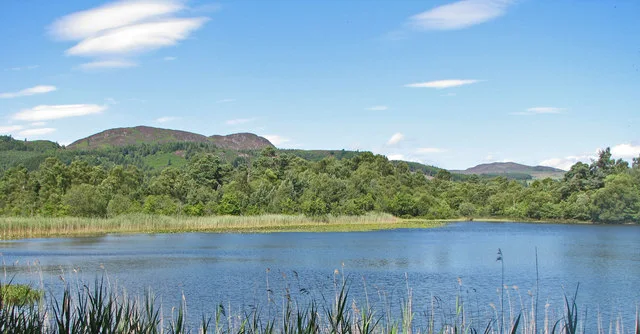
Freshwater loch, open water and reed margins
Lower section has level access; the upper section is reached by steep steps.
Winter: Goldeneye, Wigeon, Tufted Duck, Greylag Goose
Spring: Great Crested Grebe, Goldeneye, Goosander, Osprey
Summer: Great Crested Grebe, Goosander, Swallow, Osprey
Autumn: Wigeon, Tufted Duck, Canada Goose
Light: either. Scope: useful.
Loch water and wooded shore
Level gravel approach and wooden walkway; fixed-height telescopes.
Winter: Wigeon, Goldeneye, Mallard
Spring: Great Crested Grebe, Goosander
Summer: Goosander, Swallow, Mallard
Autumn: Greylag Goose, Canada Goose, Grey Heron
Light: either. Scope: useful.
Public lochside view beside the visitor centre
Use only the photographer viewpoint labelled on the 2026 operator map.
Winter: Tufted Duck, Mallard
Spring: Great Crested Grebe, Mallard
Summer: Swallow, Great Crested Grebe
Autumn: Grey Heron, Mallard
Light: either. Scope: useful.
Woodland feeding area outside the centre
Indoor observation window during visitor-centre opening hours.
Winter: Great Spotted Woodpecker, Chaffinch, Blue Tit
Spring: Nuthatch, Treecreeper, Great Spotted Woodpecker
Summer: Great Spotted Woodpecker, Chaffinch
Autumn: Nuthatch, Chaffinch, Jay
Light: either. Scope: not needed.
Woodland edge on the approach to the centre
The screen is labelled on the current operator map; remain on the approach path.
Winter: Great Spotted Woodpecker, Blue Tit
Spring: Wren, Willow Warbler
Summer: Willow Warbler, Wren
Autumn: Jay, Blue Tit
Light: either. Scope: not needed.
Woodland on the short signed nature trail
Follow the signed Woodland Trail; dogs must be on leads.
Winter: Treecreeper, Blue Tit
Spring: Willow Warbler, Wren
Summer: Wren, Willow Warbler
Autumn: Jay, Treecreeper
Light: either. Scope: not needed.
| Spot | Overlooks | Key species by season | Best light | Scope | Tide |
|---|---|---|---|---|---|
| Double-decker Hide (Main Hide)Lower section has level access; the upper section is reached by steep steps. | Freshwater loch, open water and reed margins | Winter: Goldeneye, Wigeon, Tufted Duck, Greylag Goose Spring: Great Crested Grebe, Goldeneye, Goosander, Osprey Summer: Great Crested Grebe, Goosander, Swallow, Osprey Autumn: Wigeon, Tufted Duck, Canada Goose | either | useful | — |
| Crannog HideLevel gravel approach and wooden walkway; fixed-height telescopes. | Loch water and wooded shore | Winter: Wigeon, Goldeneye, Mallard Spring: Great Crested Grebe, Goosander Summer: Goosander, Swallow, Mallard Autumn: Greylag Goose, Canada Goose, Grey Heron | either | useful | — |
| Photographer viewpointUse only the photographer viewpoint labelled on the 2026 operator map. | Public lochside view beside the visitor centre | Winter: Tufted Duck, Mallard Spring: Great Crested Grebe, Mallard Summer: Swallow, Great Crested Grebe Autumn: Grey Heron, Mallard | either | useful | — |
| Visitor-centre wildlife windowIndoor observation window during visitor-centre opening hours. | Woodland feeding area outside the centre | Winter: Great Spotted Woodpecker, Chaffinch, Blue Tit Spring: Nuthatch, Treecreeper, Great Spotted Woodpecker Summer: Great Spotted Woodpecker, Chaffinch Autumn: Nuthatch, Chaffinch, Jay | either | not needed | — |
| Wildlife-viewing screen near the visitor centreThe screen is labelled on the current operator map; remain on the approach path. | Woodland edge on the approach to the centre | Winter: Great Spotted Woodpecker, Blue Tit Spring: Wren, Willow Warbler Summer: Willow Warbler, Wren Autumn: Jay, Blue Tit | either | not needed | — |
| Woodland Trail wildlife-viewing screenFollow the signed Woodland Trail; dogs must be on leads. | Woodland on the short signed nature trail | Winter: Treecreeper, Blue Tit Spring: Willow Warbler, Wren Summer: Wren, Willow Warbler Autumn: Jay, Treecreeper | either | not needed | — |
Month chips show typical presence or our preferred viewing season. Choose birds that suit the time of your visit.
The Trust describes a wheelchair-friendly connection between the roadside parking and the visitor centre, with additional disabled parking approached by the track beside the welcome signage. Its access information should be considered alongside the detailed route needed by your particular equipment. A path that is manageable with assistance may feel different for someone travelling independently. The operator links Euan's Guide for fuller information. A named visitor's March 2026 report there describes wooden walkways and firm gravel, with level wheelchair space in two of the three hides and an accessible toilet. That same report highlights uneven, sloping ground on the entrance approach and a drain crossing it. These access details come from the dated visitor report linked below. The review also describes fixed hide telescopes positioned for standing users. Bring your own binoculars if a fixed instrument may be awkward from a seated position, and ask the centre about the best viewing window for your needs before travelling. Explain any requirements for a wheelchair space, assistance with a door or a shorter route. Build the visit around comfortable seated watches rather than assuming every hide offers an identical experience.
The visitor centre sells hot drinks and snacks and has a wildlife-themed gift shop. It provides binoculars and telescopes for visitors, an indoor viewing window towards the woodland wildlife, and children's activities in a dedicated hide. Bring lunch if making a longer walking day of the visit rather than depending on a full café menu. Cycle bays are provided for visitors arriving by bicycle. Pack a warm layer for a stationary hide watch even when the walk from town feels mild.
Only assistance dogs are permitted inside the visitor centre and hides. The Trust offers a buy-one-get-one-free ticket arrangement so visitors with a pet dog can take turns using those spaces. Plan supervision and waiting arrangements before travelling, keeping the dog under control and away from sensitive wildlife areas.
Dunkeld and Birnam is the nearest railway station; use ScotRail's journey planner for the actual date and continue by a prebooked taxi or the signed walking connection through Dunkeld. A taxi is the simplest option for a visitor who wants to use the hides without adding a countryside walk at each end. Arrange the return pickup as well as the outward transfer. Stagecoach route 23 serves Dunkeld's North Car Park on the Perth–Aberfeldy corridor, and the council publishes a combined 23/27/34 timetable. Service patterns vary, so choose a departure from the current date-specific timetable rather than assuming an hourly bus. From Dunkeld, the Trust's Fungarth Path is the approximately two-mile walking approach; leave time for birdwatching once you reach the centre. Drivers follow signs from the A9 and turn off the A923 Dunkeld–Blairgowrie road. The Trust warns that some navigation systems send PH8 0HH to the opposite end of the loch and suggests PH8 0ES as an alternative. Select the visitor centre by name as well. Cyclists can divert from National Cycle Network Route 77 via the A923.
Useful bases for an early start.
Booking.com links are affiliate links: we may earn a commission at no extra cost to you. How these links work.
About 1.8 miles by road, roughly 4 minutes’ drive from the mapped town-centre point to visitor-centre approach. OpenStreetMap estimate for Dunkeld, measured 18 October 2026. For the Dunkeld journey linked to Loch of the Lowes Wildlife Reserve, leave additional time for traffic and reaching your precise accommodation address.
Measured driving route · 2026-10-18. Map estimates exclude live traffic.
A nearby village base with the Fungarth walking approach.Find places to stay in Dunkeld on Booking.comAbout 16.4 miles by road, roughly 26 minutes’ drive from the mapped town-centre point to visitor-centre approach. OpenStreetMap estimate for Perth, measured 18 October 2026. For the Perth journey linked to Loch of the Lowes Wildlife Reserve, leave additional time for traffic and reaching your precise accommodation address.
Measured driving route · 2026-10-18. Map estimates exclude live traffic.
Rail connections and a wider city stay.Find places to stay in Perth on Booking.comAbout 10.8 miles by road, roughly 17 minutes’ drive from the mapped town-centre point to visitor-centre approach. OpenStreetMap estimate for Blairgowrie, measured 18 October 2026. For the Blairgowrie journey linked to Loch of the Lowes Wildlife Reserve, leave additional time for traffic and reaching your precise accommodation address.
Measured driving route · 2026-10-18. Map estimates exclude live traffic.
A town base east of the loch.Find places to stay in Blairgowrie on Booking.comExplore Perth and Kinross’s full guides and smaller birding sites
Call 01350 727337 or email lochofthelowes@scottishwildlifetrust.org.uk for the visitor centre. Use the Scottish Wildlife Trust's main reserve page for admissions and seasonal opening, and the linked Loch of the Lowes blog for dated Osprey reports. Explain any essential access or dog-supervision requirements when planning a visit. The address is Loch of the Lowes, Dunkeld, PH8 0HH. For a nest-focused journey, read the latest dated operator update before choosing a day late in the migration season.
Check Scottish Wildlife Trust Lowes wildlife observations. irregular dated posts, more frequent during Osprey season Reports show what has been seen, not what will be.
Follow the BTO Birders’ Code and give wildlife space.
Loch of the Lowes Wildlife Reserve: Adult £6.50; concession £6; members and children free.
Loch of the Lowes Wildlife Reserve: Only assistance dogs are permitted inside the visitor centre and hides.
Loch of the Lowes Wildlife Reserve: Ospreys from spring to late summer · autumn and winter wildfowl · year-round woodland birds.
Loch of the Lowes Wildlife Reserve: The Trust describes a wheelchair-friendly connection between the roadside parking and the visitor centre, with additional disabled parking approached by the track beside the welcome signage.
Loch of the Lowes Wildlife Reserve: Dunkeld and Birnam is the nearest railway station; use ScotRail's journey planner for the actual date and continue by a prebooked taxi or the signed walking connection through Dunkeld.
Shorter stops within 15 miles in a straight line. Use the operator’s arrival directions for the journey.
West of Dunkeld · River gorge · mixed woodland · wooded riverside
North of Pitlochry · Wooded river gorge · mixed woodland · river
Nearby complete guides.
Stops with a purpose: use one as a contrasting habitat or weather-proof Plan B. Distances are straight-line estimates, not road journeys.