Short entry4.3 miles away
Park Lime Pits Local Nature Reserve
Park Road, Rushall, Walsall · Former limestone pools, beech woodland and surrounding grassland
 the ai birderBirding near me
The AI Birder · one-page field sheet
Hamstead, West Midlands, England · B43 5AG · B43 5AG

Mallard · Moorhen · Coot · Mute Swan · Canada Goose · Great Crested Grebe
Lakeside Hide · Marsh Screen · South Bank lake viewpoint · South Bank boundary seat · Two-bench viewpoint on the hide approach · South Bank tree-trunk seating area · River viewpoint · Visitor-centre garden feeders
Check current access, hide closures and operator notices before travelling. Seasonal birds are possibilities, not promised sightings. Keep to authorised routes and give wildlife space.
Opening and charges checked 2026-10-18. Operator: https://www.rspb.org.uk/days-out/reserves/sandwell-valley
Full guide and current source links: https://aibirder.co.uk/reserves/sandwell-valley
EN 50 · RSPB reserve guide
Hamstead, West Midlands, England · B43 5AG
Lakeside birds and busy garden feeding stations close to Birmingham.
Decide if the visit fits.
Last checked 18 October 2026.
Opening and charges information · checked .
Stay nearby →Reserve overview
Lakeside birds and busy garden feeding stations close to Birmingham.
Eight checks for a smoother visit.
Conditions change: check the operator and transport notices before travelling.
January: Usually settle into Lakeside Hide for Goosander, Teal and Pochard, comparing diving and dabbling birds at leisure. Marsh Screen is the quieter second stop for Snipe possibilities. Plan the visit inside the cautious overlap of the published hide hours. February: Typically start at Lakeside Hide with Wigeon, Shoveler and Lapwing. At Marsh Screen, a stationary scan is better than repeatedly approaching the edge for Water Rail or Jack Snipe. These concealed species are possibilities, and an old record is not a reason to enter reeds. March: Usually look for Great Crested Grebe from Lakeside Hide and listen for Reed Bunting at Marsh Screen. Little Ringed Plover may return as spring develops. Keep the water margin and islands undisturbed; arrival timing changes between years and with the weather. April: Our choice is Lakeside Hide for Little Ringed Plover, Oystercatcher and Great Crested Grebe. The enclosed view makes comparison easier without approaching birds. Add Marsh Screen for Reed Bunting, keeping to its signed level approach if steps are unsuitable. May: Typically compare Little Ringed Plover with the larger Oystercatcher from Lakeside Hide. Reed Bunting adds a different sort of watching at Marsh Screen. Stay clear of protected islands and wet grassland, and let volunteers help rather than searching for nesting places. June: Usually give Lakeside Hide an unhurried session for Great Crested Grebe, Little Ringed Plover and Coot. South Bank lake viewpoint offers an outdoor alternative for common waterbirds. Warm weather does not remove the need to keep dogs on leads along the reserve paths. July: Typically watch Mallard, Moorhen and Coot from Lakeside Hide, adding Great Crested Grebe from South Bank lake viewpoint. Spend time learning ordinary species and age differences without approaching families. Summer water levels can change which view is most useful. August: Usually scan from Lakeside Hide for Lapwing and any lingering Little Ringed Plover, then compare Mallard and Coot from South Bank boundary seat. Passage varies from visit to visit. A short list of carefully identified birds is more useful than a speculative rarity search. September: Typically use Lakeside Hide for Lapwing and returning Teal, with South Bank lake viewpoint as an open-air comparison. Allow time for a slow scan of each margin. Ask staff about water levels and any habitat work before deciding which short route to follow. October: Usually choose Lakeside Hide for Shoveler, Teal and Pochard as winter wildfowl become more relevant. Marsh Screen can add Snipe if a bird steps into view. The calendar and facilities page disagree on hours, so confirm access before relying on either endpoint. November: Typically prioritise Goosander and Wigeon from Lakeside Hide, then give Marsh Screen a quiet Snipe watch. West Midland Bird Club winter records also support Jack Snipe as a scarce possibility. Do not flush concealed birds to establish whether one is present. December: Usually keep the plan simple: Lakeside Hide for Pochard, Shoveler and Lapwing, with a brief Marsh Screen scan if conditions suit. Check Monday closures and the car-park gate before travelling. Reserve-wide24-hour access does not mean the staffed hide or toilets are always available.
Best conditions: Our choice is a calm, bright spell within the confirmed staffed hide hours, with a slow pool-edge scan rather than a hurried circuit. Typically strong wind and glare make distant waterbirds harder to judge. The South Bank viewpoints give alternative public angles, while rough side paths can become muddy after rain. Light and scope ratings are editorial viewing advice.
Prices checked 18 October 2026: the RSPB lists free adult and child entry. Non-member parking is £3; members and Blue Badge holders park free. Payment is handled in the visitor centre. Advance booking is unnecessary for an ordinary visit, with separate arrangements for groups of ten or more. The main car park has 28 spaces, no height barrier and no overnight parking or camping. Official hours conflict. The October opening calendar lists a 24-hour reserve, car park 10am–5pm, centre and toilets 10am–4.30pm and hide 10am–4pm. The facilities page instead says centre Tuesday–Sunday 10am–4pm and Lakeside Hide Tuesday–Sunday 10.30am–3.30pm, both closed Mondays; it gives seasonal toilet sessions separately. Plan the staffed visit within the overlap and contact the reserve for the chosen date, particularly on Monday. An always-open reserve does not imply that its hide, toilets or car park are available throughout the night. Check the latest operator notices before travelling.
Access times: Reserve: October 2026 calendar lists 24-hour reserve access; the locked hide, centre and car park have separate hours. · Hides: Facilities page: Lakeside Hide Tuesday–Sunday 10:30–15:30, closed Monday and locked outside those hours. The October calendar instead shows 10:00–16:00. Use 10:30–15:30 as a cautious planning overlap and confirm with staff. · Car park: Checked October 2026 calendar: 10:00–17:00. No overnight parking. Confirm centre days and hours separately. · Dawn access: partly. Operator opening information.
Make Lakeside Hide the centre of a first visit, then decide whether the marsh or an outdoor lake angle deserves the remaining time. The RSPB lists one hide and six viewpoints. Some outdoor stops have descriptive route descriptions rather than published proper names, so use the current signs and ask the welcome team to identify them. The hide approach includes an off-path viewpoint with two benches; its stony approach has a level natural-surface alternative. The final approach to the hide crosses a level metal bridge, but the hide-path gates close outside the staffed session.
The South Bank route is 650 metres long. After 150 metres, Marsh Screen can be reached by eight gravel steps with handrails; a signed level approach lies 20 metres further along the main path. Farther on, a narrow natural-surface path reaches a lake viewpoint with a step to its seat and seven gravel steps back to the main route. The boundary seat gives another lake outlook from just below the path. Rough side paths towards the river involve appreciable slopes and are different from the easier main route. Choose the viewing angle that suits your party rather than treating every bench as compulsory.
Two-hour plan — our suggestion: confirm the hide session first, settle into Lakeside Hide, then add Marsh Screen if the surface and weather suit. Leave time to return without rushing for a closing gate. Full-day plan — our suggestion: start with the hide and marsh, take a break near the visitor centre, then choose the South Bank viewpoints or the wider 1.6-mile lake circuit. That circuit also crosses council-managed ground. End with a second settled watch at a permitted viewpoint instead of extending the walk merely to cover distance. The operator calendar and facilities page disagree about hours; confirm the chosen date with staff, particularly Monday. Keep dogs on leads and remain on permitted paths.
Use the linked reserve map and directions with current access notices. Species are typical seasonal targets. Light and telescope advice reflects our choice of viewpoint.
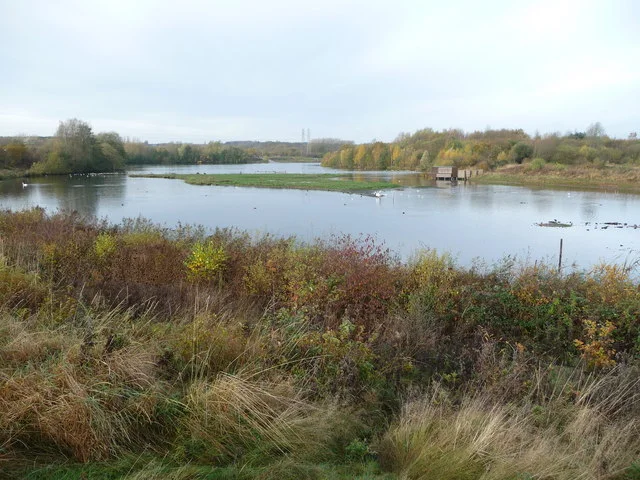
Forge Mill Lake and its managed islands
Level metal bridge and movable benches; hide path gates lock outside hide hours. A portable ramp is available inside.
Winter: Goosander, Shoveler, Wigeon, Teal, Pochard, Lapwing
Spring: Little Ringed Plover, Oystercatcher, Great Crested Grebe
Summer: Little Ringed Plover, Coot, Moorhen
Autumn: Mallard, Lapwing, Teal
Light: either. Scope: useful.
Marsh pool, muddy margins and reeds
Eight gravel steps with handrails, or the signed level approach20 m further along the main path.
Winter: Snipe, Jack Snipe, Water Rail
Spring: Reed Bunting
Summer: Reed Bunting
Autumn: Snipe
Light: either. Scope: useful.
Forge Mill Lake from the signed South Bank trail
Narrow natural path, a step to the seat and seven gravel steps back to the main path.
Winter: Shoveler, Teal
Spring: Great Crested Grebe
Summer: Mallard, Coot
Autumn: Lapwing
Light: either. Scope: useful.
Lake from the reserve-boundary seat
Seat just below the main path at the end of the650 m South Bank route.
Winter: Wigeon, Pochard
Spring: Great Crested Grebe
Summer: Coot, Mallard
Autumn: Teal
Light: either. Scope: useful.
The operator-described off-path viewpoint on the Lakeside Hide approach
Two benches, reached down a stony path or a level natural-surface alternative.
Light: either. Scope: useful.
Trees and vegetation in the operator-described seating area
Natural path off South Bank trail; tree-trunk seats and a bench. Descriptive label, not an invented official name.
Light: either. Scope: not needed.
River from the operator-described bench viewpoint
Rough path with1:10 descent and1:9 return slope; ask for current surface conditions.
Light: either. Scope: not needed.
Feeding stations and wildlife garden beside reception
Rolled-gravel garden paths; ask staff about current feeder activity instead of assuming a particular species.
Light: either. Scope: not needed.
| Spot | Overlooks | Key species by season | Best light | Scope | Tide |
|---|---|---|---|---|---|
| Lakeside HideLevel metal bridge and movable benches; hide path gates lock outside hide hours. A portable ramp is available inside. | Forge Mill Lake and its managed islands | Winter: Goosander, Shoveler, Wigeon, Teal, Pochard, Lapwing Spring: Little Ringed Plover, Oystercatcher, Great Crested Grebe Summer: Little Ringed Plover, Coot, Moorhen Autumn: Mallard, Lapwing, Teal | either | useful | — |
| Marsh ScreenEight gravel steps with handrails, or the signed level approach20 m further along the main path. | Marsh pool, muddy margins and reeds | Winter: Snipe, Jack Snipe, Water Rail Spring: Reed Bunting Summer: Reed Bunting Autumn: Snipe | either | useful | — |
| South Bank lake viewpointNarrow natural path, a step to the seat and seven gravel steps back to the main path. | Forge Mill Lake from the signed South Bank trail | Winter: Shoveler, Teal Spring: Great Crested Grebe Summer: Mallard, Coot Autumn: Lapwing | either | useful | — |
| South Bank boundary seatSeat just below the main path at the end of the650 m South Bank route. | Lake from the reserve-boundary seat | Winter: Wigeon, Pochard Spring: Great Crested Grebe Summer: Coot, Mallard Autumn: Teal | either | useful | — |
| Two-bench viewpoint on the hide approachTwo benches, reached down a stony path or a level natural-surface alternative. | The operator-described off-path viewpoint on the Lakeside Hide approach | — | either | useful | — |
| South Bank tree-trunk seating areaNatural path off South Bank trail; tree-trunk seats and a bench. Descriptive label, not an invented official name. | Trees and vegetation in the operator-described seating area | — | either | not needed | — |
| River viewpointRough path with1:10 descent and1:9 return slope; ask for current surface conditions. | River from the operator-described bench viewpoint | — | either | not needed | — |
| Visitor-centre garden feedersRolled-gravel garden paths; ask staff about current feeder activity instead of assuming a particular species. | Feeding stations and wildlife garden beside reception | — | either | not needed | — |
Month chips show typical presence or our preferred viewing season. Choose birds that suit the time of your visit.
The centre has a level, step-free entrance with automatic sliding doors, a hearing loop and movable seating. Its accessible toilet includes baby changing and audio-visual emergency alarms. Two marked Blue Badge spaces on tarmac are close to the entrance, and visitors can be dropped outside with care around deliveries and pedestrians. The longer approach from the main parking area includes a slope. Paths mix rolled gravel with natural surfaces that may become muddy. The RSPB says there are no stiles or kissing gates across the trails. The Marsh Screen has an alternative level approach to its stepped route, while other viewpoints involve slopes or rougher surfaces; select the particular destination rather than assuming identical access throughout. The Lakeside Hide is approached over a level metal bridge and provides wheelchair recesses beneath its viewing windows, movable benches and a portable ramp if the viewing height requires adjustment. Describe your preferred viewing position and any help needed with the door to the team. A short garden-and-hide outing can provide varied wildlife without taking on the entire lake circuit.
The visitor centre supplies cakes, snacks, ice creams and hot and cold drinks, with card payment preferred. Garden picnic tables provide space for visitors bringing their own food. Binocular hire is listed at £3 for the RSPB Puffins model on the October 2026 facilities page. Guided walks and private group visits can be arranged through the reserve. Natural play features and the wildlife garden make it possible to vary a family outing between birdwatching, flowers and closer exploration of the outdoor setting.
Dogs on leads are welcome on the reserve paths and inside the visitor centre. Water bowls are provided behind the building. Visitors with assistance dogs are welcome at Sandwell Valley, including throughout its visitor routes. Keep the lead short enough to prevent disturbance at the wetland edge and allow space for visitors waiting at viewpoints or watching the garden feeders.
Hamstead is the nearest railway station. The RSPB directs walkers from the station along Hamstead Hill/Old Walsall Road, then Hamstead Road and Tanhouse Avenue, following brown reserve signs. Consult West Midlands Railway's station information and plan the walking section as well as the train connection, particularly if your visit depends on a short hide session. National Express West Midlands route 16 runs from Birmingham through Hockley, Handsworth Wood and Hamstead towards Great Barr. The reserve recommends alighting for Tanhouse Avenue; confirm the most suitable stop on the current operator map for your direction of travel. National Cycle Network route 5 is the operator's cycling connection, with bicycle racks outside the centre. Drivers use the Tanhouse Avenue entrance and the brown signs off the A4041 and B4167.
Useful bases for an early start.
Booking.com links are affiliate links: we may earn a commission at no extra cost to you. How these links work.
About 5.3 miles by road, roughly 12 minutes’ drive (OSRM estimate measured 18 October 2026).
Measured driving route · 18 October 2026. Map estimates exclude live traffic.
The widest city choice for a car-free regional trip.Find places to stay in Birmingham on Booking.comAbout 3.9 miles by road, roughly 9 minutes’ drive (OSRM estimate measured 18 October 2026).
Measured driving route · 18 October 2026. Map estimates exclude live traffic.
A nearby town base west of the valley.Find places to stay in West Bromwich on Booking.comAbout 5.9 miles by road, roughly 15 minutes’ drive (OSRM estimate measured 18 October 2026).
Measured driving route · 18 October 2026. Map estimates exclude live traffic.
A northern base for exploring the Black Country.Find places to stay in Walsall on Booking.comExplore West Midlands’s full guides and smaller birding sites
Contact Sandwell Valley on 0121 357 7395 or sandwellvalley@rspb.org.uk. The address is RSPB Sandwell Valley, Tanhouse Avenue, Great Barr, Birmingham B43 5AG. Give the intended day and whether you need the hide, accessible facilities or a guided visit when contacting the team. Resolving the differing published facility sessions before booking transport is especially useful for a tightly timed outing. The reserve’s official page links to current events and visitor information.
Check RSPB reserve-team observations — summer 2024 newsletter. dated report archive Reports show what has been seen, not what will be.
Follow the BTO Birders’ Code and give wildlife space.
Sandwell Valley: Free entry; non-member parking £3; members/Blue Badge holders free.
Sandwell Valley: Dogs on leads are welcome on the reserve paths and inside the visitor centre.
Sandwell Valley: Winter ducks · spring and summer wetland birds.
Sandwell Valley: The centre has a level, step-free entrance with automatic sliding doors, a hearing loop and movable seating.
Sandwell Valley: Hamstead is the nearest railway station.
Shorter stops within 15 miles in a straight line. Use the operator’s arrival directions for the journey.
Park Road, Rushall, Walsall · Former limestone pools, beech woodland and surrounding grassland
Sutton Coldfield, Birmingham · Lowland heath, woodland, wetlands and lakes
Netherstone Grove, Four Oaks, Sutton Coldfield · Mill pool, wet woodland, marsh and meadow
Access road to Elmdon Church, Solihull · Woodland, meadow, ponds and former walled garden
North of Woodcote Green, near Bromsgrove · Ancient oak woodland, planted woodland, scrub and glades
Nearby complete guides.
Stops with a purpose: use one as a contrasting habitat or weather-proof Plan B. Distances are straight-line estimates, not road journeys.