Short entry5.1 miles away
Alvecote Pools
Robeys Lane and Pooley approaches, North Warwickshire · Shallow subsidence pools, river margins, wetland and meadow
 the ai birderBirding near me
The AI Birder · one-page field sheet
Bodymoor Heath, Staffordshire, England · B78 2BB · B78 2BB

Kingfisher · Bittern · Teal · Wigeon · Goldeneye · Shoveler
The Lookout · Fisher’s Mill Pool viewing platform · West Scrape viewing screen · East Scrape viewing screen · River Tame footbridge · Heronry boardwalk · Woodland visitor trail
Check current access, hide closures and operator notices before travelling. Seasonal birds are possibilities, not promised sightings. Keep to authorised routes and give wildlife space.
Opening and charges checked 2026-10-18. Operator: https://www.rspb.org.uk/days-out/reserves/middleton-lakes
Full guide and current source links: https://aibirder.co.uk/reserves/middleton-lakes
EN 49 · RSPB reserve guide
Bodymoor Heath, Staffordshire, England · B78 2BB
Avocets, lapwings and winter ducks in the River Tame wetlands.
Decide if the visit fits.
Last checked 18 October 2026.
Opening and charges information · checked .
Stay nearby →Reserve overview
Avocets, lapwings and winter ducks in the River Tame wetlands.
Eight checks for a smoother visit.
Conditions change: check the operator and transport notices before travelling.
January: usually begin with Goldeneye at The Lookout. Vehicle entry begins later than dawn, so distinguish a pedestrian visit from a car-based arrival. Give the lake scan time, and keep the return within current signed access and gate arrangements. February: usually begin with Pochard at Fisher’s Mill Pool viewing platform. A second lake view can help when low winter sun affects identification from one side. Give the lake scan time, and keep the return within current signed access and gate arrangements. Great White Egret and Cattle Egret are also supported winter targets in the RSPB’s reserve account. Because that source concerns communal roost use, neither has a published target position; ask the team about appropriate official viewing. March: usually begin with Lapwing at West Scrape viewing screen. Displays are visible from the managed visitor structures; leave nesting ground and islands undisturbed. Give the lake scan time, and keep the return within current signed access and gate arrangements. April: usually begin with Avocet at West Scrape viewing screen. The West Scrape screen provides an official public watch, with a scope useful for more distant birds. Give the lake scan time, and keep the return within current signed access and gate arrangements. May: usually begin with Garden Warbler at Woodland visitor trail. Listen from the woodland route and compare voices without following singing birds into vegetation. Give the lake scan time, and keep the return within current signed access and gate arrangements. June: usually begin with Common Tern at Fisher’s Mill Pool viewing platform. The platform gives a useful view of open water; breeding activity does not permit approaching rafts or islands. Give the lake scan time, and keep the return within current signed access and gate arrangements. July: usually begin with Reed Warbler at East Scrape viewing screen. Reedbed birds often remain concealed, so a quiet pause can be more useful than trying another gap immediately. Give the lake scan time, and keep the return within current signed access and gate arrangements. August: usually begin with Kingfisher at River Tame footbridge. Watch river crossings from the bridge without blocking other visitors or following a bird along private banks. Give the lake scan time, and keep the return within current signed access and gate arrangements. September: usually begin with Gadwall at Fisher’s Mill Pool viewing platform. Keep seasonal-trail availability and wet ground in mind rather than assuming every summer route remains open. Give the lake scan time, and keep the return within current signed access and gate arrangements. October: usually begin with Wigeon at The Lookout. The Welcome Hub is volunteer-dependent; bring food and optics so an unstaffed day does not interrupt the watch. Give the lake scan time, and keep the return within current signed access and gate arrangements. November: usually begin with Teal at The Lookout. Allow for the earlier winter vehicle-entry closure and the separate sunset limit on leaving by the access track. Give the lake scan time, and keep the return within current signed access and gate arrangements. December: usually begin with Moorhen at Heronry boardwalk. The short boardwalk option can suit poor weather better than committing to the whole exposed wetland circuit. Give the lake scan time, and keep the return within current signed access and gate arrangements.
Best conditions: Usually prefer a calm morning for woodland calls and an extended wetland scan, but vehicle entry does not begin at dawn. Open lakes are exposed to wind; choose an established screen rather than edging into habitat for shelter. Paths can be boggy and rooty. Plan the return around the sunset access-track closure, and confirm a staffed hub visit if hire or refreshments are essential.
Admission checked 18 October 2026: children and adults enter free. The RSPB lists non-member parking at £4, with free parking for members and Blue Badge holders. Ordinary visits do not need advance booking; groups of ten or more use the operator's group booking arrangements. There are 50 spaces and no lighting. The Welcome Hub is volunteer-dependent: the facilities page says weekends and some weekdays, while the October calendar displays the visitor centre as closed. Confirm a staffed visit if refreshments or hire are central to your plan. Check the operator's latest notices, route conditions and the day's gate arrangements before setting off.
Access times: Reserve: RSPB 19 October 2026 calendar: dawn–dusk. · Hides: Lookout and screens form the outdoor visitor circuit; no separate door-opening hours published. Welcome Hub volunteer-dependent, weekends and some weekdays; calendar 19 October shows visitor centre closed. · Car park: Entry 1 March–31 October 08:00–17:00;1 November–28 February 08:30–16:00. Access track closes at sunset; later exit after entry-barrier closing is possible only within that limit. · Dawn access: partly. Operator opening information.
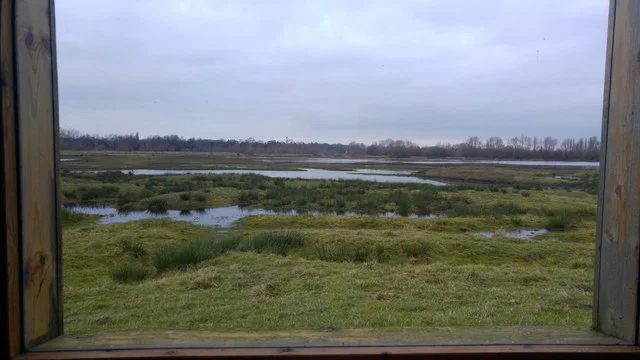
Middleton Lakes rewards a visit that includes woodland, meadow and the broad wetland views instead of concentrating on a single pool. Four signposted trails lead through the habitat mosaic. The Lookout overlooks the north lake and provides a panoramic watch, complemented by four viewing screens. Use the Welcome Hub information and current trail signs to decide which approach offers the most useful light and currently open route. The canal is an important landmark for orientation, while the public rights of way also connect the site with surrounding villages. Two-hour plan, editorial suggestion: choose a manageable woodland and wetland outing from the entrance area, concentrating on one screen rather than attempting the whole reserve. If the Lookout is your priority, allow most of your available time for reaching it, watching and returning, and omit an additional loop. Leave a margin for gates and for stopping when birds appear along the route. Full-day plan, editorial suggestion: walk through the woodland in the morning, listening to the canopy before continuing into the open wetlands. Give the Lookout an extended session, breaking a broad view into small areas of water, mud and vegetation. Stop for a packed lunch, then return through a contrasting signed trail, adding another screen if your walking time and the gate arrangements allow. Repeat a promising earlier viewpoint in different light before finishing. The best approach to a wide lake is often to remain still. Herons can stand inconspicuously along an edge, while a diving duck may reappear well away from where it went under. Scan at different distances and keep an eye on the air above the pools between telescope views. Do not leave the paths to investigate an island or a suspected nest. Grazing animals are part of the habitat management, so give them room and avoid blocking their route. After wet weather, accept a shorter circuit when the alternative would mean walking around a muddy section through adjacent habitat. Carry food and a drink so a good watch does not have to end simply because the refreshments are elsewhere.
Use the linked reserve map and directions with current access notices. Species are typical seasonal targets. Light and telescope advice reflects our choice of viewpoint.
North Lake open water and wetland margins
Large operator hide with seating at different heights; use current signs and allow return before dusk.
Winter: Teal, Wigeon, Goldeneye, Bittern, Great White Egret, Cattle Egret
Spring: Shoveler, Lapwing, Bittern, Hobby, Great White Egret, Cattle Egret
Summer: Shoveler, Teal, Lesser Black-backed Gull, Bittern, Hobby
Autumn: Wigeon, Teal, Bittern, Hobby, Great White Egret
Light: either. Scope: essential.
Fisher’s Mill Pool open water and islands
Slightly raised public platform after the canal bridge, described in the operator’s 2025 report.
Winter: Tufted Duck, Pochard, Gadwall
Spring: Great Crested Grebe, Gadwall
Summer: Common Tern, Cormorant, Great Crested Grebe
Autumn: Tufted Duck, Cormorant
Light: either. Scope: useful.
West Scrape and Jubilee Wetlands
Operator report identifies screen and benches; no access to islands or breeding margins.
Winter: Lapwing, Shelduck
Spring: Avocet, Lapwing, Oystercatcher
Summer: Avocet, Shelduck
Autumn: Lapwing, Little Egret
Light: either. Scope: essential.
East Scrape wetland and margins
Called a hide in the 2025 group report; current facilities page collectively calls the wetland structures screens. Follow signs rather than assuming enclosed shelter.
Winter: Lapwing, Teal
Spring: Redshank, Little Ringed Plover
Summer: Redshank, Reed Warbler
Autumn: Lapwing, Teal
Light: either. Scope: essential.
River Tame water and wooded banks
Public footbridge, not access to banks or islands; keep walking/cycling passage clear.
Winter: Kingfisher
Spring: Kingfisher
Summer: Kingfisher
Autumn: Kingfisher
Light: either. Scope: useful.
Entrance-area pool and feeding-station vicinity
Stay on public boardwalk; no nesting-tree locations or approach directions are supplied.
Winter: Coot, Moorhen, Mallard
Spring: Coot, Moorhen, Sedge Warbler
Summer: Coot, Moorhen, Mallard
Autumn: Mallard, Moorhen
Light: either. Scope: not needed.
Woodland canopy, understory and scrub beside visitor route
Paths have exposed roots and can be boggy; use current signed route.
Winter: Robin, Wren
Spring: Blackcap, Garden Warbler
Summer: Blackcap, Garden Warbler
Autumn: Robin, Wren
Light: either. Scope: not needed.
| Spot | Overlooks | Key species by season | Best light | Scope | Tide |
|---|---|---|---|---|---|
| The LookoutLarge operator hide with seating at different heights; use current signs and allow return before dusk. | North Lake open water and wetland margins | Winter: Teal, Wigeon, Goldeneye, Bittern, Great White Egret, Cattle Egret Spring: Shoveler, Lapwing, Bittern, Hobby, Great White Egret, Cattle Egret Summer: Shoveler, Teal, Lesser Black-backed Gull, Bittern, Hobby Autumn: Wigeon, Teal, Bittern, Hobby, Great White Egret | either | essential | — |
| Fisher’s Mill Pool viewing platformSlightly raised public platform after the canal bridge, described in the operator’s 2025 report. | Fisher’s Mill Pool open water and islands | Winter: Tufted Duck, Pochard, Gadwall Spring: Great Crested Grebe, Gadwall Summer: Common Tern, Cormorant, Great Crested Grebe Autumn: Tufted Duck, Cormorant | either | useful | — |
| West Scrape viewing screenOperator report identifies screen and benches; no access to islands or breeding margins. | West Scrape and Jubilee Wetlands | Winter: Lapwing, Shelduck Spring: Avocet, Lapwing, Oystercatcher Summer: Avocet, Shelduck Autumn: Lapwing, Little Egret | either | essential | — |
| East Scrape viewing screenCalled a hide in the 2025 group report; current facilities page collectively calls the wetland structures screens. Follow signs rather than assuming enclosed shelter. | East Scrape wetland and margins | Winter: Lapwing, Teal Spring: Redshank, Little Ringed Plover Summer: Redshank, Reed Warbler Autumn: Lapwing, Teal | either | essential | — |
| River Tame footbridgePublic footbridge, not access to banks or islands; keep walking/cycling passage clear. | River Tame water and wooded banks | Winter: Kingfisher Spring: Kingfisher Summer: Kingfisher Autumn: Kingfisher | either | useful | — |
| Heronry boardwalkStay on public boardwalk; no nesting-tree locations or approach directions are supplied. | Entrance-area pool and feeding-station vicinity | Winter: Coot, Moorhen, Mallard Spring: Coot, Moorhen, Sedge Warbler Summer: Coot, Moorhen, Mallard Autumn: Mallard, Moorhen | either | not needed | — |
| Woodland visitor trailPaths have exposed roots and can be boggy; use current signed route. | Woodland canopy, understory and scrub beside visitor route | Winter: Robin, Wren Spring: Blackcap, Garden Warbler Summer: Blackcap, Garden Warbler Autumn: Robin, Wren | either | not needed | — |
Month chips show typical presence or our preferred viewing season. Choose birds that suit the time of your visit.
The RSPB describes mostly flat paths with varied surfaces: rough grass, earth, aggregate, gravel and short boardwalk sections. They can become very boggy or uneven, and exposed roots may be difficult for a standard wheelchair. A granite-surfaced path runs from the canal towards the Lookout and one viewing screen, but that does not make every approach equivalent. The hide has seats at several heights, including some with backs. Three Blue Badge spaces are provided. The car park has a 2.1m height barrier; taller vehicles can use spaces before it. There is no formal drop-off point. Two picnic benches near the car park accommodate wheelchair users. There is no routinely available accessible toilet in the neighbouring courtyard. The RSPB describes possible access to the Hall's toilet when Hall staff are present, arranged through Middleton Hall on 01827 283095; when unstaffed that option is unavailable. Kingsbury Water Park is its stated alternative. Discuss that dependency before a visit that requires an accessible toilet, and describe your chair and planned route to the reserve team.
The Welcome Hub sells snacks, ice creams and cold drinks when staffed, and visitors can bring a picnic. Toilets are not on the reserve itself: the RSPB directs visitors to Middleton Hall's courtyard, listed as 10am–4.30pm except Tuesdays. Baby-changing facilities are also at the neighbouring Hall. Binocular hire is advertised through the Hub at £7 for RSPB Avocet or £10 for RSPB Harrier models, checked October 2026, with returns no later than 3pm. Pack for a substantial outdoor walk between facilities.
Dogs on leads can use the public rights of way. The Play Meadow and signed parts of the wetland trails exclude pet dogs, so follow the route-specific signs rather than assuming all four trails have the same rule. Assistance dogs can accompany visitors throughout. Take dog waste away because the reserve has no dog-waste bins.
The RSPB explicitly says that buses do not currently serve the reserve. Wilnecote is its nearest railway station, approximately 2.5 miles away. An arranged taxi is a practical last-leg option, while the operator also describes walking towards Fazeley and reaching the canal via the A4091. Consider the roadside sections, daylight and towpath conditions before making that additional walk part of your birding day; arrange the return before leaving the railhead if using a taxi. Visitors can also reach the rights-of-way network from Fazeley, Dosthill, Kingsbury, Drayton Bassett and Middleton village. Bicycle racks stand near the Welcome Hub. Drivers should use the reserve's brown signs from the A4091 and Bodymoor Heath Road, sharing the entrance used by Aston Villa's training ground. The RSPB warns that Middleton Hall has a separate entrance, so following signs for the Hall is not the same approach. Save the reserve-specific directions with your accommodation details.
Useful bases for an early start.
Booking.com links are affiliate links: we may earn a commission at no extra cost to you. How these links work.
About 4.9 miles by road, roughly 12 minutes’ drive (OSRM estimate measured 18 October 2026).
Measured driving route · 18 October 2026. Map estimates exclude live traffic.
A town base north of the wetlands.Find places to stay in Tamworth on Booking.comAbout 9.6 miles by road, roughly 17 minutes’ drive (OSRM estimate measured 18 October 2026).
Measured driving route · 18 October 2026. Map estimates exclude live traffic.
Combining the reserve with Birmingham-area visits.Find places to stay in Sutton Coldfield on Booking.comAbout 11.7 miles by road, roughly 21 minutes’ drive (OSRM estimate measured 18 October 2026).
Measured driving route · 18 October 2026. Map estimates exclude live traffic.
A separate cathedral-city stay north-west of the reserve.Find places to stay in Lichfield on Booking.comExplore Staffordshire’s full guides and smaller birding sites
Middleton Lakes lists 01827 259454 and middletonlakes@rspb.org.uk as its direct contacts. The postal address is Middleton Lakes, Tamworth, Staffordshire B78 2BB. Explain the intended walking route and any need for the Hub to be staffed when contacting the reserve. Toilet arrangements at Middleton Hall require a separate conversation with that operator. The RSPB page links current events and the practical pages used below, helping you build an outing around what is available on the chosen date.
Check RSPB Shropshire actual 25 May 2025 field report. fixed 2025 outing report, updated 7 November 2025; not a current daily feed Reports show what has been seen, not what will be.
Follow the BTO Birders’ Code and give wildlife space.
Middleton Lakes: Free entry; parking £4 non-members / free for RSPB members and Blue Badge holders.
Middleton Lakes: Dogs on leads can use the public rights of way.
Middleton Lakes: Winter ducks · spring and summer wetland birds.
Middleton Lakes: They can become very boggy or uneven, and exposed roots may be difficult for a standard wheelchair.
Middleton Lakes: The RSPB explicitly says that buses do not currently serve the reserve.
Shorter stops within 15 miles in a straight line. Use the operator’s arrival directions for the journey.
Robeys Lane and Pooley approaches, North Warwickshire · Shallow subsidence pools, river margins, wetland and meadow
Netherstone Grove, Four Oaks, Sutton Coldfield · Mill pool, wet woodland, marsh and meadow
Sutton Coldfield, Birmingham · Lowland heath, woodland, wetlands and lakes
Burton Road near Alrewas, opposite the National Memorial Arboretum · Restored gravel-pit lakes, scrapes, reedbeds, grassland and river margins
Access road to Elmdon Church, Solihull · Woodland, meadow, ponds and former walled garden
Park Road, Rushall, Walsall · Former limestone pools, beech woodland and surrounding grassland
Station Lane east of the A38, near Barton-under-Needwood · Restored gravel-pit wetland, reedbed, shingle and wet grassland
Near Burton upon Trent · Gravel-pit lakes, reedbed and riverside meadow
Aldermans Green Road, Coventry · Pool margins, marsh and reed vegetation
Cuttle Pool Lane, Temple Balsall, Solihull · Former gravel workings, pool, woodland and scrub
Nearby complete guides.
Stops with a purpose: use one as a contrasting habitat or weather-proof Plan B. Distances are straight-line estimates, not road journeys.