Neston
A settlement base for the RSPB Dee Estuary – Parkgate visit shown below.
- RSPB Dee Estuary – Parkgate: approximately 6 minutes / 2.5 miles by road. Measured 18 October 2026; excludes traffic, parking and walking. Open road directions
 the ai birderBirding near me
Responsible wildlife guide
For a winter Hen Harrier watch, compare Parkgate’s October–March guidance with Caerlaverock’s November–February season and Arne’s November–February records. Cors Caron is another October–March choice from the existing guides. Use only the official hides, observatories and public viewpoints listed below, allowing time for a distant hunting bird to appear. These are seasonal planning choices, not current sightings or roost directions; never follow a bird towards a resting or breeding place.
Choose an official reserve viewpoint or an operator-led watch for Hen Harriers, and enjoy the hunting bird across the wider landscape. Winter lowland wetlands can offer a practical introduction; upland viewing needs equally careful attention to the operator’s public arrangements. Our choice is a patient, well-planned session with other birds to enjoy while you wait.
Compare these public visit choices using each bird’s local guide season. Months describe bird records, not event or sailing dates. Check current operator access; sightings are never guaranteed.
| Site | Type of view | Best months | Notes and sources |
|---|---|---|---|
| RSPB Dee Estuary – Parkgate Hen Harrier | Public viewpoint | January, February, March, October, November, December | Old Baths car-park public viewpoint. Council car park closes at 17:00 in winter and 20:00 in summer; no working hide is promised. Official source · Source review: 19 October 2026. |
| WWT Caerlaverock Hen Harrier | Hide / observatory | January, February, November, December | Saltcot Merse Observatory. About half a mile from the centre; keep to the permitted approach and return within opening hours. Official source · Source review: 19 October 2026. |
| RSPB Arne Hen Harrier | Hide / observatory | January, February, November, December | Harbour Hide. Higher lookout levels involve steps; the approach is uneven in places. Official source · Source review: 19 October 2026. |
| Cors Caron National Nature Reserve Hen Harrier | Hide / observatory | January, February, March, October, November, December | Bog Hide. Accessible hide reached by the all-weather Cors Caron Walk. Bird locations move; do not leave the boardwalk to seek a closer angle. Official source · Source review: 19 October 2026. |
| Wicken Fen Hen Harrier | Hide / observatory | January, February, March, October, November, December | Charlie’s Hide. Use only the current public approach shown on operator map and signs;close livestock gates and avoid flooded paths. Official source · Source review: 19 October 2026. |
| RSPB Wallasea Island Hen Harrier | Public viewpoint | January, February, March, October, November, December | Grass Farm–Acresfleet raised viewing area. Official raised seating area; no separate proper name supplied. Official source · Source review: 19 October 2026. |
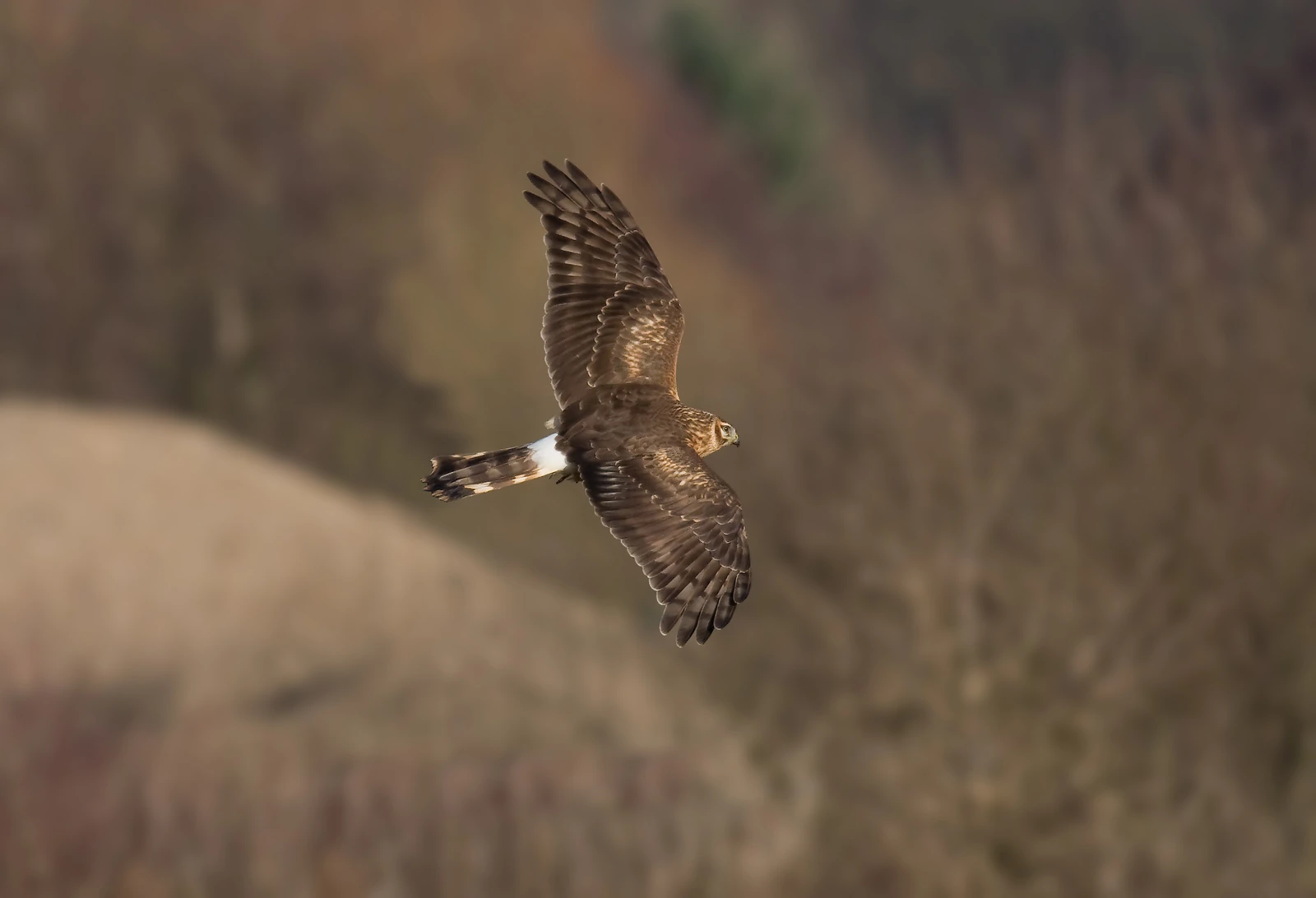
BTO describes Hen Harriers as present year-round, but in different landscapes: uplands during the breeding season and lowlands or coasts in winter. Begin with that broad choice rather than a single year-round destination. If you are new to watching harriers, our preference is a winter wetland day where an established public outlook gives a view across open country. You can learn the shape and hunting flight while also enjoying the rest of the reserve.
For a summer visit, use an operator’s advertised public viewing arrangement and its current seasonal advice. A species’ presence in an upland region does not tell you which track is suitable for visitors. Plan around the official place you can watch from, how comfortable the approach will be and whether a second visit fits the holiday. There is no need to locate a breeding territory to have a rewarding encounter with a bird passing through the wider view.
Cottascarth and Rendall Moss provides a clear example of the right approach: the RSPB explicitly invites visitors to watch Hen Harriers from its public hide. That invitation gives you a legitimate place to settle without needing more precise bird locations. Use the reserve guide for the route and access decisions, and let the view unfold naturally. The interest is the moorland landscape and any birds using it, rather than a particular hidden destination within it.
At a lowland reserve, the same principle applies through managed hides and viewpoints. The RSPB includes Blacktoft Sands among its Hen Harrier places, but individual appearances can be distant or sporadic. Choose a guide with suitable local seasonal advice and other wetland interests that appeal to you. A list of linked reserves is a starting point for selecting an authorised visit, not a reason to collect private coordinates or ask other visitors to identify a resting place.
An adult male typically shows pale grey upperparts, a lighter underside and dark wing tips. Look for the long wings and tail, the shallow raised-wing glide and the prominent white rump when the bird turns. The RSPB describes Hen Harrier as slimmer than Marsh Harrier, with a different overall impression in flight. These clues are most useful together: pale colour alone is not enough when distance and strong backlighting make other birds look unexpectedly light.
Our advice is to watch the shape through several changes of direction. Notice how the wing tips, body and tail relate to one another, then look at the colour areas when the view improves. Start with binoculars so you can follow the bird across the landscape. If you have a telescope ready, use it only once you know where to look. There is no advantage in losing a useful whole-bird view while trying to magnify a distant patch of grey.
Female and young Hen Harriers are brown rather than adult-male grey, with a noticeable pale rump and a barred tail. The term ringtail is a helpful description of that broad appearance, rather than proof that you have established the bird’s age or sex. Watch for the slimmer outline and flight as well as the rump. Female and immature harriers deserve the same careful observation as the more immediately striking grey male.
A distant brown raptor can be difficult, especially when it appears only briefly above vegetation. Keep your first note descriptive: long tail, broad or slim wings, pale rump seen or not seen, and the pattern of flight. Do not rely on a single dark photograph to settle details you could not see. If another harrier species remains a possibility, an honest uncertain identification is useful. You can compare the note with a field guide afterwards without changing what the original view actually showed.
Find an authorised outlook that lets you observe a broad area without repeatedly shifting position. Our choice is somewhere sheltered enough to keep your attention on the view, with room to sit or rest your arms. Before the watch, divide the visible landscape into a few memorable sections. Scan each section slowly, then lower your binoculars and check the whole scene for movement. A bird can enter from a different direction while you are concentrating on one corner.
If a harrier disappears, stay with the public viewpoint and search the visible landscape again. Following its flight over the ground can lead you into sensitive habitat without improving the view. For a group, share a quiet direction and a fixed feature so everybody has a chance to locate the bird. Keep the excitement away from shouting or a sudden rush to the best window. A little patience makes the encounter easier for both beginners and experienced observers.
Work backwards from a safe return journey and the reserve’s actual opening arrangements. If the operator offers a guided watch, use its published meeting instructions and booking page. Confirm the date and year before relying on an event announcement. Otherwise choose ordinary public visiting hours and a broad hunting-landscape watch. A winter day can be worthwhile well before the light begins to fail; you do not need to turn every visit into a late departure.
Typically, exposed marshes feel colder when you are standing still than when you are walking from the car park. Bring layers, waterproofs and a warm drink if allowed, and decide where a sheltered break fits. A torch is useful for a permitted unlit return route, but does not extend opening hours. Plan a nearby alternative if strong wind, rain or poor visibility makes distant raptors difficult to assess. Staying comfortable helps you watch carefully rather than simply endure the weather.
A useful photograph can show flight shape and the setting while leaving the bird distant. Take it from the official public watching place and accept the scale that gives. Avoid moving after a bird because a background or light angle would improve. If you post the image, think about whether landmarks, a map pin or embedded location information reveal a sensitive place beyond the public visitor area. A general description of the reserve is often sufficient for sharing the pleasure of the encounter.
Keep a private note of the observation while it is fresh: time, weather, visible plumage, flight direction and how confidently you identified the bird. If information could help conservation, pass it through the reserve or county recorder’s appropriate reporting route. Let those responsible for the site decide what should become public. That is a more useful contribution than immediately directing a crowd towards a bird whose next movement could expose a protected location.
The RSPB identifies persecution as a major problem for Hen Harriers, and BTO lists the species as of conservation concern. Watching arrangements should therefore be treated as part of enjoying the bird, not an obstacle between you and a closer view. Respect any temporary changes the operator makes, even if an older report describes a different opportunity. A quiet session from a managed place supports a better relationship between wildlife, visitors and the people caring for the landscape.
Our recommendation is to measure the visit by the quality of attention you gave it. You might follow one distant bird well, learn to separate a ringtail from a Marsh Harrier, or discover which weather makes your chosen public viewpoint comfortable. If no Hen Harrier appears, enjoy the other species and return in a suitable season. The strongest memory is a bird moving freely through its own habitat while you remain a considerate observer.
These rows use existing reserve watching-place records and typical local seasons. Sensitive locations are withheld. Follow current operator restrictions.
| Reserve and public watching place | Typical months | Best light | Scope |
|---|---|---|---|
| WWT Caerlaverock: Saltcot Merse Observatory | January, February, November, December | either | essential |
| RSPB Loch of Strathbeg: Tower Pool Hide | January, February, March, October, November, December | either | essential |
| WWT Steart Marshes: Otterhampton Marsh viewing platforms | January, February, March, October, November, December | either | useful |
| RSPB Frampton Marsh: Raptor viewpoint | January, February, March, October, November, December | not applicable | essential |
| RSPB Arne: Harbour Hide | November, December, January, February | either | useful |
| Cors Caron National Nature Reserve: Bog Hide | January, February, March, October, November, December | either | useful |
| Spurn National Nature Reserve: Kilnsea Wetlands Hide | January, February, March, October, November, December | either | useful |
| Cors Dyfi Nature Reserve and Dyfi Wildlife Centre: Dyfi 360 Observatory | January, February, March, October, November, December | either | essential |
| Ouse Washes: Welches Dam Hide | January, February, March, October, November, December | either | useful |
| Elmley National Nature Reserve: Entrance drive (watch from the vehicle) | November, December, January, February | either | not needed |
| RSPB Wallasea Island: Grass Farm–Acresfleet raised viewing area | January, February, March, October, November, December | either | useful |
| RSPB Northward Hill: Ernie Hemsley viewpoint | January, February, November, December | either | essential |
The months below come from each reserve’s local birding guide. They describe typical presence or a preferred watching season; national occurrence can be broader. Reports show past observations and cannot promise an encounter. Sensitive birds have no published watching position.
| Species | Reserve guide | Typical or preferred months |
|---|---|---|
| Hen Harrier | WWT Caerlaverock | January, February, November, December |
| Hen Harrier | RSPB Portmore Lough | September, October, November, December, January, February, March |
| Hen Harrier | RSPB Loch of Strathbeg | January, February, March, October, November, December |
| Hen Harrier | RSPB Lake Vyrnwy | January, February, March, April, May, June, July, August, September, October, November, December |
| Hen Harrier | WWT Steart Marshes | January, February, March, October, November, December |
| Hen Harrier | RSPB Frampton Marsh | January, February, March, October, November, December |
| Hen Harrier | RSPB Forsinard Flows | January, February, March, April, May, June, July, August, September, October, November, December |
| Hen Harrier | RSPB Loch Gruinart | January, February, March, April, May, June, July, August, September, October, November, December |
| Hen Harrier | RSPB Aghatirourke | April, May, June, July, August |
| Hen Harrier | RSPB Blacktoft Sands | January, February, March, October, November, December |
| Hen Harrier | RSPB Carngafallt | April, May, June, July, August |
| Hen Harrier | RSPB Arne | November, December, January, February |
| Hen Harrier | Cors Caron National Nature Reserve | January, February, March, October, November, December |
| Hen Harrier | Spurn National Nature Reserve | January, February, March, October, November, December |
| Hen Harrier | RSPB Insh Marshes | January, February, March, August, September, October, November, December |
| Hen Harrier | Cors Dyfi Nature Reserve and Dyfi Wildlife Centre | January, February, March, October, November, December |
| Hen Harrier | Ouse Washes | January, February, March, October, November, December |
| Hen Harrier | Elmley National Nature Reserve | November, December, January, February |
| Hen Harrier | RSPB Wallasea Island | January, February, March, October, November, December |
| Hen Harrier | RSPB Northward Hill | January, February, November, December |
| Hen Harrier | Carlton Marshes Nature Reserve | January, February, March, October, November, December |
| Hen Harrier | RSPB Geltsdale | January, February, March, April, May, June, July, August, September, October, November, December |
| Hen Harrier | Gibraltar Point National Nature Reserve | October, November, December, January, February, March |
| Hen Harrier | RSPB Dee Estuary – Parkgate | October, November, December, January, February, March |
| Hen Harrier | RSPB Buckenham Marshes | October, November, December, January, February, March |
| Hen Harrier | RSPB Nene Washes | January, February, November, December |
| Hen Harrier | RSPB Cliffe Pools | November, December, January, February |
| Hen Harrier | RSPB Greylake | November, December, January, February |
| Hen Harrier | RSPB Medmerry | January, February, March, October, November, December |
| Hen Harrier | Wicken Fen | January, February, March, October, November, December |
| Hen Harrier | Isle of Mull white-tailed eagles | January, February, March, April, May, June, July, August, September, October, November, December |
| Hen Harrier | RSPB Coll | January, February, March, April, September, October, November, December |
| Hen Harrier | RSPB Hoy | January, February, March, April, May, June, July, August, September, October, November, December |
| Hen Harrier | RSPB Cottascarth and Rendall Moss | September, October, November, December, January, February |
| Hen Harrier | Whiteford National Nature Reserve | January, February, November, December |
Some links earn us a small commission at no extra cost to you. Bases are geographical suggestions, with no claim of property inspection or availability.
A settlement base for the RSPB Dee Estuary – Parkgate visit shown below.
A settlement base for the WWT Caerlaverock visit shown below.
A settlement base for the RSPB Arne visit shown below.
Public places covered in this guide include WWT Caerlaverock, RSPB Portmore Lough, RSPB Loch of Strathbeg.
Recorded nationally throughout the year, typically in upland breeding landscapes and in lowland or coastal habitats in winter. Use the local guide’s season and official watching arrangements.
Keep to official hides, viewpoints and operator-led watches. Never seek a nest or unadvertised roost, follow a bird towards one, or publish sensitive location details.
Reviewed 2026-10-19.